The fluidized bed process is one of the oldest and most reliable methods of applying powder coatings, predating electrostatic spray technology by more than a decade. In this process, powder is placed in a tank with a porous membrane bottom through which low-pressure air is passed. The rising air suspends the powder particles, creating a fluid-like bed that behaves similarly to a liquid. Parts that are preheated to a temperature above the melting point of the powder are then dipped into this fluidized bed, and the powder melts and fuses onto the hot part surface on contact.
Technical
Powder Coating Fluidized Bed Process: Dip Coating for Thick Film Applications
Sundial Powder Coating·April 23, 2026·13 min
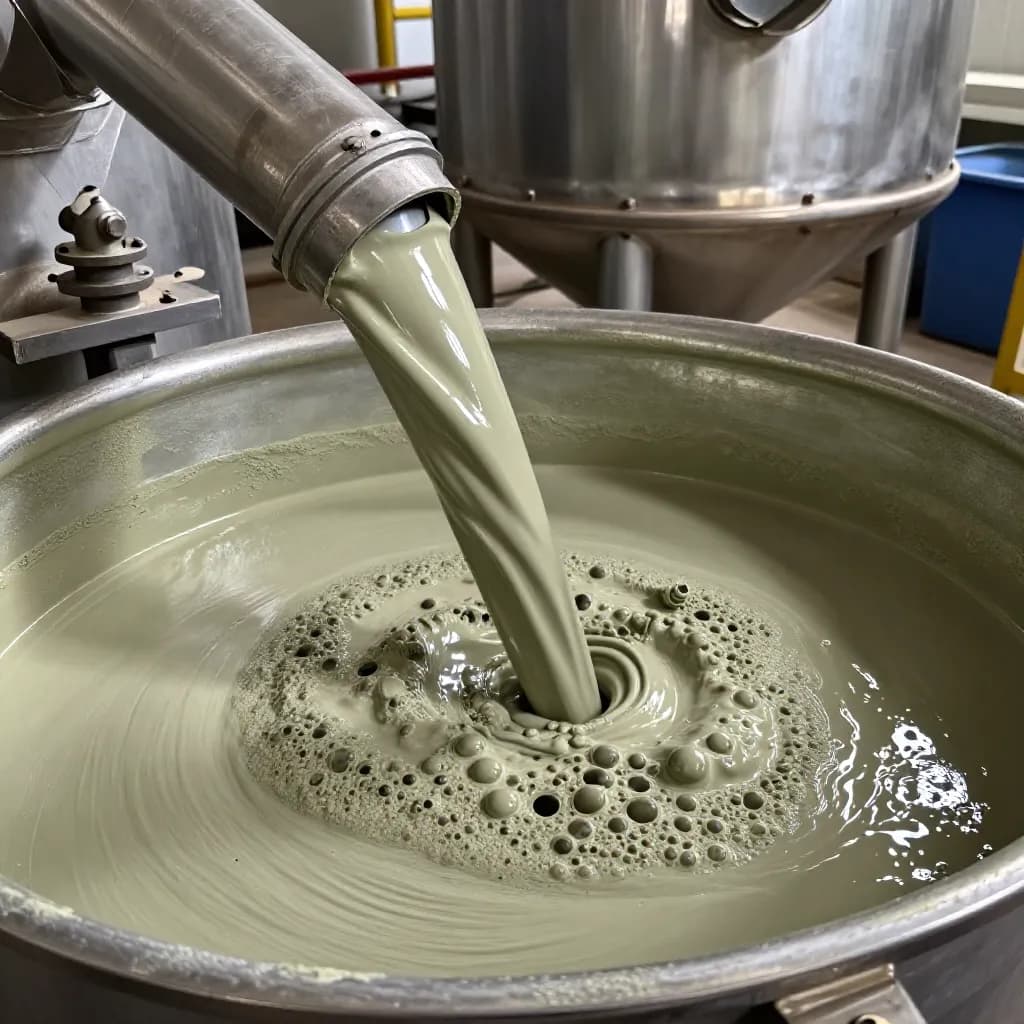
The fluidized bed process is fundamentally different from electrostatic spray in several important ways. There is no electrostatic charge involved — deposition is driven entirely by thermal energy. The part must be preheated, typically to 200–400°C depending on the powder chemistry, before immersion. Film thickness is controlled by part temperature and immersion time rather than by gun settings and spray patterns. And the resulting film thickness is much greater than electrostatic spray — typically 250–500 microns (10–20 mils) per dip, compared to 50–100 microns for spray application.
Ready to Start Your Project?
From one-off customs to 15,000-part production runs — get precise pricing in 24 hours.
On This Page
Understanding the Fluidized Bed Coating Process
This thick-film capability makes the fluidized bed process ideal for functional coatings where corrosion protection, electrical insulation, chemical resistance, or abrasion resistance is the primary objective. The process is widely used for coating wire goods, fencing, dishwasher racks, electrical bus bars, pipe fittings, and industrial hardware where coating performance matters more than decorative appearance.
Powder Types for Fluidized Bed Application
The fluidized bed process accommodates both thermoplastic and thermoset powder types, with thermoplastics being the more common choice for thick-film functional applications. Nylon 11 and Nylon 12 are among the most widely used fluidized bed powders, offering exceptional abrasion resistance, chemical resistance, and impact toughness at film thicknesses of 250–500 microns. Nylon coatings conform to standards including ASTM D4066 for nylon resin classification and are specified extensively for automotive fuel system components, hydraulic fittings, and industrial valve bodies.
Polyethylene powders — both low-density (LDPE) and high-density (HDPE) — are used for applications requiring excellent chemical resistance and moisture barrier properties. HDPE coatings are common on pipe fittings, pump housings, and chemical handling equipment. Polyvinyl chloride (PVC) plastisol powders provide a soft, cushioned coating with good chemical resistance and are used for tool handles, rack tips, and dishwasher baskets.
Thermoset powders including epoxy, polyester, and epoxy-polyester hybrids can also be applied by fluidized bed, though they are less common than thermoplastics in this process. Epoxy fluidized bed coatings are specified for electrical insulation applications such as transformer laminations, motor stators, and bus bars, where the combination of thick film build and excellent dielectric properties provides reliable insulation at high voltages. The choice of powder type is driven by the functional requirements of the application — chemical environment, operating temperature, mechanical stress, and electrical properties — rather than by decorative considerations.
Part Preheating: Temperature Control and Methods
Part preheating is the most critical process variable in fluidized bed coating. The part temperature at the moment of immersion determines the initial melt rate of the powder, the depth of fusion, and ultimately the final film thickness and coating integrity. Parts that are too cool produce thin, poorly fused coatings with inadequate adhesion. Parts that are too hot produce excessively thick coatings with potential sag, drip, and thermal degradation of the powder.
The required preheat temperature depends on the powder type and the desired film thickness. For nylon powders, typical preheat temperatures range from 280–370°C. For polyethylene, 230–320°C is common. For epoxy, 200–260°C is typical. These temperatures refer to the actual part surface temperature at the time of immersion, not the oven setpoint — the distinction is important because heavy parts require longer soak times to reach uniform temperature throughout their cross-section.
Preheating is typically performed in convection ovens, though infrared preheaters are used for thin-walled parts that heat quickly. Temperature uniformity across the part is essential for uniform coating thickness. Thick sections of a part retain more heat and produce thicker coatings than thin sections, creating a natural thickness variation that must be accounted for in the process design. Temperature monitoring using contact thermocouples or infrared pyrometers at the oven exit verifies that parts have reached the target temperature before immersion. For critical applications, data loggers with multiple thermocouples attached to the part provide a complete thermal profile through the preheat cycle.
Immersion Technique and Film Thickness Control
The immersion process involves lowering the preheated part into the fluidized bed, holding it for a controlled dwell time, and withdrawing it smoothly. The dwell time — typically 2–10 seconds — along with the part temperature determines the final film thickness. Longer immersion times and higher part temperatures produce thicker coatings. The relationship is approximately linear for short immersion times but reaches a plateau as the part surface cools below the powder melting point and deposition stops.
Part orientation during immersion affects coating uniformity. The part should be oriented to allow air and excess powder to escape freely as it enters the bed. Trapped air pockets create uncoated areas, while powder accumulation in cavities can produce excessively thick, poorly fused deposits. For complex parts, the immersion angle and speed may need to be optimized through trial runs to achieve acceptable coverage uniformity.
After withdrawal from the bed, the part retains enough residual heat to continue melting and flowing the deposited powder for several seconds. This post-dip flow period is important for achieving a smooth, continuous film. Parts should not be quenched or cooled rapidly immediately after dipping, as this can freeze the coating before it has fully flowed out, leaving a rough, orange-peel surface. For thermoset powders, a post-cure bake in an oven is required to complete the crosslinking reaction. For thermoplastic powders, the coating solidifies as the part cools to ambient temperature, and no additional curing step is needed. Film thickness is verified using magnetic induction or eddy current gauges per ASTM D7091, with typical specifications ranging from 250 to 500 microns depending on the application.
Fluidized Bed Design and Air Distribution
The fluidized bed tank is a deceptively simple piece of equipment whose performance depends critically on the quality of air distribution through the porous membrane. The membrane — typically sintered polyethylene, woven polyester fabric, or porous ceramic — must distribute air uniformly across the entire bed area to achieve consistent fluidization. Uneven air distribution creates dead zones where powder remains packed and active zones where powder is over-fluidized, both of which cause coating defects.
Air supply to the bed must be clean, dry, and oil-free. Moisture in the fluidizing air causes powder to clump and agglomerate, disrupting fluidization and producing rough, uneven coatings. A compressed air system with coalescing filters, refrigerated dryers, and desiccant dryers is typically required to achieve the necessary air quality — a dew point of -40°C or lower is recommended. Air pressure is low, typically 0.1–0.5 bar (1.5–7 psi), and the flow rate is adjusted to achieve a bed expansion of 50–100% above the settled powder level.
Bed dimensions are determined by the size of the parts to be coated. The bed must be large enough to fully immerse the part with clearance on all sides to avoid disturbing the fluidization pattern. A minimum clearance of 100–150 mm between the part and the bed walls is recommended. Bed depth (powder level) must be sufficient to cover the tallest part dimension plus the clearance, with additional depth to account for powder consumption between refills. Powder level monitoring — either visual through sight glasses or automated with level sensors — ensures consistent coating conditions throughout the production run.
Applications and Industry-Specific Requirements
The fluidized bed process serves a diverse range of industries, each with specific performance requirements that drive powder selection and process parameters. In the automotive industry, nylon fluidized bed coatings are specified for fuel system components (fuel rails, fittings, and connectors), brake line clips, and under-hood brackets where chemical resistance to fuels, oils, and road salt is essential. These applications typically require nylon 11 or nylon 12 coatings at 250–400 microns, tested per automotive OEM specifications for adhesion, chemical resistance, and thermal cycling.
The electrical industry uses epoxy fluidized bed coatings for insulation of bus bars, transformer laminations, motor stators, and switchgear components. Dielectric strength requirements per ASTM D149 drive the minimum film thickness specification, which is typically 300–500 microns for high-voltage applications. The uniform, pinhole-free film produced by the fluidized bed process is critical for electrical insulation integrity — even a single pinhole can cause dielectric breakdown and equipment failure.
Consumer products including dishwasher racks, refrigerator shelves, tool handles, and garden fencing use polyethylene or PVC fluidized bed coatings for corrosion protection, cushioning, and aesthetic appeal. These applications prioritize adhesion to wire substrates (tested per ASTM D4541), flexibility to withstand repeated bending without cracking, and resistance to household chemicals and detergents. The food service industry specifies FDA-compliant powder formulations for equipment that contacts food, adding regulatory compliance to the list of performance requirements.
Process Control, Troubleshooting, and Quality Assurance
Consistent fluidized bed coating quality requires disciplined process control across three critical variables: part temperature, immersion time, and bed condition. Part temperature should be monitored on every batch using contact thermocouples or infrared pyrometers, with records maintained for traceability. Immersion time should be controlled by timer-actuated dipping mechanisms rather than manual operator judgment, as even one-second variations can produce measurable thickness differences.
Common defects in fluidized bed coating include thin spots (insufficient part temperature or immersion time), excessive thickness (part too hot or immersion too long), poor adhesion (inadequate surface preparation or part temperature too low for proper fusion), rough surface texture (moisture in fluidizing air, contaminated powder, or insufficient post-dip flow time), and pinholes (outgassing from the substrate, moisture contamination, or air entrapment during immersion).
Quality assurance testing for fluidized bed coatings typically includes film thickness measurement per ASTM D7091, adhesion testing per ASTM D4541 (pull-off) or ASTM D3359 (cross-cut), flexibility testing per ASTM D522 (mandrel bend), impact resistance per ASTM D2794, and chemical resistance testing per ASTM D1308 for the specific chemicals encountered in the application environment. For electrical insulation applications, dielectric strength testing per ASTM D149 and volume resistivity testing per ASTM D257 are required. Statistical sampling plans per ANSI/ASQ Z1.4 define the inspection frequency and acceptance criteria for production lots.
Frequently Asked Questions
How thick are fluidized bed powder coatings?
Fluidized bed coatings are typically 250–500 microns (10–20 mils) per dip, significantly thicker than electrostatic spray coatings which are typically 50–100 microns. This thick film build is the primary advantage of the process for functional applications requiring heavy corrosion protection or electrical insulation.
What temperature must parts be preheated to for fluidized bed coating?
Preheat temperatures depend on the powder type: 280–370°C for nylon, 230–320°C for polyethylene, and 200–260°C for epoxy. The part must be above the powder's melting point at the time of immersion for proper fusion and adhesion.
Can thermoset powders be applied by fluidized bed?
Yes. Epoxy, polyester, and hybrid thermoset powders can be applied by fluidized bed, though thermoplastics like nylon and polyethylene are more common. Thermoset fluidized bed coatings require a post-cure bake to complete crosslinking after the dipping process.
What causes rough texture in fluidized bed coatings?
Rough texture is typically caused by moisture in the fluidizing air, contaminated powder, insufficient post-dip flow time, or part temperature that is too low for proper powder melting and flow. Ensuring dry, clean air supply and adequate part temperature resolves most texture issues.
What industries use fluidized bed powder coating?
Major users include automotive (fuel system components, brake clips), electrical (bus bars, motor stators, transformers), consumer products (dishwasher racks, tool handles, fencing), and food service equipment. The process is chosen when thick, functional coatings are needed for corrosion, chemical, or electrical protection.
Ready to Start Your Project?
From one-off customs to 15,000-part production runs — get precise pricing in 24 hours.