Flooding subjects powder-coated infrastructure to conditions far more aggressive than normal atmospheric exposure. Floodwater is not clean water — it carries suspended sediment, dissolved chemicals, sewage, petroleum products, agricultural runoff, and debris that create a complex chemical and mechanical attack on coating systems. The duration of submersion can range from hours for flash floods to weeks for riverine flooding, and the post-flood environment of saturated soils, high humidity, and contaminated surfaces extends the effective exposure period well beyond the flood event itself.
Architecture
Powder Coating for Flood Zone Infrastructure: Submersion Recovery, Post-Flood Corrosion, and Resilience
Sundial Powder Coating·April 22, 2026·11 min
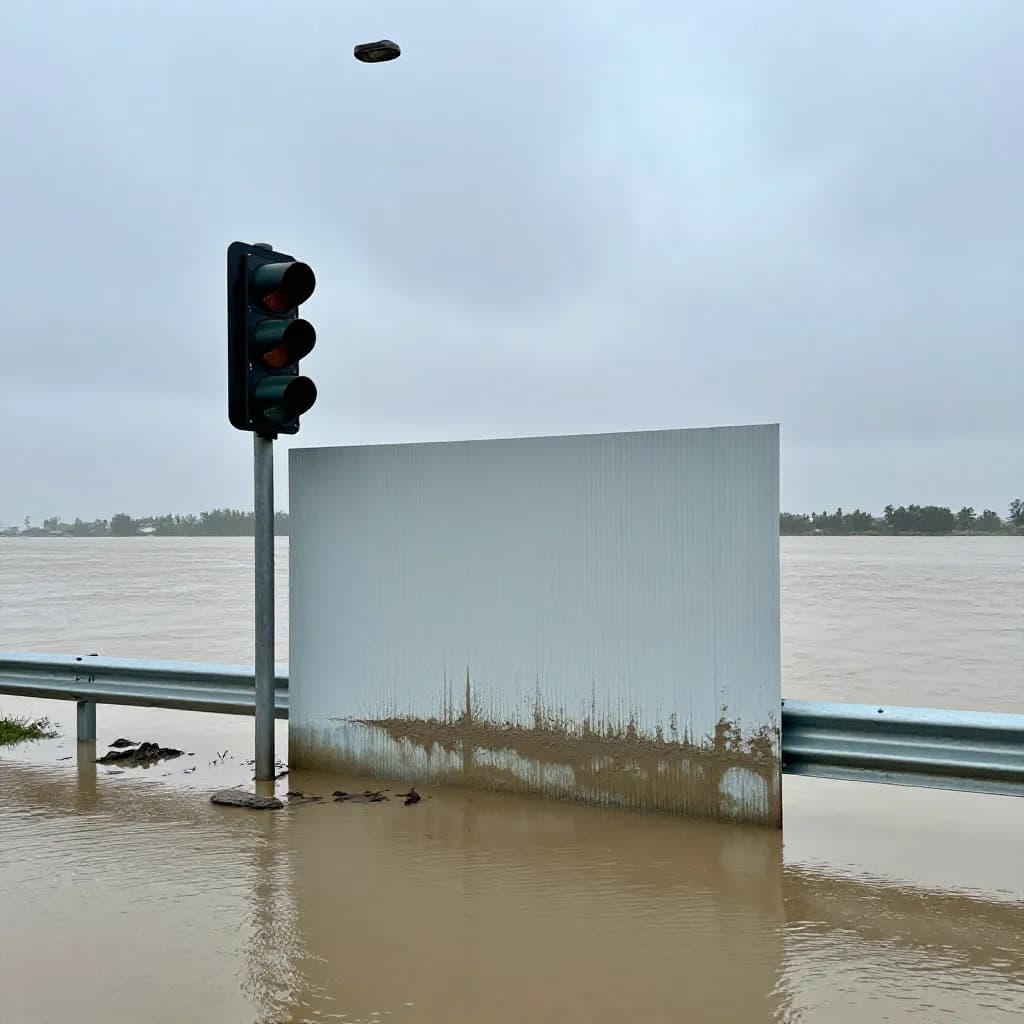
The frequency and severity of flooding events are increasing globally due to climate change, urbanization, and land-use changes. The Federal Emergency Management Agency (FEMA) estimates that flooding affects 13 million properties in the United States alone, and flood damage costs tens of billions of dollars annually worldwide. Infrastructure in flood-prone areas — bridges, utility structures, transportation systems, water treatment facilities, and commercial buildings — must be designed for flood resilience, including coating systems that can withstand submersion and recover functionality after flood events.
Ready to Start Your Project?
From one-off customs to 15,000-part production runs — get precise pricing in 24 hours.
On This Page
Flood Exposure and Coating System Challenges
Powder coatings face several specific challenges during flooding: sudden immersion in contaminated water that may contain chemicals exceeding the coating's resistance envelope, mechanical damage from waterborne debris, hydrostatic pressure driving moisture through the coating film, and extended wet conditions that promote osmotic blistering and corrosion at the coating-substrate interface. The post-flood challenge is equally significant: contaminated surfaces, trapped moisture in joints and cavities, and the warm, humid conditions typical of flood-prone regions accelerate corrosion of any areas where the coating has been compromised.
Despite these challenges, properly specified powder coatings provide excellent flood resilience compared to many alternative coating systems. The dense, crosslinked thermoset film structure of powder coatings resists moisture penetration more effectively than many liquid-applied coatings, and the strong adhesion achieved through proper pretreatment maintains the coating-substrate bond even after extended submersion.
Submersion Effects on Powder Coating Systems
The effects of submersion on powder coatings depend on the coating chemistry, film thickness, pretreatment quality, submersion duration, and the chemical composition of the floodwater. Understanding these factors enables both better specification for flood-prone applications and more effective post-flood assessment.
Epoxy powder coatings provide the best submersion resistance among common powder coating chemistries. Their low moisture vapor transmission rate, strong adhesion to steel substrates, and resistance to a broad range of chemicals make them the preferred choice for infrastructure with high flood risk. FBE (fusion-bonded epoxy) coatings at 300-500 microns, originally developed for pipeline immersion service, provide outstanding flood submersion resistance and are increasingly specified for flood-critical infrastructure.
Polyester powder coatings — the standard for architectural applications — have moderate submersion resistance. Short-duration submersion (hours to a few days) in relatively clean floodwater typically causes no significant damage to well-applied polyester coatings with proper pretreatment. Extended submersion (weeks) or exposure to chemically contaminated floodwater can cause moisture absorption, softening, blistering, and adhesion loss, particularly if the pretreatment quality is marginal.
The pretreatment layer is the critical vulnerability during submersion. Floodwater penetrating through coating defects or areas of thin coverage reaches the pretreatment-substrate interface, where it can dissolve or undermine the conversion coating. Once the pretreatment is compromised, adhesion loss propagates rapidly, and corrosion initiates at the exposed substrate. This is why pretreatment quality — not just coating thickness — is the primary determinant of flood submersion performance.
Film thickness provides a direct barrier against moisture penetration during submersion. Thicker coatings take longer for moisture to permeate, providing a longer safe submersion period. For flood-prone infrastructure, specifying minimum film thicknesses 20-40 microns above standard atmospheric requirements provides meaningful additional submersion resistance.
Post-Flood Corrosion Mechanisms
The period immediately following a flood event is the most critical for coating system integrity. Floodwater deposits a layer of contaminated sediment on all submerged surfaces, and this deposit — if not promptly removed — creates an aggressive corrosion environment that can cause more damage than the submersion itself.
Flood sediment deposits typically contain a mixture of clay particles, organic matter, dissolved salts, and chemical contaminants. This deposit retains moisture against the coating surface, creating a sustained wet condition that persists long after the floodwater has receded. The organic matter in the deposit supports microbial activity that produces organic acids and hydrogen sulfide, both of which attack coating systems. Dissolved salts — particularly chlorides from road salt, seawater intrusion, or industrial sources — create concentrated corrosive solutions as the deposit slowly dries.
Trapped moisture in joints, cavities, and behind cladding panels is a persistent post-flood corrosion risk. Floodwater that enters enclosed spaces may take weeks or months to fully evaporate, maintaining wet conditions that drive corrosion at coating defect points. Ventilation and drainage of enclosed spaces should be a priority in post-flood recovery to accelerate drying and reduce the duration of wet exposure.
Galvanic corrosion between dissimilar metals is accelerated by flood contamination. The dissolved salts in flood deposits create an effective electrolyte that drives galvanic cells between aluminum and steel, copper and steel, or stainless steel and carbon steel connections. Powder coatings that insulate dissimilar metal contacts provide critical galvanic corrosion protection, but this protection is compromised if the coating is damaged at the contact point during flooding.
Microbiologically influenced corrosion (MIC) is a significant post-flood concern, particularly in warm climates. Flood sediment introduces diverse microbial populations to coating surfaces, including sulfate-reducing bacteria that produce corrosive hydrogen sulfide. MIC can cause localized pitting corrosion rates of 1-2 mm/year on unprotected steel — sufficient to perforate structural members within a few years if not addressed.
Post-Flood Assessment and Recovery Protocols
Systematic post-flood assessment of powder-coated infrastructure enables prioritized recovery actions that minimize long-term damage and optimize the use of limited repair resources. The assessment should begin as soon as floodwater recedes and safe access is restored.
Immediate actions (within 24-48 hours of flood recession) focus on removing flood deposits and initiating drying. All submerged powder-coated surfaces should be washed with clean fresh water to remove sediment, salt, and chemical contaminants before they dry and bond to the coating surface. High-volume, low-pressure water washing is preferred — high-pressure washing can drive contaminants into coating defects and damage the coating surface. Enclosed spaces should be opened and ventilated to begin drying.
Detailed coating assessment (within 1-2 weeks) involves systematic inspection of all submerged surfaces for flood-related damage: blistering (indicating moisture penetration to the substrate), adhesion loss (tested by cross-cut or pull-off methods), softening (assessed by pencil hardness testing), discoloration or staining from chemical exposure, and mechanical damage from debris impact. The assessment should document the flood level, estimated submersion duration, and any known chemical contamination of the floodwater.
Repair prioritization follows a risk-based approach. Structural steel members where coating damage exposes the substrate to corrosion that could compromise structural capacity receive highest priority. Infrastructure components that will be re-submerged in future floods receive second priority, as unrepaired damage will be compounded by subsequent events. Cosmetic damage on non-structural components receives lowest priority.
For infrastructure with repeated flood exposure, establishing a pre-flood baseline of coating condition — through documented inspections and coating thickness measurements — enables accurate assessment of flood-specific damage versus pre-existing deterioration. This baseline data is also valuable for insurance claims and for evaluating the effectiveness of flood resilience measures over time.
Flood-Resilient Coating Specification
Specifying powder coatings for flood-prone infrastructure requires augmenting standard atmospheric corrosion protection specifications with flood-specific performance requirements. The goal is a coating system that provides normal atmospheric protection during dry periods and maintains its protective function during and after flood events.
For steel infrastructure in flood zones, duplex coating systems provide the best flood resilience. Hot-dip galvanizing (minimum 85 microns per ISO 1461) provides cathodic protection at any point where the powder coating is damaged during flooding, while the powder coating protects the galvanizing from atmospheric corrosion between flood events. This redundant protection strategy ensures that neither flood damage to the coating nor atmospheric degradation of the galvanizing alone can cause structural corrosion.
Epoxy primer coats (60-80 microns) beneath polyester or polyurethane topcoats provide enhanced moisture barrier properties for flood-prone applications. The epoxy layer's low permeability and strong adhesion resist moisture penetration during submersion, while the topcoat provides UV resistance and aesthetic appearance during normal atmospheric service. Total system thicknesses of 200-300 microns are recommended for flood zone steel infrastructure.
For aluminum infrastructure in flood zones, enhanced pretreatment is the primary flood resilience measure. Qualicoat Class 2 pretreatment with its higher conversion coating weight and more stringent adhesion testing provides significantly better submersion resistance than Class 1 pretreatment. Film thickness should be specified at minimum 80 microns to provide additional moisture barrier capacity.
Edge and fastener protection is critical for flood resilience. Edges, cut ends, and fastener holes are the most vulnerable points for moisture penetration during submersion. Specifying minimum edge radii of 2 mm, using edge-building powder formulations, and applying sealant to cut ends and fastener penetrations significantly improves flood submersion performance.
Drainage design should ensure that floodwater can drain completely from all enclosed spaces, joints, and cavities after the flood recedes. Trapped water that cannot drain creates sustained wet conditions that cause far more corrosion damage than the flood submersion itself. Drainage holes at low points of enclosed sections, sloped surfaces that direct water to drainage points, and ventilation openings that promote drying are essential design features for flood-resilient infrastructure.
Infrastructure Resilience and Climate Adaptation
As flood frequency and severity increase due to climate change, the concept of infrastructure resilience — the ability to withstand, recover from, and adapt to flood events — is becoming central to infrastructure design and coating specification in flood-prone regions.
Resilient coating design accepts that flooding will occur and focuses on minimizing damage and enabling rapid recovery rather than attempting to prevent all flood-related degradation. This approach recognizes that the cost of specifying coating systems for zero flood damage may be prohibitive, while the cost of rapid post-flood repair of a well-designed system is manageable.
Design for inspectability ensures that all coated surfaces can be accessed for post-flood assessment without destructive investigation. Removable access panels, inspection ports in enclosed sections, and clear documentation of coating system details (including original specification, application records, and maintenance history) enable efficient post-flood assessment and repair planning.
Design for repairability ensures that damaged coating areas can be effectively repaired in the field without removing the infrastructure from service. This includes specifying coating systems that are compatible with field-applied liquid repair materials, designing joints and connections that can be disassembled for coating repair, and maintaining inventories of color-matched repair materials.
Adaptive management — adjusting coating maintenance and specification practices based on observed flood performance — is an emerging approach to flood zone infrastructure management. Each flood event provides performance data that can inform future specification decisions: which coating systems performed well, which failed, and what failure modes were observed. Documenting and analyzing this data across multiple flood events enables continuous improvement of flood-resilient coating practices.
Nature-based flood management solutions — such as wetland restoration, permeable surfaces, and green infrastructure — can reduce the frequency and severity of flooding, complementing the engineering resilience provided by robust coating systems. The integration of nature-based solutions with engineered infrastructure protection represents the most comprehensive approach to flood zone resilience.
Case Studies in Flood Zone Coating Performance
Real-world flood events provide invaluable performance data for powder coatings in submersion conditions. These case studies illustrate both successful specifications and lessons learned from coating failures during major flood events.
Riverine flooding in central Europe (2013 and 2021) provided extensive data on powder coating performance during extended submersion. Bridge railings and structural steel with duplex galvanizing-plus-polyester systems showed minimal damage after 1-2 weeks of submersion, with the galvanizing providing effective cathodic protection at minor coating damage points. In contrast, single-coat polyester systems on steel showed significant blistering and adhesion loss after the same submersion period, particularly where pretreatment quality was marginal.
Coastal storm surge flooding in the Gulf Coast United States demonstrated the additional challenge of saltwater submersion. Powder-coated aluminum building components with Qualicoat Seaside-equivalent pretreatment maintained adhesion and appearance after 24-48 hours of saltwater submersion, while components with standard inland pretreatment showed filiform corrosion initiation within weeks of the flood event. This performance difference underscores the importance of coastal-grade pretreatment for all flood zone infrastructure, not just coastal buildings.
Flash flooding in urban environments highlighted the mechanical damage component of flood exposure. Waterborne debris — including vehicles, dumpsters, and construction materials — caused severe impact damage to powder-coated facades at ground level. Buildings with polyurethane powder coatings showed less coating damage at impact sites than those with standard polyester, and the polyurethane coatings maintained better adhesion around impact craters, reducing post-flood corrosion at damage points.
These case studies consistently demonstrate three key findings: pretreatment quality is the primary determinant of submersion performance, duplex systems provide the most reliable flood resilience for steel, and prompt post-flood cleaning and repair dramatically reduce long-term damage. Buildings that received thorough washing within 48 hours of flood recession showed 60-80% less corrosion damage at 12-month follow-up compared to buildings where cleaning was delayed by more than one week.
Frequently Asked Questions
Can powder coating survive flooding?
Yes. Epoxy powder coatings provide excellent submersion resistance, and well-applied polyester coatings withstand short-duration flooding (hours to days) without significant damage. Duplex systems (galvanizing plus powder coating) provide the best flood resilience for steel. Pretreatment quality is the primary determinant of submersion performance.
What should be done to powder-coated surfaces after a flood?
Wash all submerged surfaces with clean fresh water within 24-48 hours to remove sediment, salt, and chemical contaminants. Open and ventilate enclosed spaces to promote drying. Conduct detailed coating assessment within 1-2 weeks, testing for blistering, adhesion loss, and softening. Prioritize repair of structural and corrosion-critical damage.
Why is post-flood corrosion worse than the flood itself?
Flood deposits contain salts, organic matter, and chemicals that retain moisture against coating surfaces and create concentrated corrosive conditions. Trapped moisture in joints and cavities persists for weeks. Microbial activity in flood sediment produces corrosive acids and hydrogen sulfide. Prompt cleaning and drying are essential to prevent post-flood corrosion damage.
What coating system is most flood-resilient for steel infrastructure?
Duplex systems combining hot-dip galvanizing (85+ microns) with epoxy primer (60-80 microns) and polyester or polyurethane topcoat, totaling 200-300 microns. The galvanizing provides cathodic protection at flood-damaged points, while the multi-layer coating system resists moisture penetration during submersion.
How does pretreatment affect flood performance of powder coatings?
Pretreatment is the critical vulnerability during submersion. Floodwater penetrating through coating defects can dissolve or undermine the conversion coating, causing rapid adhesion loss. Qualicoat Class 2 pretreatment with higher conversion coating weight provides significantly better submersion resistance than Class 1. Coastal-grade pretreatment is recommended for all flood zone applications.
Ready to Start Your Project?
From one-off customs to 15,000-part production runs — get precise pricing in 24 hours.