The electric vehicle revolution is creating entirely new categories of powder coating applications that did not exist in the internal combustion engine era. Battery enclosures, battery module housings, power electronics enclosures, electric motor housings, charging station cabinets, and high-voltage cable management systems all require specialized coatings that address the unique challenges of electric powertrain technology — high-voltage electrical isolation, thermal management, flame retardancy, and lightweight construction.
Automotive
Powder Coating EV Battery Enclosures: Thermal Management, Dielectric Properties, and Flame Retardancy
Sundial Powder Coating·April 22, 2026·12 min
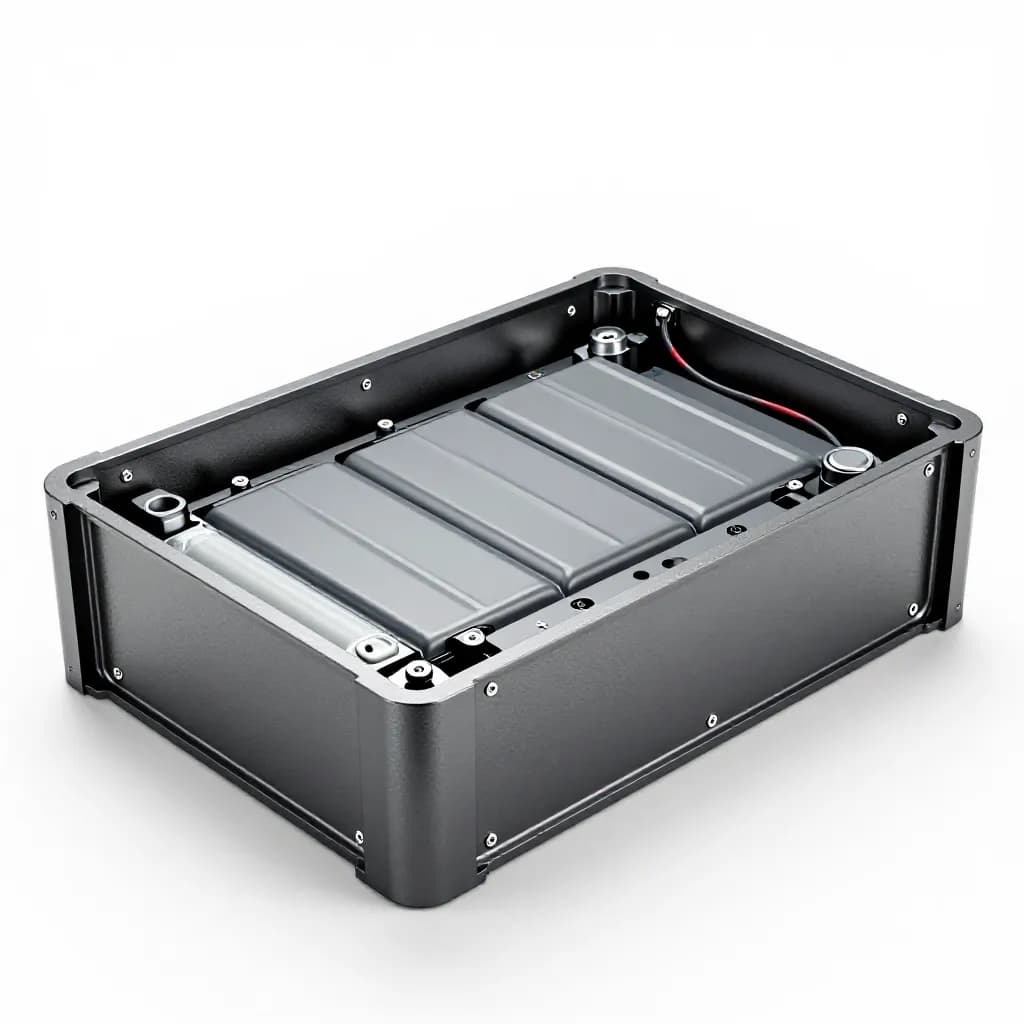
The EV battery enclosure is the most critical and technically demanding of these new coating applications. The battery pack — typically the single most expensive component of an electric vehicle, representing 30-40% of the vehicle's total cost — must be protected by an enclosure that provides structural protection, thermal management, electrical isolation, fire containment, and corrosion resistance for the vehicle's 10-15 year service life. The coating on this enclosure contributes to several of these functions, making it a safety-critical specification rather than a purely aesthetic or corrosion-protection decision.
Ready to Start Your Project?
From one-off customs to 15,000-part production runs — get precise pricing in 24 hours.
On This Page
Electric Vehicle Coating: A New Paradigm for Automotive Finishing
The scale of the EV battery enclosure coating market is growing rapidly. Global EV sales exceeded 14 million units in 2023 and are projected to reach 40+ million by 2030. Each vehicle requires a battery enclosure with 2-5 square meters of coated surface area, creating a massive and growing demand for specialized powder coatings that meet the automotive industry's exacting quality, performance, and production volume requirements.
Battery Enclosure Thermal Management and Coating Properties
EV battery packs generate significant heat during charging and discharging — a typical 75 kWh battery pack can generate 5-15 kW of waste heat during fast charging or aggressive driving. This heat must be managed to maintain battery cell temperatures within the optimal operating range of 20-40°C, as temperatures above 45°C accelerate battery degradation and temperatures above 60°C can trigger thermal runaway. The coating on the battery enclosure affects thermal management through its thermal conductivity, emissivity, and solar reflectance properties.
Thermal conductivity of the coating determines how effectively heat transfers through the enclosure wall. Standard polyester powder coatings have thermal conductivity of 0.2-0.3 W/m·K, which adds measurable thermal resistance to the enclosure wall. For battery enclosures with active liquid cooling (the dominant thermal management approach), this thermal resistance is a minor factor because the cooling system removes heat directly from the battery modules rather than through the enclosure walls. However, for air-cooled battery packs and passive thermal management designs, minimizing coating thermal resistance by using thin film builds (40-60 microns) and thermally conductive powder formulations (0.5-1.0 W/m·K using ceramic fillers) can improve thermal performance.
Thermal emissivity of the coating affects radiative heat transfer from the enclosure surface. Powder-coated surfaces have high emissivity (0.85-0.95), which promotes radiative cooling from the enclosure exterior. This is beneficial for battery thermal management, as the enclosure surface radiates heat to the surrounding environment, supplementing the active cooling system. The emissivity benefit is particularly significant for the bottom surface of the battery enclosure, which faces the road surface and can radiate heat effectively in this configuration.
Solar reflectance of the enclosure coating affects heat gain when the vehicle is parked in direct sunlight. Dark-colored enclosures absorb more solar radiation, increasing the battery pack temperature during parking and requiring the thermal management system to work harder to maintain optimal temperatures. Light-colored or solar-reflective coatings on the enclosure exterior can reduce solar heat gain by 30-50%, extending battery range and reducing thermal management energy consumption. However, the battery enclosure is typically mounted beneath the vehicle floor where direct solar exposure is limited, reducing the practical impact of solar reflectance for most vehicle architectures.
Dielectric Properties and Electrical Isolation
EV battery packs operate at voltages of 400-800V DC, creating significant electrical safety requirements for the enclosure and its coating. The coating on the battery enclosure interior surfaces must provide electrical isolation between the high-voltage battery components and the enclosure structure, which is electrically connected to the vehicle chassis and body. Any breakdown of this electrical isolation could create a shock hazard for vehicle occupants or emergency responders, or cause a short circuit that could trigger thermal runaway.
The dielectric strength of standard polyester powder coatings is approximately 15-25 kV/mm, meaning a 100-micron coating can withstand 1,500-2,500 volts before electrical breakdown. For 400V battery systems, this provides a safety margin of approximately 4-6x, which is generally adequate for the coating's role as a supplementary insulation layer (the primary electrical isolation is provided by the battery module housings and high-voltage connectors). For 800V systems, the safety margin is reduced to 2-3x, and thicker coatings (150-200 microns) or higher-dielectric-strength formulations may be specified to maintain adequate isolation.
Dielectric powder coatings specifically formulated for electrical isolation applications achieve dielectric strengths of 30-50 kV/mm through the use of high-purity resins, specialized fillers (mica, glass, ceramic), and controlled formulation to minimize voids and inclusions that could serve as electrical breakdown initiation points. These formulations are used in high-voltage electrical equipment and are increasingly specified for EV battery enclosure interiors where maximum electrical isolation is required.
Moisture resistance is critical for maintaining dielectric performance over the vehicle's service life. Water absorption into the coating film reduces dielectric strength and can create conductive pathways that compromise electrical isolation. Epoxy powder coatings provide the best moisture barrier performance among standard powder chemistries, with water absorption rates below 0.5% after 1,000 hours of immersion. For battery enclosures that may be exposed to water immersion (road flooding, car wash, rain), epoxy-based dielectric coatings provide the most reliable long-term electrical isolation.
Flame Retardancy and Thermal Runaway Protection
Battery thermal runaway — an uncontrolled exothermic reaction within a lithium-ion battery cell that can reach temperatures of 800-1,000°C — is the most serious safety concern for EV battery systems. While thermal runaway prevention is primarily addressed through battery management system (BMS) design, cell chemistry, and pack architecture, the battery enclosure coating plays a supporting role in fire containment and occupant protection.
Flame-retardant powder coatings for EV battery enclosures incorporate halogen-free flame retardant additives — typically aluminum trihydrate (ATH), magnesium hydroxide, or ammonium polyphosphate — that suppress combustion through endothermic decomposition, dilution of flammable gases, and char formation. These formulations are tested per UL 94 (Standard for Tests for Flammability of Plastic Materials) and must achieve V-0 rating (self-extinguishing within 10 seconds, no flaming drips) at the specified film thickness.
Intumescent powder coatings represent an advanced fire protection technology for battery enclosures. When exposed to temperatures above 200-300°C, intumescent coatings expand to 10-50 times their original thickness, forming a carbonaceous foam that provides thermal insulation between the fire source and the enclosure structure. This expansion delays heat transfer through the enclosure wall, providing additional time for vehicle occupants to evacuate and for emergency responders to arrive. Intumescent powder coatings can provide 15-30 minutes of fire protection at temperatures up to 1,000°C, depending on the formulation and film thickness.
The automotive industry's fire safety requirements for EV battery enclosures are defined by UN ECE Regulation 100 (Safety of Electric Power Trains) and regional standards including FMVSS 305 (US), GB 38031 (China), and the Euro NCAP battery safety assessment. These regulations require that the battery enclosure contain a thermal runaway event for a specified period (typically 5 minutes per UN R100.03) to allow occupant evacuation. The enclosure coating's flame retardancy and thermal insulation properties contribute to meeting this containment requirement.
Lightweight Construction and Coating Weight Optimization
Weight reduction is a critical design objective for EV battery enclosures because every kilogram of enclosure weight reduces the vehicle's range. Battery enclosures are increasingly fabricated from aluminum alloys (6000 series for extrusions, 5000 series for sheet) and advanced high-strength steel (AHSS) to minimize weight while maintaining structural performance. The coating specification must support this lightweight design philosophy by minimizing coating weight while maintaining the required protective and functional performance.
A standard polyester powder coating at 80 microns on an aluminum battery enclosure adds approximately 100-120 g/m² of coating weight. For a typical enclosure with 3-5 m² of coated surface area, this represents 300-600 g of total coating weight. While this is a small fraction of the total enclosure weight (typically 50-100 kg), the automotive industry's relentless focus on weight reduction drives specification of minimum practical film thicknesses — 40-60 microns where corrosion and functional requirements allow.
Thin-film powder coating technology enables film thicknesses of 25-40 microns while maintaining acceptable appearance and corrosion protection. These formulations use finer particle size distributions (D50 of 20-30 microns versus 35-45 microns for standard powders) and optimized flow and leveling characteristics to achieve smooth, pinhole-free films at reduced thickness. Thin-film powders can reduce coating weight by 40-60% compared to standard film builds, contributing to the overall weight reduction strategy for the battery enclosure.
Multi-material battery enclosures that combine aluminum, steel, and composite materials present coating challenges related to differential thermal expansion and galvanic corrosion at material interfaces. The coating system must accommodate the different thermal expansion coefficients of these materials without cracking or delaminating during the temperature cycling that battery enclosures experience in service (-40°C to +60°C). Flexible powder coating formulations with elongation values of 10-20% provide the mechanical compliance needed to bridge material interfaces without coating failure.
EV Charging Station Infrastructure Coating
EV charging stations — Level 2 AC chargers, DC fast chargers, and ultra-fast charging stations — represent a rapidly growing infrastructure coating market. The global charging station network is expanding from approximately 2.7 million public chargers in 2023 to a projected 15+ million by 2030, with each station requiring a powder-coated enclosure that provides environmental protection, electrical safety, and brand identity in outdoor public locations.
Charging station enclosures face the full spectrum of outdoor environmental challenges: UV radiation, rain, snow, temperature cycling (-40°C to +60°C), road salt, vehicle impact, and vandalism. The coating specification must address all of these challenges while also meeting the electrical safety requirements of high-voltage charging equipment (up to 1,000V DC for ultra-fast chargers). Super-durable polyester powder coating at 80-100 microns over zinc phosphate pretreatment (for steel enclosures) or chrome-free conversion coating (for aluminum enclosures) provides the baseline environmental protection.
Brand identity is a significant coating consideration for charging station networks. Major charging networks — Tesla Supercharger, ChargePoint, EVgo, Electrify America, Ionity — use distinctive colors and finishes to establish brand recognition and help EV drivers locate charging stations. Powder coating's precise color matching capability ensures consistent brand color reproduction across thousands of charging stations deployed over multiple years and manufactured by different enclosure suppliers.
Anti-vandal and anti-graffiti coating properties are important for public charging stations, which are often located in unattended parking areas where vandalism risk is elevated. Hard powder coatings (3H+ pencil hardness) resist scratching, while anti-graffiti formulations prevent spray paint adhesion. Impact-resistant formulations withstand the vehicle bumper contacts that inevitably occur at charging stations. The combination of these properties ensures that charging stations maintain their professional appearance and brand identity throughout their 10-15 year service life.
Thermal management of charging station enclosures is critical for DC fast chargers and ultra-fast chargers that generate significant waste heat from power electronics. The coating specification considerations mirror those of inverter enclosures in solar installations — light colors or solar reflective formulations reduce solar heat gain, while the high emissivity of powder-coated surfaces promotes radiative cooling. Active cooling systems (fans, liquid cooling) handle the majority of heat dissipation, but the coating's thermal properties contribute to the overall thermal management strategy.
Electric Motor and Power Electronics Enclosure Coating
Electric drive motors, inverters, DC-DC converters, and onboard chargers are housed in aluminum or steel enclosures that require powder coating for corrosion protection, thermal management, and electrical safety. These components operate at high temperatures (motor housings can reach 120-150°C during sustained high-power operation) and are exposed to road spray, salt, and mechanical vibration throughout the vehicle's service life.
Electric motor housings are typically die-cast or machined from aluminum alloy and powder coated with heat-resistant polyester or epoxy-polyester hybrid at 50-80 microns. The coating must withstand continuous operating temperatures of 120-150°C without degradation, discoloration, or adhesion loss. Standard polyester powders are rated for continuous service at 150°C, which is adequate for most EV motor applications. For high-performance motors that may exceed 150°C during sustained operation, silicone-modified polyester formulations rated to 200°C provide additional thermal margin.
Power electronics enclosures (inverters, converters, chargers) require coatings with specific EMI shielding considerations. These components generate high-frequency electromagnetic emissions that must be contained within the enclosure to comply with CISPR 25 (Vehicles, Boats, and Internal Combustion Engines — Radio Disturbance Characteristics) and other automotive EMC standards. The coating must be excluded from EMI gasket contact surfaces and grounding points to maintain the enclosure's shielding effectiveness, identical to the approach used for data center equipment enclosures.
The underbody location of many EV powertrain components exposes them to road spray, gravel impact, and salt exposure that is more severe than the engine bay environment of conventional vehicles. Stone chip resistance testing per SAE J400 (multi-impact gravelometer test) validates the coating's ability to withstand gravel impact without chipping. A minimum rating of 7 on the SAE J400 scale (less than 1.5% area affected) is typical for underbody EV component coatings. Chip-resistant primer systems with flexible epoxy or polyurethane primers beneath the topcoat provide enhanced stone chip protection for the most exposed underbody locations.
Automotive OEM Quality and Production Requirements
EV battery enclosure and component coating must meet the rigorous quality standards of automotive OEM manufacturing. Automotive coating specifications are among the most demanding in any industry, with requirements for appearance, durability, and consistency that reflect the high visibility and safety criticality of automotive coatings.
Automotive OEM coating specifications typically reference industry standards including SAE J2527 (accelerated weathering using xenon arc), SAE J400 (stone chip resistance), SAE J2334 (cyclic corrosion testing), and manufacturer-specific test protocols. Cyclic corrosion testing per SAE J2334 — which alternates salt spray, humidity, and drying cycles to simulate real-world automotive corrosion — is increasingly preferred over continuous salt spray testing (ASTM B117) because it better correlates with field corrosion performance.
Production volume requirements for EV components are substantial. A single vehicle platform may require 500,000-1,000,000 battery enclosures over its production life, all coated to identical specifications with zero defects. This volume demands automated coating lines with statistical process control, in-line quality measurement, and the capacity to maintain consistent quality across multiple shifts and production facilities. Powder coating's inherent process consistency — the same powder formulation applied at the same parameters produces the same result — supports the repeatability requirements of automotive mass production.
Supply chain qualification for automotive OEM coating is a rigorous process that typically requires 12-18 months from initial contact to production approval. The qualification process includes material testing (powder and pretreatment chemistry), process validation (application parameters, cure conditions), part-level testing (full specification compliance on production-representative parts), and production trial runs. Once qualified, the coating supplier and process are locked — any change to powder formulation, pretreatment chemistry, or process parameters requires re-qualification, ensuring that the coating performance validated during qualification is maintained throughout production.
Frequently Asked Questions
What dielectric strength does powder coating provide for EV battery enclosures?
Standard polyester powder coatings provide 15-25 kV/mm dielectric strength, meaning 100 microns withstands 1,500-2,500V. For 800V battery systems, thicker coatings (150-200 microns) or specialized dielectric formulations (30-50 kV/mm) may be needed. Epoxy-based coatings provide the best moisture resistance for maintaining long-term dielectric performance.
How does powder coating contribute to EV battery fire safety?
Flame-retardant powder coatings achieve UL 94 V-0 rating using halogen-free additives. Intumescent formulations expand 10-50x when heated, providing 15-30 minutes of thermal insulation at up to 1,000°C. This supports the UN R100.03 requirement for 5-minute thermal runaway containment to allow occupant evacuation.
How much weight does powder coating add to an EV battery enclosure?
Standard coating at 80 microns adds 100-120 g/m², or 300-600g for a typical enclosure. Thin-film powder technology (25-40 microns) reduces this by 40-60%. While small relative to total enclosure weight (50-100 kg), the automotive industry's weight reduction focus drives specification of minimum practical film thicknesses.
What coating is used for EV charging station enclosures?
Super-durable polyester at 80-100 microns over zinc phosphate (steel) or chrome-free conversion coating (aluminum) provides outdoor environmental protection. Anti-vandal properties (3H+ hardness, anti-graffiti) protect public installations. Brand-specific colors ensure network recognition across thousands of stations.
Can powder coating withstand the operating temperatures of EV motors?
Standard polyester powders handle continuous temperatures up to 150°C, adequate for most EV motors. Silicone-modified polyester extends this to 200°C for high-performance applications. The coating must also withstand thermal cycling from -40°C to +150°C without cracking or adhesion loss over the vehicle's 10-15 year service life.
Ready to Start Your Project?
From one-off customs to 15,000-part production runs — get precise pricing in 24 hours.