Powder coating is inherently one of the most environmentally favorable industrial finishing technologies, and this environmental advantage is a significant factor in its continued growth relative to liquid painting. Because powder coatings contain no solvents, they produce zero volatile organic compound (VOC) emissions during application and curing — eliminating the single largest environmental concern associated with liquid painting operations. The near-complete material utilization (95-98% with reclaim) minimizes waste generation, and the absence of hazardous solvents simplifies waste classification and disposal.
Technical
Powder Coating Environmental Compliance: EPA Regulations, Air Permits, Waste Management, and Best Practices
Sundial Powder Coating·April 22, 2026·14 min
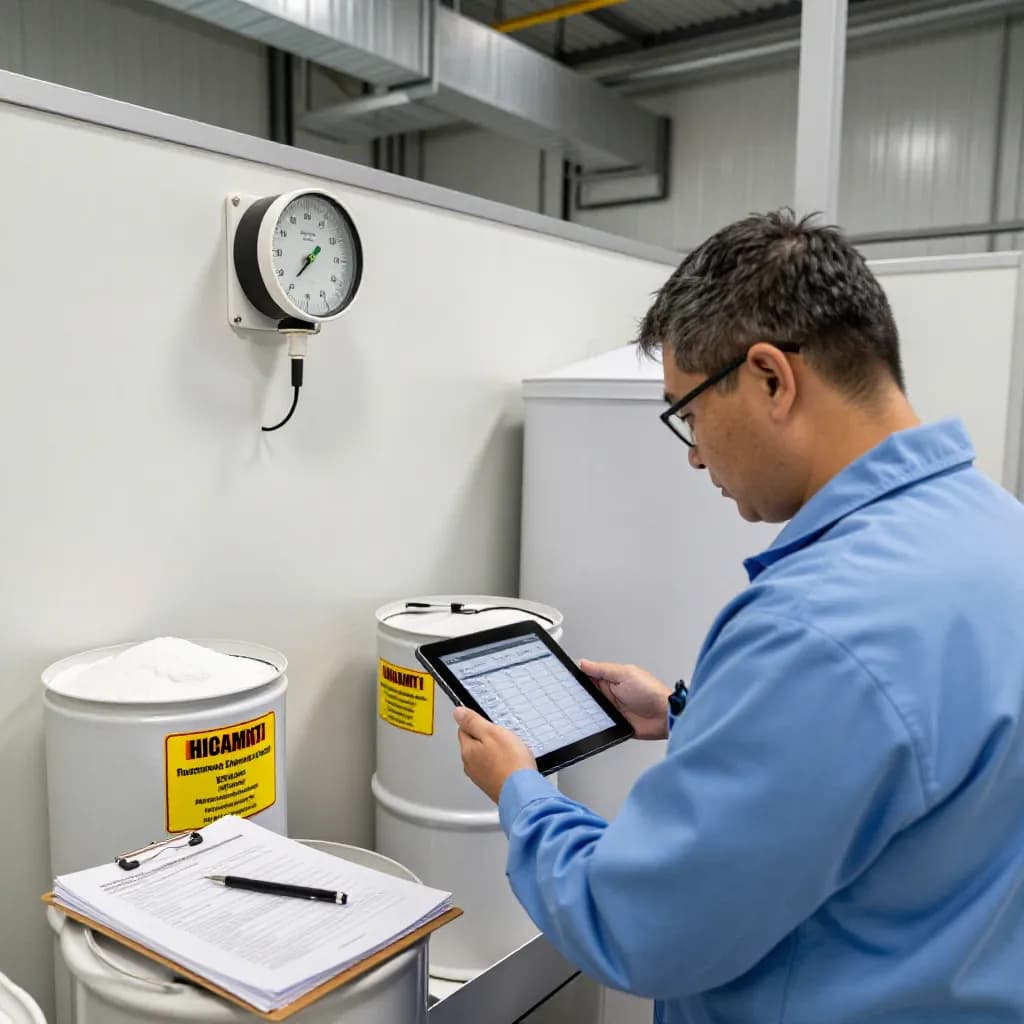
However, powder coating operations are not exempt from environmental regulation. The pretreatment process generates wastewater containing chemicals, metals, and suspended solids that must be treated before discharge. The curing oven emits small quantities of volatile organic compounds from the powder itself — decomposition products, flow agents, and unreacted monomers — that may require air emission controls depending on the production volume and local regulations. Waste powder, spent pretreatment chemicals, and wastewater treatment sludge must be properly characterized and disposed of. And the energy consumption of ovens and pretreatment systems contributes to the facility's carbon footprint.
Ready to Start Your Project?
From one-off customs to 15,000-part production runs — get precise pricing in 24 hours.
On This Page
Environmental Advantages of Powder Coating: The Regulatory Context
Understanding the applicable environmental regulations, maintaining compliance with permit requirements, and implementing best management practices are essential responsibilities for every powder coating operation. Non-compliance can result in significant fines, operational shutdowns, and reputational damage. This guide covers the major regulatory frameworks applicable to powder coating operations in the United States, with principles that apply broadly to operations in other jurisdictions as well.
Air Emissions: VOCs, HAPs, and Permit Requirements
Although powder coatings themselves contain no solvents, powder coating operations can generate air emissions from several sources: volatile organic compounds released from the powder during curing (typically 1-3% of the powder weight, consisting of flow agents, wax additives, and crosslinking byproducts); combustion byproducts from gas-fired ovens (NOx, CO, CO₂, and particulate matter); particulate emissions from powder handling and application (captured by booth filters but potentially released through exhaust stacks); and VOC emissions from any liquid cleaning solvents used in the operation.
Under the U.S. Clean Air Act, facilities that emit regulated pollutants above certain thresholds must obtain air permits. The thresholds depend on the facility's location (attainment vs non-attainment areas for specific pollutants) and the type of permit. Major source permits (Title V) are required for facilities with potential to emit above 100 tons per year of any criteria pollutant or 10 tons per year of any single hazardous air pollutant (HAP). Minor source permits (state-level) apply to facilities below these thresholds but above state-specific minor source thresholds.
Most standalone powder coating operations fall below the major source thresholds because of the inherently low emissions from the process. However, facilities that also operate liquid painting lines, large gas-fired ovens, or other emission sources may approach or exceed the thresholds. A thorough emissions inventory — calculating the potential to emit from all sources at maximum capacity — is the first step in determining permit requirements.
For powder coating ovens, the primary air emission concern is the volatile organic compounds released during curing. These emissions are typically vented through the oven exhaust stack. The emission rate depends on the powder formulation (some chemistries release more volatiles than others), the production throughput, and the cure temperature. Polyurethane powders with caprolactam-blocked crosslinkers release caprolactam vapor during curing, which may be classified as a HAP depending on the jurisdiction. Emission calculations should be based on the powder manufacturer's published volatile content data and the facility's maximum production rate.
Wastewater Management: Pretreatment Discharge Requirements
Wastewater from pretreatment systems is the most significant environmental compliance challenge for most powder coating operations. The wastewater contains dissolved metals (iron, zinc, manganese, nickel, chromium depending on the pretreatment chemistry), phosphorus (from phosphate conversion coatings), suspended solids, oil and grease (from the cleaning stages), and dissolved chemicals from the pretreatment baths.
Discharge of pretreatment wastewater is regulated under the Clean Water Act through the National Pollutant Discharge Elimination System (NPDES) permit program. Facilities that discharge directly to surface waters (rivers, lakes, streams) must obtain an NPDES permit with specific effluent limits for each regulated pollutant. Facilities that discharge to a publicly owned treatment works (POTW) — the municipal sewer system — must comply with federal pretreatment standards (40 CFR Part 403) and any additional local limits imposed by the POTW.
Typical discharge limits for powder coating pretreatment wastewater include: zinc 1-3 mg/L, iron 1-5 mg/L, phosphorus 1-5 mg/L (increasingly stringent, with some jurisdictions requiring below 1 mg/L), pH 6.0-9.0, oil and grease 15-100 mg/L, and total suspended solids 30-250 mg/L. These limits vary significantly by jurisdiction and discharge destination, so the specific applicable limits must be confirmed with the local regulatory authority or POTW.
Wastewater treatment systems for powder coating pretreatment typically include: pH adjustment (using lime, caustic soda, or sulfuric acid), chemical precipitation of metals (using lime, sodium hydroxide, or ferric chloride), flocculation (using polymer flocculants to aggregate precipitated solids), clarification (settling or dissolved air flotation to separate solids from treated water), and sludge dewatering (filter press or centrifuge to reduce sludge volume for disposal). The treated water is either discharged to the sewer or recycled back to the pretreatment system for reuse.
Solid and Hazardous Waste: RCRA Classification and Disposal
Powder coating operations generate several waste streams that must be properly characterized, stored, and disposed of under the Resource Conservation and Recovery Act (RCRA) and applicable state regulations. The key waste streams include: waste powder (overspray that cannot be reclaimed, off-spec powder, color change waste); wastewater treatment sludge; spent pretreatment chemicals; used masking materials; and general facility waste (filters, cleaning rags, empty containers).
Waste powder from standard polyester, hybrid, and epoxy formulations is generally classified as non-hazardous solid waste under RCRA because it does not exhibit any of the four hazardous waste characteristics (ignitability, corrosivity, reactivity, or toxicity) and is not listed as a hazardous waste. However, some specialty powder formulations containing heavy metal pigments (lead chromate, cadmium, hexavalent chromium) may fail the Toxicity Characteristic Leaching Procedure (TCLP) test and be classified as hazardous waste. A TCLP analysis of each waste powder stream should be performed to confirm its classification.
Wastewater treatment sludge from zinc phosphate pretreatment systems may contain sufficient zinc to fail the TCLP test (regulatory limit 5.0 mg/L in the TCLP extract), potentially classifying it as hazardous waste (D007). Sludge from iron phosphate and zirconium pretreatment systems is typically non-hazardous. Sludge characterization by TCLP analysis should be performed annually or whenever the pretreatment chemistry changes.
Spent pretreatment chemicals — bath dumps from cleaning, conversion coating, and rinse stages — must be characterized before disposal. Acidic baths (pH below 2.0) are corrosive hazardous waste (D002). Alkaline baths (pH above 12.5) are also corrosive hazardous waste. Baths containing hexavalent chromium (from chrome-based conversion coatings or chrome seals) are toxic hazardous waste. Neutralized and treated bath dumps that do not exhibit hazardous characteristics can be disposed of as non-hazardous industrial waste.
Hazardous waste generators must comply with RCRA generator requirements including: obtaining an EPA identification number, proper waste characterization and labeling, accumulation time limits (90 days for large quantity generators, 180-270 days for small quantity generators), manifesting for off-site transport, and recordkeeping and reporting. The generator category (large, small, or very small quantity) depends on the total amount of hazardous waste generated per calendar month.
Powder Dust and Combustible Dust Safety
Powder coating materials are combustible dusts that can pose fire and explosion hazards if not properly managed. While the risk is lower than with many other industrial dusts (powder coatings have relatively high minimum ignition energies and minimum explosive concentrations), the hazard is real and must be addressed through proper engineering controls, housekeeping, and safety procedures.
The combustible dust hazard arises when fine powder particles become suspended in air at concentrations within the explosive range — typically 20-60 g/m³ for most powder coating materials, which is well above the concentrations normally present in a properly operating spray booth. However, dust accumulations on surfaces can be disturbed and become airborne, potentially reaching explosive concentrations in confined spaces. The primary risk areas are: inside the spray booth (where powder concentrations are highest), inside the reclaim system (cyclones, filters, ductwork), inside the powder storage and handling areas, and any area where powder dust can accumulate on surfaces.
NFPA 652 (Standard on the Fundamentals of Combustible Dust) and NFPA 33 (Standard for Spray Application Using Flammable or Combustible Materials) provide the regulatory framework for managing combustible dust hazards in powder coating operations. Key requirements include: conducting a dust hazard analysis (DHA) to identify and evaluate combustible dust hazards; maintaining housekeeping programs that prevent dust accumulation on surfaces (accumulations exceeding 1/32 inch or 0.8 mm over 5% of the floor area are considered hazardous); using explosion-proof or dust-ignition-proof electrical equipment in classified areas; grounding and bonding all conductive equipment and containers to prevent static discharge; and installing explosion venting or suppression systems on enclosed equipment (cyclones, filters, hoppers) where explosive concentrations may occur.
Spray booth ventilation must maintain air velocities sufficient to prevent powder concentrations from reaching the lower explosive limit (LEL). The booth exhaust system should be designed to maintain powder concentrations below 50% of the LEL at all points within the booth. Interlock systems should shut down the powder delivery if the booth ventilation fails.
Water Conservation and Zero-Liquid-Discharge Systems
Water consumption in powder coating operations is driven primarily by the pretreatment system, which uses water for cleaning, rinsing, and conversion coating stages. A typical multi-stage spray pretreatment system consumes 2-10 liters of water per square meter of treated surface, depending on the number of rinse stages, the rinse water quality requirements, and the water management strategy. For a production line treating 500 m² per day, this translates to 1000-5000 liters per day of water consumption and wastewater generation.
Water conservation strategies include: counter-flow rinsing (fresh water enters the final rinse and overflows sequentially to preceding rinses, reducing consumption by 50-70%); conductivity-controlled rinse water addition (fresh water is added only when the rinse conductivity exceeds the setpoint, rather than flowing continuously); rinse water recycling through deionization or reverse osmosis (treated rinse water is returned to the rinse tanks for reuse); and bath life extension through filtration, oil removal, and chemical maintenance (reducing the frequency of bath dumps that consume fresh water for refilling).
Zero-liquid-discharge (ZLD) systems eliminate all wastewater discharge from the facility by treating and recycling all process water. A ZLD system typically includes: wastewater collection and equalization, chemical treatment (pH adjustment, precipitation, flocculation), clarification, filtration, reverse osmosis or evaporation to produce clean water for reuse, and concentration of the reject stream to a solid or semi-solid waste for disposal. ZLD systems have higher capital and operating costs than conventional treatment-and-discharge systems, but they eliminate discharge permit requirements, reduce water purchase costs, and demonstrate environmental leadership.
The transition from phosphate to zirconium-based pretreatment significantly reduces water consumption and wastewater treatment complexity. Zirconium systems operate at lower concentrations, generate less sludge, and produce wastewater with lower metal and phosphorus content, simplifying treatment and reducing the volume of waste requiring disposal. For operations considering a pretreatment system upgrade, the water and waste reduction benefits of zirconium should be factored into the total cost of ownership analysis.
Energy Management and Carbon Footprint Reduction
Energy consumption — primarily from curing ovens and pretreatment heating — is the largest contributor to the carbon footprint of a powder coating operation. Reducing energy consumption not only lowers operating costs but also supports corporate sustainability goals and may be required by customer sustainability programs or regulatory carbon reduction mandates.
The first step in energy management is measurement. Installing energy meters on major equipment — ovens, pretreatment heaters, air compressors, and booth ventilation fans — provides the data needed to identify the largest energy consumers and track the impact of efficiency improvements. Energy consumption should be normalized to production output (kWh per square meter coated or kWh per part) to enable meaningful comparison across different production volumes.
Oven energy optimization strategies include: improving insulation to reduce wall losses (see oven design article); sealing air leaks at openings, doors, and penetrations; optimizing exhaust rates to the minimum required for safety; installing heat recovery systems on exhaust stacks; reducing oven setpoints to the minimum required for the powder's cure schedule; and using oven temperature setback during non-production periods. Combined, these measures can reduce oven energy consumption by 20-40%.
Pretreatment energy reduction is achieved by: converting from heated phosphate systems (40-60°C) to ambient-temperature zirconium systems; optimizing cleaning bath temperatures to the minimum effective level; insulating pretreatment tanks and piping; and recovering heat from the dry-off oven exhaust to preheat incoming rinse water.
Compressed air is often called the most expensive utility in a manufacturing facility because of the low efficiency of air compression (only 10-15% of the electrical energy input is converted to useful compressed air energy). Reducing compressed air consumption — by fixing leaks, optimizing fluidization and transport air pressures, and using blowers instead of compressed air for low-pressure applications — can reduce the compressed air energy cost by 20-30%. Regular leak audits (using ultrasonic leak detectors) should be performed quarterly.
Renewable energy integration — installing solar panels, purchasing renewable energy certificates, or contracting for renewable electricity supply — can further reduce the carbon footprint of the coating operation. Some powder coating facilities have achieved carbon-neutral or near-carbon-neutral operation through a combination of energy efficiency improvements and renewable energy procurement.
Environmental Management Systems and Reporting
A structured environmental management system (EMS) provides the framework for maintaining compliance, tracking performance, and driving continuous improvement in environmental performance. ISO 14001 is the international standard for environmental management systems, providing a systematic approach to identifying environmental aspects, setting objectives, implementing controls, and reviewing performance.
Key elements of an EMS for a powder coating operation include: an environmental policy statement committing to compliance and continuous improvement; identification of all environmental aspects and impacts (air emissions, wastewater, solid waste, energy consumption, chemical storage); a register of applicable environmental regulations and permit requirements; operational procedures for managing each environmental aspect; monitoring and measurement programs for tracking compliance and performance; training programs for employees with environmental responsibilities; emergency preparedness and response procedures for spills, releases, and equipment failures; and management review of environmental performance at regular intervals.
Environmental reporting requirements vary by jurisdiction but typically include: annual emissions inventories (reporting actual emissions of regulated pollutants); discharge monitoring reports (periodic reporting of wastewater quality to the POTW or regulatory agency); hazardous waste biennial reports (reporting hazardous waste generation and disposal); and Toxic Release Inventory (TRI) reports (for facilities that manufacture, process, or use listed chemicals above threshold quantities). Maintaining accurate records of chemical purchases, waste generation, and disposal is essential for completing these reports accurately and demonstrating compliance during regulatory inspections.
Beyond regulatory compliance, many powder coating operations participate in voluntary environmental programs such as EPA's ENERGY STAR program (for energy efficiency), industry sustainability initiatives, and customer-driven sustainability reporting frameworks (CDP, EcoVadis, or similar). These programs provide benchmarking data, recognition for environmental leadership, and competitive advantage in markets where sustainability performance influences purchasing decisions.
Frequently Asked Questions
Does powder coating produce VOC emissions?
Powder coatings contain no solvents and produce zero VOC emissions during application. However, small quantities of VOCs (typically 1-3% of powder weight) are released during curing from flow agents, wax additives, and crosslinking byproducts. These oven emissions may require air permits depending on production volume and local regulations, but they are dramatically lower than liquid painting emissions.
Is waste powder classified as hazardous waste?
Standard polyester, hybrid, and epoxy waste powders are generally non-hazardous under RCRA. However, specialty formulations containing heavy metal pigments (lead chromate, cadmium) may fail the TCLP toxicity test and be classified as hazardous. A TCLP analysis of each waste powder stream should be performed to confirm classification. Wastewater treatment sludge from zinc phosphate systems may also be hazardous due to zinc content.
What wastewater treatment is needed for powder coating pretreatment?
Typical treatment includes pH adjustment, chemical precipitation of metals, flocculation, clarification, and sludge dewatering. Discharge must meet NPDES permit limits (for direct discharge) or local pretreatment standards (for sewer discharge). Typical limits include zinc 1-3 mg/L, phosphorus 1-5 mg/L, and pH 6.0-9.0. Zero-liquid-discharge systems eliminate all wastewater discharge through treatment and recycling.
Is powder coating dust a combustible dust hazard?
Yes. Powder coating materials are combustible dusts that can pose fire and explosion hazards if suspended in air at concentrations within the explosive range (typically 20-60 g/m³). NFPA 652 and NFPA 33 require dust hazard analysis, housekeeping to prevent accumulation, explosion-proof electrical equipment in classified areas, grounding and bonding, and explosion venting on enclosed equipment.
How can powder coating operations reduce their carbon footprint?
Key strategies include: improving oven insulation and air sealing (20-40% energy reduction), converting to ambient-temperature zirconium pretreatment, optimizing compressed air systems (20-30% savings), reducing oven setpoints to minimum cure requirements, installing heat recovery on exhaust stacks, and integrating renewable energy. Some facilities have achieved near-carbon-neutral operation through combined efficiency and renewable energy measures.
Ready to Start Your Project?
From one-off customs to 15,000-part production runs — get precise pricing in 24 hours.