The electrostatic fluidized bed (EFB) process combines elements of both conventional fluidized bed dipping and electrostatic spray application, creating a unique coating method that offers advantages neither technology provides alone. In an EFB system, powder is fluidized in a tank just as in a conventional fluidized bed, but charging electrodes embedded within or above the bed impart an electrostatic charge to the powder particles as they become airborne. Grounded parts passed through or over the charged powder cloud attract and retain the charged particles without requiring preheating.
Technical
Electrostatic Fluidized Bed Powder Coating: Charged Bed Technology for Thin Film Applications
Sundial Powder Coating·April 23, 2026·13 min
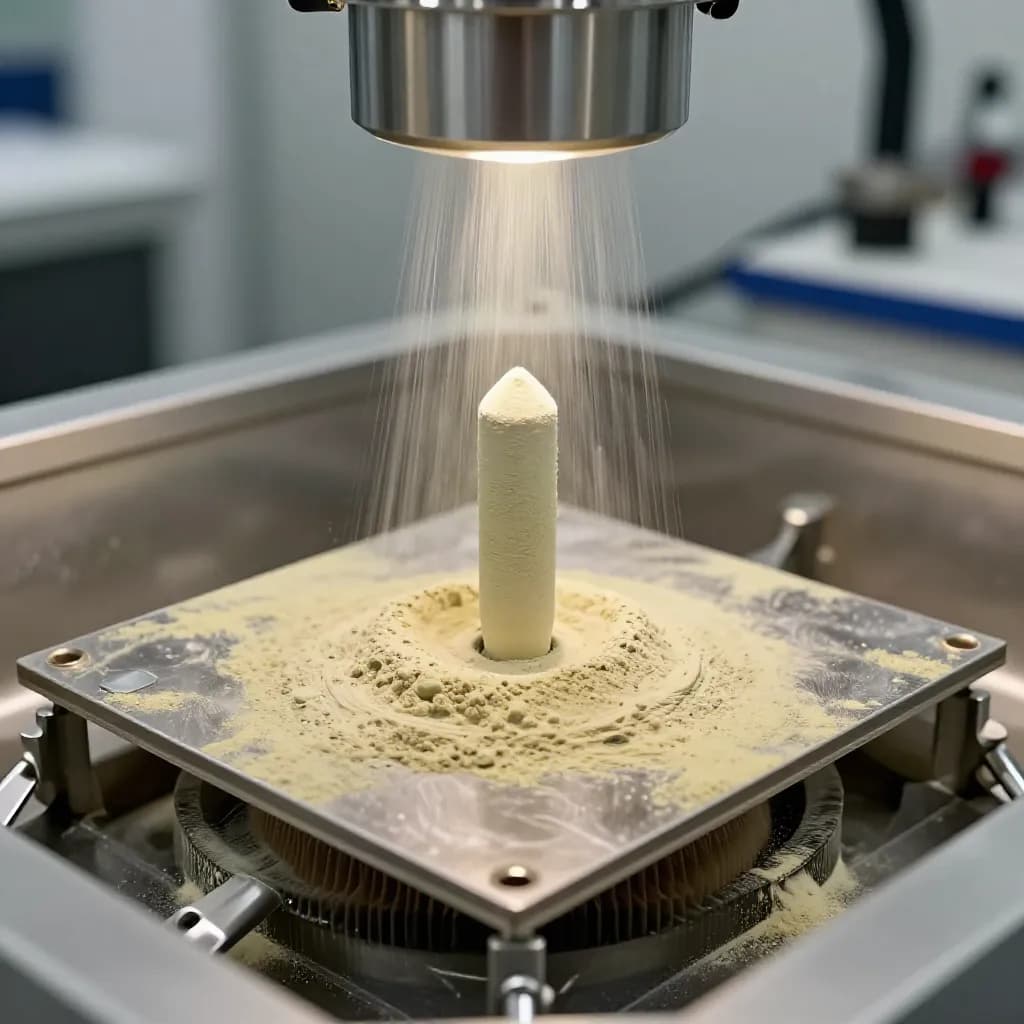
This electrostatic attraction mechanism fundamentally changes the process compared to conventional fluidized bed dipping. Because deposition is driven by electrostatic force rather than thermal fusion, parts do not need to be preheated before coating. This eliminates the energy-intensive preheat step and allows coating of heat-sensitive substrates and assemblies. Film thickness is controlled by the electrostatic field strength, exposure time, and powder cloud density rather than by part temperature and immersion time.
Ready to Start Your Project?
From one-off customs to 15,000-part production runs — get precise pricing in 24 hours.
On This Page
Electrostatic Fluidized Bed: Bridging Spray and Dip Technologies
The EFB process produces film thicknesses in the range of 50–250 microns — thinner than conventional fluidized bed dipping (250–500 microns) but at the upper end of what electrostatic spray can achieve in a single pass. This intermediate thickness range, combined with the ability to coat parts without preheating, makes the EFB process attractive for applications that require moderate film build with high throughput and minimal energy consumption.
How the Electrostatic Fluidized Bed Works
The EFB system consists of a fluidized bed tank equipped with an array of charging electrodes, typically mounted on the porous membrane or on a grid above the powder surface. These electrodes are connected to a high-voltage DC power supply, typically operating at 50–100 kV, which creates a strong electrostatic field within and above the bed. As powder particles are lifted by the fluidizing air, they pass through this field and acquire a negative charge through corona discharge — the same charging mechanism used in electrostatic spray guns.
The charged powder particles rise above the bed surface in a dense cloud, propelled by the combination of fluidizing air and electrostatic repulsion between like-charged particles. Grounded parts positioned above or passed through this charged cloud attract the particles, which deposit on the part surface and are held in place by electrostatic adhesion. The deposition rate depends on the charge density of the cloud, the distance between the part and the bed surface, and the exposure time.
After deposition, the coated parts are transferred to a curing oven where the powder melts, flows, and crosslinks (for thermoset powders) or simply melts and solidifies (for thermoplastics). The cure cycle is identical to that used for electrostatically sprayed powder — typically 10–20 minutes at 180–200°C for standard thermoset formulations. Because the powder is deposited as a dry, uncharged layer (the charge dissipates during curing), the flow and leveling behavior during cure is the same as for spray-applied powder, producing comparable surface finish quality.
Advantages for Wire Goods and Small Parts
The EFB process excels at coating wire goods, mesh products, and small parts that are difficult or inefficient to coat by electrostatic spray. Wire products such as refrigerator shelves, oven racks, shopping carts, and industrial wire baskets present a challenging geometry for spray guns — the narrow wire cross-section and open mesh structure result in very low transfer efficiency, with most of the sprayed powder passing through the mesh and into the reclaim system. The EFB process surrounds the wire product with a dense cloud of charged particles that deposit on all surfaces simultaneously, achieving much higher transfer efficiency on these geometries.
Small parts such as fasteners, clips, brackets, and electrical components benefit from the EFB process for similar reasons. When these parts are bulk-loaded onto a conveyor or fixture and passed through the charged cloud, they receive uniform coating on all exposed surfaces without the need for individual gun targeting. The throughput for small parts can be extremely high — thousands of parts per hour — because the coating process is continuous and does not require individual part positioning relative to spray guns.
The EFB process also provides excellent edge coverage on wire and sheet metal parts. The electrostatic field concentrates on sharp edges and points (the same Faraday cage effect that causes problems in recessed areas), which in the case of wire goods is actually beneficial — it ensures that the wire edges, which are most vulnerable to corrosion, receive the thickest coating. This natural edge-building characteristic reduces the risk of corrosion initiation at cut wire ends and bent edges.
Continuous Coating Lines and Integration
EFB systems are commonly integrated into continuous coating lines where parts move through the charged cloud on a conveyor at a constant speed. The conveyor carries parts over or through the bed at heights of 50–300 mm above the powder surface, with the exposure time determined by the conveyor speed and the length of the bed. Typical conveyor speeds range from 1 to 10 meters per minute, with bed lengths of 1 to 3 meters, providing exposure times of 6 seconds to 3 minutes.
For wire goods and mesh products, the conveyor is typically an overhead monorail or power-and-free system that carries the products horizontally over the bed. The products are suspended from hooks or fixtures that position them at the optimal height above the bed surface. For small parts, vibratory feeders or belt conveyors transport parts through a tunnel-shaped EFB enclosure that surrounds the parts with charged powder from all directions.
Line integration requires careful coordination between the EFB station, the cure oven, and any pretreatment stages. Because EFB-coated parts do not require preheating, the line layout is simpler than for conventional fluidized bed systems — there is no preheat oven between pretreatment and coating. However, the cure oven must be sized for the line speed and part load, and the transition from the EFB station to the oven must be short enough to prevent powder loss from vibration or air currents during transport. Grounding of the conveyor and part fixtures is critical — resistance from the part to earth ground must be below 1 megohm to ensure effective electrostatic deposition.
Process Parameters and Film Thickness Control
Film thickness in the EFB process is controlled by four primary parameters: electrode voltage, fluidizing air velocity, part-to-bed distance, and exposure time. Electrode voltage (typically 50–100 kV) determines the charge density of the powder cloud — higher voltage produces a denser cloud with more aggressive deposition. However, excessive voltage can cause back-ionization on the part surface, just as in electrostatic spray, limiting the maximum achievable film thickness in a single pass.
Fluidizing air velocity controls the height and density of the powder cloud above the bed surface. Higher air velocity lifts more powder higher above the bed, increasing the cloud density at the part location. However, excessive air velocity creates turbulence that disrupts uniform deposition and can blow powder off the part surface. The optimal air velocity is typically 0.03–0.10 m/s through the porous membrane, producing a cloud that extends 200–500 mm above the settled bed surface.
Part-to-bed distance directly affects the electrostatic field strength at the part surface and the powder cloud density encountered by the part. Closer spacing produces thicker coatings but increases the risk of uneven deposition and contact between the part and the bed surface. Exposure time — the duration the part spends in the charged cloud — provides the most linear and predictable control of film thickness. Doubling the exposure time approximately doubles the film thickness, up to the saturation point where back-ionization limits further deposition. For most applications, the target film thickness of 75–150 microns is achieved with exposure times of 10–60 seconds at moderate voltage and air velocity settings.
Powder Selection and Bed Management
Powder selection for EFB application requires attention to particle size distribution, fluidization characteristics, and charging behavior in addition to the standard performance requirements. The ideal particle size distribution for EFB is slightly coarser than for electrostatic spray — a median particle size (D50) of 40–60 microns is typical, compared to 30–45 microns for spray application. Coarser particles fluidize more uniformly and are less prone to agglomeration in the bed, while still accepting adequate electrostatic charge for efficient deposition.
Fines content (particles below 10 microns) must be carefully controlled in EFB powder. Excessive fines tend to accumulate near the charging electrodes, forming agglomerates that disrupt the electrostatic field and produce coating defects. Regular sieving of the bed powder through a 150-micron screen removes agglomerates and oversized particles, while monitoring the fines content through laser diffraction particle size analysis ensures that the distribution remains within specification.
Bed management includes maintaining consistent powder level, monitoring powder condition, and replenishing with virgin powder as material is consumed. As powder circulates in the bed, it undergoes mechanical attrition that gradually shifts the particle size distribution toward finer particles. It also accumulates moisture from the fluidizing air and contaminants from the environment. Best practice is to replenish the bed with 20–30% virgin powder for every production cycle and to completely replace the bed powder after a defined number of operating hours — typically 200–500 hours depending on the powder type and environmental conditions. Powder condition monitoring through regular particle size analysis and moisture content testing ensures consistent coating quality.
Comparison with Electrostatic Spray and Conventional Fluidized Bed
The EFB process occupies a distinct niche between electrostatic spray and conventional fluidized bed dipping, and understanding its comparative advantages and limitations is essential for selecting the right coating method. Compared to electrostatic spray, EFB offers higher transfer efficiency on wire goods and small parts (70–90% vs. 40–60% for spray on these geometries), eliminates the need for individual gun targeting, and provides more uniform all-around coverage on complex open structures. However, EFB is less flexible for large, flat parts where spray guns can be precisely positioned, and color changes require complete bed replacement rather than simple gun and hose purging.
Compared to conventional fluidized bed dipping, EFB eliminates the energy-intensive preheat step, allows coating of heat-sensitive assemblies, and produces thinner films (50–250 microns vs. 250–500 microns) that are more appropriate for decorative and moderate-protection applications. However, conventional fluidized bed dipping produces thicker, more robust coatings for heavy-duty functional applications and does not require high-voltage electrical equipment.
The EFB process is most competitive when the application requires moderate film thickness (75–200 microns) on wire goods, mesh products, or high volumes of small parts, and when energy efficiency and throughput are priorities. It is less competitive for large flat parts (where spray is more efficient), for very thick functional coatings (where conventional dipping is superior), or for operations requiring frequent color changes (where spray systems offer faster changeover). Many coating operations use EFB in combination with spray — EFB for base coating of wire goods and small parts, with spray touch-up for areas that require additional coverage.
Frequently Asked Questions
Do parts need to be preheated for electrostatic fluidized bed coating?
No. Unlike conventional fluidized bed dipping, the electrostatic fluidized bed uses electrostatic charge rather than heat to deposit powder onto parts. Parts are coated at ambient temperature and then transferred to a cure oven for melting and crosslinking. This eliminates the energy-intensive preheat step.
What film thickness does the electrostatic fluidized bed produce?
The EFB process typically produces film thicknesses of 50–250 microns, which is between electrostatic spray (50–100 microns) and conventional fluidized bed dipping (250–500 microns). The most common target range for EFB applications is 75–150 microns.
Why is the electrostatic fluidized bed good for wire products?
Wire products have open mesh structures that allow most sprayed powder to pass through, resulting in low transfer efficiency. The EFB surrounds wire products with a dense cloud of charged particles that deposit on all surfaces simultaneously, achieving 70–90% transfer efficiency compared to 40–60% for spray on these geometries.
How often should the powder in an electrostatic fluidized bed be replaced?
Best practice is to replenish with 20–30% virgin powder each production cycle and completely replace the bed powder every 200–500 operating hours. Regular particle size analysis and moisture testing monitor powder condition between replacements.
Can you change colors quickly with an electrostatic fluidized bed?
No. Color changes require draining the bed, cleaning the tank and electrodes, and refilling with the new color powder — a process that can take 30–60 minutes. EFB systems are best suited for long production runs of a single color. Facilities needing frequent color changes typically use electrostatic spray systems.
Ready to Start Your Project?
From one-off customs to 15,000-part production runs — get precise pricing in 24 hours.