Electrical switchgear — the combination of switches, fuses, circuit breakers, and associated control equipment used to protect, control, and isolate electrical circuits — operates in environments where coating failure can have consequences far beyond cosmetic degradation. In high-voltage applications, the coating on switchgear enclosures contributes to electrical insulation, personnel safety, corrosion protection of structural components, and the overall IP (Ingress Protection) rating of the assembly.
Industrial
Powder Coating for Electrical Switchgear: Arc Resistance and Dielectric Protection for High-Voltage Enclosures
Sundial Powder Coating·April 22, 2026·12 min
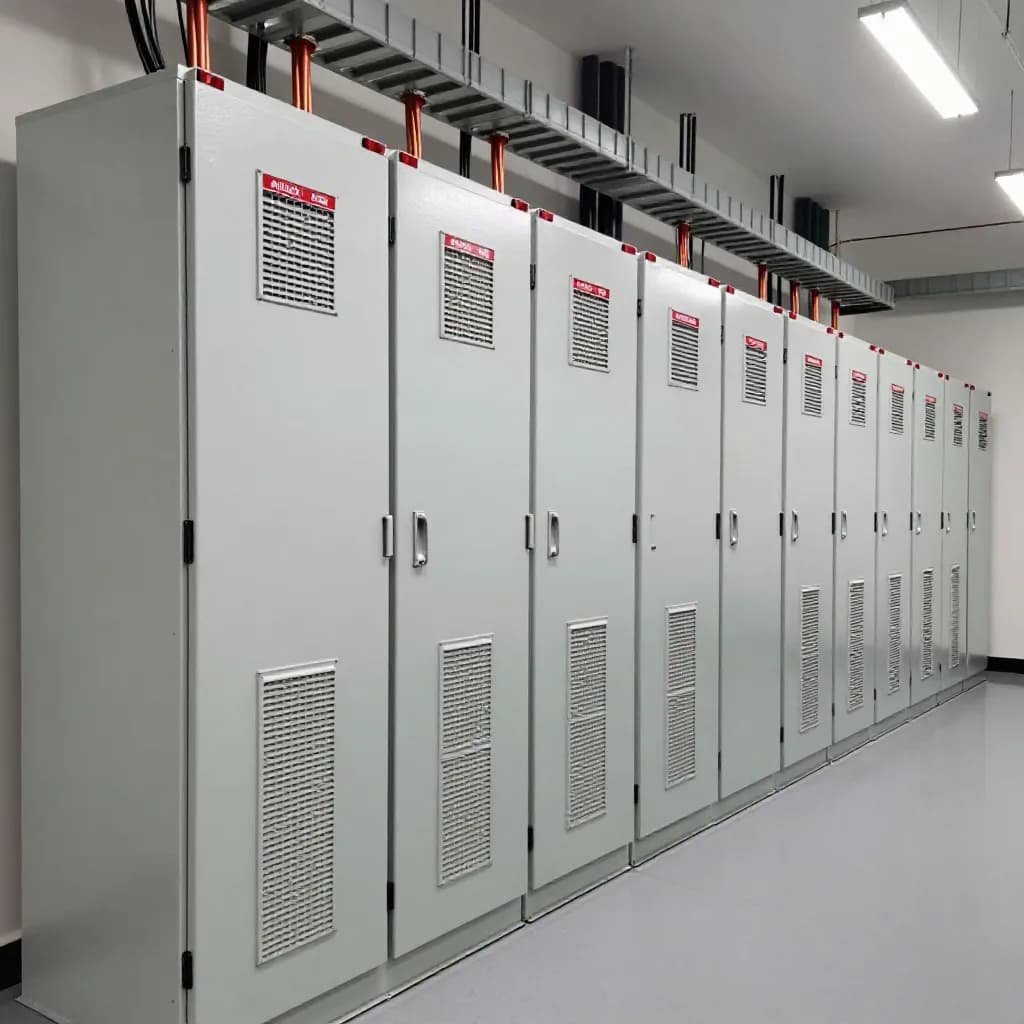
Powder coating has become the standard finishing technology for switchgear enclosures, replacing liquid paint systems that were prevalent until the 1990s. The transition was driven by powder coating's superior film build (providing better corrosion protection and electrical insulation in a single coat), zero VOC emissions (important for manufacturing facilities subject to environmental regulations), and the consistent quality achievable with automated application systems.
Ready to Start Your Project?
From one-off customs to 15,000-part production runs — get precise pricing in 24 hours.
On This Page
The Critical Role of Coatings in Electrical Switchgear
The switchgear industry spans a wide range of voltage levels and installation environments, from low-voltage distribution boards in commercial buildings to high-voltage outdoor substations operating at 132 kV or above. Each application presents distinct coating requirements related to electrical performance, environmental exposure, and safety standards. Understanding these requirements is essential for specifying powder coating systems that deliver reliable performance throughout the switchgear's 25-40 year service life.
This article examines the specific technical requirements for powder coating electrical switchgear, covering dielectric properties, arc resistance, corrosion protection, IP ratings, and the standards that govern coating performance in electrical applications.
Dielectric Properties and Electrical Insulation
The dielectric properties of powder coatings are critically important in switchgear applications where the coating contributes to the electrical insulation system. While the primary insulation in switchgear is provided by dedicated insulating components (bushings, barriers, and insulating gases), the coating on metal enclosures and structural members provides supplementary insulation that enhances safety margins and prevents surface tracking and flashover.
Dielectric strength — the maximum electric field that a material can withstand without electrical breakdown — is the primary electrical property of interest for switchgear coatings. Standard polyester powder coatings typically exhibit dielectric strength of 20-40 kV/mm, meaning a 100-micron coating film can withstand 2,000-4,000 volts before breakdown occurs. Specialized dielectric powder coatings formulated with high-purity resins and insulating fillers achieve dielectric strengths of 40-60 kV/mm, providing enhanced insulation for high-voltage applications.
Surface resistivity — the resistance to current flow across the coating surface — affects the tendency for electrical tracking (the formation of conductive paths on the coating surface due to contamination, moisture, or degradation). High surface resistivity (>10¹² ohms per square) prevents tracking and maintains insulation integrity even in contaminated or humid conditions. Powder coatings generally exhibit higher surface resistivity than liquid paints due to their denser, more uniform film structure.
Comparative Tracking Index (CTI) per IEC 60112 measures a material's resistance to tracking under wet, contaminated conditions. Switchgear coatings should achieve CTI values of 400V or higher (Material Group II or better per IEC 60664-1) to ensure reliable insulation performance in service environments where condensation, dust, and industrial contamination are present.
The dielectric properties of powder coatings can degrade over time due to moisture absorption, UV exposure, and thermal aging. For critical insulation applications, accelerated aging tests — including thermal cycling, humidity exposure, and UV weathering — are performed to verify that the coating maintains adequate dielectric performance throughout the switchgear's intended service life.
Arc Resistance and Internal Arc Containment
Internal arc faults — uncontrolled electrical discharges within switchgear enclosures — generate extreme temperatures (up to 20,000°C at the arc core), intense pressure waves, and molten metal ejection. While the primary arc containment is provided by the structural design of the enclosure, the coating on internal surfaces plays a role in the overall arc resistance of the assembly.
Arc resistance testing per ASTM D495 measures the time a coating surface can withstand a high-voltage, low-current arc before forming a conductive track. Standard polyester powder coatings achieve arc resistance times of 120-180 seconds, while specialized arc-resistant formulations using mineral fillers and flame-retardant additives can exceed 300 seconds. Higher arc resistance values indicate greater resistance to surface degradation during arc fault events.
The behavior of the coating during an internal arc event affects personnel safety. Coatings that produce toxic or flammable gases when exposed to arc temperatures can exacerbate the hazard. Powder coatings based on polyester and epoxy-polyester chemistries produce relatively benign decomposition products compared to some liquid paint systems, particularly those containing chlorinated or brominated flame retardants.
IEC 62271-200 defines the requirements for internal arc classification (IAC) of metal-enclosed switchgear. The standard specifies tests where a calibrated arc fault is initiated inside the switchgear, and the enclosure must contain the arc without allowing flame emission, dangerous pressure release, or fragmentation that could injure personnel standing at specified distances. The coating contributes to the enclosure's ability to meet these requirements by maintaining structural integrity of the enclosure panels during the arc event.
Post-arc coating condition is also relevant. After an arc fault event, the switchgear enclosure must be inspected and potentially repaired before being returned to service. Coatings that maintain adhesion and structural integrity in areas not directly impacted by the arc simplify the repair process and reduce the extent of refurbishment required.
For switchgear rated for internal arc containment, the coating specification is typically defined by the switchgear manufacturer based on type testing of the complete assembly. Substituting a different coating without re-testing may invalidate the IAC rating.
IP Ratings and Environmental Protection
The Ingress Protection (IP) rating of switchgear enclosures defines their resistance to the entry of solid objects (dust, debris) and water. The coating on enclosure panels, doors, and covers contributes to the overall IP rating by sealing the metal surfaces against moisture penetration and providing a smooth, continuous surface that supports effective gasket sealing.
IP ratings are defined by IEC 60529 and consist of two digits: the first indicating protection against solid objects (0-6) and the second indicating protection against water (0-9). Common switchgear IP ratings include IP54 (dust-protected, splash-proof) for indoor industrial installations, IP55 (dust-protected, water jet resistant) for outdoor installations, and IP65 (dust-tight, water jet resistant) for harsh outdoor environments.
The powder coating's role in achieving IP ratings is primarily related to surface quality and gasket interface performance. A smooth, uniform coating surface provides a reliable sealing surface for the EPDM or silicone gaskets that seal enclosure doors and panel joints. Coating defects such as craters, pinholes, or excessive orange peel texture can compromise gasket sealing and reduce the effective IP rating. Film thickness uniformity is particularly important at gasket contact surfaces, where variations can create gaps in the seal.
For outdoor switchgear installations, the coating must maintain its protective properties under continuous weather exposure. Rain, UV radiation, temperature cycling, and atmospheric pollutants all challenge the coating's integrity. Polyester powder coatings with UV stabilizers provide the weather resistance needed for outdoor switchgear, with super-durable formulations recommended for installations in high-UV environments or locations where maintenance access is limited.
Condensation management is a critical consideration for outdoor and unheated indoor switchgear. Temperature cycling causes moisture to condense on internal enclosure surfaces, creating a persistent humid environment that can degrade both the coating and the electrical components within. Anti-condensation heaters are commonly installed in switchgear enclosures, but the coating must also resist the effects of repeated condensation and drying cycles without blistering, delaminating, or losing adhesion.
Coastal and industrial environments impose additional demands. Salt-laden air in coastal locations and chemical fumes in industrial settings accelerate coating degradation and corrosion. Switchgear for these environments typically specifies enhanced coating systems — duplex galvanizing plus powder coating for steel enclosures, or increased film thickness with super-durable powder for aluminum enclosures — to maintain protection over the switchgear's 25-40 year service life.
Outdoor Substation Equipment and Extreme Environment Coatings
Outdoor electrical substations represent one of the most demanding environments for powder-coated equipment. Substation structures, transformer enclosures, circuit breaker housings, and control cabinets are exposed to full weather conditions for decades, often in remote locations where maintenance access is limited and costly.
The corrosion environment at outdoor substations varies enormously depending on location. Rural substations in temperate climates may experience relatively mild C2-C3 corrosivity per ISO 9223, while coastal substations can face C5-CX (extreme) conditions with corrosion rates that would destroy unprotected steel within a few years. Industrial substations near chemical plants, refineries, or smelters may be exposed to specific chemical pollutants that require tailored coating resistance.
For steel substation structures (gantries, equipment supports, cable trays), the standard coating specification is hot-dip galvanizing per ISO 1461 for primary corrosion protection, with powder coating applied over the galvanizing for color identification and enhanced durability. The galvanizing provides sacrificial protection at damage sites, while the powder coating prevents the rapid zinc consumption that occurs in aggressive environments. This duplex system achieves service lives of 30-50 years in moderate environments and 20-30 years in severe coastal or industrial conditions.
Transformer enclosures and radiator panels require coatings that resist the elevated temperatures generated during transformer operation. Oil-filled transformers can develop surface temperatures of 60-80°C during normal operation and higher during overload conditions. Standard polyester powder coatings handle these temperatures without difficulty, but the coating must also resist transformer oil contact at splash points and oil fill/drain connections.
Circuit breaker housings for outdoor SF6 or vacuum circuit breakers must maintain their IP rating and structural integrity over 25-30 year service lives with minimal maintenance. The coating specification for these critical components typically includes zinc phosphate pretreatment, epoxy primer, and super-durable polyester topcoat, with total system thickness of 120-160 microns providing robust protection against the combined effects of UV, moisture, and atmospheric corrosion.
Color coding of substation equipment follows utility-specific standards that identify voltage levels, equipment types, and safety zones. Powder coating's precise color matching and long-term color retention ensure that safety-critical color coding remains legible throughout the equipment's service life.
Standards and Specifications for Switchgear Coatings
The coating of electrical switchgear is governed by a comprehensive framework of international and national standards that define performance requirements for corrosion protection, electrical properties, and environmental resistance.
IEC 62271 series standards for high-voltage switchgear include requirements for the protective coating of enclosures. IEC 62271-1 (common specifications) requires that metallic enclosures be protected against corrosion by appropriate surface treatment and coating, with the specific requirements depending on the installation environment and intended service life.
ISO 12944 (corrosion protection of steel structures by protective paint systems) provides the framework for specifying coating systems based on environmental corrosivity category (C1-CX) and required durability (low: 2-5 years, medium: 5-15 years, high: 15-25 years, very high: >25 years). For switchgear enclosures, high or very high durability in the appropriate corrosivity category is the standard specification.
IEC 61439 series standards for low-voltage switchgear assemblies include requirements for enclosure protection that affect the coating specification. The standard requires that enclosures provide adequate protection against corrosion for the intended installation environment and that the IP rating is maintained throughout the assembly's service life.
UL 50 and UL 50E (enclosures for electrical equipment) in North America define environmental protection requirements equivalent to IP ratings, using the NEMA (National Electrical Manufacturers Association) type designation system. NEMA Type 3R (outdoor, rain-resistant), Type 4 (watertight), and Type 4X (watertight, corrosion-resistant) are common specifications for outdoor switchgear enclosures, each imposing specific requirements on the coating system.
Utility-specific specifications often exceed the minimum requirements of international standards. Major electrical utilities maintain their own coating specifications that define approved powder coating systems, pretreatment requirements, film thickness ranges, and testing protocols for switchgear and substation equipment. These specifications are developed based on the utility's operational experience and the specific environmental conditions in their service territory.
Type testing of switchgear assemblies — including internal arc tests, IP verification, and environmental testing — is performed with the production coating system in place. Any change to the coating specification after type testing may require re-testing to verify that the assembly's rated performance is maintained.
Application Challenges and Process Considerations
Powder coating switchgear enclosures presents several application challenges that differ from general industrial coating work. The large panel sizes, complex internal geometries, and stringent quality requirements of switchgear demand specialized application techniques and rigorous process control.
Enclosure panels for switchgear are typically fabricated from 1.5-3.0 mm cold-rolled or galvanized steel sheet, formed into flat or lightly contoured panels with flanged edges, mounting holes, and ventilation openings. The large, flat surfaces of these panels are prone to showing coating defects — orange peel, color variation, and contamination marks — that would be less noticeable on smaller or more complex parts. Achieving a smooth, uniform finish on large flat panels requires careful control of powder particle size (D50 of 30-35 microns for smooth finishes), application parameters, and oven temperature uniformity.
Internal surfaces of switchgear enclosures require coating for corrosion protection and, in some cases, electrical insulation. Coating the interior of assembled enclosures is challenging due to limited access for spray guns and the Faraday cage effect that prevents electrostatic powder from reaching deep recesses and internal corners. Coating individual panels before assembly provides better coverage but requires careful handling to avoid damage during the assembly process.
Masking requirements for switchgear are extensive. Earthing (grounding) points, busbar mounting surfaces, hinge pivot points, and gasket sealing surfaces must remain uncoated to ensure proper electrical contact, mechanical function, and sealing performance. Precision masking using custom-cut silicone plugs, caps, and tape ensures that these critical surfaces are protected during the coating process.
Cure temperature uniformity is particularly important for large switchgear enclosures. Temperature variations within the curing oven can cause differential cure across the panel surface, resulting in color variation, gloss differences, and inconsistent mechanical properties. Oven temperature surveys using multi-point data loggers verify that all areas of the enclosure reach the required cure temperature (typically 180-200°C metal temperature) for the specified duration (typically 10-20 minutes at temperature).
Post-coating assembly operations — including welding of internal brackets, drilling of mounting holes, and installation of hardware — inevitably damage the coating at specific points. A defined touch-up procedure using approved liquid repair paint ensures that all damage is repaired before the switchgear leaves the factory, maintaining the corrosion protection and appearance of the finished product.
Frequently Asked Questions
What dielectric strength does powder coating provide on switchgear?
Standard polyester powder coatings provide dielectric strength of 20-40 kV/mm, meaning a 100-micron film withstands 2,000-4,000 volts. Specialized dielectric formulations achieve 40-60 kV/mm. While not the primary insulation system, the coating provides supplementary insulation that enhances safety margins against surface tracking and flashover.
How does powder coating contribute to switchgear IP ratings?
Powder coating provides a smooth, continuous surface that supports effective gasket sealing at enclosure doors and panel joints. Uniform film thickness at gasket contact surfaces ensures consistent seal compression. The coating also seals the metal surface against moisture penetration, contributing to the overall IP54, IP55, or IP65 rating of the assembly.
What coating system is recommended for outdoor substation equipment?
Hot-dip galvanizing plus powder coating (duplex system) is standard for steel substation structures. The galvanizing provides sacrificial corrosion protection while the powder coating prevents premature zinc consumption. Super-durable polyester topcoats are recommended for UV resistance. This system achieves 30-50 year service lives in moderate environments.
Does the coating affect switchgear arc resistance ratings?
Yes. The coating contributes to the enclosure's internal arc containment performance per IEC 62271-200. Standard polyester coatings achieve 120-180 seconds arc resistance per ASTM D495, while specialized formulations exceed 300 seconds. Changing the coating specification after type testing may invalidate the switchgear's IAC rating.
What standards govern switchgear coating specifications?
Key standards include IEC 62271 series (high-voltage switchgear), IEC 61439 (low-voltage assemblies), ISO 12944 (corrosion protection systems), and UL 50/50E with NEMA type designations in North America. Utility-specific specifications often exceed international minimums based on local environmental conditions and operational experience.
Ready to Start Your Project?
From one-off customs to 15,000-part production runs — get precise pricing in 24 hours.