The global transition to electric vehicles is driving an unprecedented buildout of charging infrastructure. Governments worldwide have committed to deploying millions of public charging stations over the coming decade, with the European Union targeting one million public chargers by 2025 and the United States investing billions in a national charging network. This infrastructure expansion represents a massive and growing market for surface finishing solutions that can protect charging equipment in demanding outdoor environments while maintaining the brand identity and visual appeal that charging network operators require.
Automotive
Powder Coating for Electric Vehicle Charging Stations: Durability, Design, and Infrastructure Growth
Sundial Powder Coating·April 22, 2026·11 min
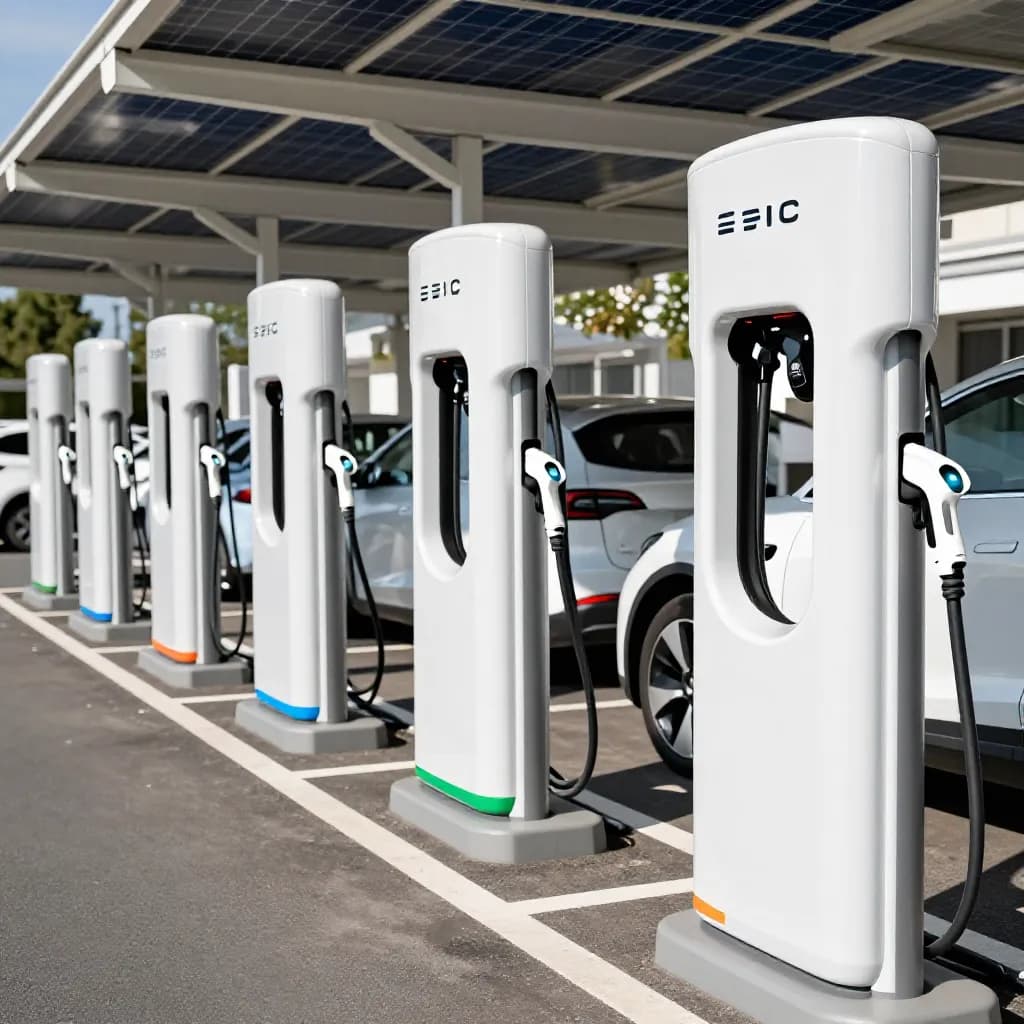
EV charging stations operate in some of the most challenging environments for surface coatings. Installed in parking lots, highway rest areas, urban streets, and commercial properties, they are exposed to the full spectrum of environmental stresses: UV radiation, rain, snow, ice, temperature extremes, road salt, vehicle exhaust, bird droppings, and atmospheric pollution. They must also withstand physical abuse from vehicle impacts, shopping carts, vandalism, and the daily wear of cable handling and connector insertion by thousands of users.
Ready to Start Your Project?
From one-off customs to 15,000-part production runs — get precise pricing in 24 hours.
On This Page
The EV Charging Infrastructure Boom
Powder coating is emerging as the preferred finishing technology for EV charging station enclosures, pedestals, and housings because it delivers the combination of outdoor durability, impact resistance, chemical resistance, and aesthetic quality that this application demands. The environmental credentials of powder coating — zero VOC emissions and high material efficiency — also align with the sustainability values of the electric vehicle industry and its customers.
Outdoor Durability Requirements
EV charging stations are designed for outdoor service lives of 10-15 years or more, during which the coating must maintain its protective and aesthetic properties without scheduled maintenance or recoating. This durability requirement places charging station coatings in the same performance category as architectural and infrastructure coatings, demanding formulations with proven long-term weathering resistance.
Super durable polyester powder coatings are the standard choice for EV charging station enclosures, providing the UV resistance, color retention, and gloss stability needed for extended outdoor exposure. These formulations maintain their appearance through 10-15 years of real-world weathering, as validated by South Florida exposure testing and accelerated weathering data. For charging stations installed in particularly aggressive environments — coastal locations with salt spray, industrial areas with chemical fallout, or high-altitude sites with intense UV — enhanced durability formulations or fluoropolymer-modified systems may be specified.
Corrosion protection is equally critical, as charging station enclosures are typically fabricated from steel or aluminum that must be protected from rust and oxidation throughout the product's service life. For steel enclosures, a multi-layer coating system — zinc-rich primer or galvanizing followed by a super durable polyester topcoat — provides the corrosion protection needed for outdoor installation. For aluminum enclosures, chromate-free conversion coating followed by super durable powder coating provides excellent corrosion resistance with a simpler coating system. The pretreatment and coating specification must be matched to the substrate material, the installation environment, and the target service life.
UV Resistance and Color Stability
Color stability under UV exposure is a critical requirement for EV charging stations because the coating color is a key element of brand identity. Charging network operators — including major automotive manufacturers, energy companies, and dedicated charging networks — use distinctive brand colors on their stations to create visual recognition and differentiate their networks. A charging station that fades, chalks, or shifts color within a few years undermines brand perception and requires costly recoating or replacement.
The UV resistance of powder coatings depends on the resin chemistry, pigment selection, and UV stabilizer package. Super durable polyester resins provide the foundation for UV resistance, with their modified molecular architecture resisting the photo-oxidation and chain scission that cause standard polyester coatings to degrade. Hindered amine light stabilizers and UV absorbers provide additional protection by scavenging the free radicals and absorbing the UV photons that initiate degradation.
Pigment selection is particularly important for brand color matching on charging stations. Organic pigments that provide bright, saturated colors — reds, oranges, and yellows — are inherently less UV-stable than inorganic pigments. For brand colors that require organic pigments, the formulator must select the most lightfast grades available and may need to increase UV stabilizer loading to achieve the required color retention. The specification should define maximum acceptable color change — typically 2-3 Delta E after 5 years of outdoor exposure — and the powder manufacturer should provide color-specific weathering data demonstrating compliance with this requirement.
Vandal Resistance and Impact Protection
EV charging stations in public locations are vulnerable to vandalism, accidental vehicle impacts, and physical abuse from daily use. The coating must resist scratching, chipping, and impact damage while maintaining its appearance and protective function. Anti-graffiti properties are also desirable, as charging stations in urban environments are targets for spray paint and marker graffiti.
Powder coatings inherently provide good impact and chip resistance due to their relatively thick film build and the flexibility of properly formulated polyester and polyurethane systems. Impact resistance can be further enhanced through the use of flexible resin systems, rubber-modified formulations, or increased film thickness in areas prone to impact damage. Textured finishes — including fine texture, wrinkle, and sand effects — provide additional scratch concealment because minor scratches are less visible on textured surfaces than on smooth, high-gloss finishes.
Anti-graffiti powder coating formulations, using fluoropolymer or silicone-modified resin systems, enable easy removal of spray paint and marker graffiti without damaging the underlying finish. For charging stations in high-vandalism areas, anti-graffiti coatings can significantly reduce the cost and frequency of graffiti removal, maintaining the station's appearance and brand image. The combination of impact resistance, scratch concealment through texture, and anti-graffiti properties creates a coating system that withstands the physical demands of public installation while minimizing maintenance requirements.
Brand Color Matching and Design Flexibility
EV charging network operators invest heavily in brand identity, and the charging station is a primary physical touchpoint with customers. Precise color matching to brand specifications is essential, with tolerances typically tighter than standard industrial applications — often Delta E 1.0 or less for critical brand colors. Powder coating technology can meet these requirements through spectrophotometric color matching and rigorous batch-to-batch quality control.
The design flexibility of powder coating supports the diverse aesthetic requirements of different charging station designs. Smooth high-gloss finishes convey a premium, technology-forward image. Matte and satin finishes provide a sophisticated, understated appearance. Metallic effects add visual depth and perceived quality. Textured finishes offer a rugged, durable aesthetic appropriate for heavy-duty commercial chargers. The ability to achieve all these effects within the powder coating platform simplifies the manufacturing process and ensures consistent quality across different finish types.
Multi-color designs — where different components of the charging station are coated in different colors — are common in charging station design, with brand colors on the main housing, contrasting colors on trim elements, and safety colors on hazard markings. Powder coating accommodates multi-color production through masking, separate coating of components before assembly, or sequential coating with intermediate masking. The precision of electrostatic powder application enables clean color transitions and consistent coverage on the complex geometries typical of charging station enclosures.
Electrical Safety and Insulation Considerations
EV charging stations handle high-voltage electricity — up to 400V DC for fast chargers and up to 1000V DC for ultra-fast chargers — creating specific requirements for the coating's electrical properties. While the primary electrical insulation is provided by the station's internal components and wiring, the external coating contributes to the overall safety envelope by providing surface insulation that prevents current leakage across the enclosure exterior.
Powder coatings are inherently good electrical insulators, with dielectric strength values of 15-25 kV/mm that far exceed the requirements for surface insulation on charging station enclosures. The continuous, pinhole-free film formed by properly applied powder coating provides a reliable insulating barrier across the entire exterior surface. This insulating property also prevents galvanic corrosion at dissimilar metal junctions — a consideration for charging stations that combine steel, aluminum, and stainless steel components.
Grounding requirements must be considered in the coating specification. Charging station enclosures require reliable electrical grounding for safety, and the coating must not interfere with grounding connections. Masking of grounding points during coating application, or the use of conductive fasteners that penetrate the coating to establish ground contact, ensures that the insulating coating does not compromise the station's electrical safety system. The coating specification should identify grounding locations and define the masking or connection strategy to maintain both coating integrity and electrical safety.
Manufacturing Scale-Up and Supply Chain
The rapid scale-up of EV charging infrastructure is creating supply chain challenges and opportunities for the powder coating industry. Charging station manufacturers are ramping production from thousands to hundreds of thousands of units annually, requiring coating suppliers and applicators to scale their capacity accordingly. The high-volume, consistent-quality requirements of charging station production align well with automated powder coating operations using robotic application, inline quality inspection, and digital process control.
Standardization of coating specifications across charging station platforms enables powder coating manufacturers to optimize formulations and maintain inventory for the most common colors and performance requirements. Several major powder coating manufacturers have developed product lines specifically targeting the EV charging infrastructure market, with pre-qualified formulations that meet the durability, color, and safety requirements of major charging network operators.
The geographic distribution of charging station manufacturing — with production facilities in North America, Europe, and Asia serving regional markets — creates demand for global powder coating supply with consistent quality across regions. Cloud-based color management systems ensure that brand colors are matched precisely regardless of which powder manufacturing facility or coating applicator produces the finished product. This global consistency is essential for charging network operators deploying stations across multiple countries and continents, where brand recognition depends on uniform visual identity.
Future Trends: Smart Stations and Integrated Design
The evolution of EV charging stations toward smarter, more integrated designs is creating new requirements and opportunities for powder coating technology. Next-generation charging stations incorporate digital displays, LED lighting, advertising panels, and communication antennas that must be integrated into the station's exterior design. The coating must accommodate these features — providing windows for displays, transparent areas for LED illumination, and RF-transparent zones for antenna communication — while maintaining a cohesive visual design.
Solar-integrated charging stations, which incorporate photovoltaic panels into the station canopy or enclosure, require coatings that do not interfere with solar energy collection. High-reflectivity powder coatings on non-solar surfaces can reduce thermal loading on the station, improving the efficiency of both the solar panels and the charging electronics. Thermal management coatings that dissipate heat from power electronics through the enclosure surface are another emerging requirement as charging power levels increase to 350 kW and beyond.
The aesthetic integration of charging stations into urban environments is receiving increasing attention from city planners and architects. Charging stations are becoming permanent elements of the streetscape, and their design — including surface finish — must complement the surrounding architecture and public space design. Custom colors, wood grain sublimation effects, and architectural-grade finishes are being specified for charging stations in heritage districts, premium retail locations, and design-conscious urban developments. This trend toward architectural integration elevates the role of powder coating from basic protection to a key element of urban design, positioning the technology at the intersection of infrastructure, sustainability, and aesthetics.
Frequently Asked Questions
What type of powder coating is best for EV charging stations?
Super durable polyester powder coatings are the standard choice for EV charging stations, providing the UV resistance, color retention, and outdoor durability needed for 10-15 year service life. For coastal or industrial environments, enhanced formulations or fluoropolymer-modified systems may be specified. The coating should be applied over appropriate pretreatment for the substrate material.
How long should powder coating last on a charging station?
Powder coating on EV charging stations should maintain acceptable appearance and protection for 10-15 years of outdoor exposure without maintenance or recoating. Super durable polyester formulations with appropriate pretreatment can achieve this service life in most environments. Coastal and industrial locations may require enhanced specifications for the most demanding conditions.
Can powder coating match specific brand colors for charging networks?
Yes. Powder coating can be precisely matched to any brand color specification using spectrophotometric color matching, with tolerances of Delta E 1.0 or less achievable for critical brand colors. Cloud-based color management systems ensure consistent color matching across multiple powder manufacturing facilities and coating applicators worldwide.
Do charging stations need anti-graffiti coatings?
Anti-graffiti coatings are recommended for charging stations in public locations, particularly urban environments where graffiti vandalism is common. Anti-graffiti powder coatings enable easy removal of spray paint and marker graffiti without damaging the underlying finish, reducing maintenance costs and maintaining brand appearance. The additional cost of anti-graffiti formulations is typically justified by reduced cleaning expenses.
Does powder coating affect the electrical safety of charging stations?
Powder coating enhances electrical safety by providing surface insulation on the station enclosure. The high dielectric strength of powder coatings prevents current leakage across the exterior surface. Grounding points must be masked during coating application or use conductive fasteners to maintain the station's grounding system. The coating specification should address grounding requirements explicitly.
Ready to Start Your Project?
From one-off customs to 15,000-part production runs — get precise pricing in 24 hours.