Earthquake-prone regions — spanning the Pacific Ring of Fire, the Alpine-Himalayan belt, the East African Rift, and numerous other tectonic boundaries — encompass some of the world's most densely populated and rapidly developing areas. Japan, California, Turkey, Italy, Chile, New Zealand, Indonesia, and western China all face significant seismic risk, and buildings in these regions must be designed to withstand ground shaking, structural deformation, and the secondary effects of earthquakes including fire, flooding, and aftershocks.
Architecture
Powder Coating for Earthquake Zone Buildings: Seismic Movement, Flexible Coatings, and Post-Event Inspection
Sundial Powder Coating·April 22, 2026·11 min
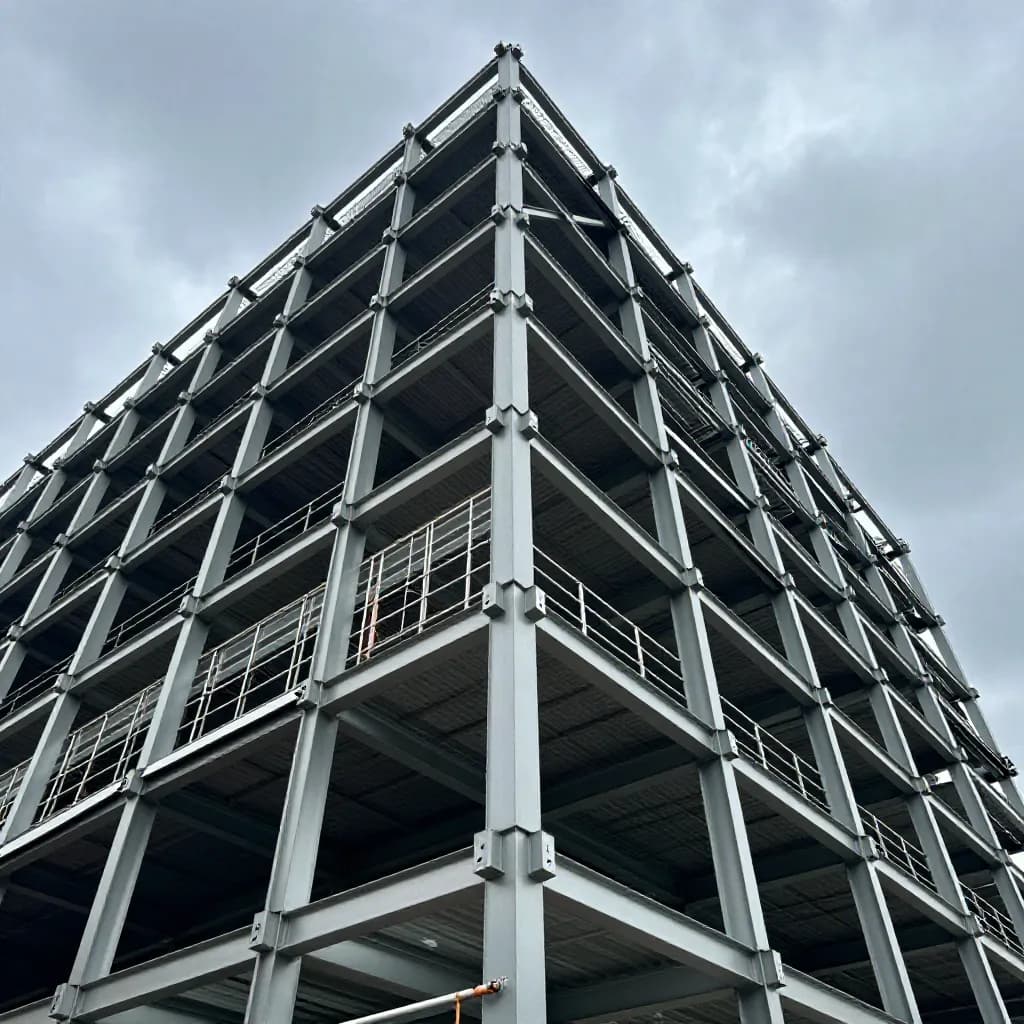
Powder coatings on buildings in seismic zones serve dual functions: corrosion protection and fire resistance during normal service, and maintenance of protective function during and after seismic events. The coating must accommodate the structural movements that occur during earthquakes — inter-story drift, joint opening and closing, and localized deformation at connection points — without catastrophic failure that would expose the substrate to accelerated corrosion or compromise fire protection.
Ready to Start Your Project?
From one-off customs to 15,000-part production runs — get precise pricing in 24 hours.
On This Page
Seismic Zones and Building Coating Requirements
Seismic design codes — including Eurocode 8, ASCE 7, and Japan's Building Standard Law — define the expected structural movements for different seismic zones and building types. Inter-story drift ratios of 1-2.5% are typical design limits for moment-frame buildings, meaning that a 4-meter story height may experience 40-100 mm of horizontal displacement during the design earthquake. Facade cladding and coating systems must accommodate these movements without failure.
The economic importance of coating performance in seismic events extends beyond the immediate structural function. Buildings that maintain their protective coatings through an earthquake can be returned to service more quickly, reducing business interruption losses. Buildings with damaged coatings require costly inspection, repair, and potential recoating before reoccupation — adding to the already enormous economic impact of earthquake events.
Coating Flexibility and Seismic Deformation
The ability of a powder coating to accommodate substrate deformation without cracking or delaminating is the primary performance requirement for seismic applications. During an earthquake, structural steel members undergo cyclic bending, twisting, and axial deformation that imposes complex stress states on the coating film. The coating must absorb this deformation elastically or, if deformation exceeds the elastic limit, fail in a controlled manner that maintains corrosion protection.
Standard polyester powder coatings achieve elongation at break values of 2-5% at room temperature, which is sufficient to accommodate the small deformations typical of moderate seismic events. However, at the strain rates associated with earthquake loading — which can be 100-1,000 times faster than standard tensile testing — polymer coatings behave more rigidly, and their effective elongation capacity is reduced. This strain-rate sensitivity means that coatings must have significantly more flexibility than the expected seismic deformation to provide an adequate safety margin.
Polyurethane powder coatings offer substantially better seismic performance than standard polyester, with elongation at break values of 10-20% and superior retention of flexibility at high strain rates. The urethane linkage provides a combination of hydrogen bonding and chain flexibility that enables the coating to absorb energy during rapid deformation without brittle fracture. For structural steel in high-seismic zones, polyurethane topcoats over epoxy primers provide the best combination of corrosion protection and seismic flexibility.
Coating thickness affects seismic performance in two opposing ways. Thicker coatings provide better corrosion protection but generate higher internal stresses during substrate deformation, increasing the risk of cracking and delamination. For seismic applications, optimizing film thickness to balance corrosion protection with mechanical flexibility is important — typically 60-80 microns for topcoats and 150-250 microns for total system thickness on structural steel.
Adhesion is equally critical. A flexible coating that delaminates from the substrate during seismic deformation provides no protection. Proper surface preparation (Sa 2.5 minimum for steel) and appropriate pretreatment ensure that the coating-substrate bond is stronger than the cohesive strength of the coating, so that any failure occurs within the coating film rather than at the interface.
Structural Steel Fire Protection and Seismic Interaction
Intumescent powder coatings — which expand to form an insulating char layer when exposed to fire — are increasingly used for structural steel fire protection in seismic zones. These coatings must maintain their fire-protective function after experiencing seismic deformation, creating a unique dual-performance requirement that standard fire testing does not address.
Intumescent powder coatings are applied at 500-2,000 microns depending on the required fire resistance period (30-120 minutes) and the section factor of the steel member. During a fire, the coating expands to 20-50 times its original thickness, forming a carbonaceous foam that insulates the steel from the fire and delays the temperature rise that causes structural failure.
The concern in seismic zones is that earthquake-induced deformation may crack or delaminate the intumescent coating before a post-earthquake fire occurs. Earthquakes frequently cause fires through ruptured gas lines, electrical short circuits, and overturned heating equipment, and the fire protection of structural steel is most critical in the immediate post-earthquake period when fire services may be overwhelmed.
Research and testing of intumescent coatings under combined seismic and fire loading is an active area of investigation. Preliminary results indicate that intumescent powder coatings maintain acceptable fire protection performance after moderate seismic deformation (inter-story drift ratios up to 1%), but may show reduced performance after severe deformation (drift ratios above 2%) due to cracking and partial delamination of the thick coating film.
For high-seismic zones where post-earthquake fire is a significant risk, specifying intumescent coatings with enhanced flexibility — achieved through modified resin chemistry and optimized filler systems — provides additional assurance of fire protection after seismic events. Post-earthquake inspection of intumescent coatings should be prioritized to identify any areas of damage that may compromise fire resistance.
Facade Cladding Systems in Seismic Zones
Powder-coated aluminum cladding systems in seismic zones must be designed to accommodate building movement without panel detachment, which poses a life-safety hazard from falling debris. The cladding attachment system — brackets, clips, and fasteners connecting the panels to the building structure — is the critical element that determines seismic performance.
Fixed-and-sliding attachment systems are the standard approach for seismic cladding design. Each panel is fixed at one point (typically the top) and slides at other attachment points, allowing the panel to move relative to the structure during seismic events without accumulating force. The sliding connections must accommodate the full design inter-story drift in both horizontal directions while maintaining positive panel retention.
The powder coating at attachment points experiences concentrated stress during seismic movement. Sliding connections create friction between the panel and the bracket, which can abrade the coating at the contact point. Fixed connections transmit seismic forces through the coating, creating localized compression and shear stresses. Specifying reinforced coating at attachment points — through increased film thickness or the use of wear-resistant coating formulations — reduces the risk of coating damage at these critical locations.
Joint design between cladding panels must accommodate seismic movement while maintaining weather tightness. Open-joint rainscreen systems, which rely on the air gap behind the cladding for weather protection rather than sealed joints, are inherently more seismic-tolerant because the joints can open and close without sealant failure. Sealed joint systems require flexible sealants with movement capacity matching the expected seismic drift.
Glazing systems in seismic zones — curtain walls, storefronts, and window walls — incorporate powder-coated aluminum frames that must accommodate both structural movement and glass retention. The powder coating on glazing frames must maintain adhesion and integrity at the frame-glass interface, where sealant bonding to the coated surface is critical for glass retention during seismic events.
Post-Earthquake Coating Inspection and Assessment
Systematic inspection of powder coatings after an earthquake provides valuable information about both the coating condition and the underlying structural performance. Coating damage patterns can indicate the location and severity of structural deformation, making facade coating inspection a useful complement to structural engineering assessment.
Post-earthquake coating inspection should be conducted in three phases. The immediate safety assessment (within hours of the event) focuses on identifying fallen or detached cladding panels that pose a public safety hazard, and securing any panels at risk of detachment. This assessment is visual and does not require close-up inspection of coating condition.
The detailed coating assessment (within days to weeks) involves systematic inspection of all powder-coated surfaces for signs of seismic damage: cracking along structural member flanges and at connection points, delamination or blistering at areas of substrate deformation, abrasion damage at sliding connections and panel-to-panel contact points, and sealant failure at joints that may allow moisture ingress to the coating-substrate interface.
The long-term monitoring phase (months to years after the event) tracks the progression of any coating damage identified in the detailed assessment. Cracks and delamination that may appear minor immediately after the earthquake can propagate over time due to moisture ingress, corrosion initiation, and the effects of normal environmental exposure. Regular monitoring enables timely repair before minor damage develops into significant coating failure.
Documentation of coating condition using standardized assessment methods (ISO 4628) and photographic records creates a baseline for tracking post-earthquake degradation. Comparison with pre-earthquake condition records — if available — enables quantification of earthquake-induced damage and supports insurance claims and repair cost estimation.
Adhesion testing at representative locations using cross-cut (ISO 2409) or pull-off (ISO 4624) methods provides quantitative data on coating-substrate bond integrity after seismic loading. Reduced adhesion values compared to pre-earthquake baselines indicate that the coating-substrate interface has been stressed, even if no visible damage is apparent.
Repair and Restoration After Seismic Events
Repair of earthquake-damaged powder coatings must balance the urgency of restoring corrosion protection with the practical constraints of post-earthquake construction conditions. Access to damaged areas may be restricted by structural damage, utilities may be disrupted, and the demand for repair services typically far exceeds supply in the immediate aftermath of a major earthquake.
Emergency corrosion protection for exposed steel surfaces can be provided by temporary protective coatings — wax-based or oil-based rust preventatives — that can be applied quickly without surface preparation and provide short-term protection (3-12 months) until permanent repair can be scheduled. These temporary measures prevent corrosion initiation during the often-extended period between the earthquake and permanent repair.
Permanent repair of damaged powder coatings typically uses liquid coating systems rather than powder, as the high-temperature curing required for powder coatings cannot be achieved in the field. Two-component epoxy primers and polyurethane topcoats, applied by brush or spray to properly prepared surfaces, provide durable repairs that are compatible with the existing powder coating system.
For extensive coating damage — where more than 20-30% of the coated surface requires repair — complete recoating may be more economical and provide better long-term performance than patchwork repair. If the building structure has been repaired and is structurally sound, removing the damaged coating by abrasive blasting and applying a new powder coating system in a controlled environment provides the highest quality restoration.
Seismic retrofit projects — strengthening existing buildings to improve earthquake resistance — often involve adding new structural steel elements (bracing, moment connections, base isolators) that require powder coating. These retrofit elements should be coated to the same specification as new construction, with particular attention to the interface between new and existing coated surfaces to ensure continuous corrosion protection.
Lessons learned from post-earthquake coating performance should be documented and fed back into specification practices. Each major earthquake provides real-world performance data that can validate or challenge laboratory testing and analytical predictions, improving the accuracy of seismic coating specifications for future projects.
Specification Standards for Seismic Zone Coatings
Current coating specification standards do not explicitly address seismic performance requirements, creating a gap that must be filled by project-specific specifications informed by seismic engineering principles and coating performance data.
ISO 12944, the primary standard for protective coatings on steel structures, defines coating system requirements based on corrosivity category and durability class but does not include provisions for seismic loading. Similarly, Qualicoat and AAMA specifications for architectural aluminum coatings focus on weathering, corrosion, and mechanical properties under normal service conditions without addressing seismic deformation.
Project-specific seismic coating specifications should include minimum elongation at break requirements for the coating system (typically 5-10% for moderate seismic zones, 10-20% for high-seismic zones), impact resistance testing at the minimum expected service temperature, adhesion retention after cyclic deformation testing simulating seismic loading, and for intumescent coatings, fire resistance testing after simulated seismic deformation.
Japanese industrial standards (JIS) provide some of the most advanced guidance for coatings in seismic applications, reflecting Japan's extensive earthquake experience. JIS K 5659 (steel structure coating) and related standards include provisions for coating flexibility and adhesion that are relevant to seismic performance, though they do not explicitly reference seismic loading.
The development of dedicated seismic coating performance standards is an ongoing effort within the international coatings community. Research programs in Japan, the United States, New Zealand, and Europe are generating the performance data needed to establish evidence-based seismic coating requirements. Until dedicated standards are available, specifying coatings with enhanced flexibility, adhesion, and impact resistance — and requiring post-earthquake inspection protocols — provides the best available approach to seismic coating specification.
Frequently Asked Questions
Can powder coatings withstand earthquake movement?
Yes, with proper specification. Standard polyester coatings accommodate moderate seismic deformation (inter-story drift up to 1%). Polyurethane coatings with 10-20% elongation at break handle severe deformation in high-seismic zones. The coating must be flexible enough to absorb rapid strain-rate deformation without brittle cracking.
What happens to intumescent fire protection coatings during earthquakes?
Intumescent coatings maintain acceptable fire protection after moderate seismic deformation (drift ratios up to 1%) but may show reduced performance after severe deformation (above 2%) due to cracking. Post-earthquake inspection of intumescent coatings should be prioritized, especially given the elevated fire risk from ruptured gas lines and electrical damage.
How should powder-coated facades be inspected after an earthquake?
Three-phase inspection: immediate safety assessment for detached panels, detailed coating assessment within days for cracking/delamination/abrasion at connections, and long-term monitoring for damage progression. Adhesion testing per ISO 4624 provides quantitative data on coating-substrate bond integrity after seismic loading.
What powder coating type is best for earthquake zone structural steel?
Polyurethane topcoats over epoxy primers provide the best combination of corrosion protection and seismic flexibility. Polyurethane achieves 10-20% elongation at break with superior high-strain-rate performance. Total system thickness of 150-250 microns balances corrosion protection with mechanical flexibility.
How are earthquake-damaged powder coatings repaired?
Emergency protection uses temporary wax or oil-based preventatives. Permanent repair uses two-component liquid epoxy primers and polyurethane topcoats applied to prepared surfaces. For damage exceeding 20-30% of surface area, complete removal and recoating in a controlled environment provides better long-term performance than patchwork repair.
Ready to Start Your Project?
From one-off customs to 15,000-part production runs — get precise pricing in 24 hours.