Desert climates — spanning the Sahara, Arabian Peninsula, Mojave, Atacama, Gobi, and Australian Outback — present a distinctive combination of environmental stresses that differ fundamentally from humid tropical or temperate conditions. The defining characteristics are extreme UV radiation intensity, wide diurnal temperature swings of 30-50°C, very low humidity often below 20%, and periodic exposure to wind-driven sand and dust particles.
Technical
Powder Coating Performance in Desert Climates: UV, Sand Abrasion, and Thermal Cycling
Sundial Powder Coating·April 22, 2026·12 min
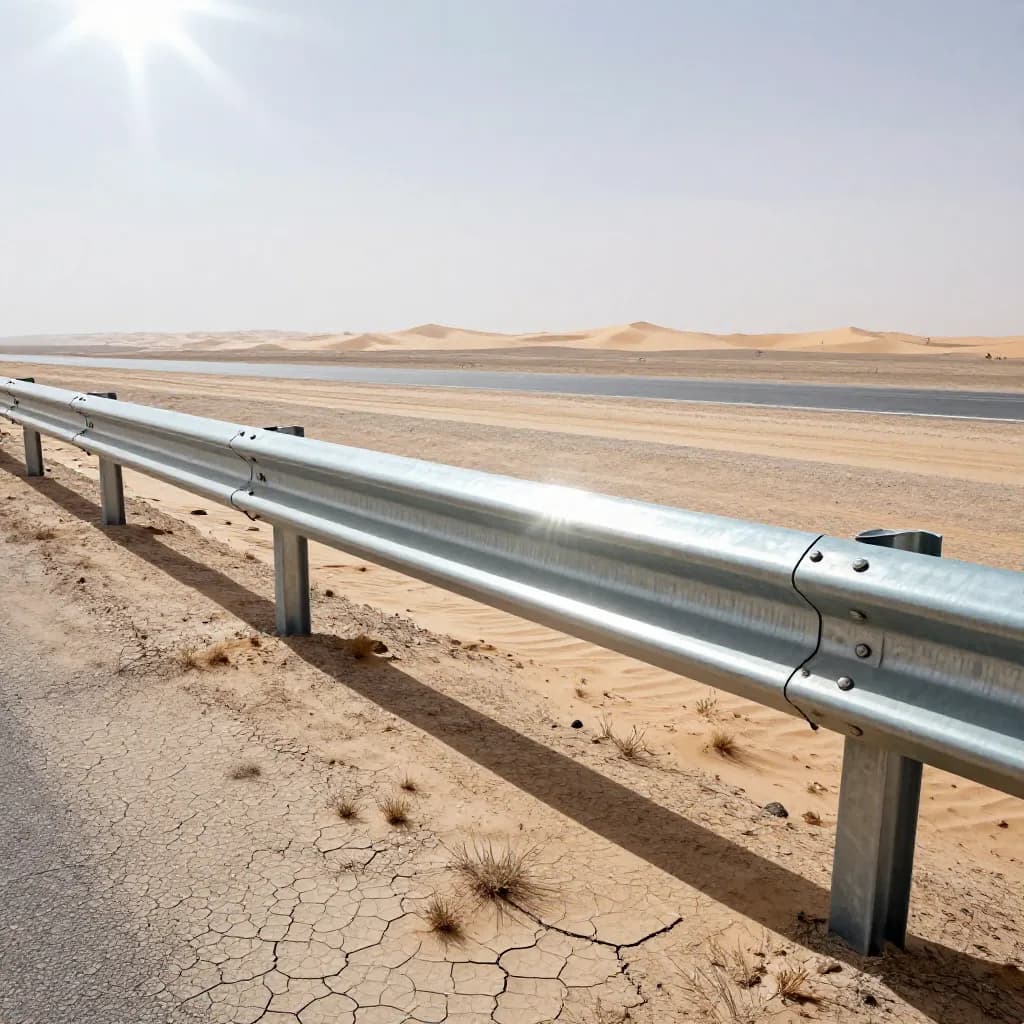
Surface temperatures on powder-coated metals in desert environments routinely exceed 70°C and can reach 90-100°C on dark-colored surfaces during peak solar hours. These temperatures approach or exceed the glass transition temperature of many standard powder coating formulations, potentially causing softening, reduced hardness, and accelerated chemical aging. The subsequent nighttime cooling to 10-20°C creates thermal cycling stresses that can induce micro-cracking in rigid coating films over thousands of cycles.
Ready to Start Your Project?
From one-off customs to 15,000-part production runs — get precise pricing in 24 hours.
On This Page
Desert Environments: A Unique Coating Challenge
Despite the harshness of these conditions, desert environments offer one significant advantage for powder coatings: the absence of sustained moisture. With annual rainfall often below 250 mm and relative humidity frequently below 30%, the moisture-driven degradation mechanisms that dominate in tropical and coastal environments — osmotic blistering, filiform corrosion, and biological growth — are largely absent. This means that properly specified powder coatings can achieve exceptional service lives in desert conditions, provided the formulation addresses the primary threats of UV, heat, and abrasion.
Extreme UV Radiation and Photodegradation
Desert regions receive some of the highest solar radiation levels on Earth. The Arabian Peninsula averages 2,200-2,400 kWh/m² of annual global horizontal irradiance, while the Sahara and Australian deserts receive similar levels. Clear skies, low atmospheric moisture, and minimal cloud cover mean that UV radiation reaches the surface with minimal attenuation. UV indices of 12-14 are common during summer months, with cumulative annual UV doses 40-60% higher than temperate European locations.
This intense UV exposure drives rapid photodegradation of organic coatings through free radical chain reactions. Standard polyester powder coatings that perform adequately for 15-20 years in central Europe may show significant chalking and gloss loss within 8-10 years in desert conditions. The rate of photodegradation approximately doubles for every 10°C increase in temperature, meaning that the elevated surface temperatures in desert environments compound the direct UV damage.
Super-durable polyester formulations are the minimum acceptable specification for desert exterior applications. These coatings incorporate high-molecular-weight polyester resins with reduced concentrations of UV-sensitive chemical groups, combined with optimized HALS and UVA stabilizer packages. The best super-durable formulations maintain gloss retention above 50% after 4,000 hours of accelerated weathering and have demonstrated 15-20 year performance in real-world desert exposure testing in Arizona, Saudi Arabia, and the UAE.
For landmark projects requiring maximum longevity, FEVE fluoropolymer powder coatings provide unmatched UV resistance. The carbon-fluorine bond energy of 485 kJ/mol far exceeds the energy of UV photons (300-400 kJ/mol for UVA/UVB), making fluoropolymer coatings essentially immune to direct photodegradation. Field exposure data from Middle Eastern installations confirms gloss retention above 80% after 20+ years.
Sand Abrasion and Wind Erosion
Wind-driven sand and dust is a defining feature of desert environments and a significant threat to powder coating integrity. Desert sandstorms can carry particles at velocities exceeding 100 km/h, with sand grain sizes typically ranging from 50-500 microns. The impact of these particles on powder-coated surfaces causes progressive erosion of the coating film, reducing thickness, increasing surface roughness, and exposing fresh coating material to UV degradation.
The abrasion resistance of a powder coating depends primarily on its hardness, crosslink density, and film thickness. Standard polyester powder coatings achieve pencil hardness values of 2H-3H, which provides moderate resistance to sand abrasion. Polyurethane powder coatings, with their higher crosslink density and inherent toughness, offer improved abrasion resistance with pencil hardness values of 3H-4H. For the most demanding desert applications, ceramic-modified powder coatings incorporating alumina or silica nanoparticles can achieve hardness values exceeding 4H while maintaining acceptable flexibility.
Film thickness is a critical factor in desert abrasion resistance. Specifying a minimum of 80-100 microns for desert exterior applications provides a sacrificial thickness margin that accommodates gradual erosion without compromising the protective function of the coating. Edge coverage is particularly important, as sharp edges and corners experience accelerated erosion due to the aerodynamic concentration of sand particles at these points.
Design strategies can significantly reduce sand abrasion damage. Recessing powder-coated surfaces behind windbreaks, using aerodynamic profiles that deflect sand-laden airflow, and orienting the most critical surfaces away from prevailing wind directions all reduce the effective sand impact energy. For ground-level infrastructure in sandy desert environments, sacrificial protective films or temporary coatings can shield powder-coated surfaces during construction and initial exposure periods.
Thermal Cycling and Coating Flexibility
Desert environments subject powder-coated surfaces to extreme thermal cycling. Diurnal temperature swings of 30-50°C are common, with surface temperatures on sun-exposed metals ranging from 10-15°C at dawn to 80-100°C at midday. Over a 20-year service life, this translates to approximately 7,000-8,000 significant thermal cycles — each one imposing differential expansion stresses between the coating and the metal substrate.
The coefficient of thermal expansion (CTE) mismatch between powder coatings and metal substrates is the root cause of thermal cycling damage. Typical polyester powder coatings have a CTE of 50-70 × 10⁻⁶/°C, while aluminum has a CTE of 23 × 10⁻⁶/°C and steel approximately 12 × 10⁻⁶/°C. This means the coating expands and contracts 2-4 times more than the substrate with each temperature cycle, generating shear stresses at the coating-substrate interface and tensile stresses within the coating film.
If the coating lacks sufficient flexibility to accommodate these cyclic stresses, micro-cracks develop and propagate over time. These cracks compromise the barrier function of the coating, allowing moisture ingress during rare rainfall events or dew formation, and accelerate UV degradation by increasing the effective surface area exposed to radiation.
Polyester powder coatings formulated for desert service should achieve a minimum T-bend flexibility of 2T (the coating can be bent over a mandrel twice its thickness without cracking) and maintain this flexibility after thermal aging at 100°C for 1,000 hours. Polyurethane powder coatings inherently offer superior flexibility and thermal cycling resistance, making them an excellent choice for desert applications where thermal stress is the primary concern. Avoiding excessive film thickness — which increases internal stress — is also important; the optimal range of 70-90 microns balances abrasion resistance with thermal cycling performance.
Color Stability and Pigment Selection for Deserts
Maintaining color stability over decades of desert exposure requires careful pigment selection and formulation design. The combination of extreme UV intensity and elevated temperatures accelerates pigment degradation mechanisms that may be negligible in temperate climates. Color shifts as small as Delta E 2-3 are perceptible to the human eye and can create visible inconsistencies on building facades, particularly when replacement panels are installed alongside original cladding.
Inorganic pigments are the foundation of color-stable desert powder coatings. Titanium dioxide (rutile grade) provides excellent white and tint base stability, with surface-treated grades offering enhanced UV screening. Iron oxide pigments — red, yellow, and black — are among the most lightfast pigments available and are ideal for earth-tone desert color palettes. Chromium oxide green and cobalt blue provide stable green and blue options, while carbon black offers the most UV-resistant dark pigmentation.
For colors that require organic pigments — bright reds, oranges, and certain blues — selecting the highest lightfastness grades is essential. Pigments rated Blue Wool Scale 7-8 (the highest ratings) should be specified for desert exterior applications. DPP (diketopyrrolopyrrole) reds, perylene reds, and phthalocyanine blues and greens represent the most durable organic pigment families for desert conditions.
Infrared-reflective (IR-reflective) pigments offer a dual benefit for desert applications. These specialized pigments reflect near-infrared solar radiation while maintaining the desired visible color, reducing surface temperatures by 10-20°C compared to conventional pigments of the same color. Lower surface temperatures reduce thermal stress on the coating, slow photodegradation rates, and improve energy efficiency of air-conditioned buildings. Dark colors formulated with IR-reflective pigments can achieve total solar reflectance values of 30-40%, compared to 5-10% for conventional dark pigments.
Pretreatment and Substrate Preparation for Desert Service
While desert environments are less corrosive than coastal or industrial atmospheres, proper pretreatment remains essential for long-term powder coating adhesion and performance. The primary pretreatment objectives in desert applications are ensuring clean, contaminant-free surfaces, providing a chemically bonded interface layer, and maximizing adhesion to withstand thermal cycling stresses.
For aluminum substrates, chrome-free conversion coatings based on titanium or zirconium fluoride chemistry provide excellent adhesion promotion and mild corrosion protection. The conversion coating weight should meet Qualicoat Class 1.5 or Class 2 requirements, with Class 2 preferred for premium architectural applications. Thorough alkaline cleaning and acid etching prior to conversion coating are critical to remove the tenacious oxide layer and any surface contaminants — particularly important in desert regions where airborne dust and sand can contaminate surfaces rapidly during processing.
For steel substrates in desert environments, the corrosion risk is lower than in humid climates, but thermal cycling stresses place greater demands on coating adhesion. Zinc phosphate pretreatment provides the best adhesion performance for steel in desert conditions, with the crystalline phosphate layer acting as both a mechanical key and a stress-distributing interlayer between the rigid coating and the metal substrate.
Surface cleanliness standards should be rigorously maintained. Abrasive blasting to Sa 2.5 (ISO 8501-1) for steel, followed by immediate phosphating, ensures optimal surface preparation. In desert environments, the low humidity actually aids surface preparation by reducing flash rusting between blasting and coating — a significant advantage over humid coastal environments where flash rusting can occur within minutes of blasting.
Desert Mega-Projects and Specification Standards
The rapid development of desert regions — particularly in the Middle East and North Africa — has generated enormous demand for high-performance powder coatings on architectural and infrastructure projects. Mega-projects in Saudi Arabia, the UAE, Qatar, and Egypt require powder coating systems that can withstand 30-50 year design lives under some of the most extreme solar and thermal conditions on Earth.
Specification standards for desert projects typically reference international frameworks adapted for local conditions. AAMA 2605 — requiring 10 years of South Florida exposure testing — is widely specified for premium architectural aluminum in Middle Eastern projects, despite South Florida's humid subtropical climate differing significantly from arid desert conditions. Qualicoat Class 2 and Class 3 certifications are increasingly specified for European-sourced aluminum systems destined for desert installations.
GSB Master certification, with its stringent requirements for accelerated weathering resistance and real-world exposure testing, provides additional assurance for desert applications. Some Middle Eastern project specifications now require supplementary desert exposure testing — typically 5-year panels exposed in Abu Dhabi, Riyadh, or similar locations — in addition to standard Florida or European exposure data.
The scale of desert mega-projects creates unique logistical challenges for powder coating quality. Millions of square meters of aluminum cladding, curtain wall, and fenestration must be coated to consistent quality standards, often by multiple applicators across different countries. Centralized specification management, regular third-party auditing, and batch-level quality documentation are essential to maintaining coating consistency across these massive projects.
Maintenance and Lifecycle Management in Desert Conditions
Maintenance requirements for powder-coated surfaces in desert environments differ significantly from those in humid climates. The absence of biological growth and reduced corrosion risk simplify the maintenance regime, but sand abrasion damage, UV degradation, and dust accumulation require specific attention.
Dust accumulation is the most frequent maintenance concern. Desert dust — composed primarily of fine silica, calcium carbonate, and clay minerals — settles on all exposed surfaces and can be difficult to remove once baked onto hot coating surfaces by solar radiation. Regular cleaning every 3-6 months using low-pressure water washing with mild detergent prevents dust from becoming permanently embedded in the coating surface. Automated cleaning systems, including robotic facade washers, are increasingly deployed on large desert buildings to maintain appearance without the safety risks of manual high-level cleaning.
Sand abrasion damage should be assessed during each cleaning cycle. Areas showing visible erosion — reduced gloss, exposed primer, or substrate visibility — should be documented and scheduled for repair. Touch-up using air-dry liquid coatings matched to the original color can arrest localized damage, though color matching can be challenging if the surrounding coating has undergone UV-induced color shift.
The lifecycle economics of powder coating in desert environments are generally favorable. The low corrosion risk means that coating failures tend to be cosmetic rather than structural, allowing extended service intervals compared to coastal environments. A well-specified super-durable polyester system with proper pretreatment can achieve 20-25 years of acceptable performance in desert conditions, while FEVE fluoropolymer systems can exceed 30 years. These extended service lives, combined with relatively simple maintenance requirements, deliver excellent lifecycle value for desert construction projects.
Frequently Asked Questions
How does desert UV affect powder coating lifespan?
Desert regions receive 40-60% more annual UV energy than temperate climates. Standard polyester powder coatings may show significant chalking within 8-10 years, while super-durable polyester formulations last 15-20 years. FEVE fluoropolymer coatings maintain gloss retention above 80% after 20+ years of desert exposure due to their UV-resistant carbon-fluorine bonds.
What powder coating resists sand abrasion best?
Polyurethane powder coatings offer the best combination of hardness (3H-4H pencil) and flexibility for sand abrasion resistance. Ceramic-modified formulations with alumina or silica nanoparticles can exceed 4H hardness. Specifying minimum 80-100 micron film thickness provides a sacrificial margin against gradual erosion.
Do dark powder coating colors work in desert climates?
Dark colors absorb more solar radiation and can reach surface temperatures of 90-100°C in desert sunlight, accelerating coating degradation. Infrared-reflective pigments reduce surface temperatures by 10-20°C while maintaining the desired color appearance, making dark colors viable for desert applications when properly formulated.
How does thermal cycling damage powder coatings in deserts?
Daily temperature swings of 30-50°C create differential expansion stresses between the coating and metal substrate due to CTE mismatch. Over 7,000-8,000 cycles in a 20-year life, this can cause micro-cracking. Coatings should achieve minimum 2T bend flexibility and maintain it after thermal aging at 100°C for 1,000 hours.
What maintenance do powder-coated surfaces need in desert environments?
Desert maintenance focuses on dust removal every 3-6 months using low-pressure water washing with mild detergent, plus assessment of sand abrasion damage during each cleaning cycle. The absence of biological growth and low corrosion risk simplify maintenance compared to humid climates, contributing to favorable lifecycle economics.
Ready to Start Your Project?
From one-off customs to 15,000-part production runs — get precise pricing in 24 hours.