Accurate identification of powder coating defects is the essential first step in troubleshooting — applying the wrong corrective action because the defect was misidentified wastes time, materials, and production capacity. Many powder coating defects look similar to the naked eye but have fundamentally different root causes. A pinhole caused by outgassing requires a completely different corrective action than a pinhole caused by moisture in the compressed air. A crater caused by silicone contamination requires different treatment than a crater caused by back-ionization.
Technical
Powder Coating Defects Identification Guide: Pinholes, Craters, Fisheyes, Sagging, and More
Sundial Powder Coating·April 22, 2026·15 min
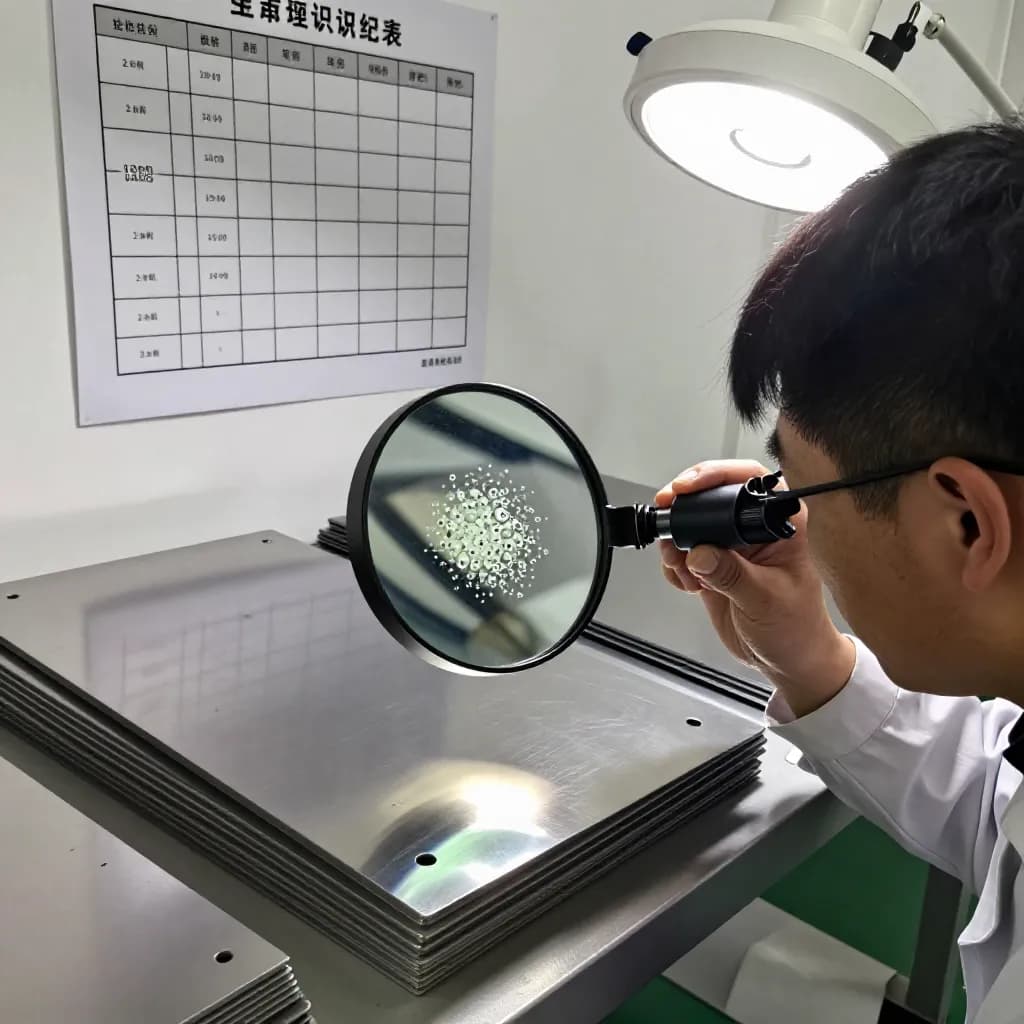
Systematic defect identification follows a structured process: first, describe the defect's visual characteristics (size, shape, distribution, location on the part); second, determine when in the process the defect first appears (before cure, during cure, or after cure); third, examine the defect under magnification to reveal its morphology; and fourth, correlate the defect characteristics with known defect mechanisms to identify the most likely root cause.
Ready to Start Your Project?
From one-off customs to 15,000-part production runs — get precise pricing in 24 hours.
On This Page
A Systematic Approach to Defect Identification
This guide catalogs the most common powder coating defects, describing their visual appearance, microscopic morphology, root causes, and corrective actions. Each defect is described in sufficient detail to enable positive identification and differentiation from similar-looking defects. The defects are organized by their primary mechanism: substrate-related defects, contamination-related defects, application-related defects, and cure-related defects.
Pinholes and Craters: Substrate and Contamination Origins
Pinholes are small holes (0.1-1.0 mm diameter) that penetrate through the full coating thickness to the substrate. They appear as tiny dark spots on light-colored coatings because the substrate is visible through the hole. Under magnification (20-50x), outgassing pinholes show a cylindrical channel with smooth walls — the path of a gas bubble pushing through the gelling film. They are typically distributed uniformly across the surface or concentrated over porous substrate areas (welds, castings, galvanized surfaces).
Craters are shallow, bowl-shaped depressions (1-5 mm diameter) in the coating surface that do not penetrate to the substrate. They have a characteristic raised rim where displaced coating material has accumulated around the depression. Contamination craters are caused by surface-active contaminants — silicone, oil, or surfactants — that create localized differences in surface tension. The contaminant repels the surrounding molten powder, creating a depression. Under magnification, contamination craters often show a small particle or residue at the center of the depression — the contamination source.
Differentiating between outgassing pinholes and contamination craters is critical because the corrective actions are opposite. Outgassing is addressed by degassing the substrate (preheating before coating), while contamination is addressed by improving cleaning and eliminating the contamination source. The key diagnostic differences are: outgassing pinholes penetrate to the substrate while contamination craters usually do not; outgassing pinholes are cylindrical while contamination craters are bowl-shaped with raised rims; outgassing is substrate-dependent (appears on porous substrates) while contamination can appear on any substrate; and outgassing is eliminated by degassing while contamination is eliminated by cleaning.
Moisture pinholes are caused by water trapped in the substrate or in the powder itself. They resemble outgassing pinholes but are typically smaller and more numerous. Moisture in the powder (from humid storage conditions or inadequate drying of the fluidization air) creates clusters of tiny pinholes distributed randomly across the surface. Moisture in the substrate (from inadequate drying after pretreatment) creates pinholes concentrated in areas where water was trapped — joints, seams, and horizontal surfaces.
Fisheyes, Crawling, and Surface Tension Defects
Fisheyes are circular defects similar to craters but typically larger (3-10 mm diameter) and with a more pronounced raised rim. They are caused by localized contamination with very low surface tension materials — most commonly silicone compounds. The extremely low surface tension of silicone (approximately 20 mN/m, compared to 30-40 mN/m for most powder coatings) creates a strong surface tension gradient that drives the molten powder away from the contamination site, forming a large, well-defined circular defect.
Silicone contamination is the most feared contaminant in powder coating because it is extremely difficult to remove and can spread from a single source to contaminate an entire production line. Sources include: silicone-based mold releases on incoming parts, silicone sealants used in building maintenance, silicone-containing personal care products (hand creams, hair products), silicone lubricants on conveyor chains, and silicone-contaminated compressed air from compressor lubricants. Even parts-per-billion levels of silicone on the substrate surface can cause fisheyes.
Crawling (also called dewetting or retraction) is an extreme form of surface tension defect where the molten powder retracts from large areas of the substrate, leaving bare metal exposed. Crawling indicates severe, widespread contamination rather than the localized contamination that causes individual fisheyes. The molten powder pulls back from the contaminated area like water beading on a waxed surface, forming thick ridges at the edges of the retracted zone.
Corrective actions for surface tension defects focus on identifying and eliminating the contamination source. Immediate actions include: cleaning the affected parts with solvent (MEK or acetone) and recoating; inspecting the pretreatment system for contamination; checking compressed air quality with a white cloth test; and reviewing all materials that contact the parts for silicone content. Long-term prevention requires: banning silicone-containing products from the coating facility; using silicone-free conveyor lubricants; installing oil-removing filters on compressed air lines; and implementing incoming part inspection for contamination.
Sagging, Runs, and Gravity-Related Defects
Sagging is the downward flow of molten powder on vertical or inclined surfaces during the cure cycle, creating a thicker film at the bottom of the part and a thinner film at the top. Mild sagging appears as a gradual thickness gradient from top to bottom. Severe sagging produces visible runs or curtains — thick ridges of coating that have flowed downward and solidified in place.
Sagging occurs when the gravitational force on the molten powder film exceeds the film's resistance to flow. The gravitational force is proportional to the film thickness and the density of the molten powder, while the resistance to flow depends on the melt viscosity and the rate of viscosity increase as crosslinking progresses. Thicker films, lower melt viscosity, and slower gel times all increase the tendency to sag.
The most common cause of sagging is excessive film thickness — applying more powder than necessary, particularly on vertical surfaces. Reducing the film thickness to the minimum required by the specification is the most effective corrective action. If the specification requires a thick film (above 80-100 μm) on vertical surfaces, using a powder formulation with higher melt viscosity or faster gel time can reduce sagging tendency.
Oven conditions also affect sagging. Rapid heating (high oven temperature or IR pre-heating) reduces the melt viscosity quickly and can cause sagging before the crosslinking reaction increases the viscosity. A gentler ramp rate — achieved by reducing the oven setpoint or using a lower-temperature first zone — allows the crosslinking reaction to begin building viscosity before the film reaches its minimum viscosity point.
Picture framing is a related defect where the coating is thicker at the edges and corners of a flat panel than in the center, creating a visible frame-like pattern. It is caused by the electrostatic edge effect — the electric field concentrates at edges and corners, depositing more powder in these areas. The thicker edge deposits are more prone to sagging on vertical panels, compounding the visual defect. Reducing the application voltage and increasing the gun-to-part distance can reduce picture framing.
Back-Ionization, Starring, and Electrostatic Defects
Back-ionization defects appear as a rough, textured surface with small craters, pits, or a characteristic 'starring' pattern (star-shaped marks) in the deposited powder layer. These defects are visible in the uncured powder before the part enters the oven, distinguishing them from cure-related defects that only appear after heating. Back-ionization is caused by excessive electrostatic charge buildup on the deposited powder layer, which creates micro-discharges that disrupt the powder surface.
The severity of back-ionization increases with film thickness, charging voltage, and current. It typically becomes visible above 80-120 μm film thickness with standard corona settings (60-80 kV, 40-60 μA). The defect is most pronounced on flat surfaces facing the gun, where the electrostatic field is strongest and the powder layer is thickest. Recessed areas and edges are less affected because they receive less powder and less direct ion bombardment.
Corrective actions for back-ionization include: reducing the charging voltage by 10-30 kV; reducing the current limit to 15-30 μA; increasing the gun-to-part distance by 50-100 mm; switching to tribo charging (which eliminates free ions); applying powder in multiple lighter passes rather than one heavy pass; and reducing the target film thickness if the specification allows. Modern corona gun controllers with automatic voltage and current regulation can detect the onset of back-ionization and reduce the charging parameters automatically.
Orange peel caused by electrostatic effects should be distinguished from orange peel caused by poor leveling. Electrostatic orange peel has a random, irregular texture that is visible in the uncured powder, while leveling-related orange peel has a more regular, undulating texture that develops during the melt and flow phase. If the deposited powder layer looks smooth before entering the oven but the cured coating has orange peel, the cause is leveling-related. If the deposited powder already shows texture before curing, the cause is electrostatic.
Yellowing, Discoloration, and Cure-Related Defects
Yellowing is a shift in color toward yellow (positive delta b in CIE Lab color space) that occurs during the cure cycle. It is most visible on white and light-colored coatings and is caused by thermal degradation of the resin or pigment system at excessive cure temperatures or times. Epoxy resins are most susceptible to yellowing, followed by hybrid and polyester formulations. Standard polyester coatings can tolerate moderate over-cure without significant yellowing, but even polyester will yellow at temperatures 20-30°C above the recommended cure window.
Oven atmosphere contamination can also cause yellowing, particularly in direct-fired gas ovens where combustion byproducts (NOx, sulfur compounds) contact the curing coating. This type of yellowing is often inconsistent — parts in different positions within the oven show different degrees of yellowing depending on their proximity to the burner and the local gas flow patterns. Switching to indirect-fired heating or improving oven ventilation can eliminate atmosphere-related yellowing.
Blooming is the appearance of a hazy, whitish film on the cured coating surface, caused by migration of additives (typically wax or flow agents) to the surface during or after curing. Blooming is more common in warm, humid conditions and may develop gradually over hours or days after curing. It can usually be removed by wiping with a solvent or mild abrasive, but it will recur if the underlying cause is not addressed. Reformulation of the powder to reduce the additive level or change the additive type is the permanent solution.
Blocking is the sticking together of coated parts that are stacked or nested before the coating has fully hardened. It occurs when the coating surface remains slightly tacky after curing — either because the cure is incomplete (under-cure) or because the coating formulation has a low glass transition temperature (Tg) that allows the surface to soften at the storage temperature. Blocking is most common with low-Tg formulations stored in warm environments. Ensuring complete cure and allowing parts to cool fully before stacking prevents blocking.
Chipping and flaking during handling or in service indicates poor adhesion (see adhesion failure troubleshooting) or excessive film brittleness from over-cure. Over-cured films lose flexibility and become prone to cracking and chipping under mechanical stress. Impact testing per ASTM D2794 and mandrel bend testing per ASTM D522 can quantify the loss of mechanical properties caused by over-cure.
Application Defects: Spitting, Surging, and Pattern Problems
Spitting is the intermittent ejection of large powder clumps or wet agglomerates from the spray gun, which deposit on the part as visible lumps or rough spots. Spitting is caused by powder buildup inside the gun, hoses, or nozzle that periodically breaks loose and is ejected with the powder stream. Common causes include: moisture in the powder or compressed air that causes powder to cake on internal surfaces; worn or damaged gun components that create turbulence and powder accumulation; and powder formulations with poor flow characteristics that tend to build up in the delivery system.
Surging is a rhythmic variation in powder output that creates visible bands of thick and thin coating on the part. It is most commonly caused by inconsistent fluidization in the feed hopper — the powder bed pulses or channels rather than fluidizing uniformly, causing the powder pickup rate to fluctuate. Other causes include: worn venturi pump throats that produce inconsistent suction; partially blocked feed hoses; and air pressure fluctuations in the compressed air supply. Dense phase delivery systems are less prone to surging than venturi systems because they use positive-pressure pumping that is less sensitive to fluidization variations.
Pattern defects include: uneven coverage (thicker on one side than the other, caused by misaligned guns or uneven powder output across a multi-gun bank); striping (visible horizontal bands caused by insufficient overlap between reciprocating gun passes); and edge buildup (excessive thickness at part edges caused by electrostatic field concentration). These defects are diagnosed by examining the deposited powder layer before curing — if the pattern defect is visible in the uncured powder, the cause is in the application process. If the uncured powder looks uniform but the cured coating shows the defect, the cause is in the cure process.
Powder clumps or seeds — small, hard particles visible as bumps in the cured coating — are caused by pre-gelled or partially cured powder particles in the feed system. These particles can form when powder is exposed to heat (near oven openings, in hot gun bodies, or in hoppers exposed to radiant heat) or when old powder that has partially reacted during extended storage is mixed with fresh powder. Sieving the powder through a 150 μm mesh before use removes most clumps, and maintaining proper storage conditions (below 25°C, below 60% RH) prevents their formation.
Defect Prevention: Process Control and Root Cause Elimination
While this guide focuses on defect identification and troubleshooting, the ultimate goal is defect prevention — eliminating the root causes of defects so they do not occur in the first place. A prevention-oriented approach is more effective and less costly than a detection-and-correction approach.
Process control is the foundation of defect prevention. Establishing control limits for every critical process parameter — pretreatment chemistry, rinse quality, dry-off temperature, application settings, film thickness, oven temperature profile, and cure verification — and monitoring these parameters continuously ensures that the process operates within the conditions that produce defect-free coatings. Statistical process control (SPC) charts provide early warning of parameter drift before it causes defects.
Incoming material control prevents substrate and powder quality problems from entering the process. Inspecting substrates for surface condition, contamination, and dimensional accuracy catches problems before coating labor and materials are invested. Verifying powder PSD, color, and reactivity against specifications ensures that the powder will perform as expected in the application and cure process.
Environmental control addresses contamination sources that are external to the coating process itself. Maintaining positive air pressure in the spray booth area prevents dust and contaminants from entering. Filtering the booth supply air removes airborne particles. Controlling humidity in the powder storage and application areas prevents moisture-related defects. Banning silicone-containing products from the facility eliminates the most common contamination source.
Operator training ensures that the people performing the coating process understand the relationship between process parameters and coating quality, can recognize the early signs of developing problems, and know the correct response to out-of-specification conditions. Regular refresher training and cross-training between workstations maintain skill levels and provide backup capability.
Continuous improvement uses defect data to identify the most frequent and costly defect types, investigate their root causes, implement corrective actions, and verify that the actions are effective. Pareto analysis of defect data typically reveals that 80% of defects come from 20% of the causes — focusing improvement efforts on these top causes provides the greatest return on investment.
Frequently Asked Questions
How do you tell the difference between outgassing pinholes and contamination craters?
Outgassing pinholes penetrate to the substrate with cylindrical channels (visible under magnification), are distributed across porous substrate areas, and are eliminated by degassing. Contamination craters are shallow bowl-shaped depressions with raised rims, do not penetrate to the substrate, can appear on any substrate, and are eliminated by removing the contamination source.
What causes fisheyes in powder coating?
Fisheyes are caused by localized contamination with very low surface tension materials, most commonly silicone. Even parts-per-billion levels of silicone create strong surface tension gradients that repel the molten powder, forming large circular defects. Sources include mold releases, sealants, personal care products, conveyor lubricants, and contaminated compressed air.
Why does my powder coating sag on vertical surfaces?
Sagging occurs when gravitational force on the molten film exceeds its resistance to flow. The most common cause is excessive film thickness — reduce to the minimum specification. Other factors include low melt viscosity powder, slow gel time, and rapid oven heating that reduces viscosity before crosslinking begins. Using higher-viscosity powder or a gentler oven ramp rate can help.
What causes yellowing of white powder coating?
Yellowing is caused by thermal degradation during over-cure (excessive temperature or time) or by oven atmosphere contamination (NOx from direct-fired gas burners). Verify cure conditions with an oven temperature profile — metal temperature should not exceed the powder manufacturer's recommended maximum. For atmosphere-related yellowing, improve oven ventilation or switch to indirect-fired heating.
How can I tell if a defect is caused by application or curing?
Examine the deposited powder layer before it enters the oven. If the defect is visible in the uncured powder (back-ionization starring, pattern problems, spitting), the cause is in the application process. If the uncured powder looks smooth but the cured coating shows defects (orange peel from poor leveling, yellowing, pinholes from outgassing), the cause is in the cure process or substrate.
What is picture framing in powder coating?
Picture framing is thicker coating at the edges and corners of flat panels compared to the center, creating a visible frame-like pattern. It is caused by electrostatic field concentration at edges that deposits more powder in these areas. Reducing application voltage, increasing gun distance, and using tribo charging can minimize the effect.
Ready to Start Your Project?
From one-off customs to 15,000-part production runs — get precise pricing in 24 hours.