Powder coating is a dry finishing process where finely ground particles of pigment and resin are electrostatically charged and sprayed onto a metal surface. The charged particles cling to the grounded metal part, creating an even layer of powder across the entire surface. The coated part is then placed in a curing oven where heat melts the powder, causes it to flow into a smooth film, and chemically cross-links it into a hard, durable finish.
Local Info
Powder Coating FAQ: Answers to the Questions Customers Ask Most
Sundial Powder Coating·April 20, 2026·12 min
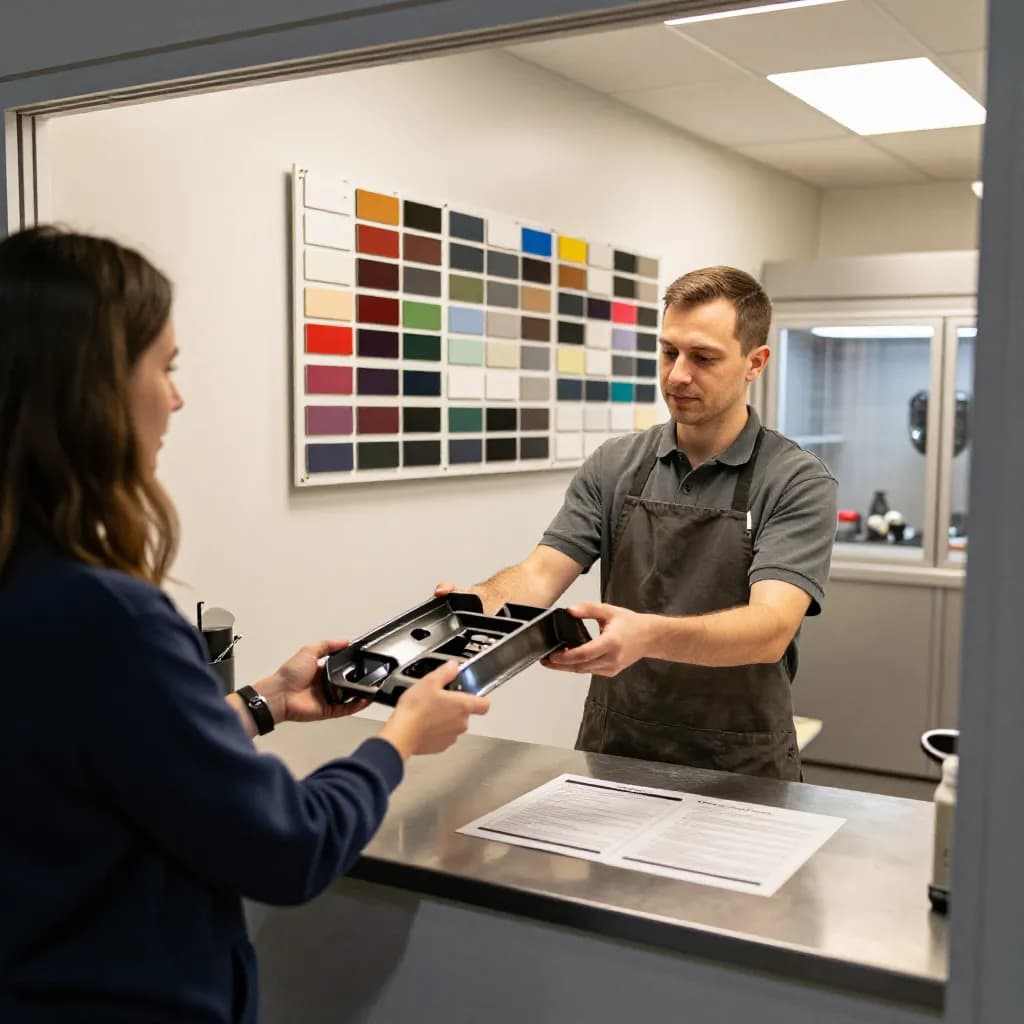
The key difference from liquid paint is that powder coating contains no solvents. Liquid paint relies on solvents to keep the pigment and resin in a sprayable liquid form, and these solvents evaporate during drying, releasing volatile organic compounds into the air. Powder coating skips this entirely. The powder is applied dry and cured with heat, producing virtually zero VOC emissions and creating a finish that is typically thicker, harder, and more uniform than liquid paint.
Ready to Start Your Project?
From one-off customs to 15,000-part production runs — get precise pricing in 24 hours.
On This Page
What Is Powder Coating and How Is It Different from Paint?
In practical terms, powder coating produces a finish that is more resistant to chipping, scratching, fading, and corrosion than most liquid paints. It wraps around edges and into recesses more consistently, and it does not run or sag during application. The result is a smooth, even finish with excellent coverage that maintains its appearance for years with minimal maintenance.
What Items Can Be Powder Coated?
Almost any metal item that can withstand the curing temperature of approximately 180 to 200 degrees Celsius can be powder coated. This includes steel, aluminum, stainless steel, cast iron, brass, copper, and bronze. Common items include automotive parts like wheels, bumpers, and brackets, motorcycle frames and components, furniture frames and legs, gates, railings, fencing, garden furniture, light fixtures, tools, and industrial equipment.
The main limitation is size. The item must fit inside the curing oven, so very large structures may need to be disassembled into sections for coating. Some coaters have large walk-in ovens that can accommodate items several meters long, while others are limited to smaller batch ovens. If you have an unusually large item, check the coater's oven dimensions before committing.
Non-metal items generally cannot be powder coated because they cannot be electrostatically charged or cannot withstand the curing temperature. Wood, plastic, glass, and fabric are not suitable. However, some specialized low-temperature powders and UV-cure systems are being developed for heat-sensitive substrates, though these are not yet widely available in most coating shops.
How Long Does Powder Coating Take?
The total turnaround time for a powder coating job depends on several factors, but most standard jobs are completed within three to seven business days. The actual coating and curing process takes only a few hours, but the preparation work that precedes it, including stripping old finishes, media blasting, pretreatment, and masking, is what determines the overall timeline.
Parts in good condition with no existing coatings move through the process fastest. A set of clean, bare metal brackets might be blasted, pretreated, coated, and cured in a single day. Conversely, parts with heavy rust, multiple layers of old paint, or complex masking requirements need significantly more preparation time. A heavily corroded motorcycle frame with dozens of masking points could take several days of preparation before it is ready for the spray booth.
Other factors that affect turnaround include the shop's current workload, whether your chosen color is in stock or needs to be ordered, and the batch size. Rush services are available at many shops for straightforward jobs in stock colors. If your timeline is critical, discuss it with the coater when you drop off your parts so they can plan accordingly.
How Durable Is Powder Coating?
Powder coating is one of the most durable finish options available for metal. A properly applied powder coat is significantly harder and more resilient than conventional liquid paint. It resists chipping from impacts that would damage paint, maintains its color and gloss through years of UV exposure, and provides a continuous barrier against moisture and corrosion that protects the underlying metal.
The durability of a specific powder coating job depends on three factors: the quality of the pretreatment, the type of powder used, and the accuracy of the curing process. Proper pretreatment creates a chemical bond between the metal and the coating that prevents peeling and corrosion. The right powder type, whether standard polyester for outdoor use or a specialty formulation for high-temperature or chemical exposure, ensures the finish performs in its intended environment. Correct curing, verified by temperature monitoring, ensures the powder fully cross-links into its hardest, most resilient state.
In real-world terms, a quality powder coat on outdoor metalwork like gates, railings, and furniture typically maintains its appearance for ten to fifteen years or more with basic cleaning. Indoor applications last even longer due to reduced UV and weather exposure. Architectural powder coatings on building facades are warranted for up to twenty-five years, demonstrating the exceptional longevity that the best powder coating systems can achieve.
What Colors and Finishes Are Available?
The range of colors available in powder coating is virtually unlimited. Standard color systems like RAL Classic offer over two hundred defined colors, and powder manufacturers produce thousands of additional shades, effects, and specialty finishes. If you can imagine a color, there is almost certainly a powder available to match it, and if there is not, a custom formulation can be developed.
Beyond solid colors, powder coating offers a wide range of finishes and effects. Gloss levels range from mirror-like high gloss through semi-gloss and satin to completely flat matte. Metallic finishes incorporate fine metal flakes for a sparkling, reflective appearance. Textured finishes include fine and coarse textures, wrinkle effects, and hammertone patterns. Specialty effects like candy coats, color-shifting pigments, and transparent tints over metallic bases create eye-catching visual impact.
Wood-grain and stone-effect finishes are achieved through a sublimation transfer process applied over a base powder coat. These finishes allow metal items like gates, window frames, and furniture to mimic the appearance of natural materials while retaining the durability and low maintenance of powder-coated metal. The realism of modern sublimation transfers is remarkable, with detailed grain patterns and color variation that closely replicate natural wood and stone.
How Should I Prepare My Parts Before Bringing Them In?
The most important preparation step is disassembly. Remove all non-metal components from your parts before bringing them to the coater. This includes rubber bushings, plastic caps, gaskets, seals, bearings, glass panels, stickers, and any electronic components. These items cannot survive the curing oven and will be damaged or destroyed if left attached. Remove as many fasteners as practical, especially if you want them coated separately or left uncoated.
Clean off heavy contamination. While the coater handles final cleaning and preparation, removing the worst of the grease, oil, and grime before drop-off speeds up the process and lets the coater assess the metal condition more easily. A wipe with a degreaser is usually sufficient. You do not need to remove old paint or rust, as the coater has the equipment and chemicals to handle that.
Identify and communicate any areas that must remain uncoated. Threaded holes, bearing seats, electrical contacts, mating surfaces, and any precision-machined areas need to be masked during the coating process. Make a list, mark the areas with tape, or provide annotated photos so the coater knows exactly what to protect. Clear masking instructions prevent problems during reassembly and ensure the finished parts fit and function correctly.
How Do I Care for Powder-Coated Items?
Powder-coated items are low maintenance, but a little regular care keeps them looking their best for the longest possible time. For routine cleaning, warm water with a mild soap or household detergent and a soft cloth or sponge is all you need. This removes dust, dirt, pollen, and light grime without affecting the finish. Rinse with clean water and allow to dry naturally or wipe with a soft towel.
Avoid abrasive cleaners, scouring pads, steel wool, and harsh chemical solvents. These can scratch, dull, or damage the powder coat surface. If you encounter a stubborn stain or deposit, try a non-abrasive household cleaner or isopropyl alcohol on a soft cloth. For outdoor items, a periodic wash every few months removes environmental deposits that can gradually degrade the finish if left to accumulate.
If the coating is scratched or chipped, address it promptly to prevent moisture from reaching the bare metal underneath. Small chips can be touched up with matching liquid paint available from the coater or powder manufacturer. For larger areas of damage, the item may need to be stripped and recoated. Prompt attention to damage, especially on outdoor items, prevents corrosion from developing under the coating and spreading beyond the original damage point.
Is Powder Coating Environmentally Friendly?
Powder coating is one of the most environmentally responsible finishing methods available. Because it contains no solvents, it produces virtually zero volatile organic compound emissions during application and curing. This is a significant advantage over liquid paint, which releases solvents into the atmosphere as it dries. For businesses and consumers concerned about air quality and environmental impact, powder coating is the cleaner choice.
Overspray in powder coating is collected and recycled. Powder that does not adhere to the part during spraying is captured by the booth's recovery system, filtered, and returned to the supply for reuse. Recovery rates of 95 percent or higher are common in well-managed shops. This contrasts sharply with liquid paint, where overspray is typically captured in filters or water wash systems and disposed of as waste.
The durability of powder coating also contributes to its environmental profile. A finish that lasts ten to twenty years before needing replacement means fewer refinishing cycles over the life of the item, reducing the cumulative material use, energy consumption, and waste generation compared to finishes that need reapplication every few years. When a powder-coated item does eventually need refinishing, the old coating can be stripped and the metal recoated, extending the item's useful life further.
Frequently Asked Questions
Can powder coating be applied over existing paint or coatings?
Powder coating should be applied to clean, bare metal for the best adhesion and durability. Existing paint, primer, or old powder coat needs to be stripped before new powder is applied. Coating over an existing finish risks adhesion failure because the new powder bonds to the old coating rather than the metal, and the old coating may not provide a stable foundation.
Is powder coating safe for items that get hot, like fire pits or exhaust parts?
Standard powder coatings are rated for continuous temperatures up to about 150 degrees Celsius. For items that experience higher temperatures, specialty high-temperature and ceramic powder coatings are available that withstand temperatures of 500 degrees Celsius or more. Discuss the operating temperature of your item with the coater so they can select the appropriate powder type.
Can I powder coat just one small item, or is there a minimum?
Most shops are happy to coat individual items, even small ones. There is no technical minimum for powder coating. However, the setup involved in preparing the spray booth and running the oven means that very small jobs may not be the most economical use of the process. Some shops have minimum charges that reflect this setup overhead. Ask your local coater about their policy for small jobs.
How do I choose between gloss, satin, and matte finishes?
Gloss finishes are shiny and reflective, showing off smooth surfaces but also highlighting any imperfections. Satin finishes offer a soft sheen that balances visual appeal with practicality, hiding minor marks better than high gloss. Matte finishes are flat with no reflectivity, providing a modern, understated look that conceals fingerprints and light scratches. Ask to see samples of each on actual coated metal to decide which suits your project.
Does powder coating add noticeable thickness to parts?
Powder coating typically adds 60 to 80 microns of thickness, which is roughly the thickness of a sheet of paper. For most applications, this is imperceptible and does not affect fitment. For precision components with tight tolerances, such as bearing seats or threaded holes, the coater masks these areas to maintain exact dimensions. Discuss any fitment concerns with your coater before the job begins.
Ready to Start Your Project?
From one-off customs to 15,000-part production runs — get precise pricing in 24 hours.