Custom color powder coating allows you to go beyond standard color charts and get a finish that matches your exact vision. The process starts when you provide a color reference to your coater, whether that is a specific code from a color system, a physical sample, or even a description of what you are looking for. The coater then works with their powder supplier to formulate a powder that matches your target.
Local Info
Custom Color Powder Coating: How to Get Any Color You Want
Sundial Powder Coating·April 20, 2026·8 min
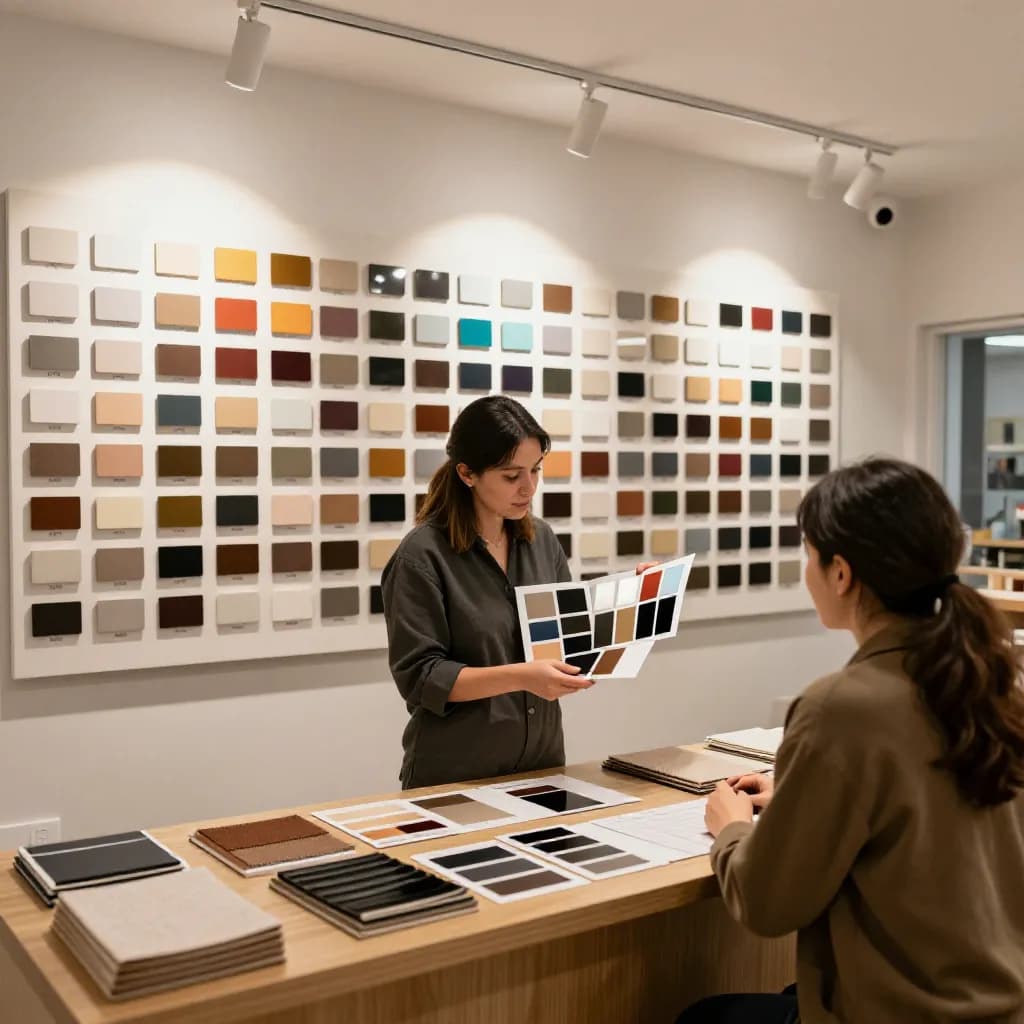
The matching is done using a spectrophotometer, an instrument that measures color with far greater precision than the human eye. It reads the color values of your reference and compares them to the formulated powder, ensuring the match is accurate and reproducible. This scientific approach eliminates the guesswork that comes with visual matching alone and produces consistent results across batches.
Ready to Start Your Project?
From one-off customs to 15,000-part production runs — get precise pricing in 24 hours.
On This Page
How Custom Colors Work
Once the custom powder is formulated, a trial batch is produced and sprayed onto a sample panel for your approval. This panel is your opportunity to verify the color under real-world conditions before committing to the full production run. Only after you approve the sample does the coater proceed with coating your actual parts.
What References You Can Provide
The most precise way to specify a custom color is with a code from an established color system. RAL codes are widely used in Europe and increasingly worldwide, with the RAL Classic and RAL Design systems covering thousands of defined colors. Pantone references are common in branding and graphic design. NCS, Munsell, and BS color codes are also recognized by powder manufacturers. If you have a code, provide it and the coater can match it directly.
Physical samples are the next best option. A paint chip, a piece of coated metal, a fabric swatch, or any solid-colored object can serve as a reference for spectrophotometer matching. The sample should be clean, unfaded, and large enough for the instrument to read accurately. Even a small chip can work, but a larger sample gives the coater more confidence in the reading.
If you do not have a code or a physical sample, you can still communicate your color intent. A photo, a description, or a reference to a well-known color can give the coater a starting point. They can then produce several sample panels in the range you describe, and you choose the one that best matches your vision. This approach requires more iteration but can still produce an excellent result.
The Matching Process
After receiving your color reference, the coater sends the specification to their powder supplier, who formulates a trial batch. This formulation process considers not just the color but also the desired gloss level, texture, and performance requirements. A custom outdoor color needs UV-stable pigments, while an indoor color has more flexibility in pigment selection.
The trial batch is sprayed onto sample panels, typically on the same substrate material as your actual parts. These panels are measured with a spectrophotometer to verify the match falls within acceptable tolerances, usually expressed as a Delta E value. A Delta E of one or less is generally considered an imperceptible difference to the human eye, though tighter tolerances can be specified for critical applications.
You receive the sample panels for approval. Evaluate them under the lighting conditions where the finished parts will be used, not just under office lighting. Natural daylight, artificial interior lighting, and mixed conditions can all affect how a color appears. Once you approve the sample, the coater retains it as the production reference standard and proceeds with your order.
Minimum Quantities for Custom Colors
Custom color powder is manufactured in batches, and powder suppliers have minimum order quantities that make production economically viable. These minimums typically range from five to twenty-five kilograms depending on the supplier and the complexity of the formulation. This means custom colors are most practical when you have enough parts to use a reasonable quantity of powder.
For small projects, the minimum powder quantity may be more than you need for your specific parts. In this case, you have a few options. Some coaters will store the remaining powder for future use if you anticipate needing the same color again. Others may be able to combine your custom color request with another customer's order for the same or similar color, though this is less common.
If the minimum quantity is a concern, discuss alternatives with your coater. They may be able to find a close match in an existing standard color range that avoids the need for a custom formulation entirely. Many powder manufacturers offer extensive standard ranges with hundreds of colors, and there may be a stock option close enough to your target that a custom batch is unnecessary.
Tips for Getting the Perfect Custom Color
Provide a physical sample whenever possible, even if you also have a color code. Codes can be interpreted slightly differently by different manufacturers, and a physical reference gives the coater an unambiguous target. If your reference is a painted surface, make sure it is clean and unfaded, as dirt and UV degradation will shift the color reading.
View approval samples under natural daylight, which reveals the true color more accurately than artificial lighting. If the finished parts will be installed outdoors, evaluate the sample outdoors. If they will be in a showroom under specific lighting, evaluate under those conditions. Color perception is heavily influenced by lighting, and approving a sample under the wrong light source is a common cause of disappointment.
Approve the sample on the actual substrate material whenever possible. The same powder can appear slightly different on aluminum versus steel, or on a flat panel versus a textured extrusion. If your parts are aluminum, ask for the sample to be sprayed on aluminum. This eliminates substrate-related color variation and gives you the most accurate preview of the finished result.
Frequently Asked Questions
How long does custom color matching take?
The typical timeline from providing your reference to receiving approval samples is one to three weeks, depending on the powder supplier's workload and the complexity of the color. Simple solid colors are faster to match than metallics, textures, or colors with unusual pigment requirements. Allow additional time if multiple rounds of refinement are needed.
Can any color be matched in powder coating?
Nearly any color can be matched, though some extremely vivid or fluorescent shades are more challenging due to pigment limitations in powder formulations. Metallic and pearlescent effects can also be matched but may require additional development time. Discuss any unusual color requirements with your coater early so they can advise on feasibility.
Will my custom color look the same as my paint sample?
A spectrophotometer match ensures the color values are as close as technically possible, but powder coating and liquid paint have inherently different surface characteristics. Powder tends to have a slightly different texture and light interaction than wet paint. Approving a sample panel sprayed with the actual powder on the actual substrate gives you the most accurate expectation of the finished result.
Can I reorder the same custom color later?
Yes, if the coater retains your color specification and the approved reference panel, they can reorder the same formulation from the powder supplier. This is one reason to work with a coater who documents custom colors carefully. Keeping the reference panel and formulation code on file ensures future orders match the original precisely.
Ready to Start Your Project?
From one-off customs to 15,000-part production runs — get precise pricing in 24 hours.