Curtain walls and facades are the most exposed elements of any building envelope. They face continuous assault from ultraviolet radiation, wind-driven rain, temperature cycling, atmospheric pollution, and in coastal locations, salt-laden air. The coating system applied to these elements must withstand decades of this exposure while maintaining both its protective function and its visual appearance.
Architecture
Powder Coating for Curtain Walls and Facades: Specification Guide
Sundial Powder Coating·April 20, 2026·9 min
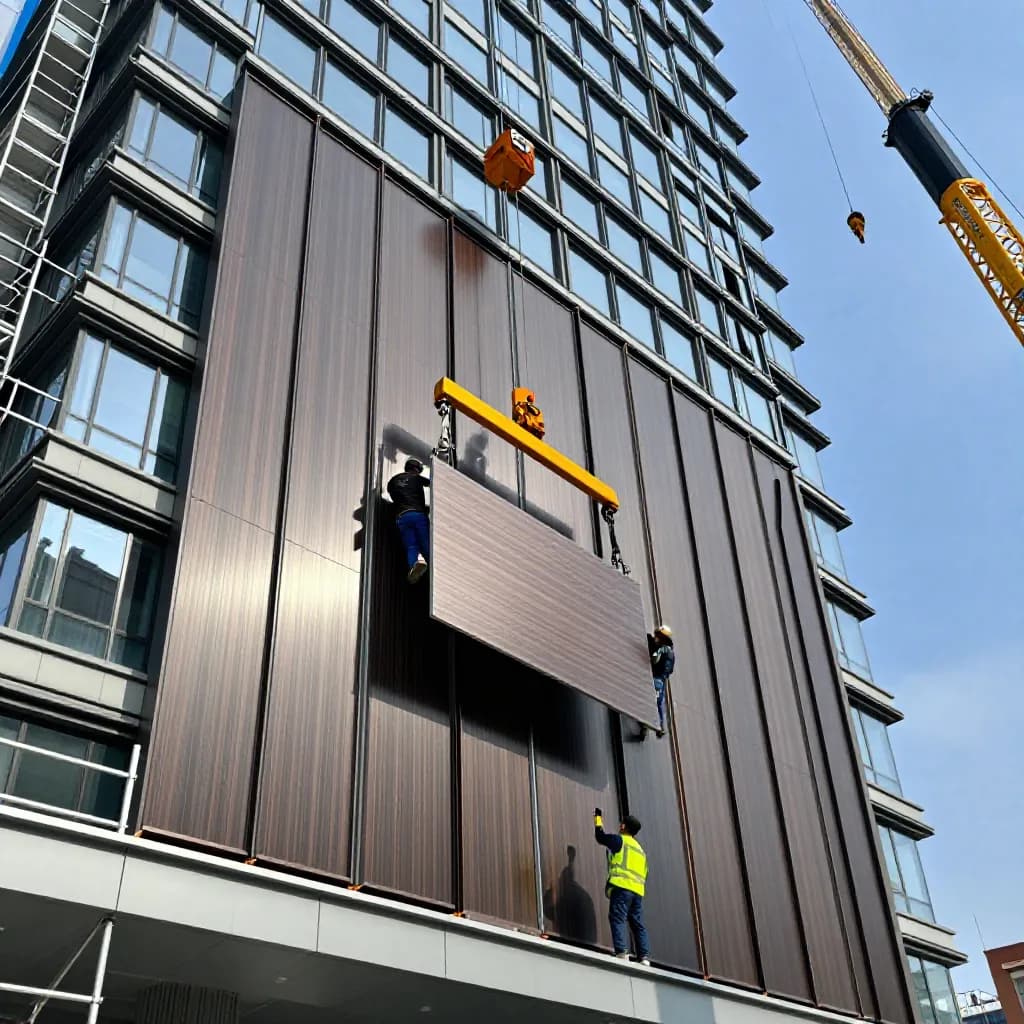
The consequences of coating failure on a curtain wall are severe. Chalking, fading, cracking, or peeling on a prominent facade damages the building's aesthetic value, reduces property marketability, and triggers expensive remediation programs involving scaffolding, access equipment, and disruption to building occupants. For these reasons, curtain wall coatings must be specified to the highest performance standards.
Ready to Start Your Project?
From one-off customs to 15,000-part production runs — get precise pricing in 24 hours.
On This Page
Why Curtain Walls Demand the Best Coating System
Powder coating has become the preferred finishing system for aluminum curtain walls and facades precisely because it meets these demanding requirements. Its superior film thickness of 60-120 microns, zero VOC profile, non-combustible fire classification, and proven 20-25 year service life make it the natural choice for architects and facade engineers seeking long-term performance and reliability.
The Powder Coating System: Pretreatment, Primer, and Topcoat
A high-performance powder coating system for curtain walls begins with thorough surface pretreatment. The aluminum substrate is cleaned, degreased, and then treated with a chemical conversion coating — typically a chrome-free process based on titanium or zirconium chemistry — that promotes adhesion and provides an additional layer of corrosion protection. For projects in aggressive environments, a multi-stage pretreatment including anodic oxidation may be specified.
Following pretreatment, a powder primer may be applied to provide enhanced corrosion resistance, particularly for projects in coastal, industrial, or tropical environments. The primer is cured before the topcoat is applied, creating a dual-layer system with exceptional barrier properties.
The topcoat is the primary performance and aesthetic layer. For curtain wall applications, superdurable or hyperdurable polyester powder coatings are standard, offering outstanding UV resistance, color retention, and gloss stability. The topcoat is applied at 60-120 microns and cured in an oven at 180-200°C, producing a hard, dense, chemically cross-linked film that bonds permanently to the substrate.
Quality Standards for Curtain Wall Coatings
Specifying powder coatings for curtain walls requires reference to established quality certification systems. Qualicoat is the most widely recognized European standard, with its Class 2 and Class 3 ratings designed specifically for high-exposure architectural applications. Class 2 requires superdurable powder coatings tested to 1,000 hours of accelerated weathering, while Class 3 demands hyperdurable formulations tested to 2,000 hours.
GSB International offers an equivalent certification framework, with GSB Master representing the highest performance tier. GSB-certified coatings undergo rigorous testing for adhesion, hardness, impact resistance, chemical resistance, and accelerated weathering, providing specifiers with independently verified performance data.
In North America, AAMA 2605 is the benchmark specification for high-performance architectural coatings. It requires 10 years of actual South Florida weathering exposure — the most demanding natural weathering test available — along with comprehensive laboratory testing for adhesion, humidity resistance, salt spray resistance, and color retention. Specifying AAMA 2605-compliant powder coatings ensures curtain wall performance that meets the most stringent North American requirements.
Color Specification for Facades
Color selection for curtain wall facades involves both aesthetic and technical considerations. Architects typically specify colors using the RAL Classic system, RAL Design system, NCS, or custom color references. Powder coating manufacturers can match virtually any color reference, and production batches are verified against approved standards using spectrophotometric measurement to ensure consistency.
For facades with high solar exposure, color choice affects thermal performance. Darker colors absorb more solar radiation, increasing surface temperatures and thermal movement in aluminum profiles. Specifiers should consider solar reflectance index values when selecting facade colors, particularly for large curtain wall areas in warm climates. Many powder coating manufacturers now offer cool-roof and cool-facade formulations with infrared-reflective pigments that reduce heat absorption.
Special effect finishes — including metallics, pearlescents, textured surfaces, and wood-grain sublimation transfers — are increasingly popular for facade applications. These finishes allow architects to create distinctive building identities while retaining all the performance advantages of powder coating. Metallic finishes, in particular, offer a contemporary aesthetic that is difficult to achieve consistently with liquid paint systems.
Fire Performance: A1/A2 vs Combustible Liquid-Painted Composites
Fire performance is a critical specification criterion for curtain wall coatings, particularly in the wake of high-profile facade fires that have prompted regulatory reform worldwide. Powder-coated aluminum curtain wall systems achieve A1 or A2 Euroclass fire ratings, classifying them as non-combustible or limited combustibility. This classification reflects the inherent non-combustibility of the aluminum substrate combined with the negligible fuel contribution of the thin powder coating film.
Liquid-painted composite panels and cladding systems present a different fire risk profile. Some composite panels with combustible polymer cores, when combined with liquid paint finishes, have failed to meet non-combustible fire classifications. The combination of a combustible core material with a coating system that may itself contribute to fire spread has been identified as a significant risk factor in facade fire incidents.
Specifying powder-coated aluminum for curtain walls and facades provides a clear, unambiguous path to fire compliance. The A1/A2 classification is achieved without the need for additional fire-retardant treatments, complex fire engineering assessments, or reliance on system-specific test evidence. This simplicity reduces specification risk and provides building owners with confidence in the long-term fire safety of their facade investment.
Maintenance and Lifecycle: 20-25 Years vs 8-12 Years
The maintenance profile of powder-coated curtain walls is one of the most compelling arguments for the technology. With a proven service life of 20-25 years before recoating is required, powder-coated facades dramatically reduce the frequency of costly facade maintenance programs. Liquid-painted curtain walls, by comparison, typically require recoating within 8-12 years, meaning two to three additional maintenance cycles over a 60-year building life.
Routine maintenance for powder-coated curtain walls is limited to periodic cleaning, typically on an annual or biannual cycle depending on the local environment. The hard, smooth powder coating surface resists dirt adhesion and is easily cleaned with mild detergent and water. In urban environments with high pollution levels, more frequent cleaning may be advisable, but the coating itself does not degrade from normal cleaning procedures.
The lifecycle cost advantage of powder coating is substantial. When scaffolding, access equipment, surface preparation, coating application, waste disposal, and building disruption costs are factored in, each recoating cycle for a curtain wall facade can cost 40-60% of the original coating cost. Eliminating two or three of these cycles over the building life represents a significant saving that more than offsets any difference in initial coating cost between powder and liquid systems.
Frequently Asked Questions
What quality standard should I specify for curtain wall powder coating?
For European projects, specify Qualicoat Class 2 or Class 3 for high-exposure facades. For North American projects, specify AAMA 2605, which requires 10 years of South Florida weathering exposure. GSB Master certification is an equivalent European option. All three standards ensure independently verified long-term performance for curtain wall applications.
How long does powder coating last on a curtain wall?
Powder coating on aluminum curtain walls typically lasts 20-25 years before recoating is needed, compared to 8-12 years for liquid paint systems. This extended service life is achieved through the combination of 60-120 micron film thickness, superdurable polyester chemistry, and rigorous pretreatment processes.
Is powder-coated aluminum curtain wall non-combustible?
Yes. Powder-coated aluminum curtain wall systems achieve A1 or A2 Euroclass fire ratings, classifying them as non-combustible. The thin powder coating film on a non-combustible aluminum substrate contributes negligible fuel load, making it one of the safest facade finishing combinations available.
Can I get metallic and wood-grain finishes on curtain wall powder coating?
Yes. Modern powder coating technology offers a full range of metallic, pearlescent, textured, and wood-grain sublimation finishes for curtain wall applications. These special effect finishes provide distinctive aesthetics while retaining all the durability, fire safety, and environmental advantages of standard powder coatings.
What pretreatment is needed for curtain wall powder coating?
Curtain wall aluminum requires multi-stage pretreatment including cleaning, degreasing, and chemical conversion coating — typically chrome-free titanium or zirconium-based chemistry. For aggressive environments such as coastal or industrial locations, enhanced pretreatment including anodic oxidation and powder primer may be specified for additional corrosion protection.
Ready to Start Your Project?
From one-off customs to 15,000-part production runs — get precise pricing in 24 hours.