The cure schedule is the single most critical process parameter in powder coating. It defines the minimum combination of temperature and time required for the powder to fully crosslink into a durable, chemically resistant film. Every powder formulation has a specific cure schedule published on its technical data sheet — typically expressed as a temperature and a dwell time at that temperature, such as 200°C for 10 minutes or 180°C for 15 minutes. However, these numbers are frequently misunderstood, leading to chronic under-cure or over-cure problems across the industry.
Technical
Powder Coating Cure Schedule Explained: Temperature, Time, and Process Control
Sundial Powder Coating·April 22, 2026·14 min
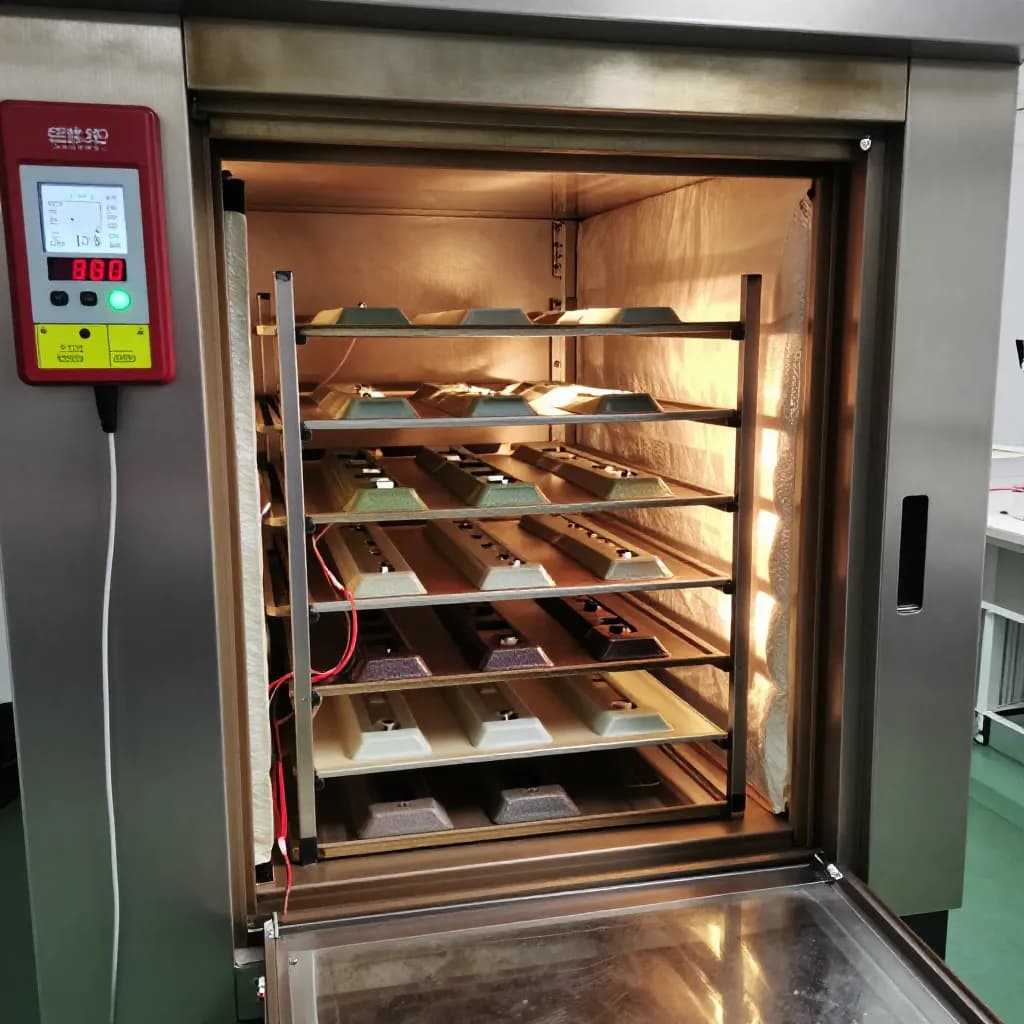
The most common misconception is that the cure schedule refers to oven air temperature and total time in the oven. It does not. The cure schedule refers to the temperature of the metal substrate itself, measured at the thickest or most thermally massive point of the part, and the time that the metal remains at or above the specified cure temperature. This distinction is fundamental because metal parts require significant time to heat from ambient temperature to cure temperature — a period known as the ramp-up or heat-up phase — during which no meaningful crosslinking occurs.
Ready to Start Your Project?
From one-off customs to 15,000-part production runs — get precise pricing in 24 hours.
On This Page
Understanding the Cure Schedule: More Than Just Temperature and Time
For a typical 3 mm aluminum extrusion entering a convection oven set at 200°C, the metal may require 8-12 minutes to reach 200°C, followed by the 10-minute dwell time specified on the data sheet. The total oven residence time is therefore 18-22 minutes, not 10 minutes. For heavier steel fabrications with wall thicknesses of 6-10 mm, ramp-up times can extend to 15-25 minutes, making total oven times of 25-35 minutes necessary. Failing to account for this ramp-up phase is the single most common cause of under-cured powder coating in production environments.
Metal Temperature vs Air Temperature: The Critical Distinction
Oven air temperature and metal substrate temperature are fundamentally different measurements, and confusing them is a persistent source of quality failures. Oven air temperature is what the oven controller displays — it reflects the temperature of the circulating air inside the oven chamber. Metal temperature is the actual temperature of the part being coated, which always lags behind the air temperature during heating and may never fully reach the oven setpoint on heavy parts with short oven residence times.
The thermal lag between air and metal depends on several factors: the mass and thickness of the part, the thermal conductivity of the substrate material, the air velocity inside the oven, and the oven loading density. Aluminum, with a thermal conductivity of approximately 205 W/m·K, heats significantly faster than mild steel at approximately 50 W/m·K. A 2 mm aluminum panel may reach oven air temperature within 4-6 minutes, while a 6 mm steel bracket may require 15-20 minutes in the same oven.
To verify that parts are actually reaching cure temperature, coating operations must use oven temperature profiling systems. These systems consist of thermocouples attached directly to the metal substrate at multiple points — typically the thickest section, the thinnest section, and a mid-range point — connected to a data logger that travels through the oven with the parts. The resulting temperature profile shows the exact ramp-up curve, peak metal temperature, and time at cure temperature for each measurement point. Industry best practice calls for profiling to be performed at least weekly during production, and whenever part geometry, line speed, or oven setpoints change. Standards such as Qualicoat require documented oven profiles as part of the quality management system.
The Cure Window: Balancing Under-Cure and Over-Cure
Every powder coating has a cure window — the range of temperature-time combinations that produce an acceptable crosslinked film. Below the lower boundary of this window, the powder is under-cured: the crosslinking reaction is incomplete, leaving a film that may appear normal visually but has compromised mechanical properties, chemical resistance, and weathering durability. Above the upper boundary, the powder is over-cured: excessive heat causes thermal degradation of the resin and pigment system, leading to yellowing, embrittlement, gloss reduction, and loss of flexibility.
Under-cure is detectable through several methods. The solvent rub test, performed with methyl ethyl ketone (MEK) per ASTM D5402, is the most common field test — a fully cured thermoset powder should withstand 50-100 double rubs without softening or color transfer, while an under-cured film will soften within 10-30 rubs. Differential scanning calorimetry (DSC) provides a more precise laboratory measurement by detecting residual exothermic reaction energy in the cured film. A fully cured sample shows no residual exotherm, while an under-cured sample exhibits a measurable heat flow peak corresponding to the uncompleted crosslinking reaction.
Over-cure manifests differently depending on the resin chemistry. Polyester powders tend to yellow and lose gloss when over-cured, with delta b values shifting positive and 60° gloss readings dropping by 10-30 units compared to properly cured panels. Epoxy powders are particularly sensitive to over-cure, developing severe yellowing and chalking. Hybrid powders fall between these extremes. The practical cure window for most standard polyester powders is approximately 180-210°C metal temperature with dwell times of 8-20 minutes, though specific formulations vary. Operating in the center of this window provides the best margin against both under-cure and over-cure.
Convection Curing: Principles and Process Control
Convection ovens are the most widely used curing technology in the powder coating industry, accounting for an estimated 80-85% of all curing installations worldwide. They work by circulating heated air over and around the coated parts, transferring thermal energy from the air to the metal substrate through convective heat transfer. The efficiency of this process depends on air temperature, air velocity, and the uniformity of air distribution within the oven chamber.
A well-designed convection oven maintains temperature uniformity of ±5°C throughout the work zone at the setpoint temperature. This uniformity is achieved through careful duct design, balanced air distribution nozzles, and adequate recirculation fan capacity — typically providing 1-3 m/s air velocity across the parts. Poor uniformity leads to hot spots and cold spots within the oven, meaning parts in different positions receive different cure schedules. Temperature uniformity surveys, performed with multiple thermocouples distributed throughout the empty oven, should be conducted quarterly and documented per AMS 2750 or equivalent standards.
Convection ovens are available in batch and conveyor configurations. Batch ovens are loaded with a rack of parts, the door is closed, and the oven heats to setpoint — they are flexible but less energy-efficient due to the thermal mass of the oven structure that must be reheated after each door opening. Conveyor ovens maintain a constant temperature while parts travel through on a continuous conveyor, offering higher throughput and better energy efficiency for production volumes above approximately 500-1000 parts per shift. Line speed in a conveyor oven is calculated by dividing the heated zone length by the required total oven residence time, including both ramp-up and dwell phases. For example, a 12-meter heated zone with a required 20-minute residence time yields a maximum line speed of 0.6 meters per minute.
Infrared Curing: Speed, Efficiency, and Limitations
Infrared (IR) curing uses electromagnetic radiation in the 0.7-10 μm wavelength range to transfer energy directly to the powder coating film and substrate surface, rather than heating the surrounding air. This direct energy transfer mechanism offers significantly faster heat-up rates compared to convection, particularly for thin-gauge parts and flat geometries. IR curing can reduce total cure times by 30-60% for suitable applications, making it attractive for high-speed production lines.
IR emitters are classified by their peak emission wavelength: short-wave (0.7-2 μm), medium-wave (2-4 μm), and long-wave (4-10 μm). Short-wave IR penetrates deeper into the coating and substrate, heating the metal directly and curing from the inside out — this is advantageous for adhesion but requires careful control to avoid overheating thin substrates. Medium-wave IR is absorbed primarily by the organic powder coating itself, providing efficient surface heating. Long-wave IR is absorbed within the first few microns of the coating surface and is less commonly used for powder curing.
The primary limitation of IR curing is its sensitivity to part geometry. IR radiation travels in straight lines, so recessed areas, inside corners, and shadowed surfaces receive less energy than directly exposed faces. This creates non-uniform heating that can result in under-cured areas on complex three-dimensional parts. For this reason, many production lines use a combination approach: an IR zone at the oven entrance provides rapid initial heating and gel of the powder film, followed by a convection zone that ensures uniform final cure across all surfaces. This hybrid IR-convection configuration captures the speed advantage of IR while maintaining the geometric uniformity of convection. Typical hybrid configurations use 2-3 meters of IR followed by 8-10 meters of convection, reducing total oven length by 20-30% compared to convection-only designs.
Low-Temperature and Fast-Cure Powder Technologies
Advances in resin and crosslinker chemistry have expanded the available cure window significantly in recent years. Standard powder coatings typically cure at 180-200°C metal temperature for 10-15 minutes, but low-temperature cure formulations are now available that achieve full crosslinking at 140-160°C for 15-20 minutes. These low-bake powders enable coating of heat-sensitive substrates such as medium-density fiberboard (MDF), plastics, and pre-assembled components containing rubber seals or adhesives that would be damaged by conventional cure temperatures.
Fast-cure powders represent another technology direction, maintaining conventional cure temperatures of 180-200°C but reducing the required dwell time to 5-8 minutes. These formulations use highly reactive crosslinker systems that accelerate the crosslinking reaction, enabling higher line speeds or shorter oven residence times. Fast-cure powders are particularly valuable for high-volume operations where oven throughput is the production bottleneck.
UV-curable powder coatings represent the most radical departure from conventional thermal curing. These powders are applied electrostatically like conventional powders, then melted and leveled using a brief IR or convection heating step at 100-130°C, and finally crosslinked by exposure to ultraviolet radiation. The UV cure step takes only seconds, enabling extremely fast processing. UV powders are used primarily for flat substrates such as panels, shelving, and furniture components where uniform UV exposure can be achieved. The technology is less suitable for complex three-dimensional parts due to the line-of-sight requirement of UV radiation, similar to the geometric limitations of IR curing. Despite these constraints, UV-curable powders have found significant adoption in the wood and furniture finishing markets.
Cure Schedule Verification and Quality Assurance
Robust cure verification is essential for any powder coating operation producing parts for demanding applications. The foundation of cure verification is the oven temperature profile, which provides objective evidence that parts reached the required metal temperature for the specified dwell time. Modern profiling systems use 6-20 thermocouple channels with Type K thermocouples spot-welded or mechanically attached to representative parts. The data logger records temperature at 1-5 second intervals throughout the oven transit, producing a detailed time-temperature curve for each measurement point.
Profile analysis should confirm three key parameters: peak metal temperature (PMT), time above cure temperature (TAT), and the equivalent cure factor. The equivalent cure factor integrates the actual time-temperature profile against the powder manufacturer's published cure window, accounting for the fact that higher temperatures require shorter times and vice versa. A cure factor of 1.0 or greater indicates a complete cure; values below 1.0 indicate under-cure. Most profiling software calculates this factor automatically when the powder's cure schedule data is entered.
Beyond oven profiling, cured film properties should be verified through regular testing. The MEK solvent rub test provides a quick pass-fail assessment of cure completeness. Mechanical property tests — including pencil hardness per ASTM D3363, impact resistance per ASTM D2794, and mandrel bend per ASTM D522 — confirm that the cured film has achieved its expected performance characteristics. For critical applications, DSC analysis of cured film samples provides the most definitive cure assessment. A comprehensive quality system combines oven profiling with periodic film property testing to ensure consistent cure across all production conditions.
Common Cure-Related Defects and Troubleshooting
Cure-related defects account for a significant proportion of powder coating quality failures, and accurate diagnosis requires understanding the relationship between cure conditions and film properties. Yellowing is one of the most visible cure-related defects, typically caused by over-cure — excessive temperature, excessive time, or both. White and light-colored powders are most susceptible, with delta b color shifts of 2-5 units being common when cure temperatures exceed the recommended window by 10-20°C. Yellowing can also result from contamination in the oven atmosphere, particularly from combustion byproducts in direct-fired gas ovens with inadequate exhaust.
Poor adhesion that passes initial inspection but fails in service is a classic symptom of under-cure. The incompletely crosslinked film may have adequate initial adhesion to pass a cross-hatch test immediately after coating, but the residual unreacted functional groups continue to react slowly at ambient temperature, generating internal stresses that eventually cause delamination. This delayed adhesion failure is particularly insidious because it may not manifest until weeks or months after coating, when parts are already installed.
Gloss inconsistency across a batch of parts often indicates non-uniform cure conditions within the oven. Parts positioned in hot spots may show lower gloss due to slight over-cure, while parts in cold spots show higher gloss due to slight under-cure — this is counterintuitive but reflects the fact that many powder formulations reach peak gloss at a specific cure point and lose gloss with additional thermal exposure. Mapping gloss readings to part positions within the oven can identify uniformity problems. Other cure-related defects include orange peel from insufficient flow time before gel, brittleness from over-cure degradation, and solvent sensitivity from under-cure. Systematic troubleshooting always begins with an oven temperature profile to establish the actual cure conditions before investigating other potential causes.
Frequently Asked Questions
What does the cure schedule on a powder coating data sheet actually mean?
The cure schedule specifies the minimum metal substrate temperature and the minimum time the metal must remain at or above that temperature for complete crosslinking. For example, '200°C for 10 minutes' means the metal itself must reach 200°C and stay there for 10 minutes. This does not include the ramp-up time needed for the metal to reach that temperature, which can add 8-25 minutes depending on part mass and material.
How do I know if my powder coating is fully cured?
The most common field test is the MEK solvent rub test per ASTM D5402 — a fully cured thermoset powder withstands 50-100 double rubs without softening. Oven temperature profiling with thermocouples attached to the metal confirms actual cure conditions. For definitive laboratory analysis, differential scanning calorimetry (DSC) detects any residual uncured material in the film.
What happens if powder coating is under-cured?
Under-cured powder coating has incomplete crosslinking, resulting in reduced chemical resistance, poor adhesion durability, lower hardness, and compromised weathering performance. The film may look acceptable initially but can fail prematurely in service through delamination, chalking, or solvent sensitivity. Under-cure is detected by MEK rub testing and DSC analysis.
Is infrared curing better than convection for powder coating?
IR curing offers faster heat-up rates and can reduce cure times by 30-60% for flat or simple geometries. However, it struggles with complex three-dimensional parts because IR radiation cannot reach recessed or shadowed areas. Many production lines use a hybrid approach — IR for rapid initial heating followed by convection for uniform final cure — combining the speed of IR with the geometric coverage of convection.
How often should oven temperature profiles be run?
Industry best practice recommends profiling at least weekly during production, and additionally whenever part geometry, line speed, oven setpoint, or loading density changes. Quality standards such as Qualicoat require documented oven profiles as part of the quality management system. Quarterly oven uniformity surveys of the empty oven should also be performed per AMS 2750 or equivalent.
Ready to Start Your Project?
From one-off customs to 15,000-part production runs — get precise pricing in 24 hours.