Commercial kitchens are among the most hostile environments for any surface finish. Equipment and fixtures are exposed to a relentless combination of heat, steam, grease splatter, and aggressive cleaning chemicals — often all within the same shift. Temperatures near cooking stations can exceed 60°C at surface level, while steam from dishwashers and stockpots creates persistent humidity that challenges adhesion and promotes corrosion on unprotected metal.
Hospitality
Powder Coating for Commercial Kitchen Equipment and Fixtures
Sundial Powder Coating·April 20, 2026·9 min
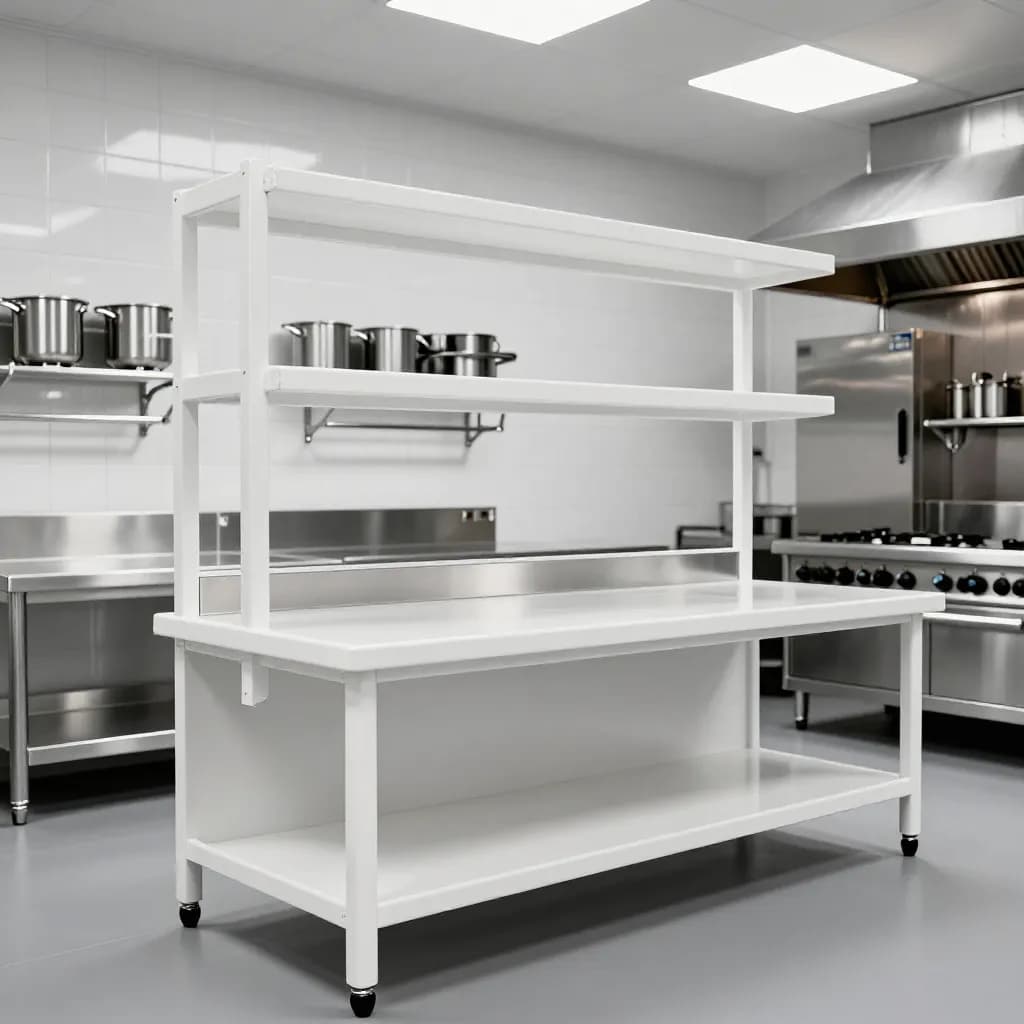
The cleaning regime in a commercial kitchen is equally demanding. Health and safety regulations require thorough sanitization at the end of every service, using industrial degreasers, caustic cleaners, and sometimes steam cleaning. These chemicals are formulated to dissolve organic residues, and they will attack any coating that lacks genuine chemical resistance. A finish that looks fine in a showroom can deteriorate rapidly under real kitchen conditions.
Ready to Start Your Project?
From one-off customs to 15,000-part production runs — get precise pricing in 24 hours.
On This Page
Kitchen Equipment Coating Demands
Grease is the constant companion of every kitchen surface. Airborne grease particles settle on every exposed surface, building up layers that must be removed regularly. The combination of grease accumulation and aggressive cleaning creates a cycle of chemical and mechanical stress that quickly exposes the limitations of inferior coatings.
What Can Be Powder Coated in a Commercial Kitchen
A wide range of commercial kitchen fixtures and equipment housings benefit from powder coating. Storage shelving, wire racking systems, equipment stands, and table frames are prime candidates — these items endure constant use and cleaning but do not come into direct contact with cooking heat. Hood exteriors, ventilation duct covers, and equipment housings also benefit from the durable, easy-to-clean surface that powder coating provides.
It is important to distinguish between food-adjacent surfaces and direct cooking surfaces. Powder coating is ideal for structural and support elements — the frames, housings, and fixtures that surround the cooking process. Direct cooking surfaces such as grill grates, oven interiors, and fryer baskets require specialized high-temperature coatings or are left as bare stainless steel, cast iron, or other materials designed for direct food contact at extreme temperatures.
Walk-in cooler shelving, prep table frames, dish rack trolleys, and utility carts are all excellent applications for powder coating in the kitchen environment. These items see heavy daily use, frequent cleaning, and occasional impact damage, making the chip resistance and chemical durability of powder coating a significant advantage over painted or chrome-plated alternatives.
Hygiene Advantages of Powder Coating
Hygiene is non-negotiable in food service, and powder coating offers meaningful advantages over alternative finishes. The cured powder film is non-porous, meaning it does not harbor bacteria in microscopic surface imperfections the way chipped paint or worn chrome plating can. This smooth, sealed surface is easy to sanitize thoroughly and does not degrade with repeated cleaning.
Unlike liquid paint, powder coating does not flake or peel under normal service conditions. Paint flakes in a kitchen environment are a contamination risk — they can fall into food preparation areas and represent a clear hygiene violation. Powder coating's superior adhesion and film integrity eliminate this risk, providing a stable, intact surface throughout the equipment's service life.
The non-porous nature of powder coating also means it resists staining from common kitchen substances. Turmeric, tomato sauce, coffee, and other notorious staining agents wipe clean from powder-coated surfaces without leaving permanent discoloration, keeping equipment looking professional and hygienic even after years of service.
Heat Considerations for Kitchen Applications
Standard polyester powder coatings perform well at ambient kitchen temperatures and are suitable for the majority of kitchen fixtures — shelving, table frames, trolleys, and equipment housings that are not in close proximity to direct heat sources. These coatings are rated for continuous service temperatures up to approximately 120°C, which covers most kitchen environments outside the immediate cooking zone.
For fixtures positioned near ovens, grills, fryers, or other high-heat equipment, high-temperature powder coating formulations are available. Silicone-modified and ceramic-based powder coatings can withstand continuous temperatures of 300°C or higher, making them suitable for equipment housings, heat shields, and structural elements that operate in elevated temperature zones.
Selecting the right formulation for each application is essential. Over-specifying high-temperature coatings for ambient-temperature fixtures adds unnecessary complexity, while under-specifying standard coatings for near-heat applications leads to premature failure. A knowledgeable powder coating applicator will assess each item's operating environment and recommend the appropriate formulation.
Regulatory Considerations for Kitchen Coatings
The regulatory landscape for coatings in food service environments distinguishes between food-contact surfaces and food-adjacent surfaces. Food-contact coatings — those that come into direct contact with food — must comply with specific regulations such as FDA 21 CFR in the United States or EU Regulation 1935/2004 in Europe. These regulations set strict limits on extractable substances and require specific testing and certification.
Food-adjacent surfaces — equipment housings, structural frames, shelving, and fixtures that are near food but do not directly contact it — have less stringent coating requirements. Standard commercial-grade powder coatings are generally acceptable for these applications, provided they are fully cured, non-toxic, and do not flake or shed particles. Most reputable powder coating manufacturers offer formulations that meet these requirements as standard.
Kitchen operators should work with their powder coating supplier to ensure that the specified coating is appropriate for its intended use. For any application where coated surfaces may come into incidental contact with food, requesting documentation of food-safety compliance is a prudent step that protects both the business and its customers.
Frequently Asked Questions
Can you powder coat commercial kitchen shelving?
Yes. Commercial kitchen shelving is an excellent candidate for powder coating. The finish provides a non-porous, easy-to-clean surface that resists grease buildup, staining, and degradation from commercial cleaning chemicals. It is a durable alternative to chrome plating, which can flake and corrode in humid kitchen environments.
Is powder coating food-safe for kitchen equipment?
Standard powder coatings are safe for food-adjacent surfaces such as equipment housings, table frames, and shelving. For surfaces that directly contact food, FDA-compliant or EU-certified food-contact powder coatings are available. Always confirm the specific formulation's compliance with relevant food safety regulations for your application.
How does powder coating handle kitchen grease and cleaning chemicals?
Powder coating's dense, cross-linked film provides excellent resistance to both grease accumulation and the aggressive cleaning chemicals used in commercial kitchens. The non-porous surface prevents grease from penetrating the finish, and the chemical resistance withstands repeated exposure to industrial degreasers and sanitizers.
What temperature can powder coating withstand in a kitchen?
Standard polyester powder coatings handle continuous temperatures up to approximately 120°C, suitable for most kitchen fixtures. For equipment near direct heat sources, high-temperature formulations rated for 300°C or higher are available. The correct formulation depends on the specific operating environment of each item.
Ready to Start Your Project?
From one-off customs to 15,000-part production runs — get precise pricing in 24 hours.