The powder coating industry relies on standardized color systems to ensure consistent communication between specifiers, manufacturers, and applicators. The RAL Classic system, developed in Germany in 1927, is the most widely used color standard in Europe and much of the world. It comprises over 200 standardized colors, each identified by a four-digit code, and is the default reference for architectural powder coating specifications. Virtually every powder coating manufacturer offers the full RAL Classic range as standard stock colors.
Technical
Powder Coating Colors and Finishes: A Complete Guide
Sundial Powder Coating·April 20, 2026·10 min
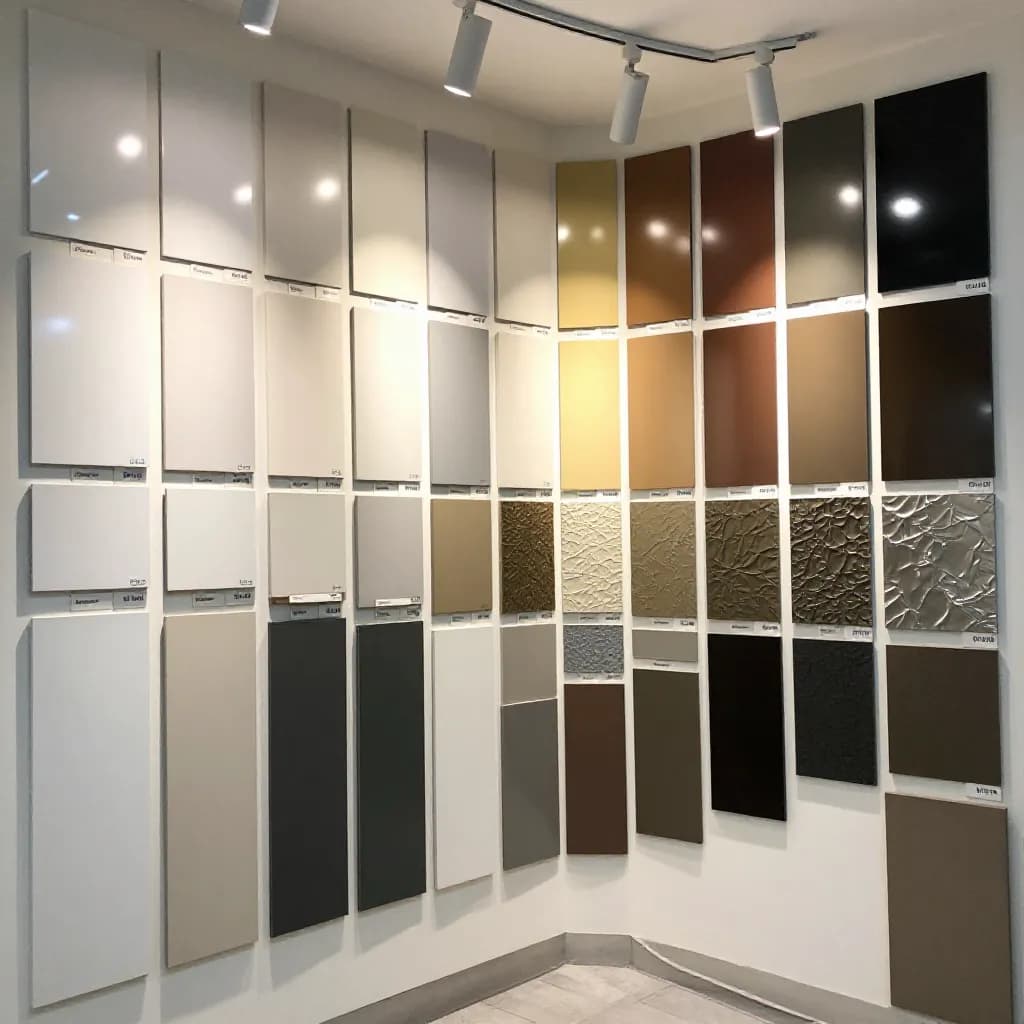
Beyond RAL Classic, several other color systems are used depending on the region and application. The British Standard (BS) color system is common in the United Kingdom, while the Natural Color System (NCS) developed in Scandinavia is based on how humans perceive color and is popular among architects and designers. In North America, the Pantone Matching System is widely recognized, though it originated in the printing industry. Many powder coating manufacturers also maintain their own proprietary color collections that may include hundreds or thousands of unique shades and effects not found in standard systems.
Ready to Start Your Project?
From one-off customs to 15,000-part production runs — get precise pricing in 24 hours.
On This Page
Color Systems for Powder Coating
Custom color matching is a routine capability for major powder coating manufacturers. When a project requires a specific color that does not match any standard reference, manufacturers can develop a custom formulation to match a provided sample, digital color specification, or reference from any color system. Custom colors typically require minimum order quantities and longer lead times, but they give architects and designers complete freedom to realize their creative vision.
Gloss Levels
Gloss level is a critical specification that significantly affects the visual appearance of a powder-coated surface. Gloss is measured using a gloss meter at a 60-degree angle and expressed in gloss units (GU). The powder coating industry generally categorizes gloss levels into four main ranges: matte (0-20 GU), satin (21-40 GU), semi-gloss (41-70 GU), and gloss (71-100+ GU). Each level creates a distinctly different aesthetic effect and has practical implications for the finished product.
Matte finishes have become increasingly popular in contemporary architecture and design. They create a sophisticated, understated appearance that minimizes reflections and hides minor surface imperfections. Matte powder coatings are particularly effective on large facade panels where glare from sunlight could be distracting. Satin finishes offer a subtle sheen that balances the elegance of matte with a slightly more reflective quality, making them versatile for both interior and exterior applications.
Semi-gloss and high-gloss finishes provide a more vibrant, reflective appearance that enhances color depth and creates a sense of premium quality. High-gloss finishes are popular for automotive accessories, consumer electronics, and decorative applications where a polished look is desired. However, high-gloss surfaces tend to show fingerprints, scratches, and surface imperfections more readily than lower gloss levels. When specifying gloss, it is important to note that the same color can look noticeably different at different gloss levels, so samples should always be evaluated at the specified gloss.
Texture Options
Texture is another powerful design tool in the powder coating palette. Smooth finishes are the most common and provide a clean, uniform surface that works well in virtually any application. However, textured finishes offer both aesthetic and practical advantages that make them an excellent choice for many projects.
Fine texture finishes add a subtle, slightly rough surface that is pleasant to the touch and effective at hiding minor substrate imperfections such as weld marks, grinding scratches, and small dents. This makes fine textures popular for industrial equipment, electrical enclosures, and fabricated metal products where achieving a perfectly smooth substrate would be costly or impractical. Sand textures create a more pronounced granular appearance reminiscent of sandstone, adding visual interest and a tactile quality to architectural elements.
Wrinkle finishes produce a distinctive crinkled or hammered appearance that is both decorative and highly effective at concealing surface defects. They are commonly used on tool boxes, engine components, and industrial housings. Leather textures replicate the look and feel of leather grain and are used for premium interior applications. River textures create flowing, organic patterns that add movement and visual depth to surfaces. The choice of texture affects not only appearance but also practical properties such as fingerprint resistance, ease of cleaning, and perceived surface hardness.
Special Effects
Modern powder coating technology offers an impressive array of special effect finishes that go far beyond solid colors. Metallic finishes incorporate aluminum flakes or mica particles into the powder formulation, creating a sparkling, reflective appearance that shifts with viewing angle and lighting conditions. Metallic effects range from subtle shimmer to bold, high-impact sparkle and are available in virtually any base color. They are widely used in automotive, architectural, and consumer product applications.
Pearlescent finishes use specially coated mica pigments that create a soft, luminous glow with subtle color shifts depending on the viewing angle. Unlike metallics, which produce distinct sparkle points, pearlescents create a smooth, flowing color effect that adds depth and sophistication. Anodized-look powder coatings replicate the distinctive appearance of anodized aluminum — including the characteristic metallic depth and subtle color variation — while offering the broader color range and easier maintenance of powder coating.
Wood grain and stone effect finishes use sublimation transfer technology to apply photorealistic patterns onto powder-coated surfaces. A base coat of powder is applied and cured, then a printed transfer film is wrapped around the part and heated in a vacuum oven, causing the pattern to sublimate into the coating surface. The result is a remarkably realistic wood or stone appearance on aluminum or steel substrates, combining the natural aesthetic of wood or stone with the durability and low maintenance of powder coating. These finishes are increasingly popular for window frames, doors, cladding, and interior architectural elements.
How Custom Colors Are Developed
Developing a custom powder coating color is a precise, multi-step process that combines science and craftsmanship. The process typically begins when a customer provides a color reference, which could be a physical sample, a RAL or Pantone code, a digital color specification, or even a photograph or material swatch. The powder manufacturer's color laboratory then analyzes the target color using a spectrophotometer, which measures the precise wavelengths of light reflected by the sample.
Using the spectrophotometric data, color technicians formulate a trial batch by selecting and blending appropriate pigments, resins, and additives. The formulation is extruded, ground into powder, and applied to test panels for evaluation. The cured panels are measured with a spectrophotometer and visually compared to the target under standardized lighting conditions, including daylight, fluorescent, and incandescent light, to check for metamerism — the phenomenon where two colors appear to match under one light source but differ under another.
Multiple iterations may be required to achieve an acceptable match, particularly for complex colors involving metallic or pearlescent effects. Once the color is approved, the formulation is documented and stored so that it can be reproduced consistently in future production batches. Major manufacturers maintain databases of thousands of custom formulations developed for previous projects. The entire development process typically takes two to four weeks, and minimum order quantities for custom colors generally range from 25 to 100 kilograms depending on the manufacturer.
Choosing the Right Color and Finish for Your Project
Selecting the right color and finish for a powder coating project involves balancing aesthetic preferences with practical performance considerations. For exterior architectural applications, color choice should account for the local climate and UV exposure. Darker colors absorb more heat, which can cause thermal expansion issues on large panels, and some organic pigments are more susceptible to UV fading than others. Inorganic pigments such as iron oxides, titanium dioxide, and carbon black generally offer superior lightfastness compared to organic alternatives.
The surrounding environment and architectural context should also inform color selection. Colors that complement the local landscape, neighboring buildings, and the overall design intent will create a more harmonious result. Many architects use color to create visual contrast, define building zones, or establish brand identity. Requesting physical spray-out samples evaluated in the actual project environment — rather than relying solely on small color chips viewed indoors — is essential for making confident color decisions, as colors can appear dramatically different depending on scale, lighting, and surrounding colors.
Finish selection should consider both aesthetics and maintenance. Matte and textured finishes are more forgiving of surface imperfections and tend to show dirt and fingerprints less than high-gloss smooth finishes. However, smooth finishes are generally easier to clean. For high-traffic areas or surfaces that will be frequently touched, a satin or fine texture finish often provides the best balance of appearance and practicality. Always request samples that represent the actual production finish, including the specified color, gloss level, and texture, and evaluate them under realistic conditions before finalizing the specification.
Frequently Asked Questions
How many colors are available in powder coating?
Powder coating is available in virtually unlimited colors. The RAL Classic system alone includes over 200 standardized colors, and major manufacturers offer collections of 1,000 or more standard shades. Custom color matching allows any color to be reproduced in powder coating form. When combined with different gloss levels, textures, and special effects, the total number of available finish options is essentially limitless.
Can you get a matte finish in powder coating?
Yes, matte finishes are widely available in powder coating and have become one of the most popular choices for contemporary architectural and design projects. Matte powder coatings typically measure between 0 and 20 gloss units at a 60-degree angle. They are available in the full range of colors and can be combined with smooth or textured surfaces.
What is the most popular powder coating color?
RAL 9010 Pure White and RAL 7016 Anthracite Grey are consistently among the most popular powder coating colors for architectural applications. RAL 9005 Jet Black, RAL 7035 Light Grey, and RAL 9016 Traffic White are also extremely popular. Color trends vary by region and application, but neutral tones and dark greys have dominated architectural specifications in recent years.
Can powder coating look like wood?
Yes, wood grain powder coating finishes use sublimation transfer technology to create remarkably realistic wood appearances on metal substrates. A base coat of powder is applied and cured, then a printed film with a wood pattern is heat-transferred onto the surface. The result closely replicates the look of natural wood species including oak, walnut, cherry, and teak, while providing the durability and low maintenance of powder coating.
Do metallic powder coatings cost more?
Metallic powder coatings typically cost 20-50% more than standard solid color formulations due to the cost of the metallic pigments (aluminum flakes or mica particles) and the more complex manufacturing process. Application may also require additional care to ensure consistent metallic effect distribution. Despite the premium, metallic finishes remain popular for their distinctive visual impact and are widely used in architectural, automotive, and decorative applications.
Ready to Start Your Project?
From one-off customs to 15,000-part production runs — get precise pricing in 24 hours.