Color is one of the most visible and most frequently specified properties of a powder coating, yet it is also one of the most challenging to control consistently. Human color perception is subjective — it varies between individuals, changes with lighting conditions, and is influenced by surrounding colors, surface texture, and viewing angle. Objective color measurement using spectrophotometers and standardized color spaces provides the foundation for consistent color matching, batch-to-batch quality control, and resolution of color disputes between coating applicators and their customers.
Technical
Powder Coating Color Matching and Spectrophotometry: Delta E, CIE Lab, and Digital Workflows
Sundial Powder Coating·April 22, 2026·14 min
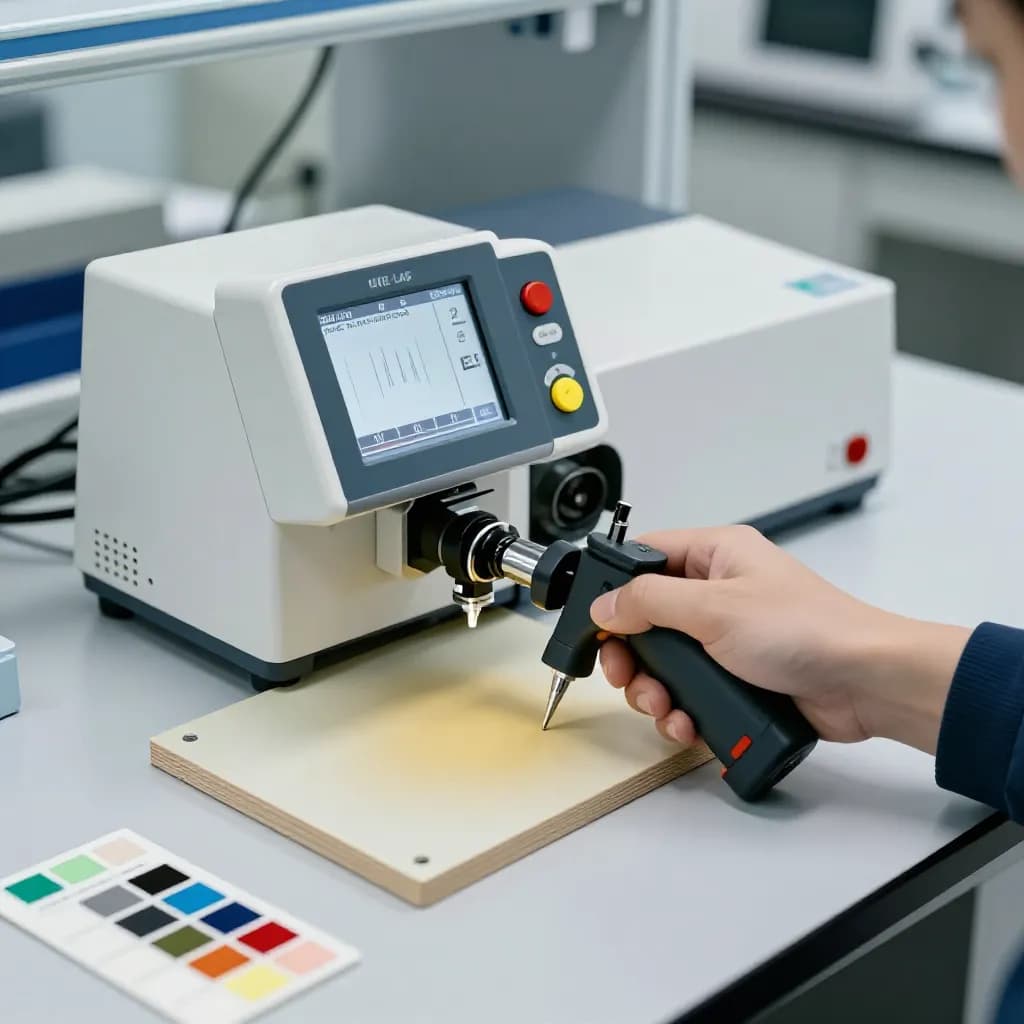
The CIE Lab color space (also written CIELAB or Lab*) is the international standard for describing color in powder coating and most other industrial applications. Developed by the Commission Internationale de l'Éclairage (CIE) in 1976, it describes any color using three coordinates: L* (lightness, from 0 = black to 100 = white), a* (green-red axis, negative = green, positive = red), and b* (blue-yellow axis, negative = blue, positive = yellow). Every visible color can be uniquely identified by its Lab* coordinates, and the difference between two colors can be quantified as a single number — Delta E (ΔE) — calculated as the Euclidean distance between their Lab* coordinates.
Ready to Start Your Project?
From one-off customs to 15,000-part production runs — get precise pricing in 24 hours.
On This Page
The Science of Color Measurement in Powder Coating
Delta E provides an objective, numerical measure of color difference that replaces subjective visual assessment. A Delta E of 0 means the colors are identical; a Delta E of 1.0 is approximately the threshold of perceptibility for a trained observer under controlled conditions; and a Delta E of 3-5 is noticeable to most people. The powder coating industry typically specifies color tolerances in the range of Delta E 0.5-2.0, depending on the application and the criticality of color consistency.
Spectrophotometers: Instrument Types and Selection
A spectrophotometer measures the spectral reflectance of a surface — the percentage of light reflected at each wavelength across the visible spectrum (380-780 nm). From this spectral data, the instrument calculates the CIE Lab coordinates, Delta E values, and other color metrics using standardized mathematical models. Two main types of spectrophotometers are used in the powder coating industry: portable (handheld) instruments for production floor use, and benchtop instruments for laboratory reference measurements.
Portable spectrophotometers are the workhorses of production color control. Modern instruments weigh 200-500 grams, measure in 1-3 seconds, and achieve inter-instrument agreement of Delta E 0.15-0.30. They use either a sphere (d/8°) or 45°/0° measurement geometry. Sphere geometry illuminates the sample diffusely using an integrating sphere and measures at 8° from normal — this geometry captures both the color and the surface texture effects, and can operate in specular-included (SCI) or specular-excluded (SCE) mode. The 45°/0° geometry illuminates at 45° and measures at 0° (perpendicular), closely matching how the human eye perceives color under typical viewing conditions.
For powder coating applications, sphere geometry with specular-excluded (SCE) mode is most commonly specified because it correlates best with visual assessment and is less sensitive to surface gloss variations. However, the choice of geometry should be agreed upon between the coating applicator and the customer, as different geometries can produce different Delta E values for the same pair of samples. Benchtop spectrophotometers offer higher precision (repeatability of Delta E 0.02-0.05) and are used for master standard measurements, powder formulation development, and referee measurements when production instruments disagree. All instruments should be calibrated regularly using certified white and black calibration tiles, with calibration verification performed at the start of each shift.
Delta E Formulas: CIE76, CMC, and CIEDE2000
The original Delta E formula (CIE76 or ΔEab) calculates color difference as a simple Euclidean distance in Lab space: ΔE = √[(ΔL*)² + (Δa*)² + (Δb*)²]. While straightforward, this formula has a known limitation — it does not account for the non-uniformity of human color perception across the color space. Equal numerical differences in Lab* coordinates do not correspond to equal perceived differences across all colors. A Delta E of 1.0 in the blue region may be barely perceptible, while the same Delta E in the yellow region may be clearly visible.
The CMC (Colour Measurement Committee) formula, developed by the Society of Dyers and Colourists, addresses this non-uniformity by applying weighting factors that vary with the position in color space. The CMC formula uses a lightness-to-chroma ratio (typically 2:1 for the coatings industry, written as CMC 2:1) that gives more tolerance to lightness differences than to chroma differences, reflecting the fact that the human eye is less sensitive to lightness variations. CMC Delta E values are generally smaller than CIE76 values for the same color pair, and the tolerances are more perceptually uniform across the color space.
The CIEDE2000 formula (ΔE00) is the most recent and most perceptually uniform color difference formula, incorporating corrections for lightness, chroma, and hue weighting, as well as an interactive term that improves accuracy in the blue region. CIEDE2000 is increasingly adopted as the standard for industrial color specification, including in the powder coating industry. When specifying color tolerances, it is essential to state which Delta E formula is being used, as the same pair of samples will produce different numerical values under different formulas. A tolerance of ΔE*ab ≤ 1.0 (CIE76) is roughly equivalent to ΔE00 ≤ 0.7 (CIEDE2000) for many colors, but the relationship varies across the color space.
Metamerism: When Colors Match Under One Light but Not Another
Metamerism is a phenomenon where two color samples appear to match under one light source but differ visibly under another. It occurs when the two samples have different spectral reflectance curves that happen to produce the same tristimulus values (and therefore the same perceived color) under a specific illuminant, but produce different tristimulus values under a different illuminant. Metamerism is a significant concern in powder coating because the coating may be formulated and approved under one lighting condition but viewed in service under different conditions.
The most common metameric pair in powder coating involves a production sample matched to a reference standard using different pigment combinations. For example, a gray color might be achieved using carbon black plus titanium dioxide in one formulation, and using iron oxide plus titanium dioxide in another. Both formulations may produce identical Lab* values under D65 (daylight) illuminant, but differ noticeably under illuminant A (incandescent) or F11 (fluorescent). The degree of metamerism is quantified by the metamerism index — the Delta E between the two samples calculated under a different illuminant than the one used for matching.
To minimize metamerism risk, powder manufacturers should match colors using the same pigment types as the reference standard whenever possible. When different pigments must be used (due to cost, availability, or performance requirements), the metamerism index should be evaluated under at least three illuminants: D65 (daylight), A (incandescent), and F11 or TL84 (fluorescent). A metamerism index below 0.5 ΔE is generally acceptable; values above 1.0 ΔE indicate a significant metamerism risk that should be communicated to the customer. Visual evaluation in a light booth with multiple illuminant sources is the standard practice for detecting metamerism during color approval.
Batch-to-Batch Color Consistency in Powder Manufacturing
Maintaining consistent color across production batches of powder coating is one of the most demanding quality control challenges in the industry. Color variation between batches arises from multiple sources: raw material variation in pigments and resins, weighing accuracy during batching, mixing and dispersion uniformity during extrusion, and grinding conditions that affect particle size distribution and surface area.
Pigment variation is the largest single contributor to batch-to-batch color differences. Natural and synthetic pigments have inherent lot-to-lot variation in color strength, hue, and undertone. Titanium dioxide — the most widely used white pigment — can vary by 0.3-0.5 Delta E units between lots from the same manufacturer. Organic pigments used for bright reds, yellows, and blues can vary even more. Powder manufacturers manage this variation through incoming pigment inspection, adjustment of pigment loading based on color strength testing, and blending of pigment lots to average out variation.
Extrusion parameters — temperature profile, screw speed, and throughput rate — affect pigment dispersion and can influence color. Under-dispersed pigments produce weaker color strength and may show specks or streaks. Over-processing at excessive temperatures can degrade heat-sensitive organic pigments, causing color shifts. The extrusion process should be validated and controlled to ensure consistent dispersion without thermal degradation.
Grinding affects color through its influence on particle size distribution. Finer particles have greater surface area per unit mass, which can increase the apparent color strength and shift the hue slightly compared to coarser particles of the same formulation. Consistent grinding to a target D50 of 33-38 μm with controlled fines content helps maintain color consistency. For critical color applications, powder manufacturers may hold production batches for laboratory color verification against the approved master standard before releasing them for shipment, rejecting or reworking batches that exceed the agreed Delta E tolerance.
Visual Color Assessment: Light Booths and Evaluation Protocols
Despite the availability of instrumental color measurement, visual assessment remains an essential part of color quality control in powder coating. Spectrophotometers measure color at a single point on the surface, while the human eye evaluates the overall appearance including color uniformity, texture effects, metallic flop, and surface defects that instruments may miss. The combination of instrumental measurement for numerical compliance and visual assessment for overall appearance provides the most comprehensive color evaluation.
Visual color assessment should be performed in a standardized light booth that provides controlled, reproducible illumination. The booth should include at least three light sources: D65 (simulating average daylight at 6500K color temperature), illuminant A (simulating incandescent light at 2856K), and a fluorescent source (TL84 or F11). The booth interior should be neutral gray (Munsell N7 or equivalent) to avoid color adaptation effects from colored surroundings. Samples should be placed side by side in the center of the booth, oriented at the same angle, and evaluated at a viewing distance of 30-50 cm.
The evaluation protocol should follow a structured sequence: first assess under D65 for overall color match, then switch to illuminant A to check for metamerism, then to fluorescent to check for fluorescent metamerism. The observer should note any differences in lightness, hue, and chroma separately, as this information is more useful for corrective action than a simple pass/fail judgment. For metallic and effect colors, the samples should be evaluated at multiple angles — face (near-perpendicular), 15°, 45°, and 75° from specular — because these colors change appearance dramatically with viewing angle.
Observer qualification is important for reliable visual assessment. Color vision deficiency affects approximately 8% of males and 0.5% of females, and even individuals with normal color vision vary in their sensitivity and consistency. Color assessors should be tested for color vision deficiency using the Ishihara or Farnsworth-Munsell 100 Hue test, and their visual assessments should be periodically correlated with instrumental measurements to ensure consistency.
Digital Color Workflows and Data Management
Modern color management in powder coating increasingly relies on digital workflows that capture, store, transmit, and analyze color data electronically. Digital color workflows replace physical color samples and subjective visual approvals with spectral data files that can be shared instantly between powder manufacturers, coating applicators, and end customers regardless of geographic location.
The foundation of a digital color workflow is the spectral reflectance data file — a measurement of the reference standard's reflectance at each wavelength across the visible spectrum, typically at 10 nm intervals from 360-750 nm. This spectral data file contains all the information needed to calculate Lab* values, Delta E under any formula, and color appearance under any illuminant. Spectral data files can be stored in standard formats (such as CxF — Color Exchange Format — per ISO 17972) and transmitted electronically, eliminating the need to ship physical color samples.
Cloud-based color management platforms allow all parties in the supply chain to access the same reference data, submit measurement results, and track color approval status in real time. The powder manufacturer measures a production batch and uploads the spectral data; the system automatically calculates Delta E against the approved reference and flags batches that exceed tolerance. The coating applicator measures incoming powder and coated parts, uploading results that are compared against the same reference. The end customer can monitor color consistency across multiple suppliers and production sites from a single dashboard.
These digital systems also enable trend analysis — tracking color drift over time across multiple batches to detect gradual shifts before they exceed tolerance. Statistical analysis of color data can identify correlations between color variation and process variables (pigment lots, extrusion parameters, cure conditions), supporting root cause analysis and continuous improvement. For operations producing color-critical products, digital color management has become an essential tool for maintaining consistency and reducing the time and cost of color approval processes.
Troubleshooting Color Problems in Production
Color problems in powder coating production can originate from the powder itself, the application process, or the cure conditions. Systematic troubleshooting requires isolating the source by comparing measurements at each stage of the process.
If the incoming powder measures within tolerance against the approved standard but the cured coating does not, the problem lies in the application or cure process. Over-cure is the most common process-related cause of color shift — excessive temperature or time causes thermal degradation of pigments, typically manifesting as yellowing (positive delta b shift) on light colors and darkening (negative delta L shift) on some colors. Run an oven temperature profile to verify that metal temperatures and dwell times are within the powder manufacturer's recommended cure window. Under-cure can also cause color differences because the incompletely crosslinked film has different optical properties than a fully cured film.
Film thickness affects color measurement because thinner films have less hiding power, allowing the substrate color to influence the measured color. A 10 μm reduction in film thickness can shift Delta E by 0.3-1.0 units on colors with moderate hiding power. Always verify that film thickness is within specification before investigating other causes of color variation. Surface texture (orange peel, gloss variation) also affects color measurement — rougher surfaces scatter more light and can shift measured L* and chroma values compared to smooth surfaces.
If the incoming powder itself is out of tolerance, contact the powder manufacturer with the measurement data, including the instrument type, geometry, illuminant, and Delta E formula used. Provide measurements on both the production batch and the approved reference standard to confirm that the reference has not changed. Powder color can shift during storage if exposed to excessive heat, moisture, or UV light — verify storage conditions and check the powder's manufacture date against its shelf life specification, typically 12-24 months for most formulations.
Frequently Asked Questions
What Delta E tolerance is standard for powder coating?
Typical tolerances range from Delta E 0.5-2.0 depending on the application. Automotive and appliance finishes often specify ΔE ≤ 0.5-1.0, architectural coatings typically allow ΔE ≤ 1.0-1.5, and general industrial finishes may accept ΔE ≤ 1.5-2.0. Always specify which Delta E formula (CIE76, CMC, or CIEDE2000) is being used, as different formulas produce different numerical values.
What is metamerism and why does it matter in powder coating?
Metamerism occurs when two colors match under one light source but differ under another, caused by different spectral reflectance curves that coincidentally produce the same perceived color under specific illumination. It matters because powder coated parts may be formulated under daylight but viewed under fluorescent or incandescent light in service. Evaluate color matches under at least three illuminants (D65, A, and F11/TL84) to detect metamerism.
Which spectrophotometer geometry is best for powder coating?
Sphere geometry with specular-excluded (SCE) mode is most commonly specified for powder coating because it correlates well with visual assessment and is less sensitive to gloss variations. The 45°/0° geometry also correlates well with visual perception. The key is that both parties — supplier and customer — agree on the same geometry and measurement conditions.
Why does my powder coating color change after curing?
Color shift after curing is most commonly caused by over-cure — excessive temperature or time degrades pigments, causing yellowing on light colors. Under-cure can also cause color differences due to incomplete crosslinking. Film thickness variations affect color through hiding power differences. Always verify cure conditions with an oven temperature profile and confirm film thickness is within specification before investigating other causes.
How do you maintain color consistency between powder batches?
Powder manufacturers control batch consistency through incoming pigment inspection, pigment lot blending, validated extrusion parameters, consistent grinding to target particle size, and laboratory color verification against approved master standards before batch release. Coating applicators should measure incoming powder batches against the reference standard and verify that cure conditions and film thickness are consistent.
Ready to Start Your Project?
From one-off customs to 15,000-part production runs — get precise pricing in 24 hours.