Coastal environments present the most aggressive conditions that architectural coatings can face. Airborne salt spray, driven by prevailing winds, deposits chloride ions on every exposed surface. These ions are hygroscopic, attracting moisture and creating a persistent electrolyte film on metal surfaces that accelerates corrosion far beyond what is experienced inland. Buildings within five kilometres of the coast are exposed to significantly higher chloride deposition rates, and those directly on the seafront face the most extreme conditions.
Architecture
Powder Coating for Coastal Buildings: Protecting Against Salt and Sea
Sundial Powder Coating·April 20, 2026·10 min
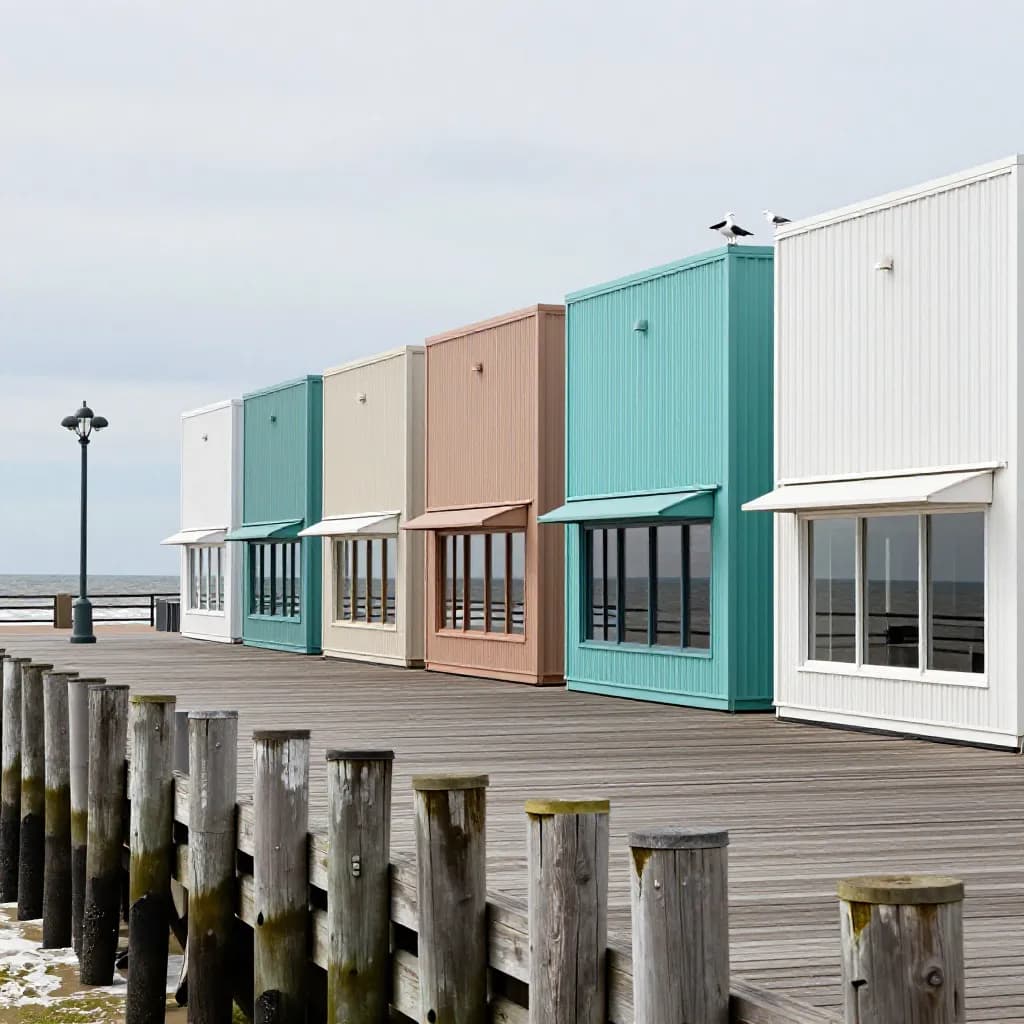
Humidity compounds the problem. Coastal areas typically experience higher relative humidity than inland locations, meaning metal surfaces remain wet for longer periods. This extended time-of-wetness increases the duration of electrochemical corrosion reactions, accelerating metal loss and coating degradation. UV radiation is also more intense in coastal settings, particularly where reflective water and sand surfaces amplify exposure.
Ready to Start Your Project?
From one-off customs to 15,000-part production runs — get precise pricing in 24 hours.
On This Page
The Coastal Corrosion Challenge
Wind-driven rain and sand abrasion add mechanical stress to the chemical assault. Coatings on coastal buildings must resist not only chemical attack from salt and moisture but also physical erosion from wind-borne particles. Any coating system specified for the coast must address all of these factors simultaneously to deliver reliable long-term protection.
Why Powder Coating Outperforms Liquid Paint at the Coast
Powder coating's inherent characteristics make it significantly more effective than liquid paint in coastal environments. The 60-120 micron film thickness achieved in a single coat creates a substantially thicker barrier against salt and moisture penetration compared to the 25-50 microns typical of liquid paint. This thicker film takes longer to degrade under chemical attack and provides a greater margin of protection before the substrate is exposed.
Edge coverage is a critical differentiator at the coast. Powder coating wraps around edges and into recesses more effectively than liquid paint, which tends to thin at edges due to surface tension effects. In coastal environments, edges and corners are the most vulnerable points for corrosion initiation, so the superior edge coverage of powder coating provides a meaningful performance advantage where it matters most.
Qualicoat Seaside certification specifically validates powder coating systems for use in marine and coastal environments. This certification requires enhanced pretreatment, primer application, and accelerated corrosion testing beyond standard Qualicoat requirements, giving specifiers confidence that certified systems will perform reliably even in the most aggressive coastal conditions.
Specification for Coastal Projects
Specifying powder coating for coastal buildings requires attention to the complete coating system, not just the topcoat. Qualicoat Seaside certification is the benchmark standard, requiring a multi-stage pretreatment process that includes chromate-free conversion coating or anodic oxidation to create a robust foundation for the powder layers. This enhanced pretreatment is essential for long-term adhesion and corrosion resistance in salt-laden environments.
Primer systems are a key component of coastal specifications. A dedicated powder primer coat, applied before the topcoat, provides an additional barrier layer and improves adhesion to the pretreated substrate. The combined primer-plus-topcoat system delivers total film builds of 100-160 microns, creating a formidable barrier against salt penetration that far exceeds what single-coat liquid systems can achieve.
Specifiers should also consider the orientation and exposure of each building element. South-facing and windward facades receive the highest salt and UV loads and may warrant enhanced specifications such as Qualicoat Class 2 or Class 3 topcoats for maximum weathering resistance. Sheltered elements may be adequately served by Class 1 systems, allowing cost optimization without compromising overall building performance.
Common Coastal Applications
Powder-coated aluminum is used extensively in coastal construction across a wide range of applications. Window and door frames are the most common, with powder coating providing the corrosion resistance and UV stability needed to maintain both appearance and thermal performance over decades of coastal exposure. Curtain walling and structural glazing systems on seafront commercial buildings rely on powder coating to protect the aluminum framework from salt attack.
Balustrades and handrails on coastal balconies, terraces, and promenades are particularly demanding applications. These elements are fully exposed to salt spray, rain, and physical contact, requiring the full protection of a Qualicoat Seaside-certified system. Powder coating's impact resistance also helps these high-touch elements maintain their appearance despite daily use.
Cladding panels, fascias, and roofline elements complete the exterior envelope, while beach facilities, lifeguard stations, pier structures, and coastal leisure buildings all benefit from powder coating's combination of corrosion resistance, UV stability, and low maintenance requirements. Even street furniture, signage, and lighting columns in coastal towns are increasingly specified with powder-coated finishes to reduce long-term maintenance costs.
Maintenance in Coastal Environments
While powder coating delivers exceptional durability at the coast, maintenance regimes should be adjusted to reflect the more aggressive environment. Qualicoat recommends more frequent cleaning intervals for coastal installations — typically every three to six months rather than the annual cleaning sufficient for inland buildings. Regular cleaning removes accumulated salt deposits before they can concentrate and attack the coating film.
The cleaning process itself is straightforward. Washing with clean water and a mild, pH-neutral detergent is sufficient to remove salt, dirt, and biological deposits. High-pressure washing should be avoided as it can damage sealants and gaskets, but gentle rinsing with a hose or soft cloth is effective and can be incorporated into routine building maintenance schedules.
Inspection during cleaning provides an opportunity to identify any areas of coating damage early. Small chips or scratches from impacts can be touched up with compatible repair systems before corrosion has a chance to establish. This proactive approach to maintenance maximizes the service life of the coating system and avoids the need for costly large-scale remediation work.
Why Liquid Paint Fails Faster at the Coast
Liquid paint systems are inherently disadvantaged in coastal environments. The thin 25-50 micron films are more quickly penetrated by chloride ions, allowing salt to reach the substrate and initiate corrosion in a fraction of the time it takes to breach a 60-120 micron powder coating. Once corrosion begins beneath a liquid paint film, it spreads rapidly as the thin coating delaminates and lifts away from the corroding substrate.
Poor edge coverage is the most critical weakness of liquid paint at the coast. Surface tension causes liquid paint to pull away from sharp edges during application, leaving these vulnerable points with even thinner protection than the nominal film thickness. In coastal environments, edges are where corrosion starts first, and filiform corrosion — thread-like corrosion that spreads beneath the paint film from edge defects — is a characteristic failure mode of liquid-painted aluminum in salt-laden conditions.
The lower material efficiency of liquid paint, typically 30-70% compared to powder coating's 95-98%, also means that achieving consistent coverage on complex profiles is more difficult and wasteful. Combined with the need for solvent-based formulations that emit VOCs and require specialized storage and disposal, liquid paint presents both a performance and an environmental disadvantage for coastal architectural projects.
Frequently Asked Questions
What is Qualicoat Seaside certification?
Qualicoat Seaside is an enhanced quality certification for powder-coated aluminum intended for use in coastal and marine environments. It requires additional pretreatment steps, primer application, and accelerated corrosion testing beyond standard Qualicoat requirements, ensuring the coating system can withstand salt spray, humidity, and UV exposure typical of coastal locations.
How often should powder-coated surfaces be cleaned at the coast?
Qualicoat recommends cleaning powder-coated surfaces every three to six months in coastal environments, compared to annually for inland installations. Regular cleaning with water and mild detergent removes accumulated salt deposits before they can concentrate and damage the coating film.
Why does liquid paint fail faster on coastal buildings?
Liquid paint's thin 25-50 micron films are quickly penetrated by salt, and poor edge coverage allows filiform corrosion to initiate at edges and spread beneath the film. Powder coating's 60-120 micron thickness and superior edge coverage provide a much more robust barrier against the aggressive coastal environment.
Can powder coating protect aluminum balustrades on seafront balconies?
Yes. Powder coating with Qualicoat Seaside certification is specifically designed for fully exposed coastal applications including balustrades, handrails, and railings. The thick film, enhanced pretreatment, and primer system provide long-term corrosion and UV resistance even in direct salt spray conditions.
Ready to Start Your Project?
From one-off customs to 15,000-part production runs — get precise pricing in 24 hours.