Coastal environments represent the ultimate test of architectural surface finishes. The combination of airborne salt, high humidity, intense UV radiation, wind-driven rain, and temperature cycling creates conditions that can destroy inadequate coating systems within months. Buildings within 1 kilometer of the coastline — and in some exposed locations, up to 5 kilometers — are subjected to salt deposition rates that accelerate corrosion far beyond the levels experienced in inland environments.
Architecture
Powder Coating for Coastal Architecture: Salt Spray Resistance, Qualicoat Seaside, and Marine-Grade Pretreatment
Sundial Powder Coating·April 22, 2026·12 min
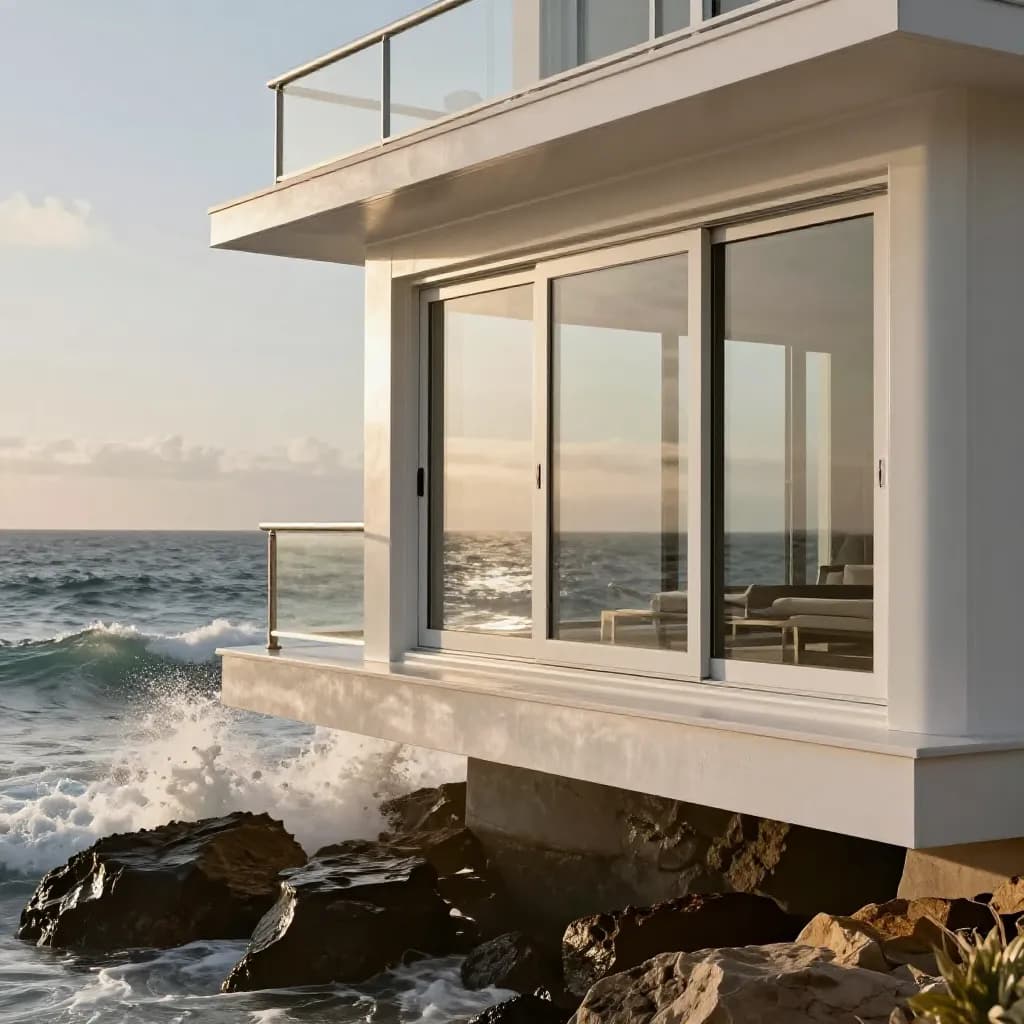
Powder coating technology, when properly specified for coastal conditions, provides the long-term protection that coastal buildings require. The 60-120 micron film thickness creates a dense barrier against salt penetration, while marine-grade pretreatment systems ensure the adhesion foundation needed to resist the aggressive moisture and chloride environment. Qualicoat Seaside certification — the industry's most demanding quality standard for coastal applications — verifies that the complete coating system meets the performance requirements of marine environments.
Ready to Start Your Project?
From one-off customs to 15,000-part production runs — get precise pricing in 24 hours.
On This Page
Coastal Architecture: The Most Demanding Environment for Building Finishes
This guide examines the specification of powder coating systems for coastal architecture, covering the corrosion mechanisms specific to marine environments, the Qualicoat Seaside certification requirements, marine-grade pretreatment options, and the design considerations for buildings in tropical coastal climates. Whether specifying a beachfront residence, a coastal commercial development, or a harbor-side public building, this guide provides the technical foundation for confident coating specification in the most demanding architectural environment.
Understanding Coastal Corrosion Mechanisms
Corrosion in coastal environments is driven by the deposition of airborne salt — primarily sodium chloride — on metal surfaces. This salt, carried inland by wind from breaking waves and sea spray, dissolves in surface moisture to form an electrolyte solution that dramatically accelerates the electrochemical corrosion process. The corrosion rate in a coastal environment can be 10-100 times higher than in a rural inland location, depending on distance from the sea, prevailing wind direction, and local topography.
For aluminum — the dominant substrate for architectural metalwork — coastal corrosion manifests primarily as pitting corrosion. Chloride ions penetrate the natural aluminum oxide layer, initiating localized corrosion pits that can progress rapidly in the presence of sustained moisture. The coating system must prevent chloride ions from reaching the aluminum surface, and the pretreatment must reinforce the oxide layer's resistance to chloride attack.
For steel substrates, coastal corrosion is more generalized, with chloride-laden moisture causing uniform surface corrosion that progressively reduces the section thickness of structural members. The coating system must provide a continuous, impervious barrier against moisture and chloride penetration, and any damage to the coating must be repaired promptly to prevent corrosion initiation at exposed areas.
The severity of coastal corrosion is classified by ISO 9223, with coastal environments typically falling into categories C4 (high) or C5 (very high). The most exposed locations — directly adjacent to the sea with salt spray contact — may be classified as CX (extreme). The coating system specification must be appropriate for the identified corrosivity category, with more aggressive environments requiring more robust protection systems including enhanced pretreatment, increased film thickness, and duplex coating approaches.
Qualicoat Seaside Certification: The Marine Performance Standard
Qualicoat Seaside is the most rigorous quality certification for powder-coated aluminum in coastal environments. Developed by the Qualicoat quality association specifically for marine applications, the Seaside certification adds demanding requirements beyond the standard Qualicoat Class 1 and Class 2 specifications, addressing the specific corrosion challenges of salt-laden atmospheres.
The Qualicoat Seaside certification requires the complete coating system — pretreatment, primer (if used), and topcoat — to pass extended neutral salt spray testing to ISO 9227. The test duration and acceptance criteria are more stringent than standard Qualicoat requirements, with the coating system required to demonstrate resistance to blistering, delamination, and corrosion creep beyond specified limits after prolonged salt spray exposure. Only coating systems that pass these enhanced tests on substrates pretreated by the specific applicator's process are eligible for Seaside certification.
The pretreatment requirements for Qualicoat Seaside are particularly demanding. Standard chromate-free conversion coatings may not provide adequate adhesion and corrosion resistance for marine environments, and Seaside certification typically requires enhanced pretreatment processes such as multi-stage titanium or zirconium-based conversion coatings, or anodic oxidation pretreatment. The specific pretreatment process must be validated through the Seaside testing protocol as part of the applicator's certification.
For architects and specifiers, Qualicoat Seaside certification provides a clear, independently verified performance standard for coastal applications. By specifying Qualicoat Seaside certified coating systems applied by Seaside-licensed applicators, project teams can be confident that the coating will perform as required in the marine environment. The certification also provides a framework for quality assurance during production, with regular audits and testing ensuring ongoing compliance with the Seaside performance requirements.
Marine-Grade Pretreatment Systems
The pretreatment of aluminum before powder coating is the foundation of the coating system's performance, and in coastal environments, the pretreatment must provide enhanced adhesion and corrosion resistance to withstand the aggressive chloride environment. Several pretreatment technologies are used for marine-grade applications, each with specific advantages and limitations.
Multi-stage chromate-free conversion coatings represent the most common pretreatment for marine-grade powder coating. These systems typically involve alkaline cleaning, acid etching to remove the natural oxide layer and create surface roughness, and application of a titanium or zirconium-based conversion coating that provides both adhesion promotion and corrosion inhibition. The conversion coating creates a chemically bonded interface between the aluminum and the powder film that resists the moisture-driven adhesion loss that is the primary failure mechanism in coastal environments.
Anodic oxidation pretreatment — creating a controlled aluminum oxide layer through electrochemical processing — provides the highest level of adhesion security for marine applications. The porous anodic oxide layer provides mechanical interlocking with the powder coating, creating an interface that is extremely resistant to moisture penetration and adhesion loss. Anodic oxidation pretreatment is specified for the most demanding coastal applications, including buildings directly adjacent to the sea and structures in tropical marine environments.
For steel substrates in coastal environments, zinc phosphate pretreatment provides the corrosion inhibition needed to supplement the powder coating's barrier protection. The zinc phosphate layer provides a degree of cathodic protection at any coating damage points, slowing the initiation of corrosion at scratches and chips. For the most aggressive marine exposures, hot-dip galvanizing followed by powder coating (duplex system) provides the highest level of protection, with the galvanized zinc layer providing sacrificial protection that extends the system's tolerance of coating damage.
Tropical Coastal Climates: UV, Humidity, and Biological Growth
Tropical coastal environments combine the salt exposure of marine locations with intense UV radiation, sustained high humidity, elevated temperatures, and aggressive biological growth. This combination creates the most demanding conditions for architectural coatings anywhere in the world, and the coating system must address all of these challenges simultaneously.
UV radiation in tropical locations is significantly more intense than in temperate zones, accelerating the photochemical degradation of coating polymers. Super-durable polyester powder coatings — formulated with UV-stabilized resin systems and high-performance pigments — provide the enhanced UV resistance needed for tropical exposure. These formulations maintain color and gloss within specified limits after the equivalent of 10 years of South Florida exposure testing, which represents one of the most aggressive natural UV environments used for coating qualification.
Sustained high humidity — often exceeding 90% relative humidity for extended periods — creates conditions for continuous moisture contact with coated surfaces. The dense, non-porous powder film prevents moisture penetration, but the adhesion at the coating-substrate interface must also resist the osmotic forces that sustained humidity generates. Marine-grade pretreatment systems, particularly anodic oxidation, provide the adhesion security needed to resist these forces over the 20-25 year service life expected of the coating.
Biological growth — including algae, lichen, mold, and fungal colonization — is a persistent challenge in tropical environments. These organisms can colonize coating surfaces, creating unsightly discoloration and, in some cases, producing organic acids that attack the coating film. Powder coating's smooth, non-porous surface resists biological colonization more effectively than rougher liquid paint surfaces, and antimicrobial powder coating formulations incorporating biocidal additives provide active resistance to biological growth. Regular cleaning with mild biocidal wash solutions maintains the coating surface in a condition that discourages recolonization.
Design Considerations for Coastal Buildings
The design of coastal buildings influences the performance demands on the coating system. Architectural decisions about building orientation, facade geometry, drainage details, and material interfaces all affect the severity of salt exposure and moisture retention on metalwork surfaces, and these factors should be considered during the coating specification process.
Building orientation relative to prevailing winds determines which facades receive the highest salt deposition. Windward facades facing the sea may receive salt deposition rates 5-10 times higher than sheltered leeward facades. The coating specification can be differentiated by facade orientation, with Qualicoat Seaside certified systems on exposed facades and standard Qualicoat Class 2 systems on sheltered facades, optimizing both performance and cost.
Facade geometry influences salt accumulation and moisture retention. Horizontal surfaces, recesses, and upward-facing ledges accumulate salt deposits and retain moisture longer than vertical surfaces, creating localized areas of enhanced corrosion risk. The coating system on these elements may require enhanced specification — increased film thickness, duplex protection, or more frequent maintenance cleaning — to address the elevated exposure.
Material interfaces between powder-coated aluminum and other building materials require careful detailing to prevent galvanic corrosion and moisture entrapment. Contact between aluminum and copper, steel, or carbon fiber can initiate galvanic corrosion in the presence of salt-laden moisture. Isolation gaskets, sealants, and drainage details that prevent moisture accumulation at material interfaces are essential design measures that complement the coating system's protection.
Drainage design is critical for coastal buildings. Effective drainage that removes salt-laden water from metalwork surfaces reduces the duration of corrosive contact and extends coating life. Conversely, poor drainage that allows salt water to pool on horizontal surfaces or accumulate in joints and crevices accelerates corrosion regardless of the coating quality. The coating specification and the building's drainage design should be developed in coordination to optimize the overall corrosion protection strategy.
Maintenance Strategies for Coastal Powder-Coated Buildings
While powder coating provides 20-25 years of protection in coastal environments when properly specified, a planned maintenance strategy maximizes coating life and ensures that the building maintains its intended appearance throughout this period. The maintenance requirements for coastal buildings are more demanding than for inland locations, reflecting the more aggressive environmental exposure.
Regular cleaning is the most important maintenance measure for coastal powder-coated buildings. Salt deposits on coated surfaces are hygroscopic — they absorb moisture from the air — creating persistent wet conditions that stress the coating system. Periodic washing with clean water removes accumulated salt, reducing the corrosive load on the coating and extending its effective service life. The recommended cleaning frequency depends on the severity of salt exposure: monthly for buildings directly adjacent to the sea, quarterly for buildings within 1 kilometer, and semi-annually for buildings in the wider coastal zone.
Inspection of the coating condition should be conducted annually, with particular attention to areas of enhanced exposure — windward facades, horizontal surfaces, drainage points, and material interfaces. Early identification of coating damage — scratches, chips, or areas of adhesion loss — allows prompt repair before corrosion initiates at the damage site. Localized repairs using touch-up powder coating or compatible liquid repair coatings can extend the overall coating life by preventing corrosion propagation from damage points.
The maintenance strategy should be documented in the building's maintenance manual, with specific guidance on cleaning methods, inspection protocols, and repair procedures. For buildings with Qualicoat Seaside certified coating systems, the Qualicoat maintenance guidelines provide a framework for preserving the coating's performance throughout its intended service life. Adherence to these maintenance guidelines is typically a condition of the coating warranty, and documented maintenance records support warranty claims in the event of premature coating failure.
Specification Checklist for Coastal Powder Coating Projects
Specifying powder coating for coastal architecture requires attention to a comprehensive set of parameters that collectively determine the coating system's performance in the marine environment. This section provides a specification checklist that architects and specifiers can use to ensure that all critical factors are addressed.
Substrate selection and preparation form the foundation. Aluminum alloys should be selected for their corrosion resistance — 6063-T5 and 6060-T5 are standard for architectural extrusions, while 5005 and 5052 are preferred for sheet and plate applications in marine environments. Steel substrates should be hot-dip galvanized before powder coating for coastal applications. Surface preparation must achieve the cleanliness and profile required by the pretreatment system specification.
Pretreatment specification should identify the specific process required for the corrosivity category and target service life. For Qualicoat Seaside applications, the pretreatment must be validated as part of the applicator's Seaside certification. Anodic oxidation pretreatment should be specified for the most demanding marine exposures.
Powder coating specification should define the resin type (super-durable polyester for exterior applications), the minimum film thickness (typically 60-80 microns for Qualicoat Seaside), the color and gloss requirements, and the performance certification (Qualicoat Seaside, Qualicoat Class 2, or AAMA 2605). The specification should also identify any special requirements such as anti-graffiti performance, antimicrobial properties, or solar reflectance.
Quality assurance requirements should specify the testing and inspection regime during production, including film thickness measurement, adhesion testing, and color verification. The specification should identify the quality certification required of the applicator — Qualicoat Seaside license for marine applications — and define the documentation to be provided with the finished product, including test certificates, color records, and warranty terms.
Frequently Asked Questions
What is Qualicoat Seaside certification?
Qualicoat Seaside is the most rigorous quality certification for powder-coated aluminum in coastal environments. It requires the complete coating system to pass extended salt spray testing beyond standard Qualicoat requirements, with enhanced pretreatment validated through the Seaside testing protocol.
How far from the coast does marine-grade powder coating need to be specified?
Buildings within 1 kilometer of the coastline typically require marine-grade specification. In exposed locations with prevailing onshore winds, enhanced specification may be needed up to 5 kilometers inland. The specific requirement depends on salt deposition rates, which vary with distance, topography, and wind patterns.
What pretreatment is best for coastal aluminum powder coating?
Anodic oxidation provides the highest adhesion security for marine applications. Multi-stage titanium or zirconium-based conversion coatings are also effective for Qualicoat Seaside certification. The specific pretreatment must be validated through the Seaside testing protocol as part of the applicator's certification.
How often should coastal powder-coated buildings be cleaned?
Monthly cleaning is recommended for buildings directly adjacent to the sea, quarterly within 1 kilometer, and semi-annually in the wider coastal zone. Regular washing removes hygroscopic salt deposits that create persistent wet conditions, extending coating life and maintaining appearance.
Can powder coating resist tropical coastal conditions?
Yes. Super-durable polyester formulations with marine-grade pretreatment provide 20-25 years of protection in tropical coastal environments. UV-stabilized resins resist intense tropical radiation, and the dense non-porous film withstands sustained humidity above 90% RH.
How does powder coating compare to liquid paint in coastal environments?
Powder coating's 60-120 micron film is denser and non-porous compared to 25-50 micron liquid paint with inherent micro-porosity. This provides superior salt and moisture barrier protection, with 20-25 year coastal service life versus 5-8 years for liquid paint in equivalent marine conditions.
Ready to Start Your Project?
From one-off customs to 15,000-part production runs — get precise pricing in 24 hours.