The circular economy — an economic model that eliminates waste and keeps materials in use through design, reuse, recycling, and regeneration — is reshaping how industries think about manufacturing processes and material flows. Powder coating technology is inherently aligned with circular economy principles in ways that liquid painting cannot match, making it a natural fit for manufacturers pursuing circular economy strategies and certifications.
Environmental
Powder Coating and the Circular Economy: Recycling, Reclaim, and Zero-Waste Operations
Sundial Powder Coating·April 22, 2026·11 min
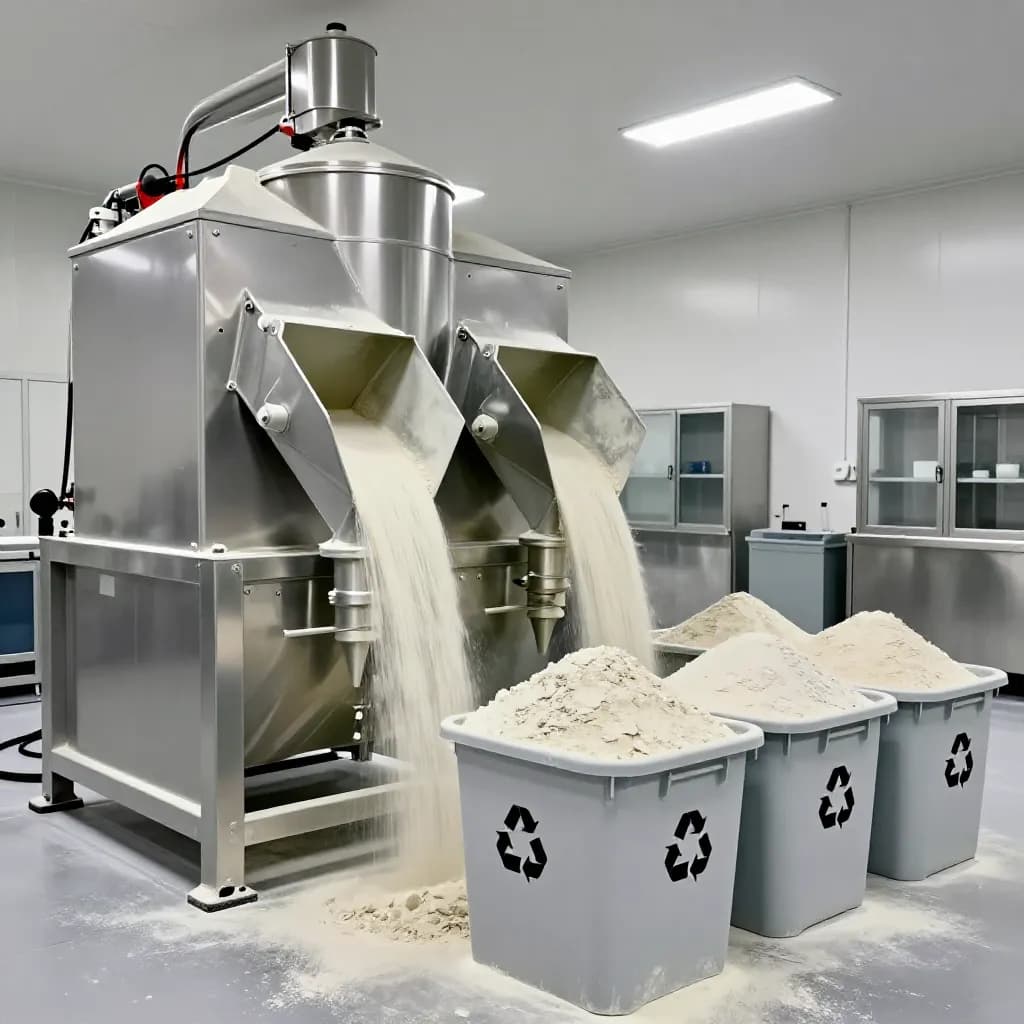
The most fundamental circular economy advantage of powder coating is its near-zero waste generation during application. Overspray powder that does not deposit on the target part is collected by booth recovery systems and returned to the application process for reuse. Material utilization rates of 95-98% are routinely achieved, meaning that virtually all powder purchased is converted into finished coating on products. Liquid paint operations, by contrast, generate significant waste streams including paint sludge, solvent waste, contaminated cleaning materials, and overspray that cannot be economically recovered.
Ready to Start Your Project?
From one-off customs to 15,000-part production runs — get precise pricing in 24 hours.
On This Page
Powder Coating's Natural Alignment with Circular Economy Principles
Beyond application efficiency, powder coating supports circularity at the product end-of-life stage. Powder-coated metals — particularly aluminum — can be recycled with the coating in place, as the organic coating burns off during the metal melting process. This compatibility with metal recycling means that powder-coated products do not require coating removal before recycling, simplifying the end-of-life processing chain and improving the economics of metal recovery.
Powder Reclaim Systems and Material Efficiency
Powder reclaim is the cornerstone of material efficiency in powder coating operations. Modern reclaim systems use cyclone separators, cartridge filters, or combinations of both to capture overspray powder from the application booth and return it to the powder feed system for reapplication. The efficiency of the reclaim system directly impacts the overall material utilization rate and the economic and environmental performance of the coating operation.
Cyclone reclaim systems separate powder from the booth exhaust air using centrifugal force, achieving recovery rates of 90-95% of overspray powder. The recovered powder is typically sieved to remove agglomerates and contaminants before being blended with virgin powder at ratios of 20-40% reclaim to 60-80% virgin. Cartridge filter systems achieve even higher recovery rates — approaching 99% — by capturing fine particles that pass through cyclones, though the recovered powder may contain a higher proportion of fines that can affect application behavior.
The quality of reclaimed powder depends on the cleanliness of the reclaim system, the consistency of the application process, and the management of color changes. Contamination from color cross-contamination during color changes is the primary quality risk in reclaim operations. Quick color change booth designs — with smooth, non-stick interior surfaces and efficient purging systems — minimize cross-contamination and reduce the powder waste associated with color transitions. For operations running a single color or limited color palette, reclaim rates approaching 98% are achievable, making powder coating one of the most material-efficient industrial coating processes available.
End-of-Life Coating Removal Technologies
When coated products reach end of life, the coating must sometimes be removed to enable substrate recycling or recoating. Several coating removal technologies are available, each with different environmental profiles, effectiveness, and suitability for different substrates and coating types.
Thermal stripping — heating the coated part in a burn-off oven or fluidized sand bed to 400-500°C — decomposes the organic powder coating, leaving the metal substrate clean and ready for recycling or recoating. This method is fast and effective for steel and aluminum substrates but consumes significant energy and produces combustion emissions that must be managed through afterburner systems. Modern thermal stripping ovens incorporate heat recovery and emission control systems that minimize environmental impact.
Chemical stripping uses alkaline or solvent-based solutions to dissolve or swell the coating for removal. This method operates at lower temperatures and is suitable for substrates that cannot tolerate thermal stripping temperatures, but it generates chemical waste that requires treatment and disposal. Newer bio-based and water-based stripping formulations reduce the environmental impact of chemical removal.
Mechanical removal methods — including media blasting, dry ice blasting, and laser ablation — physically remove the coating without chemicals or high temperatures. These methods are particularly useful for localized coating removal or for substrates sensitive to both heat and chemicals. Laser ablation is emerging as a precision coating removal technology that can selectively remove coating layers without damaging the substrate, enabling targeted repair and recoating of damaged areas without stripping the entire part.
Aluminum Recycling and Powder Coating Compatibility
Aluminum is the most widely powder-coated metal in architectural applications, and its recyclability is a key sustainability advantage. Aluminum can be recycled indefinitely without loss of properties, and recycling aluminum requires only 5% of the energy needed to produce primary aluminum from bauxite ore. The compatibility of powder coatings with aluminum recycling processes is therefore critical to the circular economy credentials of powder-coated architectural products.
During aluminum recycling, coated scrap is charged into a melting furnace where the organic powder coating decomposes and burns off at temperatures well below the aluminum melting point of 660°C. The coating residue — primarily inorganic pigments and fillers — reports to the dross layer that floats on the molten aluminum and is skimmed off. The recovered aluminum is essentially unaffected by the presence of the powder coating, with no measurable impact on alloy composition or mechanical properties.
The thin film thickness of powder coatings — typically 60-120 microns — means that the organic content per kilogram of coated aluminum is very small, typically less than 1% by weight. This low organic loading minimizes the energy consumed in burning off the coating and reduces the volume of combustion gases generated during recycling. Compared to thicker coating systems, adhesive-backed films, or composite cladding materials, powder-coated aluminum presents the simplest and cleanest recycling pathway, supporting the closed-loop material cycles that the circular economy demands.
Zero-Waste Powder Coating Operations
Achieving zero-waste status — where no operational waste is sent to landfill — is an aspirational but increasingly achievable goal for powder coating operations. The inherent material efficiency of powder coating provides a strong foundation, but reaching true zero waste requires systematic management of all waste streams generated by the operation.
Powder waste streams include off-specification powder from color changes, contaminated reclaim powder, expired or damaged powder inventory, and booth filter media containing powder residue. These waste streams can be diverted from landfill through several pathways. Off-specification and contaminated powder can be used as feedstock for lower-specification applications such as primer coats, internal surfaces, or non-critical industrial coatings where color consistency is less important. Powder waste can also be processed into recycled powder products through re-extrusion and re-grinding, though this is economically viable only for large, consistent waste streams.
Pretreatment waste — spent chemical baths, rinse water, and sludge from phosphate or conversion coating processes — represents the largest waste management challenge for many powder coating operations. Closed-loop water recycling systems that treat and reuse rinse water, combined with chemical recovery systems that extend bath life and reduce sludge generation, can dramatically reduce pretreatment waste volumes. Sludge from phosphate pretreatment can be processed for metal recovery or used as raw material in cement manufacturing, diverting it from landfill. Energy recovery from combustible waste streams — including powder waste and packaging materials — through waste-to-energy facilities provides a final diversion pathway for materials that cannot be recycled or reused.
Closed-Loop Supply Chain Models
The circular economy vision extends beyond individual coating operations to encompass closed-loop supply chain models where materials flow in continuous cycles from production through use and back to production. For powder-coated products, this means designing products for disassembly and material recovery, establishing collection and return systems for end-of-life products, and creating recycling pathways that return recovered materials to productive use.
The architectural aluminum industry provides a model for closed-loop powder coating supply chains. Aluminum window frames, curtain wall components, and cladding panels have well-established collection and recycling pathways in many markets, with recycling rates exceeding 90% in some European countries. The powder coating on these products is compatible with aluminum recycling, and the recovered aluminum is remelted and extruded into new architectural profiles, completing the material loop.
Powder coating manufacturers are also exploring circular models for their own products. Take-back programs for unused or expired powder, recycling of powder packaging materials, and use of recycled content in powder formulations are emerging initiatives. Bio-based resins derived from renewable feedstocks — plant oils, sugars, and lignin — reduce dependence on petrochemical raw materials and improve the carbon footprint of powder coating products. The development of powder coatings designed for easy removal at end of life — using thermoplastic or reversibly crosslinked chemistries that can be stripped with minimal energy and chemical input — represents the ultimate circular economy coating: a coating that protects the product during its service life and then facilitates clean material recovery when the product is retired.
Measuring and Reporting Circular Economy Performance
Quantifying circular economy performance requires metrics that capture material flows, waste diversion, and resource efficiency across the coating operation and its supply chain. Key metrics include material utilization rate, which measures the percentage of purchased powder that becomes finished coating; waste diversion rate, which measures the percentage of waste diverted from landfill through recycling, reuse, or energy recovery; and recycled content, which measures the percentage of input materials derived from recycled sources.
Lifecycle assessment provides the most comprehensive framework for evaluating the circular economy performance of powder-coated products. LCA quantifies the environmental impacts — carbon footprint, energy consumption, water use, waste generation, and resource depletion — across the entire product lifecycle from raw material extraction through manufacturing, use, and end-of-life. Comparative LCA studies consistently demonstrate that powder coating has lower lifecycle environmental impacts than liquid painting for equivalent applications, with the advantages most pronounced in material efficiency, waste generation, and air emissions categories.
Environmental Product Declarations based on LCA data provide standardized, third-party verified documentation of the environmental performance of powder-coated products. EPDs are increasingly required for green building certifications and public procurement specifications, creating a market incentive for coating operations to measure and improve their circular economy performance. The combination of inherent material efficiency, compatibility with metal recycling, and growing availability of bio-based and recycled-content formulations positions powder coating as the surface finishing technology most aligned with circular economy principles.
Frequently Asked Questions
What percentage of powder coating material is typically wasted?
Powder coating operations typically achieve 95-98% material utilization through overspray reclaim and reuse, meaning only 2-5% of purchased powder becomes waste. This compares favorably to liquid painting operations where 30-70% of paint material is lost as waste. The exact utilization rate depends on the reclaim system efficiency, color change frequency, and quality management practices.
Can powder-coated aluminum be recycled?
Yes. Powder-coated aluminum is fully recyclable. During the aluminum melting process, the organic powder coating decomposes and burns off, leaving clean aluminum that can be recycled into new products with no loss of material properties. The thin coating film represents less than 1% of the total weight, minimizing any impact on the recycling process.
What happens to powder coating waste that cannot be reclaimed?
Powder waste that cannot be reclaimed for reuse in the primary application can be diverted through several pathways: use in lower-specification coating applications, re-extrusion into recycled powder products, energy recovery through waste-to-energy facilities, or use as filler material in other products. The goal of zero-waste operations is to eliminate landfill disposal entirely through these diversion strategies.
How does powder coating compare to liquid paint in circular economy terms?
Powder coating significantly outperforms liquid paint on circular economy metrics. Material utilization is 95-98% versus 30-70% for liquid paint. Powder coating generates zero VOC emissions and no solvent waste. Overspray is reclaimed and reused rather than becoming paint sludge. And powder-coated metals are compatible with standard recycling processes without coating removal.
Are bio-based powder coatings commercially available?
Bio-based powder coatings using resins derived partially from renewable feedstocks such as plant oils and sugars are entering commercial availability. Current bio-based content levels range from 20-50% of the resin component, with ongoing research targeting higher bio-based content. These formulations offer comparable performance to conventional petrochemical-based powders while reducing carbon footprint and fossil resource dependence.
Ready to Start Your Project?
From one-off customs to 15,000-part production runs — get precise pricing in 24 hours.