Chemical manufacturing facilities — including petrochemical refineries, pharmaceutical plants, fertilizer production, specialty chemical manufacturing, and water treatment works — expose powder coatings to a uniquely complex combination of chemical, thermal, and mechanical stresses. Unlike atmospheric or marine environments where the corrosive agents are relatively predictable, chemical plant environments can involve exposure to hundreds of different chemicals, often in combination, at varying concentrations and temperatures.
Industrial
Powder Coating in Chemical Plant Environments: Acid/Alkali Exposure, Solvent Resistance, Decontamination, and Safety Colors
Sundial Powder Coating·April 22, 2026·12 min
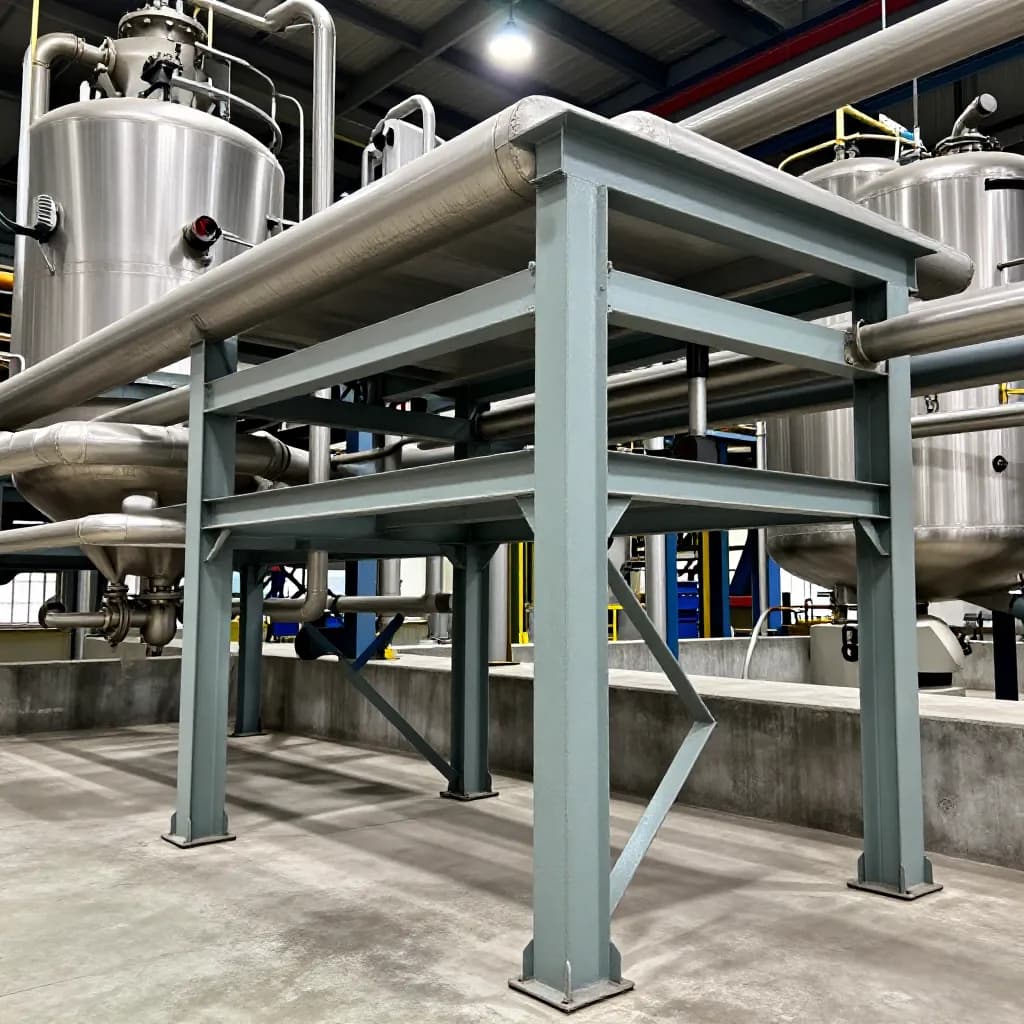
The chemical exposure profile of a plant depends on the specific processes operated, but common aggressive agents include mineral acids (sulfuric, hydrochloric, nitric, phosphoric), organic acids (acetic, formic, citric), alkalis (sodium hydroxide, potassium hydroxide, ammonia), organic solvents (acetone, MEK, toluene, xylene), oxidizing agents (hydrogen peroxide, sodium hypochlorite), and process-specific chemicals unique to each facility.
Ready to Start Your Project?
From one-off customs to 15,000-part production runs — get precise pricing in 24 hours.
On This Page
Chemical Plant Environments and Coating Demands
Beyond chemical exposure, chemical plant coatings must withstand thermal cycling from process temperature variations, mechanical damage from maintenance activities and equipment movement, high-pressure water and steam cleaning during decontamination, and UV exposure on exterior surfaces. The coating must also support the plant's safety management system through correct application of safety color coding per ISO 3864 and ANSI Z535.
The consequences of coating failure in chemical plants extend beyond corrosion damage. Coating degradation can compromise structural integrity of process equipment, contaminate products in pharmaceutical and food-grade applications, create slip hazards from coating delamination on walkways, and obscure safety markings that workers depend on for hazard identification. These safety implications elevate coating specification and maintenance from a maintenance concern to a safety-critical function.
Acid and Alkali Resistance of Powder Coatings
Resistance to acids and alkalis is the primary chemical performance requirement for powder coatings in chemical plant environments. The mechanism of chemical attack differs between acids and alkalis, and different powder coating chemistries offer different resistance profiles.
Acid attack on powder coatings occurs through several mechanisms depending on the acid type and concentration. Mineral acids (H2SO4, HCl, HNO3) at dilute concentrations (below 10%) primarily attack the coating through diffusion of hydrogen ions into the film, causing gradual hydrolysis of the polymer binder. At higher concentrations, direct chemical dissolution of the coating surface occurs, with visible etching, softening, and eventual film loss. Oxidizing acids (HNO3, chromic acid) additionally cause oxidative degradation of the organic binder.
Alkali attack is particularly aggressive toward polyester powder coatings because the ester bonds in the polyester backbone are susceptible to saponification — alkaline hydrolysis that breaks the polymer chain. Sodium hydroxide solutions above 5% concentration can cause visible softening and blistering of standard polyester coatings within hours. This vulnerability makes polyester coatings unsuitable for areas of chemical plants where alkali exposure is likely.
Epoxy powder coatings provide the broadest acid and alkali resistance among common powder coating chemistries. The ether and hydroxyl groups in the cured epoxy network are resistant to both acid and alkaline hydrolysis, and the high crosslink density of epoxy coatings limits chemical penetration. Standard bisphenol-A epoxy coatings resist dilute acids (up to 10% H2SO4, 5% HCl) and moderate alkalis (up to 20% NaOH) at ambient temperature.
Novolac epoxy powder coatings — modified with phenolic resin to increase crosslink density and chemical resistance — extend the resistance envelope to concentrated acids (up to 30% H2SO4, 10% HCl, 50% H3PO4) and strong alkalis (up to 50% NaOH) at temperatures up to 90°C. Novolac epoxy is the standard coating chemistry for the most chemically aggressive areas of chemical plants.
Vinyl ester powder coatings, while less common than epoxy, offer exceptional resistance to oxidizing acids and chlorinated solvents. For chemical plants processing bleach (sodium hypochlorite), chlorine, or oxidizing acids, vinyl ester coatings provide superior performance compared to standard epoxy formulations.
Solvent Resistance and Chemical Compatibility
Organic solvent exposure is common in chemical plants, particularly in pharmaceutical manufacturing, specialty chemical production, and petrochemical processing. Solvents attack powder coatings through absorption and swelling of the polymer matrix, dissolution of the binder, and extraction of plasticizers and additives — mechanisms that differ fundamentally from the ionic attack of acids and alkalis.
The solvent resistance of a powder coating depends primarily on its crosslink density and the solubility parameter match between the solvent and the polymer. Highly crosslinked coatings resist solvent absorption because the tight network structure limits the space available for solvent molecules to penetrate. Coatings whose solubility parameters differ significantly from the solvent resist dissolution because the thermodynamic driving force for mixing is unfavorable.
Epoxy powder coatings provide good resistance to aliphatic hydrocarbons (hexane, heptane), alcohols (methanol, ethanol, isopropanol), and many industrial solvents. However, they are vulnerable to strong ketones (acetone, MEK) and aromatic solvents (toluene, xylene) that have solubility parameters close to the epoxy resin, causing swelling and softening.
Novolac epoxy coatings offer improved solvent resistance compared to standard epoxy due to their higher crosslink density, which restricts solvent penetration. For chemical plants with significant ketone or aromatic solvent exposure, novolac epoxy is the preferred coating chemistry.
Chemical compatibility testing is essential before specifying any powder coating for chemical plant service. ASTM D1308 (spot test method) provides a rapid screening test: drops of the specific chemicals encountered in the plant are placed on the coating surface, covered, and evaluated after defined exposure periods (1 hour, 24 hours, 7 days) for softening, blistering, discoloration, and adhesion loss. ISO 2812-1 (immersion method) provides more rigorous evaluation for continuous or frequent chemical contact.
For areas where multiple chemicals may contact the coating — such as process areas with potential spills of different materials — the coating must resist the most aggressive chemical in the exposure profile. Chemical compatibility matrices provided by powder coating manufacturers list resistance ratings for hundreds of chemicals, but project-specific testing in the actual process chemicals is strongly recommended for critical applications.
Decontamination and Cleaning Resistance
Chemical plants require regular decontamination of surfaces for safety, hygiene, and regulatory compliance. The cleaning methods used — high-pressure water jetting, steam cleaning, chemical wash-down, and in pharmaceutical plants, validated cleaning procedures — impose significant stress on powder coating systems that must be factored into the coating specification.
High-pressure water jetting at 100-500 bar is routinely used for cleaning process areas, equipment exteriors, and containment bunds. At these pressures, the water jet can erode coating surfaces, particularly at edges, corners, and areas of reduced adhesion. Powder coatings for areas subject to regular high-pressure cleaning should achieve minimum adhesion of 5 MPa (pull-off test per ISO 4624) and pencil hardness of 2H or higher to resist jetting erosion.
Steam cleaning at 120-150°C creates thermal shock on the coating surface, with rapid temperature rise from ambient to above 100°C in seconds. This thermal shock can cause blistering, cracking, or adhesion loss in coatings with inadequate thermal resistance or poor adhesion. Epoxy and novolac epoxy coatings with Tg values above 120°C provide the best steam cleaning resistance.
Chemical wash-down using alkaline cleaners (typically 2-5% NaOH solutions), acidic cleaners (1-5% phosphoric or citric acid), or oxidizing sanitizers (sodium hypochlorite at 200-1,000 ppm) is standard practice in chemical and pharmaceutical plants. The coating must resist repeated exposure to these cleaning chemicals without degradation. Testing should simulate the actual cleaning regime — including concentration, temperature, contact time, and frequency — rather than relying on generic chemical resistance data.
In pharmaceutical manufacturing, validated cleaning procedures must demonstrate that process residues are removed to defined limits. The powder coating surface must be compatible with the validated cleaning method and must not harbor residues in surface defects or texture. Smooth, glossy powder coating finishes (above 70 GU at 60°) are preferred for pharmaceutical applications because they are easier to clean and validate than textured or matte finishes.
For food-grade chemical plants, the coating must comply with FDA 21 CFR 175.300 or EU Regulation 1935/2004 for materials in contact with food. These regulations restrict the coating composition to approved substances and require that the cured coating does not transfer harmful substances to food products. Powder coatings specifically formulated and certified for food contact are available from major manufacturers.
Safety Color Coding and Visibility
Safety color coding is a critical function of powder coatings in chemical plant environments. Color-coded piping, equipment, and structural elements communicate hazard information to workers, emergency responders, and maintenance personnel. The correct application and maintenance of safety colors is a regulatory requirement in most jurisdictions and a fundamental element of the plant's safety management system.
ISO 3864 (Graphical symbols — Safety colours and safety signs) and ANSI Z535 (Safety Signs and Colors) define the standard safety colors and their meanings: red for fire protection equipment and prohibition signs, yellow for caution and physical hazards, orange for warning of dangerous parts, green for safety and first aid, blue for mandatory actions, and specific colors for pipe contents per ANSI/ASME A13.1 or ISO 14726.
Powder coating provides excellent safety color performance due to its ability to achieve consistent, vibrant colors with high opacity in a single coat. The thick film build (60-100 microns) ensures complete hiding of the substrate, and the uniform application achieved by electrostatic powder coating eliminates the thin spots and runs that can compromise color visibility in liquid-painted safety markings.
Color retention of safety markings is a safety-critical requirement. Faded or discolored safety colors can be misidentified, leading to incorrect hazard assessment and potentially dangerous actions. For exterior safety markings exposed to UV, super-durable polyester formulations with high-lightfastness pigments maintain color visibility over 10-15 years. For interior safety markings protected from UV, standard polyester or epoxy coatings provide indefinite color stability.
Retro-reflective and fluorescent powder coatings enhance safety marking visibility in low-light conditions common in enclosed process areas, nighttime operations, and emergency situations. Fluorescent yellow-green (similar to RAL 1026) provides the highest daytime visibility, while retro-reflective coatings return light toward its source, improving visibility under artificial lighting.
Regular inspection of safety color condition should be included in the plant's safety management system. Colors that have faded, been obscured by chemical deposits, or been damaged by maintenance activities must be restored promptly. The ease of touch-up and recoating of powder-coated surfaces — using either powder or compatible liquid coatings — supports efficient maintenance of safety color systems.
Coating System Design for Chemical Plant Zones
Chemical plants are typically divided into zones based on the type and severity of chemical exposure, and the coating specification should be tailored to each zone rather than applying a single specification across the entire facility.
Process areas — where chemical exposure is most severe and frequent — require the highest level of chemical resistance. Novolac epoxy powder coatings at 200-400 microns (applied in two coats for pinhole-free coverage) provide the broadest chemical resistance for process area structural steel, piping supports, and equipment frames. For areas with specific chemical exposures that exceed novolac epoxy resistance, specialized coatings (vinyl ester, fluoropolymer, or rubber linings) may be required.
Containment areas — bunds, drip trays, and secondary containment structures designed to capture chemical spills — require coatings that can withstand prolonged immersion in the contained chemical. The coating specification for containment areas should be based on immersion testing (ISO 2812-1) in the specific chemicals that may be spilled, at the maximum expected concentration and temperature. Novolac epoxy at 400-600 microns is the standard for most containment applications.
Utility areas — pipe racks, cable trays, structural steel, and walkways outside the immediate process zone — experience lower chemical exposure but are subject to atmospheric corrosion, occasional chemical splash, and mechanical wear from foot traffic and maintenance activities. Standard epoxy primer plus polyester or polyurethane topcoat systems at 200-280 microns total provide adequate protection for utility areas, with the topcoat providing UV resistance for exterior surfaces.
Administrative and control room areas require coatings primarily for aesthetic appearance and fire protection rather than chemical resistance. Standard architectural polyester powder coatings at 60-80 microns are appropriate for these areas, with color selection following the plant's design standards and safety color requirements.
Transition zones between different exposure areas require careful specification to ensure that the coating system is adequate for the most aggressive exposure that may occur. Chemical splash from process areas can reach utility areas during upsets or maintenance activities, and the coating in transition zones should be specified for the worst-case exposure scenario rather than the normal operating condition.
Inspection, Maintenance, and Lifecycle Management
Coating inspection and maintenance in chemical plants must be integrated with the plant's overall maintenance management system, including turnaround scheduling, safety permit systems, and regulatory compliance requirements.
Routine inspection of powder coatings in chemical plants should be conducted on a 6-12 month cycle, with more frequent inspection of high-exposure areas and areas with known coating damage. Inspection methods include visual assessment per ISO 4628 (rating of degradation), adhesion testing per ISO 2409 or ISO 4624 at representative locations, film thickness measurement to detect erosion or chemical thinning, and chemical resistance spot testing if new chemicals have been introduced to the process.
Plant turnarounds — scheduled shutdowns for maintenance and inspection — provide the primary opportunity for coating repair and recoating. During turnarounds, process equipment is drained and cleaned, providing access to surfaces that are normally inaccessible during operation. Coating repair during turnarounds should be planned in advance based on inspection data, with repair materials, surface preparation equipment, and qualified applicators pre-arranged.
Coating repair in chemical plants typically uses liquid coating systems (two-component epoxy and polyurethane) rather than powder, as the high-temperature curing required for powder coatings cannot be achieved in the field. The repair coating must be chemically compatible with both the existing powder coating and the chemical exposure at the repair location. Overlap zones between the existing coating and the repair coating should be feathered and sealed to prevent chemical penetration at the interface.
Lifecycle cost analysis for chemical plant coatings should account for the total cost of the coating system over the plant's operating life — typically 20-40 years. This analysis includes initial coating cost, inspection and maintenance costs, turnaround coating repair costs, production losses during coating-related shutdowns, and the cost of premature equipment replacement due to corrosion. Higher-specification coating systems that reduce maintenance frequency and extend equipment life typically deliver lower total lifecycle costs despite higher initial investment.
Regulatory compliance documentation — including coating specification records, application quality records, inspection reports, and repair records — must be maintained throughout the plant's operating life. These records demonstrate compliance with safety regulations, support insurance requirements, and provide the data needed for informed maintenance planning and lifecycle cost management.
Frequently Asked Questions
What powder coating chemistry is best for chemical plant environments?
Novolac epoxy provides the broadest chemical resistance, handling concentrated acids (up to 30% H2SO4), strong alkalis (up to 50% NaOH), and many solvents at temperatures up to 90°C. Standard bisphenol-A epoxy handles moderate chemical exposure. Polyester is unsuitable for alkali exposure due to saponification vulnerability.
How do you specify coatings for chemical plant containment areas?
Containment coatings must withstand prolonged immersion in the specific chemicals that may be spilled. Specification should be based on immersion testing (ISO 2812-1) in actual chemicals at maximum concentration and temperature. Novolac epoxy at 400-600 microns applied in two coats is the standard for most containment applications.
Can powder coatings withstand steam cleaning and high-pressure washing?
Yes, with proper specification. Coatings should achieve minimum 5 MPa pull-off adhesion and 2H pencil hardness for high-pressure jetting resistance. For steam cleaning at 120-150°C, epoxy or novolac epoxy coatings with Tg above 120°C are required. Testing should simulate the actual cleaning regime including frequency.
What are the safety color requirements for chemical plant powder coatings?
ISO 3864 and ANSI Z535 define safety colors: red for fire protection, yellow for caution, orange for warnings, green for safety, blue for mandatory actions. Pipe color coding follows ANSI/ASME A13.1 or ISO 14726. Color retention is safety-critical — faded colors must be restored promptly. Super-durable formulations maintain exterior color for 10-15 years.
How often should chemical plant coatings be inspected?
Routine inspection every 6-12 months, with more frequent checks of high-exposure areas. Assessment includes visual rating per ISO 4628, adhesion testing, thickness measurement, and chemical resistance verification. Major coating repairs are scheduled during plant turnarounds using pre-planned materials and qualified applicators.
Ready to Start Your Project?
From one-off customs to 15,000-part production runs — get precise pricing in 24 hours.