Carbon steel and mild steel account for the vast majority of all powder-coated components worldwide. From office furniture and shelving to agricultural equipment, automotive parts, and industrial machinery, carbon steel's combination of low cost, excellent formability, weldability, and mechanical strength makes it the default material for fabricated metal products. Its compatibility with electrostatic powder coating is excellent — carbon steel is electrically conductive, magnetically responsive (enabling magnetic film thickness measurement), and readily accepts conversion coatings that promote adhesion and corrosion resistance.
Technical
Powder Coating Carbon Steel and Mild Steel: The Definitive Pretreatment and Application Guide
Sundial Powder Coating·April 22, 2026·14 min
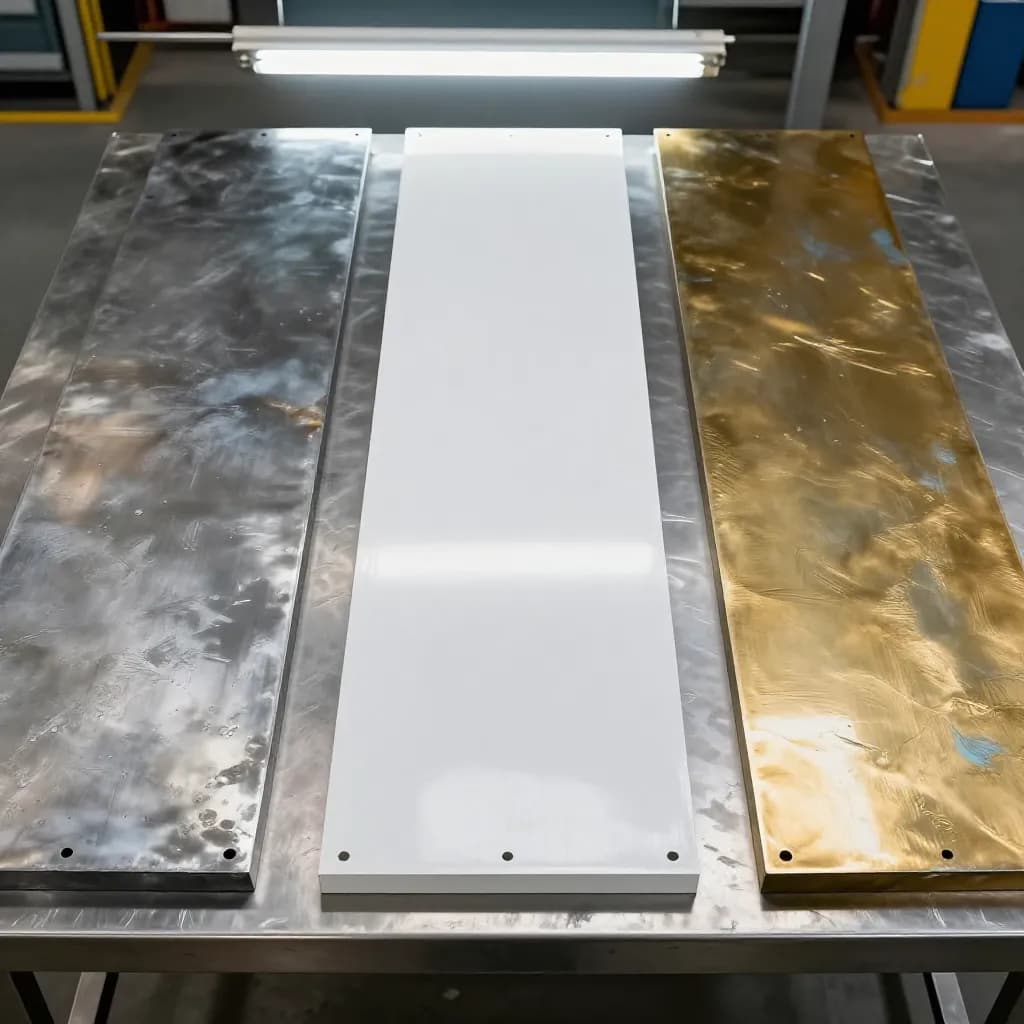
The term 'carbon steel' encompasses a broad range of alloys containing 0.05-2.0% carbon, with mild steel (0.05-0.25% carbon) being the most commonly coated grade. Low-carbon steel grades such as AISI 1008, 1010, and 1018 are used for sheet metal fabrications, tubing, and structural sections. Medium-carbon steels (1035, 1045) are encountered in machinery components and fasteners. The carbon content affects hardness, weldability, and surface preparation requirements, but the fundamental powder coating process is similar across all carbon steel grades.
Ready to Start Your Project?
From one-off customs to 15,000-part production runs — get precise pricing in 24 hours.
On This Page
Carbon Steel: The Most Common Powder Coating Substrate
Despite its ubiquity, carbon steel should not be treated as a simple or forgiving substrate. It has no inherent corrosion resistance — unlike stainless steel, aluminum, or titanium, carbon steel rusts aggressively when exposed to moisture and oxygen. The entire burden of corrosion protection falls on the pretreatment and coating system. Any deficiency in surface preparation, conversion coating, powder application, or cure will eventually manifest as corrosion-driven coating failure. The high volume of carbon steel coating means that even small improvements in process efficiency or defect reduction translate to significant economic benefits.
Iron Phosphate Pretreatment: The Workhorse System
Iron phosphate conversion coating is the most widely used pretreatment for carbon steel in powder coating operations, favored for its simplicity, low cost, and compatibility with multi-metal processing lines that handle both steel and aluminum. The process deposits a thin, amorphous iron phosphate layer on the steel surface through a chemical reaction between the phosphating solution and the iron in the substrate. This conversion layer — typically weighing 0.3-1.0 g/m² — provides a micro-rough surface that enhances powder adhesion and a modest degree of under-film corrosion resistance.
A standard iron phosphate pretreatment line consists of five to seven stages: alkaline cleaning (to remove oils, greases, and shop soils), rinse, iron phosphate conversion coating, rinse, and optional final seal rinse with chromium-free sealant. The alkaline cleaner stage operates at 50-70°C with a pH of 10-12 and a contact time of 60-120 seconds. The iron phosphate stage operates at 35-55°C with a pH of 4.0-5.5 and a contact time of 60-120 seconds. Process control requires regular monitoring of concentration, pH, temperature, and coating weight on test panels.
Iron phosphate systems are classified as 'light' conversion coatings because the coating weight is relatively low and the crystal structure is amorphous rather than crystalline. This limits their corrosion resistance compared to zinc phosphate systems — iron phosphate typically provides 100-250 hours of salt spray resistance (with powder topcoat), compared to 500-1000+ hours for zinc phosphate. For interior applications, mild exterior environments, and products with moderate corrosion resistance requirements, iron phosphate provides an excellent balance of performance and economy. For demanding exterior, marine, or industrial environments, zinc phosphate or more advanced pretreatment systems should be specified.
Zinc Phosphate Pretreatment: Maximum Corrosion Protection
Zinc phosphate conversion coating represents the premium pretreatment option for carbon steel, delivering significantly superior corrosion resistance compared to iron phosphate. The process deposits a dense, crystalline zinc phosphate layer weighing 1.5-4.0 g/m² on the steel surface. This crystalline structure provides both excellent mechanical keying for the powder coating and a robust barrier against under-film corrosion propagation. The zinc phosphate crystals also act as corrosion inhibitors, releasing zinc ions that passivate exposed steel at any points of coating damage.
The zinc phosphate process is more complex than iron phosphate, typically requiring seven to nine stages: alkaline cleaning, rinse, surface conditioning (titanium-based activator), zinc phosphate conversion, rinse, passivation rinse (chromium-free or trivalent chromium sealant), and deionized water final rinse. The surface conditioning stage is critical — it deposits titanium phosphate nucleation sites on the steel surface that promote the formation of a fine, dense zinc phosphate crystal structure. Without surface conditioning, the crystals are coarse and loosely packed, providing inferior performance.
Zinc phosphate operates at 45-65°C with a total acid concentration of 15-25 points and a free acid ratio carefully controlled to maintain crystal quality. The process requires more rigorous chemical management than iron phosphate — sludge generation from the phosphating reaction must be managed through continuous filtration or periodic desludging, and the bath chemistry must be maintained within tighter tolerances. The higher operating cost and complexity of zinc phosphate are justified for applications requiring maximum corrosion protection: automotive body panels, agricultural equipment, outdoor furniture, highway infrastructure, and any product exposed to C3-C5 corrosive environments per ISO 12944.
Blast Cleaning and Mechanical Pretreatment
Blast cleaning is the preferred mechanical pretreatment for carbon steel, particularly for heavy fabrications, structural steel, and components with mill scale, heavy rust, or weld spatter that chemical cleaning cannot effectively remove. The blast process simultaneously removes surface contaminants and creates a roughened surface profile that provides mechanical adhesion for the powder coating. For carbon steel, the target surface cleanliness is typically Sa 2.5 (near-white metal) per ISO 8501-1, with a surface profile of 40-75 micrometers per ISO 8503.
Steel grit (angular) and steel shot (spherical) are the most common blast media for carbon steel. Angular grit produces a more aggressive, peaked profile that provides superior mechanical keying, while shot produces a smoother, dimpled profile with less stress concentration. Grit sizes of G25 to G40 (0.7-1.0 mm) are standard for general industrial applications. Aluminum oxide grit is used when ferrous contamination must be avoided or when a more aggressive cut is needed. Blast pressure of 4-7 bar and nozzle distance of 150-300 mm are typical parameters.
The cleanliness and profile achieved by blasting are only maintained if the surface is protected from re-contamination and flash rusting. In humid environments (above 60% relative humidity), flash rust can form on blasted carbon steel within 30-60 minutes, compromising coating adhesion. Best practice is to coat blasted parts within four hours, or to apply a temporary rust-preventive treatment if longer delays are unavoidable. Some facilities use dehumidified blast rooms and coating areas to extend the working window. After blasting, parts should be handled with clean gloves to prevent oil and salt contamination from skin contact, and compressed air used for dust removal should be filtered and oil-free.
Emerging Pretreatment Technologies
The powder coating industry is actively developing and adopting new pretreatment technologies that offer improved performance, reduced environmental impact, or both. Zirconium-based conversion coatings — sometimes called nano-ceramic or thin-film pretreatments — deposit an ultra-thin (20-100 nanometer) zirconium oxide layer on the steel surface. Despite their minimal thickness, these coatings provide corrosion resistance approaching zinc phosphate levels while generating virtually no sludge, operating at ambient temperature, and using significantly less water and chemicals than traditional phosphate systems.
Silane and organosilane pretreatments create a molecular-level bond between the metal surface and the organic coating through hydrolysis and condensation reactions. The silane molecule has a metal-reactive end (typically an alkoxy group) that bonds to the steel surface and an organic-reactive end (typically an amino or epoxy group) that bonds to the powder coating. This dual functionality creates a chemical bridge that enhances adhesion beyond what mechanical keying alone can achieve. Silane pretreatments are applied as dilute aqueous solutions by spray, dip, or roll-coat and cure at low temperatures or ambient conditions.
Plasma pretreatment is an emerging technology that uses ionized gas to clean and activate steel surfaces without chemicals or water. Atmospheric plasma systems generate a stream of reactive species — ions, electrons, UV photons, and free radicals — that remove organic contaminants, modify surface chemistry, and increase surface energy for improved wetting and adhesion. Plasma pretreatment is particularly attractive for lean manufacturing environments because it eliminates the need for wet chemistry, rinse water, and wastewater treatment. Current limitations include relatively slow processing speeds and the need for close proximity between the plasma source and the workpiece, but ongoing development is addressing these constraints for production-scale implementation.
Powder Application and Cure for Carbon Steel
Carbon steel's excellent electrical conductivity and magnetic properties make it the ideal substrate for electrostatic powder coating. Corona charging guns operating at 60-100 kV produce efficient powder deposition with first-pass transfer efficiencies of 60-80% on flat surfaces. Tribo-charging guns, which impart charge through friction rather than corona discharge, offer advantages for complex geometries where the Faraday cage effect limits corona gun penetration into recesses and channels. Many production lines use a combination of corona guns for flat surfaces and tribo guns for complex areas.
Film thickness targets for carbon steel depend on the application and corrosion resistance requirements. Interior decorative applications may require only 50-70 micrometers, while exterior industrial applications typically specify 60-100 micrometers. Heavy-duty corrosion protection for marine, chemical, or buried applications may require 150-300 micrometers, often achieved through multi-coat systems with an epoxy primer and polyester topcoat. Film thickness uniformity is important — thin spots at edges, corners, and weld areas are the most common initiation points for corrosion failure.
Cure parameters for carbon steel are straightforward compared to substrates with outgassing or thermal sensitivity concerns. Standard polyester powders cure at 180-200°C for 10-15 minutes at metal temperature, with the part's thermal mass determining the total oven time required. Thin-gauge sheet metal (0.5-1.5 mm) reaches cure temperature quickly and may require only 15-20 minutes total oven time, while heavy fabrications (10+ mm wall thickness) may need 30-45 minutes. Infrared temperature measurement of the actual part surface — not the oven air temperature — is essential for verifying cure, particularly for parts with varying wall thicknesses where thin sections may over-cure while thick sections are still ramping.
Rust Prevention and Storage Between Process Steps
Flash rust prevention between pretreatment and coating is one of the most overlooked aspects of carbon steel powder coating, yet it is a frequent cause of adhesion failures and premature corrosion. Carbon steel begins to oxidize immediately upon exposure to humid air after cleaning or blasting, and even a thin flash rust layer can compromise coating adhesion and under-film corrosion resistance. The rate of flash rusting depends on ambient humidity, temperature, and the presence of airborne contaminants — in tropical or coastal environments, visible rust can form within minutes on freshly cleaned steel.
Best practices for preventing flash rust include maintaining relative humidity below 50% in pretreatment and coating areas (using dehumidification if necessary), minimizing the time between pretreatment and coating application (ideally less than four hours), and ensuring that rinse water quality is adequate (conductivity below 30 microsiemens/cm for final rinse). Dry-off ovens after the final rinse stage should reach 120-150°C to rapidly evaporate residual moisture and warm the parts, which inhibits condensation during transfer to the coating booth.
For operations where delays between pretreatment and coating are unavoidable — for example, when parts are pretreated on one shift and coated on the next — temporary rust-preventive treatments can extend the protection window. Chromium-free seal rinses applied as the final pretreatment stage deposit a thin inhibitive film that protects against flash rust for 24-72 hours depending on environmental conditions. Alternatively, pretreated parts can be stored in a climate-controlled area with dehumidification. Parts that have developed flash rust must be re-pretreated before coating — attempting to coat over flash rust will result in adhesion failure and accelerated corrosion.
Industrial Applications and Specification Guidelines
Carbon steel powder coating spans virtually every industrial sector, and the specification requirements vary enormously depending on the application. Office furniture and retail fixtures represent the high-volume, moderate-performance segment — iron phosphate pretreatment with a single coat of polyester or epoxy-polyester powder at 60-80 micrometers provides adequate protection for interior environments. The primary quality concerns are aesthetic consistency (color, gloss, texture) and mechanical durability (scratch and impact resistance for daily use).
Agricultural and construction equipment operates in demanding outdoor environments with exposure to soil, moisture, chemicals, and mechanical abuse. Zinc phosphate pretreatment with epoxy primer (25-50 micrometers) and polyester topcoat (50-80 micrometers) is the standard specification, providing 500-1000 hours of salt spray resistance. Edge coverage and weld area protection are critical because these are the first points of corrosion initiation in field service. Design for coating — radiusing sharp edges, sealing lap joints, and providing drainage holes — significantly improves coating durability on agricultural equipment.
Automotive components, appliances, and HVAC equipment require consistent quality at high production volumes. Automated pretreatment lines with continuous chemical monitoring, robotic powder application with recipe-driven parameter control, and conveyorized cure ovens with data-logged temperature profiles ensure batch-to-batch consistency. Statistical process control (SPC) of film thickness, adhesion, and appearance parameters provides early warning of process drift. For automotive applications, corrosion specifications typically require 720-1000 hours of cyclic corrosion testing per SAE J2334 or GM 9540P, which more accurately simulates real-world automotive corrosion than traditional salt spray testing.
Frequently Asked Questions
What is the best pretreatment for carbon steel before powder coating?
It depends on the corrosion resistance required. Iron phosphate is the most common and cost-effective option, suitable for interior and mild exterior applications (100-250 hours salt spray). Zinc phosphate provides superior corrosion protection (500-1000+ hours salt spray) for demanding outdoor, marine, and industrial environments. Newer zirconium-based nano-ceramic pretreatments offer zinc phosphate-level performance with lower environmental impact.
How do you prevent flash rust on steel before powder coating?
Maintain humidity below 50% in pretreatment and coating areas, minimize time between pretreatment and coating (under 4 hours), use high-quality rinse water (below 30 microsiemens/cm), and dry parts quickly at 120-150°C after rinsing. Chromium-free seal rinses can extend protection to 24-72 hours. Parts with flash rust must be re-pretreated — never coat over rust.
What is the difference between iron phosphate and zinc phosphate?
Iron phosphate deposits a thin amorphous layer (0.3-1.0 g/m²) providing moderate corrosion resistance. Zinc phosphate deposits a thicker crystalline layer (1.5-4.0 g/m²) with significantly better corrosion resistance and adhesion. Zinc phosphate requires more complex chemistry (7-9 stages vs 5-7) and higher operating costs but is essential for demanding exterior and industrial applications.
How thick should powder coating be on carbon steel?
Interior decorative applications: 50-70 micrometers. Standard exterior industrial: 60-100 micrometers. Heavy-duty corrosion protection (marine, chemical, buried): 150-300 micrometers, typically as a multi-coat system with epoxy primer and polyester topcoat. Film thickness uniformity is critical — thin spots at edges and welds are the primary corrosion initiation points.
What blast standard is required for carbon steel before powder coating?
Sa 2.5 (near-white metal) per ISO 8501-1 is the standard target, with a surface profile of 40-75 micrometers. This removes mill scale, rust, and contaminants while creating adequate roughness for adhesion. Steel grit (G25-G40) or aluminum oxide at 4-7 bar blast pressure are the most common media choices.
Ready to Start Your Project?
From one-off customs to 15,000-part production runs — get precise pricing in 24 hours.