Powder coating operations have a distinct carbon footprint profile shaped by the energy-intensive nature of the curing process and the electricity demands of application equipment. The largest single source of greenhouse gas emissions in most powder coating facilities is the curing oven, which typically operates at temperatures between 160°C and 200°C and may be fueled by natural gas, propane, or electricity. For gas-fired ovens, direct combustion emissions (Scope 1) represent the dominant carbon source. For electrically heated ovens, the carbon intensity depends on the local electricity grid mix (Scope 2).
Environmental
Pathway to Carbon-Neutral Powder Coating Operations: Renewable Energy, Scope 3, and Offset Strategies
Sundial Powder Coating·April 22, 2026·12 min
Beyond the curing oven, other significant energy consumers include pretreatment systems (heating wash solutions, drying ovens), compressed air systems (for powder application guns and fluidized bed hoppers), ventilation and air handling systems (spray booth exhaust, oven exhaust), and facility heating and cooling. The relative contribution of each system varies by facility size, production volume, and geographic location, but the curing oven typically accounts for 50-70% of total energy consumption in a powder coating operation.
Ready to Start Your Project?
From one-off customs to 15,000-part production runs — get precise pricing in 24 hours.
On This Page
The Carbon Footprint of Powder Coating Operations
Scope 3 emissions — indirect emissions from the value chain — add another layer of complexity. For powder coating operations, significant Scope 3 sources include the embodied carbon of powder coating materials (resin production, pigment manufacturing), transportation of raw materials and finished products, waste treatment and disposal, and employee commuting. A comprehensive carbon footprint assessment following the GHG Protocol Corporate Standard is the essential first step toward carbon neutrality, providing the baseline against which reduction strategies are measured.
Energy Efficiency as the Foundation for Decarbonization
Before investing in renewable energy or carbon offsets, powder coating operations should maximize energy efficiency to reduce the absolute quantity of energy required. Energy efficiency improvements deliver both carbon reduction and cost savings, making them the most economically attractive decarbonization strategy. A systematic energy audit following ISO 50001 or equivalent methodology identifies the highest-impact efficiency opportunities.
Curing oven optimization offers the largest efficiency gains. Strategies include improving oven insulation to reduce heat loss, optimizing air circulation patterns to ensure uniform heating with minimum energy input, implementing oven scheduling to minimize idle time and maximize batch loading, and exploring low-temperature cure powder coating formulations that reduce curing temperatures by 20-40°C. Heat recovery systems that capture waste heat from oven exhaust and redirect it to pretreatment heating or facility space heating can recover 20-40% of oven energy that would otherwise be lost.
Compressed air system optimization is another high-impact area. Compressed air is one of the most expensive forms of energy in industrial facilities, and powder coating operations rely heavily on compressed air for powder delivery, booth air management, and general plant utilities. Leak detection and repair programs, pressure optimization, variable speed drive compressors, and right-sizing of the compressed air system can reduce compressed air energy consumption by 20-30%. LED lighting upgrades, variable frequency drives on ventilation fans, and building envelope improvements provide additional efficiency gains that collectively reduce the facility's total energy demand and carbon footprint.
Transitioning to Renewable Energy
Once energy efficiency has been maximized, transitioning to renewable energy sources addresses the remaining Scope 1 and Scope 2 emissions. For Scope 2 emissions from electricity consumption, the options include on-site renewable generation, power purchase agreements (PPAs) for off-site renewable electricity, and the purchase of renewable energy certificates (RECs) or guarantees of origin (GOs). Each option has different implications for carbon accounting, cost, and credibility.
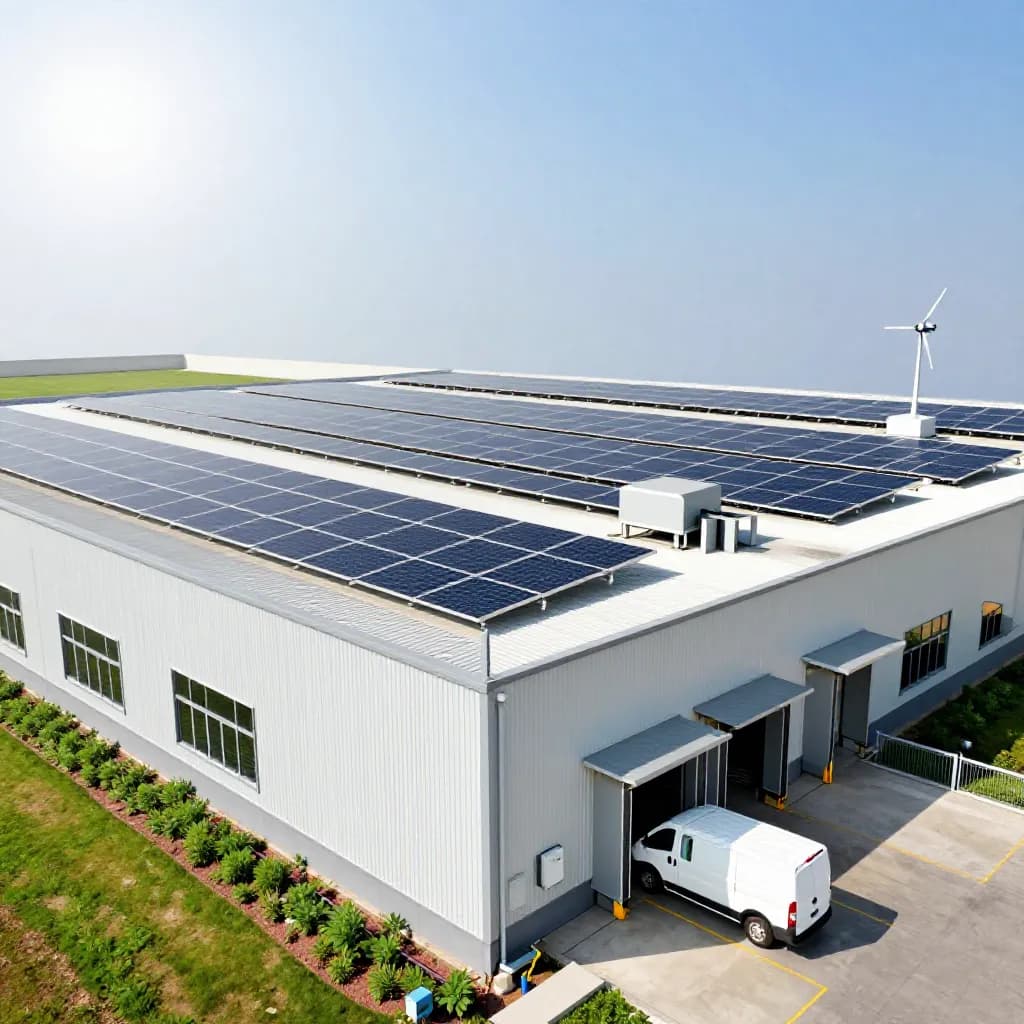
On-site solar photovoltaic (PV) installations are increasingly common at powder coating facilities, particularly those with large roof areas suitable for panel installation. A well-designed rooftop solar system can offset 20-50% of a facility's electricity consumption, depending on geographic location, roof area, and energy demand profile. Battery energy storage systems can increase the self-consumption rate of solar generation by storing excess daytime production for use during evening shifts or demand peaks. The economics of on-site solar have improved dramatically, with payback periods of 5-8 years in many regions.
For Scope 1 emissions from natural gas-fired curing ovens, the transition pathway is more challenging. Options include electrification of ovens powered by renewable electricity, biogas or renewable natural gas substitution, and hydrogen-ready oven technology for future green hydrogen availability. Oven electrification using infrared or induction heating technologies is technically feasible for some powder coating applications and eliminates direct combustion emissions entirely. However, the capital cost of oven replacement and the need for increased electrical supply capacity make this a longer-term investment. Companies should evaluate their oven fleet age and replacement schedule to identify natural transition points for electrification.
Managing Scope 3 Emissions Across the Value Chain
Scope 3 emissions typically represent 60-80% of a powder coating operation's total carbon footprint, making them essential to address for credible carbon neutrality claims. The GHG Protocol Scope 3 Standard identifies 15 categories of indirect emissions, of which several are particularly significant for powder coating operations: purchased goods and services (raw materials), upstream transportation, waste generated in operations, and downstream transportation of coated products.
The embodied carbon of powder coating raw materials — particularly resins derived from petrochemical feedstocks — is often the single largest Scope 3 category. Engaging with resin and pigment suppliers to understand and reduce the carbon intensity of raw materials is a critical strategy. This may involve selecting suppliers with lower-carbon manufacturing processes, specifying bio-based or partially bio-based resins that displace fossil carbon, and supporting supplier decarbonization initiatives. Some resin manufacturers are beginning to offer carbon footprint data for their products, enabling powder coating formulators to make carbon-informed raw material selections.
Transportation emissions can be reduced through supply chain optimization, including sourcing raw materials from geographically closer suppliers, consolidating shipments, optimizing logistics routes, and transitioning to lower-carbon transport modes. Waste-related Scope 3 emissions are typically small for powder coating operations due to high material utilization, but can be further reduced through improved reclaim efficiency and waste-to-energy recovery for non-reclaimable waste. Setting Scope 3 reduction targets aligned with the Science Based Targets initiative (SBTi) framework provides a credible, science-aligned pathway for value chain decarbonization.
Carbon Offset Strategies and Credibility
Carbon offsets play a role in achieving carbon neutrality for emissions that cannot be eliminated through efficiency improvements and renewable energy transition. However, the credibility of offset-based carbon neutrality claims depends critically on the quality of the offsets purchased and the transparency of the overall carbon management strategy. The principle of the mitigation hierarchy — avoid, reduce, then offset — should guide the approach, with offsets used only for residual emissions after all feasible reduction measures have been implemented.
High-quality carbon offsets should meet recognized standards such as the Verified Carbon Standard (VCS/Verra), Gold Standard, American Carbon Registry (ACR), or Climate Action Reserve (CAR). These standards require independent verification of emission reductions, additionality (the reductions would not have occurred without the offset project), permanence, and avoidance of leakage (shifting emissions elsewhere). Project types with strong credibility include renewable energy projects in developing countries, methane capture from landfills or agricultural operations, and verified reforestation and afforestation projects.
The evolving regulatory landscape for carbon claims adds urgency to getting offset strategy right. The EU Green Claims Directive, expected to take effect in the coming years, will require substantiation of environmental claims including carbon neutrality. The US Federal Trade Commission's Green Guides provide guidance on environmental marketing claims. Companies making carbon neutrality claims should maintain detailed documentation of their carbon footprint calculation methodology, reduction measures implemented, and offset purchases, and should be prepared to defend these claims against increasing regulatory and public scrutiny.
Science Based Targets and Net Zero Commitments
The Science Based Targets initiative (SBTi) provides the most widely recognized framework for corporate climate commitments, and an increasing number of powder coating companies and their customers are setting SBTi-aligned targets. SBTi targets are defined as consistent with the level of decarbonization required to keep global temperature increase to 1.5°C above pre-industrial levels, as outlined in the Paris Agreement. The SBTi Net-Zero Standard requires companies to reduce Scope 1, 2, and 3 emissions by at least 90% before using offsets for residual emissions.
For powder coating operations, an SBTi-aligned near-term target might commit to reducing Scope 1 and 2 emissions by 42% by 2030 (consistent with 1.5°C pathways) and reducing Scope 3 emissions by 25% over the same period. A long-term net-zero target would commit to at least 90% reduction across all scopes by 2050. These targets require concrete action plans including energy efficiency investments, renewable energy procurement, oven electrification timelines, and supplier engagement programs.
The business case for SBTi-aligned targets extends beyond environmental responsibility. Major customers in automotive, construction, and consumer goods sectors are increasingly requiring their suppliers to set science-based targets as a condition of continued business. The CDP (formerly Carbon Disclosure Project) supply chain program, through which major corporations assess their suppliers' climate performance, explicitly rewards SBTi-aligned targets. Powder coating companies that set and pursue science-based targets position themselves as preferred suppliers in an increasingly carbon-conscious market while building resilience against future carbon pricing mechanisms.
Implementation Roadmap and Milestones
A practical roadmap to carbon-neutral powder coating operations should span 5-10 years and include clear milestones for each phase. Phase 1 (Years 1-2) focuses on baseline establishment and quick wins: conduct a comprehensive GHG inventory across Scopes 1, 2, and 3; implement energy efficiency measures with short payback periods; switch to renewable electricity through RECs or green tariffs; and establish carbon reporting systems. These actions can typically achieve 20-30% carbon reduction from baseline.
Phase 2 (Years 3-5) addresses structural changes: install on-site renewable generation; implement heat recovery systems; begin oven electrification planning; engage key suppliers on Scope 3 reduction; and set science-based targets. This phase targets an additional 20-30% reduction, bringing cumulative reduction to 40-60% from baseline. Phase 3 (Years 5-10) tackles the most challenging emissions: complete oven electrification or fuel switching; achieve deep Scope 3 reductions through supply chain transformation; and offset remaining residual emissions with high-quality credits.
Throughout the roadmap, transparent reporting is essential. Annual carbon footprint reports following the GHG Protocol, progress updates against targets, and third-party verification of emission reductions build credibility with customers, regulators, and other stakeholders. Participation in industry initiatives such as the Powder Coating Institute's sustainability programs and sector-specific climate commitments demonstrates leadership and enables benchmarking against peers. The journey to carbon neutrality is a marathon, not a sprint, and consistent progress against a credible plan is more valuable than premature claims of achievement.
Frequently Asked Questions
What is the biggest source of carbon emissions in powder coating?
The curing oven is typically the largest single source, accounting for 50-70% of facility energy consumption. For gas-fired ovens, this represents direct Scope 1 emissions. However, Scope 3 emissions from raw materials often represent 60-80% of the total carbon footprint when the full value chain is considered.
Can powder coating operations achieve carbon neutrality?
Yes, through a combination of energy efficiency improvements, renewable energy procurement, oven electrification, Scope 3 supplier engagement, and high-quality carbon offsets for residual emissions. A realistic timeline is 5-10 years, following the mitigation hierarchy of avoid, reduce, then offset.
What are science-based targets for powder coating companies?
Science-based targets aligned with the SBTi framework typically require 42% reduction in Scope 1 and 2 emissions by 2030 and 25% Scope 3 reduction, consistent with 1.5°C pathways. Long-term net-zero targets require at least 90% reduction across all scopes by 2050, with offsets only for residual emissions.
How can powder coating ovens be decarbonized?
Options include electrification using infrared or induction heating powered by renewable electricity, substitution with biogas or renewable natural gas, and future green hydrogen fuel switching. Heat recovery systems and low-temperature cure powder formulations reduce energy demand regardless of fuel source.
Are carbon offsets credible for powder coating companies?
Carbon offsets are credible when used for residual emissions after maximizing efficiency and renewable energy, and when purchased from recognized standards (VCS/Verra, Gold Standard, ACR, CAR). The EU Green Claims Directive and similar regulations are increasing scrutiny of offset-based claims, making quality and transparency essential.
Ready to Start Your Project?
From one-off customs to 15,000-part production runs — get precise pricing in 24 hours.