Bridges represent one of the most demanding applications for protective coatings in the entire construction industry. Fully exposed to weather, UV radiation, temperature extremes, de-icing chemicals, and atmospheric pollution, bridge steelwork must maintain its structural integrity for design lives of 75-120 years. The coating system is the primary defense against the corrosion that threatens this integrity, and its performance directly influences the safety, serviceability, and lifecycle cost of the bridge.
Architecture
Powder Coating for Bridge Infrastructure: Structural Steel, Duplex Systems, and Heritage Bridges
Sundial Powder Coating·April 22, 2026·12 min
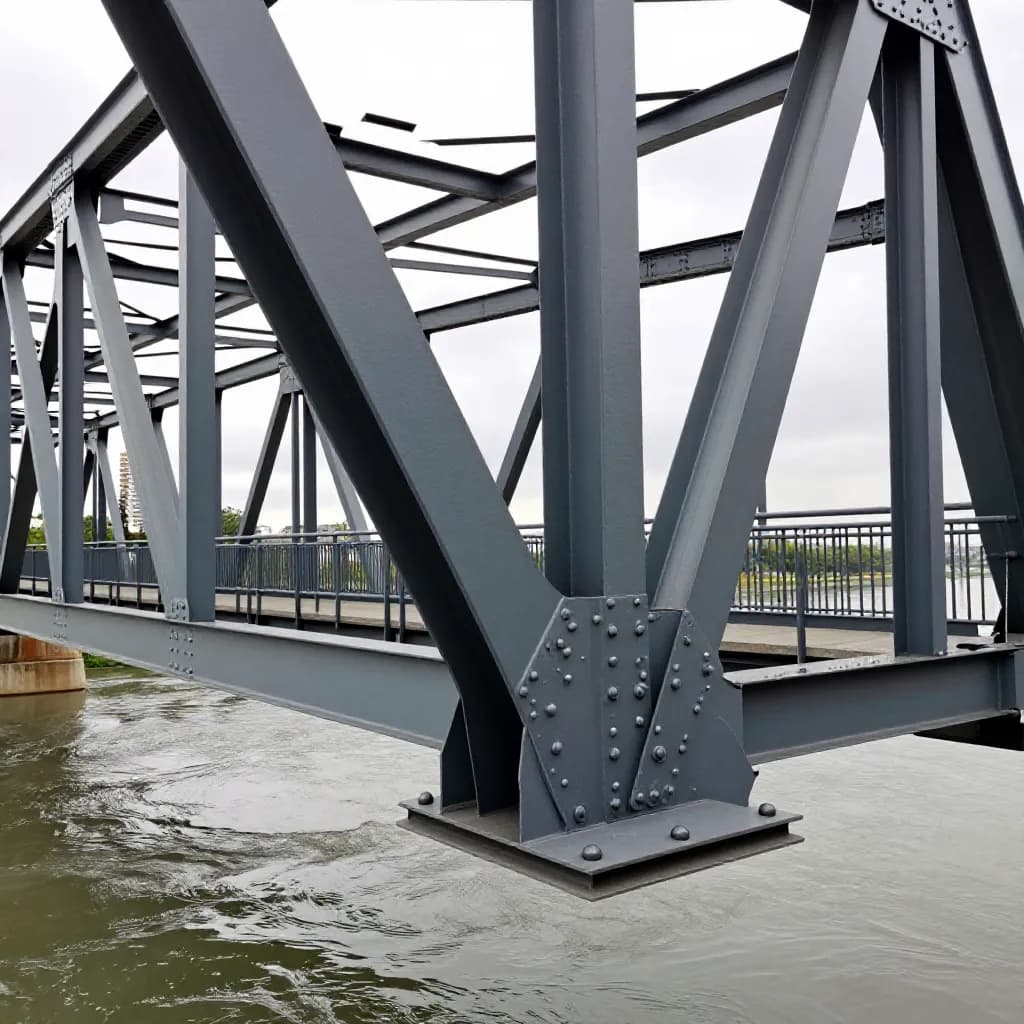
Powder coating has gained significant ground in bridge infrastructure as the technology has scaled to accommodate the large structural members typical of bridge construction. Applied at 60-120 microns in a single coat — compared to the multi-coat liquid systems that have traditionally dominated bridge painting — powder coating offers a denser, more uniform film with superior adhesion and chemical resistance. The elimination of solvent-related defects such as solvent pop, sagging, and inter-coat contamination produces a more reliable barrier against the aggressive environments that bridges endure.
Ready to Start Your Project?
From one-off customs to 15,000-part production runs — get precise pricing in 24 hours.
On This Page
Bridge Infrastructure: The Ultimate Test of Coating Durability
This article examines the application of powder coating technology to bridge infrastructure, covering structural steel protection, duplex galvanizing-plus-powder systems, maintenance access considerations, and the sensitive restoration of heritage bridges. While liquid paint systems remain dominant for the largest bridge structures due to size constraints on powder coating ovens, the technology is increasingly specified for pedestrian bridges, highway overpasses, bridge furniture, and heritage restoration projects where its performance advantages are compelling.
Structural Steel Protection: Corrosion Categories and System Selection
Bridge steelwork is classified by corrosivity category under ISO 9223, with most bridge environments falling into categories C3 (medium) through C5 (very high) depending on location, climate, and proximity to marine or industrial pollution sources. The coating system must be specified to provide adequate protection for the required service life within the identified corrosivity category, following the guidance of ISO 12944 for protective paint systems on structural steel.
Powder coating systems for bridge steelwork are selected based on the corrosivity assessment and the target maintenance-free period. For C3 environments — typical of rural and suburban bridges away from marine or industrial influence — a single-coat polyester powder system at 80-120 microns on properly pretreated steel provides protection for 15-25 years. For C4 environments — urban bridges with moderate pollution or bridges in temperate coastal zones — enhanced systems including zinc-rich powder primers with polyester topcoats extend protection to 20-30 years.
For C5 environments — bridges in aggressive marine or industrial atmospheres — the most robust powder coating systems are specified. These typically combine hot-dip galvanizing with powder coating topcoat (duplex systems) or multi-coat powder systems with zinc-rich primer, epoxy intermediate coat, and polyester topcoat. These systems provide protection exceeding 40 years in C5 environments, significantly reducing the frequency of maintenance interventions on structures where access is difficult and costly.
The pretreatment of bridge steelwork before powder coating is critical to system performance. Abrasive blast cleaning to Sa 2½ (ISO 8501-1) followed by chromate-free conversion coating provides the surface preparation needed for optimal powder adhesion and corrosion resistance. For galvanized steel, sweep blasting or chemical pretreatment prepares the zinc surface for powder adhesion without compromising the galvanized layer.
Duplex Systems: Galvanizing Plus Powder Coating
Duplex coating systems — combining the sacrificial cathodic protection of hot-dip galvanizing with the barrier protection and aesthetic finish of powder coating — represent the gold standard for bridge steel protection. The synergistic effect of the two protection mechanisms delivers a service life that exceeds the sum of the individual systems, with duplex-coated steelwork achieving maintenance-free periods of 40-60 years in moderate environments.
The galvanized zinc layer provides cathodic protection at any points of coating damage. When the powder topcoat is scratched, chipped, or otherwise breached, the exposed zinc corrodes preferentially to the steel substrate, preventing the initiation of steel corrosion at the damage site. This self-healing characteristic is particularly valuable for bridge applications where minor coating damage from debris impact, maintenance activities, or thermal movement is inevitable over the structure's service life.
The powder coating topcoat serves multiple functions in the duplex system. It provides barrier protection that slows the consumption of the zinc layer, extending the period of cathodic protection. It provides UV protection for the zinc, preventing the white rust formation that can occur on uncoated galvanized surfaces. And it provides the aesthetic finish — color, gloss, and texture — required by the bridge's architectural design and the planning authority's visual requirements.
Application of powder coating to galvanized steel requires careful surface preparation to ensure adhesion. The zinc surface must be clean, free from zinc oxide and zinc hydroxide deposits, and roughened to provide mechanical key for the powder. Sweep blasting with fine abrasive media is the most common preparation method, removing surface oxides and creating a profile without significantly reducing the zinc coating thickness. Chemical pretreatment with specialized galvanized steel primers provides an alternative where blasting is impractical.
Maintenance Access and Lifecycle Cost Optimization
Bridge maintenance is inherently difficult and expensive. Access to bridge steelwork typically requires lane closures, traffic management, scaffolding or rope access, and coordination with navigation authorities for bridges over waterways. Each maintenance intervention carries significant direct costs for access and coating work, plus indirect costs from traffic disruption, economic impact on surrounding areas, and environmental management of coating removal waste.
Powder coating's extended service life directly reduces the frequency of these costly maintenance interventions. A bridge coating system that requires recoating every 20-25 years instead of every 10-15 years eliminates one or more complete maintenance cycles over the bridge's design life, with cumulative cost savings that far exceed any difference in initial coating cost. For a highway overpass with a 75-year design life, the difference between three recoating cycles and five represents hundreds of thousands in avoided maintenance costs.
The predictability of powder coating degradation also supports maintenance planning. Powder coatings degrade gradually and predictably through chalking and gloss loss, providing visible indicators of coating condition that allow maintenance to be planned well in advance. This contrasts with some liquid paint systems that can fail suddenly through delamination or blistering, requiring emergency maintenance that is both more costly and more disruptive than planned interventions.
For bridge elements where maintenance access is particularly difficult — cable stays, arch ribs, suspension hangers, and high-level cross-bracing — the specification of the most durable coating system is economically justified even at higher initial cost. Duplex galvanizing-plus-powder systems that provide 40-60 years of protection can potentially eliminate all recoating requirements within the bridge's design life, delivering the lowest possible lifecycle cost for these access-constrained elements.
Pedestrian and Cycle Bridges: Design Freedom and Community Value
Pedestrian and cycle bridges are increasingly recognized as important pieces of urban infrastructure that contribute to community connectivity, active transport networks, and placemaking. Unlike highway bridges where engineering pragmatism dominates, pedestrian bridges are designed as architectural statements that enhance the public realm. The surface finish is a critical element of this architectural expression, and powder coating provides the design freedom and durability that these community assets require.
The color palette available in powder coating allows pedestrian bridge designers to create structures that respond to their context — complementing surrounding architecture, reflecting local identity, or creating bold visual landmarks. Custom color matching to any reference standard ensures that the designer's color intent is precisely realized, while metallic and special-effect finishes add visual depth and interest that engage pedestrians and cyclists as they cross.
The scale of pedestrian bridges — typically spanning 20-80 meters with structural members that fit within standard powder coating oven dimensions — makes them ideal candidates for factory-applied powder coating. Components are coated in controlled conditions, achieving consistent quality across all elements, then transported to site for assembly. This approach eliminates the weather dependencies and quality variability of on-site liquid painting, delivering a superior finish that maintains its appearance for 20-25 years.
Anti-graffiti powder coatings are frequently specified for pedestrian bridges in urban locations. These formulations allow graffiti removal without damaging the underlying finish, maintaining the bridge's appearance and community value. The combination of anti-graffiti performance with the mechanical durability of powder coating — resisting scratching, impact, and abrasion from pedestrian and cycle traffic — ensures that the bridge remains an asset to its community rather than a maintenance liability.
Heritage Bridge Restoration: Preserving History with Modern Technology
Heritage bridges — including Victorian iron and steel structures, Art Deco concrete-and-steel bridges, and mid-century modern designs — present unique challenges for coating specification. The restoration of these structures must balance the preservation of historic character with the application of modern protection technology, often under the scrutiny of heritage authorities and conservation organizations.
Powder coating offers significant advantages for heritage bridge restoration. The technology can replicate the appearance of historic paint finishes — including the specific colors, gloss levels, and textures of original coating schemes — while providing the superior durability and corrosion protection of modern thermoset technology. Spectrophotometric color matching to historic paint samples ensures accurate reproduction of original colors, and the range of gloss levels available in powder coating allows matching of the specific sheen characteristics of historic finishes.
For cast iron elements — common on Victorian-era bridges — powder coating provides excellent adhesion and protection on the complex surface geometry of decorative castings. The electrostatic application process wraps powder around the intricate profiles of cast iron balusters, brackets, and ornamental panels, achieving uniform coverage that would be difficult to replicate with brush or spray application of liquid paint. The resulting finish is both more durable and more visually refined than traditional liquid painting of cast iron.
The conservation principle of reversibility — the ability to remove a modern intervention without damaging the historic fabric — is addressed by powder coating's removal characteristics. Powder coatings can be removed by thermal stripping or chemical stripping methods that do not damage the underlying iron or steel substrate, allowing future conservators to access the original material if required. This reversibility, combined with the coating's superior protective performance, makes powder coating an increasingly accepted technology among heritage conservation professionals.
Environmental Compliance and Sustainable Bridge Maintenance
Bridge coating operations are subject to stringent environmental regulations governing emissions, waste management, and protection of waterways and ecosystems. The environmental profile of the coating system — both during application and throughout its service life — is an increasingly important specification criterion for bridge infrastructure projects.
Powder coating's zero VOC formulation eliminates the air quality concerns associated with solvent-based liquid bridge paints. This is particularly significant for bridge coating operations conducted over or adjacent to waterways, where solvent emissions could affect aquatic ecosystems and water quality. The absence of solvents also eliminates the fire and explosion risks associated with liquid paint application in confined spaces within bridge structures.
The 95-98% material utilization efficiency of powder coating dramatically reduces waste generation compared to liquid painting. Overspray powder is collected and reused, eliminating the paint waste stream that requires hazardous waste disposal in liquid painting operations. For bridge coating projects where waste management is complicated by the need to prevent contamination of waterways and surrounding land, this waste reduction simplifies environmental management and reduces disposal costs.
The extended service life of powder coating systems reduces the environmental impact of bridge maintenance over the structure's design life. Fewer recoating cycles mean less material consumption, less waste generation, less energy use for access equipment and coating application, and less traffic disruption with its associated vehicle emissions. When the full lifecycle environmental impact is assessed, powder coating consistently delivers the lowest environmental footprint per year of protection among bridge coating options, supporting the sustainability objectives of infrastructure owners and the communities they serve.
Frequently Asked Questions
How long does a duplex galvanizing-plus-powder system last on bridges?
Duplex systems combining hot-dip galvanizing with powder coating topcoat achieve maintenance-free periods of 40-60 years in moderate environments. The synergistic effect of cathodic zinc protection and powder barrier protection exceeds the sum of the individual systems' service lives.
Can powder coating be applied to large bridge structural members?
Specialized powder coating facilities accommodate structural members up to 15 meters in length. For pedestrian bridges and highway overpasses, factory-applied powder coating delivers superior quality compared to on-site liquid painting. The largest bridge structures may still require on-site liquid systems due to size constraints.
Is powder coating suitable for heritage bridge restoration?
Yes. Powder coating replicates historic paint colors and finishes through spectrophotometric matching while providing superior durability. The coating is reversible through thermal or chemical stripping, satisfying conservation principles. Electrostatic application achieves uniform coverage on complex cast iron decorative elements.
How does powder coating reduce bridge maintenance costs?
By extending recoating intervals from 10-15 years to 20-25 years, powder coating eliminates one or more complete maintenance cycles over a bridge's 75-120 year design life. Each avoided intervention saves significant costs for access equipment, traffic management, and coating work.
What environmental advantages does powder coating offer for bridge projects?
Zero VOC emissions protect air quality and aquatic ecosystems during coating operations over waterways. The 95-98% material efficiency eliminates hazardous paint waste streams. Extended service life reduces the cumulative environmental impact of maintenance over the bridge's design life.
What corrosion protection does powder coating provide for bridge steel?
Protection varies by system and environment: single-coat polyester provides 15-25 years in C3 environments, zinc-rich primer systems provide 20-30 years in C4, and duplex galvanizing-plus-powder systems exceed 40 years in C5 environments, following ISO 12944 guidance.
Ready to Start Your Project?
From one-off customs to 15,000-part production runs — get precise pricing in 24 hours.