BREEAM (Building Research Establishment Environmental Assessment Method) is the world's longest-established green building certification system, developed by BRE Global in the United Kingdom. Since its launch in 1990, BREEAM has been used to certify over 600,000 buildings across more than 90 countries. The certification evaluates buildings across ten categories: management, health and wellbeing, energy, transport, water, materials, waste, land use and ecology, pollution, and innovation. Powder coatings can contribute to credits in several of these categories, particularly materials, health and wellbeing, and pollution.
Environmental
Powder Coating and BREEAM Certification: Credits, Responsible Sourcing, and Lifecycle Assessment
Sundial Powder Coating·April 22, 2026·11 min
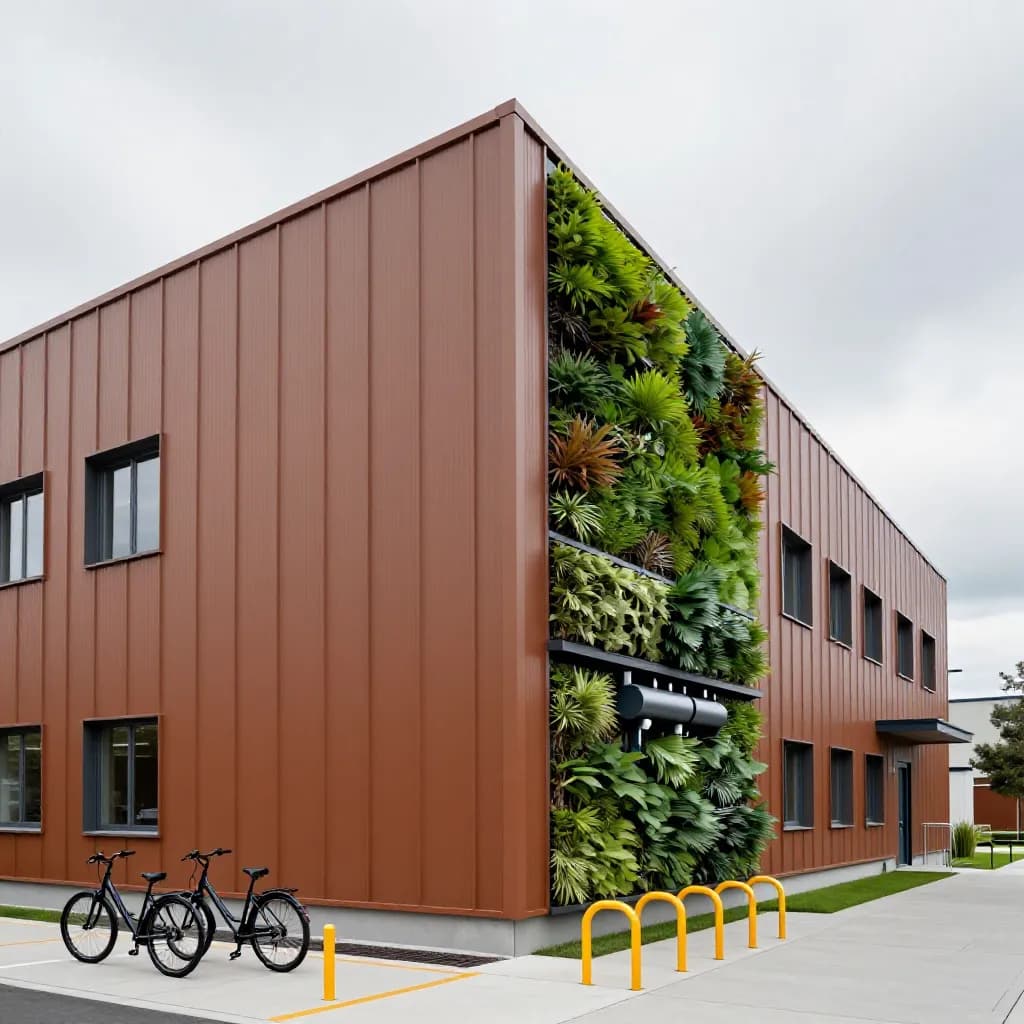
BREEAM's approach to materials assessment differs from LEED in several important ways. BREEAM places significant emphasis on responsible sourcing of materials through its Mat 03 credit, which evaluates the environmental management systems and supply chain practices of material manufacturers. The system also uses the BRE Green Guide to Specification ratings and Environmental Product Declarations to assess the lifecycle environmental impact of building materials. Understanding these assessment mechanisms is essential for powder coating companies seeking to support their customers' BREEAM certification goals.
Ready to Start Your Project?
From one-off customs to 15,000-part production runs — get precise pricing in 24 hours.
On This Page
BREEAM Certification and Building Material Selection
The current version, BREEAM New Construction 2023, has refined the materials assessment methodology to place greater emphasis on whole-life carbon, circular economy principles, and material health. These updates align well with the inherent environmental advantages of powder coatings, including zero VOC emissions, high material utilization, and the durability that extends substrate service life. This article examines the specific BREEAM credits where powder coatings can contribute and the documentation needed to support credit claims.
Mat 03: Responsible Sourcing of Construction Products
Mat 03 is one of the most significant BREEAM credits for material manufacturers, awarding points based on the responsible sourcing practices of product suppliers. The credit evaluates manufacturers against a tiered framework that considers environmental management systems, supply chain management, and third-party certification. For powder coatings, achieving a high Mat 03 score requires demonstrating robust environmental management across the manufacturing operation and supply chain.
The highest Mat 03 scores are achieved by products with BES 6001 certification (Framework Standard for Responsible Sourcing of Construction Products), issued by BRE Global. BES 6001 evaluates organizational governance, supply chain management, and environmental and social performance across the product lifecycle. Powder coating manufacturers with BES 6001 certification provide their customers with the maximum Mat 03 credit value. ISO 14001 environmental management system certification also contributes to Mat 03 scoring, though at a lower tier than BES 6001.
For powder coating applicators who coat products for the construction industry, the Mat 03 implications extend beyond their own operations to their supply chain. The responsible sourcing assessment considers the provenance of raw materials, including resins, pigments, and additives. Applicators should work with powder coating manufacturers who can demonstrate responsible sourcing practices and provide the documentation needed for BREEAM assessment. The combination of a BES 6001-certified powder coating manufacturer and an ISO 14001-certified applicator provides the strongest possible Mat 03 contribution for powder-coated building products.
Mat 01: Environmental Impacts from Construction Products
Mat 01 assesses the lifecycle environmental impacts of construction products using Environmental Product Declarations (EPDs) and the BRE Green Guide to Specification. This credit rewards the selection of products with lower environmental impacts across categories including global warming potential, ozone depletion, acidification, eutrophication, and resource depletion. Powder coatings with published EPDs can contribute directly to this credit.
The BRE Green Guide to Specification rates building elements on an A+ to E scale based on their lifecycle environmental impact, with A+ representing the lowest impact. The ratings are derived from lifecycle assessment data and cover common building element specifications. Where powder-coated building elements are included in the Green Guide, their ratings reflect the environmental performance of the complete element including substrate, pretreatment, and coating. Powder coatings' zero-VOC emissions and high material utilization typically contribute positively to Green Guide ratings.
For building elements not covered by the Green Guide, project teams can use EPDs to demonstrate environmental performance. BREEAM accepts EPDs conforming to EN 15804 (for construction products) or ISO 14025 (general Type III declarations). Powder coating manufacturers with product-specific EPDs enable their customers to pursue Mat 01 credits for powder-coated elements. The EPD should cover the full product lifecycle, including raw material extraction, manufacturing, transport, application, service life, and end-of-life scenarios. BREEAM assessors evaluate EPD data against benchmarks to determine the credit value of each product.
Health and Wellbeing Credits: Indoor Air Quality
BREEAM's Health and Wellbeing (Hea) category includes credits related to indoor air quality that are directly relevant to powder coatings used on interior building components. Hea 02: Indoor Air Quality rewards the specification of low-emitting materials that minimize the release of volatile organic compounds and other pollutants into indoor environments. Powder coatings' zero-VOC characteristic provides a straightforward pathway to compliance with these requirements.
BREEAM's indoor air quality assessment references testing standards including ISO 16000 series for indoor air quality measurement and EN 16516 for determination of emissions from building products. For powder-coated interior products such as metal ceiling panels, wall cladding, furniture systems, and shelving, emission testing per these standards typically confirms negligible VOC emissions. Products with third-party emission certifications such as the Indoor Air Comfort Gold label or equivalent provide the strongest documentation for BREEAM Hea 02 credit claims.
The health and wellbeing assessment also considers the potential for material degradation to affect indoor air quality over the building's service life. Powder coatings' durability and resistance to chalking, flaking, and degradation mean that they maintain their low-emission profile throughout the building's operational life, unlike some liquid coatings that may release VOCs as they age and degrade. This long-term emission stability is an additional advantage for BREEAM assessment, though it is not always explicitly credited in the scoring methodology. Project teams should highlight this characteristic in their BREEAM submissions to support the overall indoor air quality narrative.
Pollution Credits and Environmental Management
BREEAM's Pollution (Pol) category addresses the environmental impact of building operations and construction processes, including emissions to air, water, and land. Pol 05: Reduction of Noise and Light Pollution and other pollution credits may not directly reference coatings, but the broader pollution prevention framework rewards construction practices that minimize environmental impact — an area where powder coating operations have inherent advantages over liquid painting.
The zero-VOC emissions from powder coating application eliminate a significant source of air pollution associated with construction finishing operations. For projects where on-site or near-site coating operations are conducted, the absence of solvent emissions simplifies compliance with local air quality regulations and reduces the project's contribution to ground-level ozone formation. This advantage can be documented in the BREEAM pollution assessment as part of the project's overall environmental management strategy.
Water pollution prevention is another area where powder coatings contribute positively. Unlike liquid paint operations that generate solvent-contaminated wastewater and require specialized effluent treatment, powder coating operations produce no solvent-bearing wastewater. The pretreatment stage does generate wastewater that requires treatment, but this is common to all coating processes regardless of the topcoat technology. The waste minimization benefits of powder coating — with 95-98% material utilization and no solvent waste — also support BREEAM's waste reduction objectives under the Wst category, contributing to a holistic environmental performance narrative.
Whole-Life Carbon and Circular Economy Considerations
BREEAM 2023 places increased emphasis on whole-life carbon assessment, requiring projects to evaluate the embodied carbon of building materials alongside operational carbon. This assessment, aligned with EN 15978 methodology, considers carbon emissions across all lifecycle stages: product stage (A1-A3), construction process stage (A4-A5), use stage (B1-B7), and end-of-life stage (C1-C4), plus benefits beyond the system boundary (D). Powder coatings' lifecycle characteristics influence several of these stages.
In the product stage (A1-A3), powder coatings' manufacturing carbon footprint is influenced by resin production, pigment manufacturing, and the energy used in powder production (mixing, extrusion, grinding). The absence of solvent production and the high material utilization rate contribute to a lower product-stage carbon footprint compared to liquid coatings. In the use stage (B2-B5), powder coatings' durability reduces the frequency of maintenance and replacement, lowering the lifecycle carbon associated with coating renewal. A powder coating with a 20-year service life versus a liquid coating requiring recoating every 10 years effectively halves the use-stage carbon from coating maintenance.
Circular economy principles are increasingly integrated into BREEAM assessment. Powder coatings support circularity through their compatibility with metal recycling — powder-coated aluminum and steel can be recycled without the coating preventing material recovery. The overspray reclaim capability of powder coating operations, where unused powder is collected and reused, exemplifies closed-loop material management. These circular economy attributes should be documented in BREEAM submissions to support credits related to material efficiency and waste reduction.
Preparing Documentation for BREEAM Assessment
Effective BREEAM documentation for powder coatings requires coordination between the powder coating manufacturer, the applicator, and the BREEAM assessor. The documentation package should be assembled early in the project to ensure that all required evidence is available when the assessor conducts their evaluation. Key documents include EPDs conforming to EN 15804, BES 6001 certificates or ISO 14001 certificates for responsible sourcing credits, VOC content declarations and emission test reports for indoor air quality credits, and product datasheets confirming performance characteristics.
The BREEAM assessor will evaluate documentation against the specific credit criteria in the BREEAM technical manual. Unlike LEED, where documentation is submitted to a central review body, BREEAM assessment is conducted by licensed assessors who interpret the technical manual requirements. This means that the quality and clarity of documentation can influence credit outcomes. Powder coating manufacturers should provide documentation that clearly maps their product attributes to specific BREEAM credit requirements, making the assessor's evaluation straightforward.
For projects targeting high BREEAM ratings (Excellent or Outstanding), early engagement between the project team and powder coating suppliers is essential. The assessor can identify which credits are being targeted and what documentation gaps exist, allowing suppliers to prepare or obtain the necessary evidence. Some BREEAM credits require evidence of manufacturer engagement in sustainability initiatives beyond basic compliance, such as participation in industry sustainability programs, carbon reduction commitments, or circular economy initiatives. Powder coating manufacturers who can demonstrate these broader sustainability commitments provide additional value to BREEAM project teams.
Frequently Asked Questions
How do powder coatings contribute to BREEAM Mat 03 credits?
Powder coatings contribute to Mat 03 (Responsible Sourcing) through manufacturer certifications. BES 6001 certification provides the highest credit value, while ISO 14001 certification contributes at a lower tier. The assessment considers both the powder coating manufacturer's and the applicator's environmental management practices.
Do powder coatings need EPDs for BREEAM?
EPDs conforming to EN 15804 are needed for Mat 01 (Environmental Impacts) credits. They enable lifecycle impact assessment of powder-coated building elements. While not mandatory for all BREEAM credits, EPDs provide the strongest evidence of environmental performance and support multiple credit categories.
How does BREEAM assess indoor air quality for powder coatings?
BREEAM Hea 02 evaluates indoor air quality contributions of building materials. Powder coatings qualify as low-emitting materials due to zero VOC content. Emission testing per ISO 16000 or EN 16516, or third-party certifications like Indoor Air Comfort Gold, provides documentation for credit claims.
What is BES 6001 and why does it matter for powder coatings?
BES 6001 is BRE Global's Framework Standard for Responsible Sourcing of Construction Products. It evaluates organizational governance, supply chain management, and environmental performance. Powder coating manufacturers with BES 6001 certification provide maximum BREEAM Mat 03 credit value to their construction industry customers.
Does BREEAM consider the durability of powder coatings?
Yes. BREEAM's whole-life carbon assessment and lifecycle impact evaluation consider coating durability as it affects maintenance frequency and replacement cycles. Powder coatings' 20-25 year service life reduces use-stage environmental impacts compared to shorter-lived coating alternatives, supporting better lifecycle performance scores.
Ready to Start Your Project?
From one-off customs to 15,000-part production runs — get precise pricing in 24 hours.