Balustrades, railings, and handrails occupy a unique position in architectural specification. They are safety-critical components that must maintain structural integrity and visual appearance under constant physical contact, weather exposure, and mechanical stress. Unlike facade panels that are rarely touched, railings are gripped, leaned against, and subjected to impacts from bags, bicycles, and everyday use throughout their service life.
Architecture
Powder Coating for Balustrades, Railings, and Handrails
Sundial Powder Coating·April 20, 2026·10 min
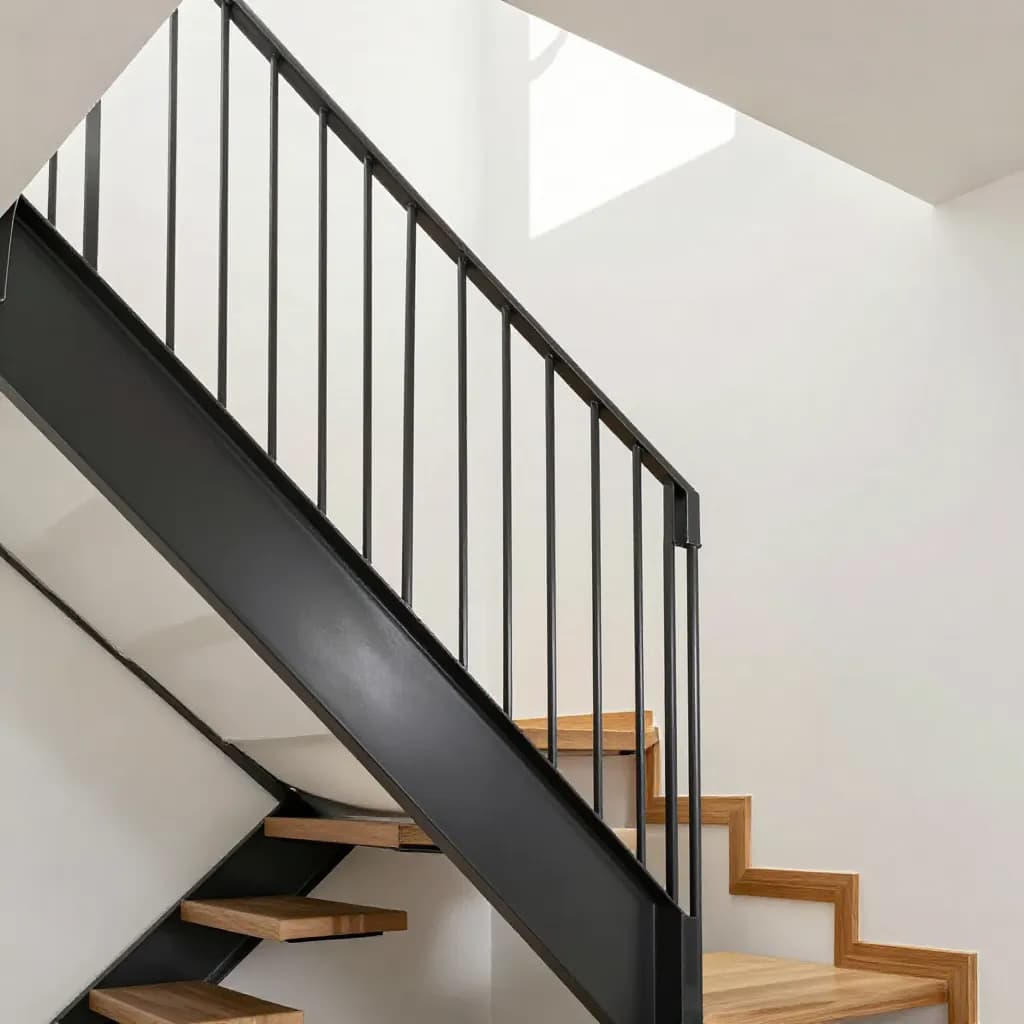
This combination of safety function and high-touch exposure makes coating performance essential rather than cosmetic. A railing coating that chips, peels, or corrodes does not simply look unsightly — it exposes the underlying metal to accelerated corrosion that can compromise structural integrity over time. In public buildings, commercial properties, and residential developments, coating failure on railings creates both liability risk and costly maintenance obligations.
Ready to Start Your Project?
From one-off customs to 15,000-part production runs — get precise pricing in 24 hours.
On This Page
Why Railings Need Superior Coatings
The geometry of railings further compounds the coating challenge. Tubular profiles, welded joints, sharp edges, and complex intersections create areas where thin liquid paint films struggle to achieve adequate coverage. These vulnerable points are precisely where corrosion initiates first, making the choice of coating system a critical factor in the long-term performance and safety of every railing installation.
Powder Coating Advantages for Railings and Handrails
Powder coating addresses every challenge that railings present. Applied at 60-120 microns in a single coat, powder delivers a film build that is two to three times thicker than liquid paint at 25-50 microns. This thicker film provides substantially greater resistance to chipping, scratching, and abrasion from daily contact — the primary mode of coating degradation on handrails and balustrades.
Edge coverage is where powder coating demonstrates its most significant advantage over liquid paint. During electrostatic application, powder particles are attracted to edges and corners, building up a protective film in precisely the areas where liquid paint tends to pull away and thin out. This natural edge-building characteristic means that welded joints, tube ends, and sharp profile edges receive adequate protection without the need for additional manual touch-up coats.
Corrosion protection follows directly from these advantages. The combination of thicker film build, superior edge coverage, and the dense, non-porous nature of cured powder coating creates a continuous barrier that prevents moisture and corrosive agents from reaching the metal substrate. With proper pretreatment, powder-coated railings routinely achieve 20-25 years of service life, even in exposed outdoor environments where liquid-painted equivalents would require recoating within 8-12 years.
Specification Requirements for Coated Railings
Specifying powder coating for balustrades and railings requires attention to both the coating system and the pretreatment process. For aluminum railings, Qualicoat Class 1 or Class 2 certification provides a reliable baseline, with Class 2 recommended for exposed outdoor installations where UV and weather resistance are critical. In North America, AAMA 2604 or AAMA 2605 specifications set equivalent performance requirements.
For steel and galvanized steel railings, the pretreatment stage is particularly important. Zinc phosphate or iron phosphate conversion coatings provide the adhesion and corrosion resistance foundation, while the powder topcoat — typically a polyester or polyester-epoxy hybrid — delivers the weather resistance and colour retention. Minimum film thickness of 80 microns is recommended for exterior railing applications to ensure adequate edge coverage and mechanical durability.
Specifiers should also consider the specific environment where railings will be installed. Coastal locations, swimming pool surrounds, and industrial environments with chemical exposure all demand enhanced specification. Qualicoat Seaside certification or equivalent salt spray resistance testing provides assurance that the coating system will withstand aggressive corrosive conditions without premature failure.
Color Trends for Balustrades and Railings
Contemporary architectural design favours a refined palette for railings and balustrades. RAL 9005 Jet Black and RAL 7016 Anthracite Grey dominate current specifications, offering a sophisticated, modern aesthetic that complements both residential and commercial architecture. These dark tones provide visual definition to balustrade lines while receding against facade surfaces, allowing the architectural form to take precedence.
Beyond the dominant dark tones, there is growing interest in textured and matte finishes that reduce glare and fingerprint visibility on handrails. Fine texture powder coatings in dark grey and black tones are increasingly specified for high-traffic handrails because they mask the inevitable marks from daily contact while maintaining a clean, contemporary appearance. Satin and matte finishes serve a similar function, offering a softer visual quality than high-gloss alternatives.
For heritage and conservation projects, powder coating can be colour-matched to traditional ironwork colours, including period-appropriate greens, blues, and metallic bronze effects. The ability to replicate virtually any colour reference means that powder-coated aluminum or steel railings can be specified to match existing heritage metalwork, providing modern performance within a historically sensitive aesthetic framework.
Why Liquid Paint Fails on Railings
Liquid paint is fundamentally unsuited to the demands of railing and balustrade applications. The thin film build of 25-50 microns provides inadequate protection against the mechanical stresses that railings endure daily. Chipping at contact points — where hands grip, where gates latch, where posts meet horizontal rails — is the most common and visible mode of failure, exposing bare metal to corrosion within just a few years of installation.
Poor edge coverage is the second critical weakness. Liquid paint naturally pulls away from sharp edges and corners due to surface tension effects, leaving these areas with significantly thinner film than flat surfaces. On railings, where tubular profiles, welded joints, and cut edges are abundant, this edge recession creates a network of vulnerable points where corrosion initiates and spreads beneath the surrounding paint film.
The maintenance cycle for liquid-painted railings is both frequent and disruptive. Recoating is typically required every 5-8 years in exposed outdoor environments, and the preparation required — sanding, priming, and multi-coat application — generates dust, solvent fumes, and access disruption. For railings on occupied buildings, balconies, and public spaces, this repeated maintenance creates ongoing inconvenience and cost that powder coating's 20-25 year service life eliminates entirely.
Frequently Asked Questions
How long does powder coating last on railings and balustrades?
Powder-coated railings typically last 20-25 years before recoating is needed, compared to just 5-8 years for liquid-painted railings in exposed outdoor environments. The thicker film build of 60-120 microns provides superior resistance to chipping, scratching, and corrosion from daily contact and weather exposure.
What is the best colour for powder-coated railings?
RAL 9005 Jet Black and RAL 7016 Anthracite Grey are the most popular choices for contemporary architecture. Textured and matte finishes in these colours are increasingly specified for handrails because they reduce fingerprint visibility and mask marks from daily contact.
Does powder coating cover edges better than liquid paint on railings?
Yes. During electrostatic application, powder particles are naturally attracted to edges and corners, building up protective film where liquid paint pulls away and thins out. This superior edge coverage is critical for railings, where tubular profiles, welded joints, and cut edges are the most vulnerable points for corrosion.
What specification should I use for exterior powder-coated railings?
For aluminum railings, specify Qualicoat Class 2 or AAMA 2604/2605 for exterior applications. For steel railings, ensure proper zinc or iron phosphate pretreatment with a minimum 80-micron polyester powder topcoat. In coastal or aggressive environments, Qualicoat Seaside certification provides additional corrosion resistance assurance.
Ready to Start Your Project?
From one-off customs to 15,000-part production runs — get precise pricing in 24 hours.