Balustrades and handrails are among the most safety-critical architectural elements in any building. They prevent falls from height, provide support for people navigating stairs and ramps, and must maintain their structural integrity and functionality throughout the building's service life. The coating on these components is not merely decorative — it protects the structural material from corrosion that could compromise load-bearing capacity, provides the tactile surface that users grip for support, and contributes to the visual design language of the building.
Architecture
Powder Coating for Balustrades and Handrails: Building Code Compliance and Coastal Durability
Sundial Powder Coating·April 22, 2026·11 min
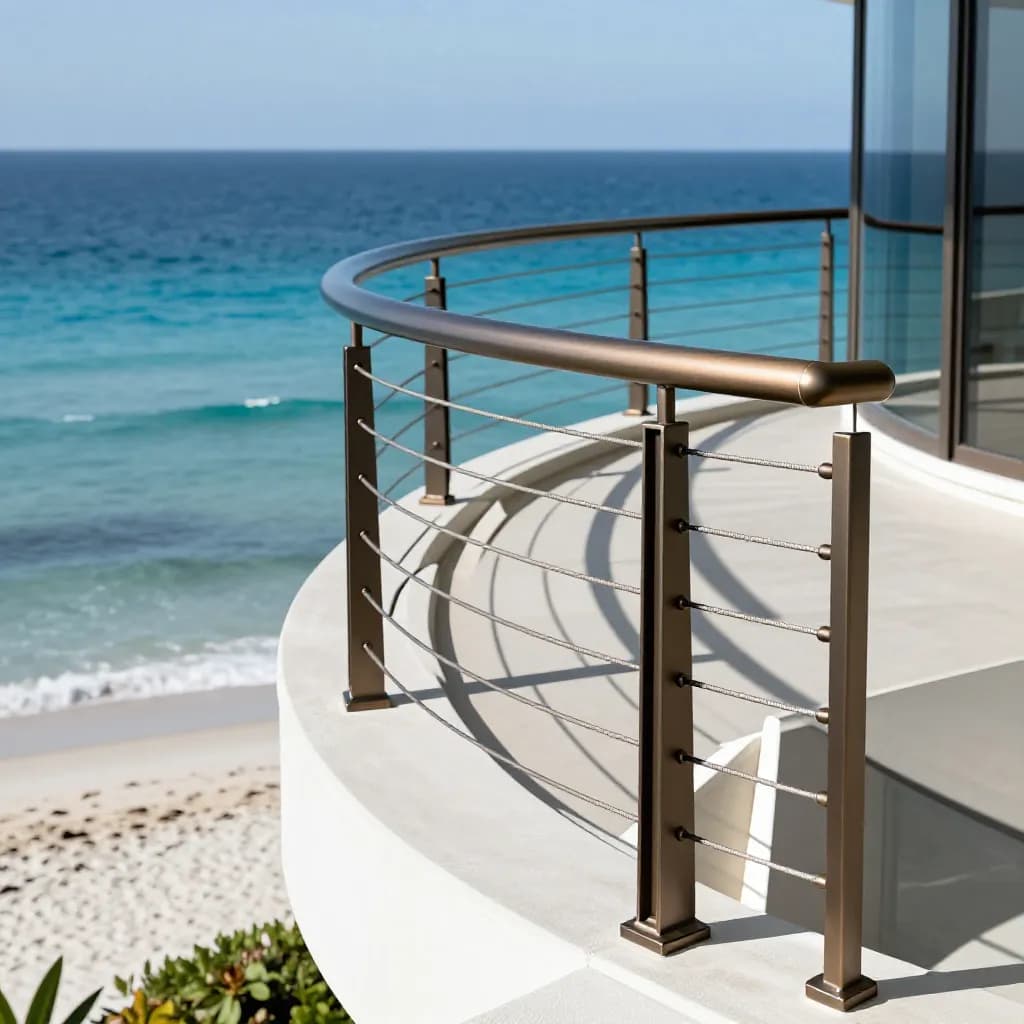
Powder coating has become the preferred finish for metal balustrades and handrails in both residential and commercial construction. The technology's combination of durability, color range, and corrosion protection makes it suitable for the full spectrum of balustrade applications, from simple residential stair rails to complex commercial atrium balustrades and exposed exterior installations in aggressive coastal environments.
Ready to Start Your Project?
From one-off customs to 15,000-part production runs — get precise pricing in 24 hours.
On This Page
Balustrades and Handrails: Safety-Critical Coated Components
The regulatory framework governing balustrades and handrails is extensive and varies by jurisdiction, but all codes share common requirements for minimum height, maximum opening dimensions, load resistance, and durability. The powder coating specification must be developed in the context of these regulatory requirements, ensuring that the coating system supports rather than compromises the balustrade's compliance with applicable building codes.
This article examines the technical requirements for powder coating balustrades and handrails, covering substrate selection, coating system specification, building code compliance, coastal durability, and the design options available to architects and specifiers.
Substrate Selection: Mild Steel, Stainless Steel, and Aluminum
The choice of substrate material fundamentally influences the powder coating specification for balustrades and handrails. Each material has distinct properties that affect preparation, adhesion, corrosion protection requirements, and long-term coating performance.
Mild steel is the most common substrate for powder-coated balustrades, offering excellent strength, weldability, and cost-effectiveness. Steel balustrades require comprehensive corrosion protection because the base material corrodes readily when exposed to moisture. The standard coating system for steel balustrades is zinc phosphate pretreatment followed by polyester powder coating at 80-100 microns. For exterior applications or environments with elevated corrosion risk, a dual-coat system (epoxy primer plus polyester topcoat) or a duplex system (hot-dip galvanizing plus powder coating) provides enhanced protection.
Stainless steel balustrades are specified for their inherent corrosion resistance and premium aesthetic. Grade 316 (marine grade) stainless steel is standard for exterior and coastal applications, while grade 304 is acceptable for interior use. Powder coating stainless steel requires specialized surface preparation — the passive chromium oxide layer that provides corrosion resistance also inhibits coating adhesion. Abrasive blasting with aluminum oxide media to create a 25-50 micron surface profile, followed by a suitable conversion coating, provides the adhesion foundation for reliable powder coating on stainless steel.
Aluminum balustrades combine light weight with good corrosion resistance and excellent extrudability, enabling complex profile designs that would be difficult or impossible to achieve in steel. Aluminum is the substrate of choice for architectural balustrade systems where design flexibility and weight reduction are priorities. Chromate-free pretreatment (zirconium or titanium-based conversion coatings) provides the adhesion foundation for powder coating on aluminum, with standard polyester powder at 60-80 microns delivering adequate protection for most environments.
The galvanic compatibility of different metals in a balustrade assembly must be considered when specifying coatings. Where aluminum and steel components are joined, the powder coating acts as an insulating barrier that prevents galvanic corrosion at the dissimilar metal junction. Adequate coating thickness and coverage at connection points is essential to maintain this galvanic isolation.
Building Code Compliance and Structural Considerations
Building codes impose strict requirements on balustrade and handrail design, fabrication, and installation that directly influence the coating specification. Understanding these requirements ensures that the powder coating system supports code compliance rather than creating conflicts.
Minimum balustrade heights are specified by building codes to prevent falls. Typical requirements are 900 mm for residential stairs, 1,000-1,100 mm for commercial buildings and public areas, and 1,200 mm or more for elevated locations such as balconies above certain heights. The powder coating film thickness (typically 60-120 microns) has negligible effect on overall balustrade dimensions and does not affect height compliance.
Maximum opening dimensions in balustrade infill panels are regulated to prevent children from passing through or becoming trapped. The common requirement is that a 100 mm sphere must not pass through any opening in the balustrade. For balustrades with vertical bar infill, the clear spacing between bars must account for the powder coating thickness on both adjacent bars. At 80 microns per surface, the coating reduces the clear opening by approximately 0.3 mm — negligible in practice but worth noting for designs at the maximum allowable spacing.
Load resistance requirements are the most structurally significant code provisions. Balustrades must resist specified horizontal loads (typically 0.36-1.5 kN/m depending on the building type and occupancy) applied at the top of the balustrade, plus vertical loads on the handrail and infill loads to resist crowd pressure. The powder coating must not compromise the structural capacity of the balustrade system. In practice, the thin powder coating film has no measurable effect on structural capacity, but the coating process must not introduce defects — such as heat-affected zones from excessive curing temperatures on thin-walled sections — that could reduce material strength.
Handrail graspability requirements specify that handrails must be of a shape and size that allows a firm grip. Circular handrails of 32-50 mm diameter are universally accepted, and the smooth, consistent surface provided by powder coating enhances graspability compared to rough or textured finishes. The coating must maintain its surface integrity under the repeated gripping and sliding contact of daily use without wearing through to expose the substrate.
Coastal and Marine Environment Performance
Balustrades in coastal environments face some of the most aggressive corrosion conditions encountered in architectural applications. Airborne salt, high humidity, UV radiation, and wind-driven rain combine to create a corrosion environment classified as C4 (high) or C5 (very high) per ISO 9223, depending on the distance from the shoreline and the degree of exposure.
Within 500 meters of the coastline, the corrosion rate of unprotected mild steel can exceed 80 microns per year — meaning that a 3 mm thick steel balustrade post could lose 10% of its wall thickness in just 4 years without adequate protection. This rate of material loss has direct implications for structural capacity and safety, making robust corrosion protection essential for coastal balustrades.
The recommended coating system for steel balustrades in coastal environments is a duplex system: hot-dip galvanizing to ISO 1461 (minimum 85 microns zinc coating for sections above 6 mm thick) followed by polyester powder coating at 80-100 microns. This system provides both sacrificial cathodic protection from the zinc layer and barrier protection from the powder coating, achieving combined service lives of 30-40 years in C4 environments and 20-30 years in C5 environments.
For aluminum balustrades in coastal locations, Qualicoat Seaside certification is the appropriate specification. This certification requires extended acetic acid salt spray testing (2,000 hours) and demonstrates that the coating system — including the chromate-free pretreatment and powder coating — can withstand the accelerated corrosion conditions of coastal exposure. Standard Qualicoat Class 2 certification (1,000 hours AASS) is insufficient for locations within 5 kilometers of the coastline.
Stainless steel grade 316 provides inherent corrosion resistance in coastal environments, but even marine-grade stainless can develop tea staining (superficial brown discoloration) in aggressive coastal conditions. Powder coating stainless steel balustrades in coastal locations provides an additional barrier against tea staining while offering the color and design flexibility that bare stainless steel cannot provide.
Maintenance frequency must be increased for coastal balustrades. Monthly washing with fresh water to remove salt deposits is recommended for balustrades within 1 kilometer of the shoreline. Quarterly inspection of coating condition, with prompt repair of any damage, prevents corrosion from establishing at defect sites.
Design Options and Aesthetic Possibilities
Powder coating transforms balustrades and handrails from purely functional safety elements into significant design features that contribute to the architectural character of a building. The virtually unlimited palette of colors, textures, and special effects available in powder coating enables architects to create balustrade designs that range from understated and minimal to bold and expressive.
Color selection for balustrades is influenced by both aesthetic preferences and practical considerations. Dark colors (black RAL 9005, anthracite RAL 7016, dark bronze) are popular for their contemporary appearance and ability to recede visually, minimizing the visual impact of the balustrade structure. Light colors (white RAL 9016, silver RAL 9006) create a lighter, more open feel but show dirt and handling marks more readily. Bold accent colors can transform balustrades into design statements, particularly in public buildings, schools, and cultural facilities.
Textured finishes offer both aesthetic and practical benefits for balustrades. Fine sand textures provide a contemporary matte appearance that hides minor surface imperfections and fingerprints. Coarse textures and wrinkle finishes create more dramatic visual effects and provide enhanced grip on handrail surfaces. Leatherette textures offer a tactile quality that is particularly pleasant for handrail applications.
Metallic powder coatings containing aluminum, mica, or copper flake pigments create finishes that change character with viewing angle and lighting conditions. Bronze, copper, and champagne metallics are popular for balustrades in hospitality and high-end residential projects. These metallic effects are achieved within the single powder coating layer, unlike liquid metallic paint systems that require separate base coat and clear coat applications.
Wood-effect sublimation finishes enable aluminum balustrades to replicate the appearance of timber with the durability and fire performance of powder-coated metal. This technology is particularly valuable for balustrades in heritage buildings where a timber aesthetic is desired but fire regulations prohibit the use of combustible materials.
Combination finishes — using different colors or textures on different components of the same balustrade system — create visual interest and can highlight the structural logic of the design. For example, handrails in a warm bronze metallic with posts in matte black creates a sophisticated two-tone effect that emphasizes the horizontal line of the handrail.
Glass Balustrade Systems with Powder-Coated Frames
Glass balustrades with powder-coated aluminum or steel frames represent one of the fastest-growing segments of the balustrade market. These systems combine the transparency and lightness of glass infill panels with the structural support and design flexibility of powder-coated metal frames, creating balustrades that maximize views and natural light while meeting all safety requirements.
Framed glass balustrade systems use powder-coated aluminum or steel posts and rails to support toughened or laminated glass panels. The glass is typically held in place by gaskets, clamps, or channels integrated into the metal frame. The powder coating on the frame must be compatible with the glass retention system — gasket materials must seal effectively against the coated surface, and clamp fixings must achieve adequate grip without damaging the coating.
Semi-frameless systems minimize the visible metal framework by using concealed base channels or point fixings to support the glass, with only a powder-coated handrail visible at the top. The base channel, which is typically a U-shaped aluminum extrusion set into the floor structure, must be powder coated on all surfaces including the interior of the channel where the glass edge sits. Coating in the channel interior protects against moisture-driven corrosion that can develop from condensation and water ingress at the glass-to-channel interface.
Structural glass balustrades that use the glass itself as the primary structural element (with no posts) still require powder-coated metal components for handrails, base shoes, and connection hardware. These components are typically small-section aluminum or stainless steel elements where coating quality and consistency are critical because they are viewed at close range.
The interface between powder-coated metal and glass requires careful detailing to prevent galvanic corrosion, water entrapment, and thermal stress. Setting blocks, gaskets, and sealants at the glass-to-metal interface must be compatible with the powder coating chemistry and must not stain or discolor the coated surface over time. Silicone-based sealants are generally compatible with polyester powder coatings, but compatibility testing per ASTM C794 is recommended for critical applications.
Installation, Maintenance, and Lifecycle Performance
The installation process for powder-coated balustrades requires care to protect the coating from damage during handling, positioning, and fixing. Unlike liquid paint, which can be easily touched up on site, powder coating damage requires more involved repair procedures, making damage prevention during installation the preferred approach.
Protective films applied to powder-coated surfaces during manufacture should be maintained throughout transport, storage, and installation. These films are typically self-adhesive polyethylene sheets that peel off cleanly after installation. The films must be removed within the manufacturer's recommended timeframe (usually 6-12 months) to prevent adhesive residue from bonding permanently to the coating.
Welding during installation — sometimes necessary for site-specific modifications or connections — damages the powder coating in the heat-affected zone and must be followed by surface preparation and touch-up coating of the affected area. Minimizing site welding through accurate pre-fabrication and the use of mechanical connections (bolts, screws, clamps) preserves coating integrity and reduces on-site repair requirements.
Touch-up repair of minor coating damage uses liquid paint matched to the original powder coating color. While liquid touch-up will never perfectly replicate the appearance of the original powder coating (differences in texture, gloss, and color depth are inevitable), careful application using fine brushes or aerosol cans produces repairs that are acceptable for most applications. For high-visibility locations where touch-up quality is critical, damaged components should be removed, factory-stripped, and re-powder-coated.
Routine maintenance of powder-coated balustrades involves periodic cleaning with mild detergent and water, inspection for coating damage or corrosion, and prompt repair of any defects. Cleaning frequency depends on the environment: every 3-6 months for coastal and urban locations, every 6-12 months for suburban and rural settings. Handrails in high-traffic areas may require more frequent cleaning to remove accumulated hand oils and dirt.
The expected service life of powder-coated balustrades is 20-25 years for standard polyester coatings in moderate environments, extending to 30+ years for duplex systems in aggressive conditions. At end of life, the balustrade can be removed, stripped, re-prepared, and re-powder-coated for another service cycle, or the metal can be recycled through standard scrap metal processes.
Frequently Asked Questions
What coating system is best for coastal balustrades?
For steel balustrades within 500 meters of the coastline, a duplex system of hot-dip galvanizing plus polyester powder coating provides the best protection, lasting 20-40 years depending on exposure severity. For aluminum, Qualicoat Seaside certified coatings with 2,000 hours AASS resistance are recommended. Monthly fresh water washing removes salt deposits.
Does powder coating affect balustrade structural compliance?
No. The thin powder coating film (60-120 microns) has negligible effect on balustrade dimensions, structural capacity, or code compliance. The coating does not reduce material strength, and its contribution to overall dimensions is less than 0.3 mm — insignificant for building code compliance calculations.
Can stainless steel balustrades be powder coated?
Yes, but specialized surface preparation is required. The passive chromium oxide layer on stainless steel inhibits coating adhesion, so abrasive blasting with aluminum oxide to create a 25-50 micron surface profile, followed by a suitable conversion coating, is necessary. This provides reliable adhesion while the stainless substrate provides inherent corrosion resistance.
What colors are most popular for balustrade powder coating?
Black (RAL 9005) and anthracite grey (RAL 7016) are the most popular choices for their contemporary appearance and ability to recede visually. Silver metallic, dark bronze, and white are also common. Wood-effect sublimation finishes are increasingly popular for projects requiring a timber aesthetic with metal fire performance.
How do you repair damaged powder coating on installed balustrades?
Minor damage is repaired with color-matched liquid touch-up paint applied by fine brush or aerosol. For high-visibility locations, damaged components should be removed and factory re-coated. Prompt repair of any damage is essential to prevent corrosion, especially in coastal and exterior applications.
Ready to Start Your Project?
From one-off customs to 15,000-part production runs — get precise pricing in 24 hours.