Arctic and subarctic regions — including northern Scandinavia, Canada, Alaska, Siberia, Iceland, and high-altitude mountain environments — subject powder coatings to conditions that are fundamentally different from temperate or tropical service. Temperatures routinely drop below -30°C, with extreme lows reaching -50°C in continental arctic locations. These temperatures are maintained for months, not hours, creating sustained cold exposure that tests the fundamental material properties of cured powder coating films.
Technical
Powder Coating in Arctic and Cold Climates: Flexibility, Ice Adhesion, and Thermal Shock
Sundial Powder Coating·April 22, 2026·12 min
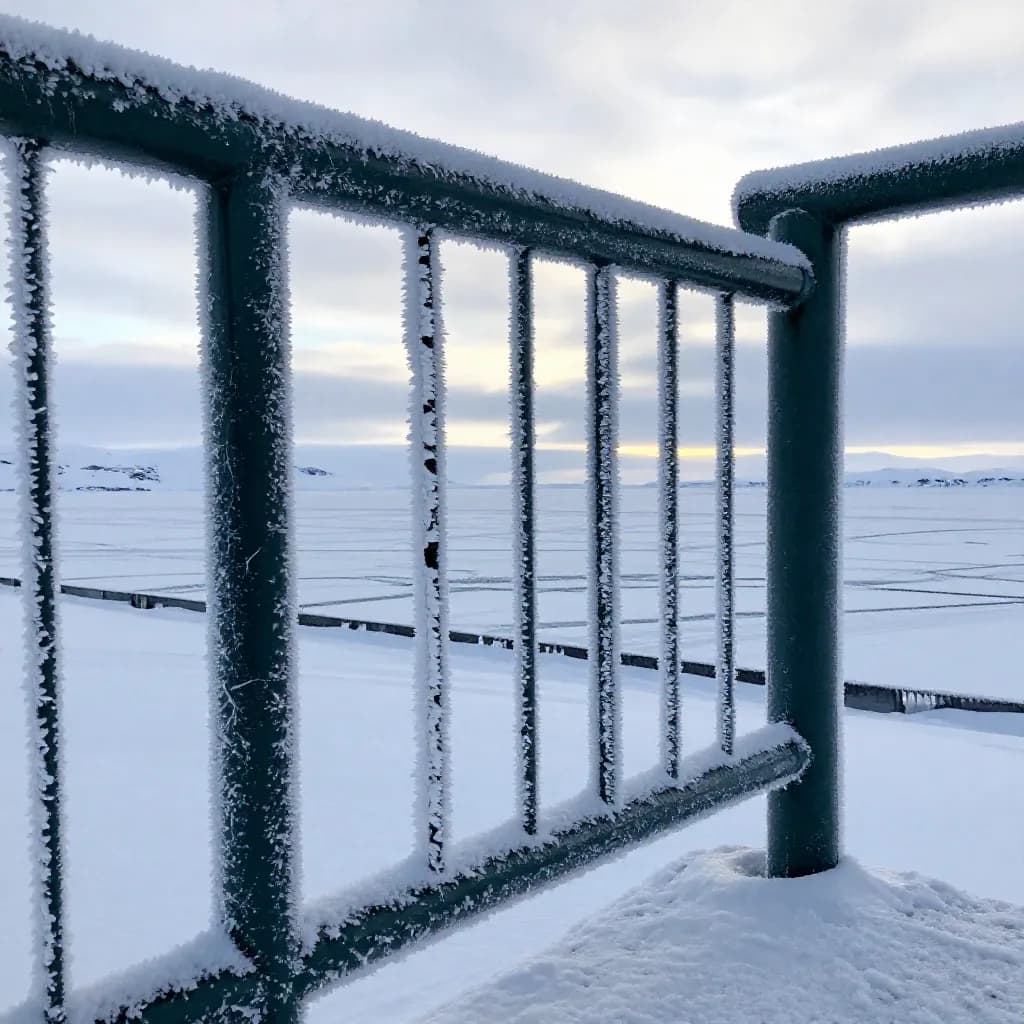
The primary cold-climate challenges for powder coatings are low-temperature embrittlement, ice adhesion and ice-removal damage, thermal shock from rapid temperature changes, and chemical attack from de-icing agents. Each of these mechanisms can cause coating failure if the formulation and application are not specifically designed for cold-climate service.
Ready to Start Your Project?
From one-off customs to 15,000-part production runs — get precise pricing in 24 hours.
On This Page
Cold Climate Challenges for Powder Coatings
Low-temperature embrittlement occurs when the coating film transitions from a flexible, energy-absorbing state to a rigid, brittle state as temperature decreases below the coating's glass transition temperature. Standard polyester powder coatings have glass transition temperatures of 60-70°C, meaning they are well above Tg at arctic temperatures and in a glassy, brittle state. While this does not cause immediate failure, it means the coating cannot accommodate mechanical impacts, substrate flexing, or thermal contraction without cracking.
The economic importance of cold-climate powder coating performance is substantial. Arctic infrastructure — pipelines, offshore platforms, bridges, power transmission towers, and buildings — represents billions of dollars of investment that depends on reliable corrosion protection in environments where maintenance access is severely limited by weather, darkness, and remoteness.
Low-Temperature Flexibility and Impact Resistance
The flexibility and impact resistance of powder coatings decrease significantly at low temperatures. At -30°C, a standard polyester powder coating that passes reverse impact testing at 20°C may crack or delaminate under the same impact energy. This reduction in mechanical performance is a direct consequence of the polymer physics: below the glass transition temperature, polymer chain mobility is restricted, and the coating behaves as a brittle glass rather than a flexible film.
For cold-climate applications, powder coating formulations must be specifically designed to maintain adequate flexibility at the minimum expected service temperature. This is achieved through several formulation strategies: using polyester resins with lower glass transition temperatures, incorporating flexible chain segments into the polymer backbone, adding plasticizing additives, and optimizing crosslink density to balance hardness with flexibility.
Polyurethane powder coatings offer inherently superior low-temperature flexibility compared to standard polyester systems. The urethane linkage provides a combination of hydrogen bonding and chain flexibility that maintains impact resistance at temperatures as low as -40°C. For the most demanding arctic applications, polyurethane powder coatings meeting the requirements of ISO 12944-5 for corrosivity category C5 provide the best combination of flexibility, corrosion protection, and weathering resistance.
Impact resistance testing for cold-climate powder coatings should be conducted at the minimum expected service temperature, not at the standard 20°C test temperature. ASTM D2794 (Gardner impact test) performed at -30°C or -40°C provides a realistic assessment of cold-climate impact performance. Coatings should achieve a minimum of 40 inch-pounds direct impact at the specified low temperature without cracking or delamination.
Ice Adhesion and Ice-Removal Damage
Ice formation on powder-coated surfaces is an unavoidable reality in cold climates, and the adhesion of ice to the coating surface creates both functional and durability concerns. Ice accumulation on structural members increases dead loads, alters aerodynamic profiles, blocks drainage systems, and impairs the function of moving components such as doors, windows, and mechanical equipment.
The adhesion strength of ice to a surface depends on the surface energy, roughness, and chemistry of the coating. Standard powder coatings have relatively high surface energies (35-45 mN/m) that promote strong ice adhesion, making ice removal difficult and increasing the risk of coating damage during de-icing operations. Mechanical ice removal using scrapers, hammers, or vibration can chip, scratch, or crack brittle cold-temperature coatings, creating defect points that initiate corrosion.
Icephobic powder coatings represent an emerging technology for cold-climate applications. These formulations incorporate low-surface-energy additives — typically fluorinated or silicone-based compounds — that reduce ice adhesion strength by 50-80% compared to standard coatings. By reducing the force required to remove ice, icephobic coatings minimize both the labor required for de-icing and the risk of mechanical damage to the coating during ice removal.
Surface texture plays a significant role in ice adhesion. Smooth, glossy powder coating finishes generally exhibit lower ice adhesion than rough or textured finishes because they provide fewer mechanical interlocking points for ice crystals. For cold-climate applications where ice accumulation is a primary concern, specifying smooth finishes with gloss levels above 70 GU (gloss units at 60°) is recommended. Nano-textured superhydrophobic coatings, which create an air layer between the surface and water droplets, show promise for ice prevention but are not yet widely available in powder coating form.
Thermal Shock Resistance
Thermal shock — rapid temperature change — is a severe test of powder coating adhesion and integrity. In cold climates, thermal shock occurs when cold surfaces are suddenly exposed to warm conditions (a frozen structure brought into a heated workshop) or when warm surfaces are rapidly cooled (hot process equipment exposed to arctic ambient air). Temperature differentials of 60-100°C occurring within minutes generate intense thermal stresses that can cause immediate coating failure.
The mechanism of thermal shock damage involves differential thermal expansion between the coating and substrate. When a powder-coated steel component at -40°C is suddenly immersed in warm water at 60°C, the coating attempts to expand rapidly while the steel substrate — with its much lower coefficient of thermal expansion and higher thermal mass — remains cold. The resulting tensile stress in the coating can exceed its adhesive or cohesive strength, causing cracking, blistering, or delamination.
Thermal shock resistance testing for cold-climate powder coatings typically involves cycling between -40°C and +60°C with rapid transitions (less than 5 minutes between temperature extremes). Coatings should withstand a minimum of 100 such cycles without visible cracking, blistering, or adhesion loss. ISO 2812-1 and ASTM D2247 provide standardized frameworks for thermal cycling evaluation, though project-specific test protocols may specify more severe conditions.
Formulation strategies for thermal shock resistance include optimizing the coating's elastic modulus to accommodate rapid dimensional changes, ensuring strong adhesion through proper pretreatment, and controlling film thickness to minimize internal stress. Thinner coatings (60-70 microns) generally perform better under thermal shock than thicker films because the total stress is proportional to film thickness. However, this must be balanced against the corrosion protection requirements that may demand thicker films in aggressive cold-climate environments.
De-Icing Chemical Resistance
De-icing chemicals are ubiquitous in cold-climate environments and represent a significant chemical exposure for powder-coated surfaces. Road salt (sodium chloride), calcium chloride, magnesium chloride, potassium acetate, and calcium magnesium acetate are all used extensively on roads, bridges, parking structures, and airport infrastructure. These chemicals, often applied in concentrated solutions, can attack powder coatings through multiple mechanisms.
Sodium chloride — the most common de-icing agent — is corrosive to steel and aluminum substrates and can penetrate powder coating films through defects, pores, or areas of insufficient thickness. Chloride ions are particularly aggressive because they disrupt the passive oxide layer on aluminum and catalyze pitting corrosion on steel. Powder coatings exposed to road salt spray should achieve a minimum of 1,000 hours salt spray resistance (ISO 9227) with less than 2 mm creep from scribe marks.
Calcium and magnesium chloride solutions, increasingly used because they remain effective at lower temperatures than sodium chloride, are more chemically aggressive than road salt. These hygroscopic salts attract and retain moisture on coating surfaces, extending the wet time and accelerating corrosion at defect points. Powder coatings for infrastructure exposed to these agents should be tested specifically against calcium chloride solutions at concentrations up to 30% by weight.
Organic de-icers — potassium acetate and calcium magnesium acetate — are less corrosive than chloride-based agents but can cause different forms of coating degradation. Acetate solutions are mildly alkaline and can attack certain powder coating chemistries through saponification (alkaline hydrolysis of ester bonds in polyester resins). For airport and environmentally sensitive applications where organic de-icers are used, polyurethane or acrylic powder coatings offer better chemical resistance than standard polyester formulations.
Corrosion Protection Systems for Arctic Infrastructure
Arctic infrastructure demands robust corrosion protection systems that maintain their integrity over decades of cold-climate service with minimal maintenance access. The combination of low temperatures, freeze-thaw cycling, de-icing chemicals, and mechanical damage from ice and snow creates a corrosivity environment that can range from ISO 9223 C3 (medium) for inland arctic locations to C5-Very High for coastal arctic and offshore installations.
Duplex coating systems — combining hot-dip galvanizing or thermal spray zinc/aluminum with powder coating topcoats — provide the most reliable long-term protection for steel infrastructure in cold climates. The zinc or zinc-aluminum metallic layer provides cathodic (sacrificial) protection to the steel substrate at any point where the powder coating is damaged, while the powder coating protects the metallic layer from atmospheric corrosion and extends its service life by a factor of 2-3 compared to bare galvanizing.
For pipeline applications in arctic environments, fusion-bonded epoxy (FBE) powder coatings applied at 350-500 microns provide the primary corrosion barrier. FBE coatings are specifically formulated for excellent adhesion to steel at elevated application temperatures (230-245°C) and maintain their protective properties at service temperatures from -40°C to +85°C. Three-layer polyethylene (3LPE) and three-layer polypropylene (3LPP) systems, which use FBE as the primary coating layer, are the standard for buried arctic pipelines.
For structural steel in arctic buildings and bridges, powder coating systems meeting ISO 12944-5 durability class High (H) or Very High (VH) for corrosivity category C4 or C5 are typically specified. These systems may include zinc-rich epoxy primers, epoxy intermediate coats, and polyurethane or polyester topcoats, with total dry film thicknesses of 200-320 microns depending on the corrosivity category and required durability.
Specification Standards for Cold-Climate Powder Coating
Specifying powder coatings for cold-climate applications requires attention to standards and test methods that address low-temperature performance — requirements that are often absent from standard architectural specifications designed for temperate conditions.
ISO 12944, the comprehensive standard for corrosion protection of steel structures by protective paint systems, provides the primary framework for cold-climate infrastructure coating specification. Part 5 defines coating system types and minimum dry film thicknesses for each corrosivity category, while Part 9 addresses offshore and related structures. For arctic applications, specifying corrosivity category C4 or C5 with durability class High (15-25 years) or Very High (>25 years) ensures appropriate system design.
NORSOK M-501, the Norwegian standard for surface preparation and protective coating, is widely used for arctic offshore and coastal infrastructure. This standard requires extensive qualification testing including cathodic disbondment, thermal cycling, and impact resistance at low temperatures. Coatings qualified to NORSOK M-501 System 1 (for atmospheric exposure) or System 7 (for splash and tidal zones) have demonstrated performance under conditions representative of North Sea and arctic environments.
For architectural applications in cold climates, Qualicoat and GSB certifications remain relevant but should be supplemented with project-specific requirements for low-temperature flexibility, thermal shock resistance, and de-icing chemical resistance. AAMA 2604 and 2605 specifications, while primarily focused on weathering performance, can be augmented with cold-climate test requirements to create comprehensive architectural specifications for arctic buildings.
Project specifications should explicitly state the minimum service temperature and require that all mechanical property testing — impact, flexibility, adhesion — be conducted at that temperature rather than at the standard 23°C laboratory conditions.
Maintenance and Repair in Cold-Climate Conditions
Maintenance and repair of powder-coated surfaces in cold climates face unique logistical and technical challenges. The short construction season — often limited to 4-6 months in arctic regions — restricts the window for coating maintenance and repair. Extreme cold, darkness, wind, and ice make outdoor coating work impossible for much of the year, requiring that maintenance be carefully planned and executed during favorable weather windows.
Field repair of damaged powder coatings in cold climates typically relies on air-dry or moisture-cure liquid coating systems, as the high-temperature curing required for powder coatings (typically 180-200°C) cannot be achieved in the field. Two-component polyurethane and epoxy liquid coatings that cure at ambient temperatures down to 5-10°C are the standard repair materials. For emergency repairs at lower temperatures, specialized cold-cure formulations that achieve adequate film formation at temperatures as low as -5°C are available, though their performance is generally inferior to coatings applied under optimal conditions.
Surface preparation for field repairs in cold climates requires special attention. Moisture condensation on cold metal surfaces can compromise adhesion if not properly managed. Heating the repair area to 3°C above the dew point before surface preparation and coating application is essential. Portable induction heaters or infrared lamps can provide localized heating without the fire risk associated with open-flame heating in confined spaces.
Preventive maintenance strategies for cold-climate powder coatings should focus on autumn inspections — conducted before the onset of winter — to identify and repair any coating damage before the most aggressive exposure period. Particular attention should be paid to areas subject to mechanical damage from ice and snow removal, joints and fastener locations where moisture can accumulate and freeze, and surfaces exposed to de-icing chemical splash and spray.
Frequently Asked Questions
Can powder coating withstand -40°C temperatures?
Yes, but formulation matters. Standard polyester powder coatings become brittle below their glass transition temperature and may crack under impact at -40°C. Polyurethane powder coatings maintain flexibility at temperatures as low as -40°C and are recommended for arctic applications. Impact testing should be conducted at the minimum expected service temperature.
How does ice damage powder-coated surfaces?
Ice adheres strongly to standard powder coatings (surface energy 35-45 mN/m), and mechanical removal using scrapers or hammers can chip or crack the brittle cold-temperature film. Icephobic coatings with low-surface-energy additives reduce ice adhesion by 50-80%, minimizing both removal effort and coating damage risk.
What powder coating resists road salt and de-icing chemicals?
Polyurethane powder coatings offer the best resistance to chloride-based de-icing agents. Coatings should achieve minimum 1,000 hours salt spray resistance per ISO 9227 with less than 2 mm creep from scribe. For organic de-icers like potassium acetate, polyurethane or acrylic formulations resist alkaline hydrolysis better than standard polyester.
What is the best corrosion protection system for arctic steel structures?
Duplex systems combining hot-dip galvanizing with powder coating topcoats provide the most reliable protection. The zinc layer provides cathodic protection at damage points while the powder coating extends galvanizing life by 2-3x. For pipelines, fusion-bonded epoxy at 350-500 microns within 3LPE or 3LPP systems is the standard.
Can powder coating be repaired in cold weather?
Field repairs use air-dry or moisture-cure liquid coatings since powder coating requires oven curing at 180-200°C. Two-component polyurethane systems cure at temperatures down to 5-10°C, with specialized cold-cure formulations working as low as -5°C. The repair area must be heated above the dew point before application.
What standards apply to powder coating in arctic environments?
ISO 12944 (C4/C5 corrosivity categories with High or Very High durability), NORSOK M-501 for offshore and coastal arctic infrastructure, and Qualicoat/AAMA specifications supplemented with low-temperature test requirements. All mechanical testing should be conducted at the minimum expected service temperature.
Ready to Start Your Project?
From one-off customs to 15,000-part production runs — get precise pricing in 24 hours.