Curtain walls are non-structural facade systems that hang from the building's structural frame like a curtain, providing weather protection, thermal insulation, and aesthetic expression without carrying any building loads other than their own weight and wind pressure. These systems are the defining architectural element of modern commercial buildings, and the quality of their finish is one of the most visible indicators of building quality.
Architecture
Powder Coating for Architectural Curtain Walls: Color Consistency and Performance Across Large Facades
Sundial Powder Coating·April 22, 2026·12 min
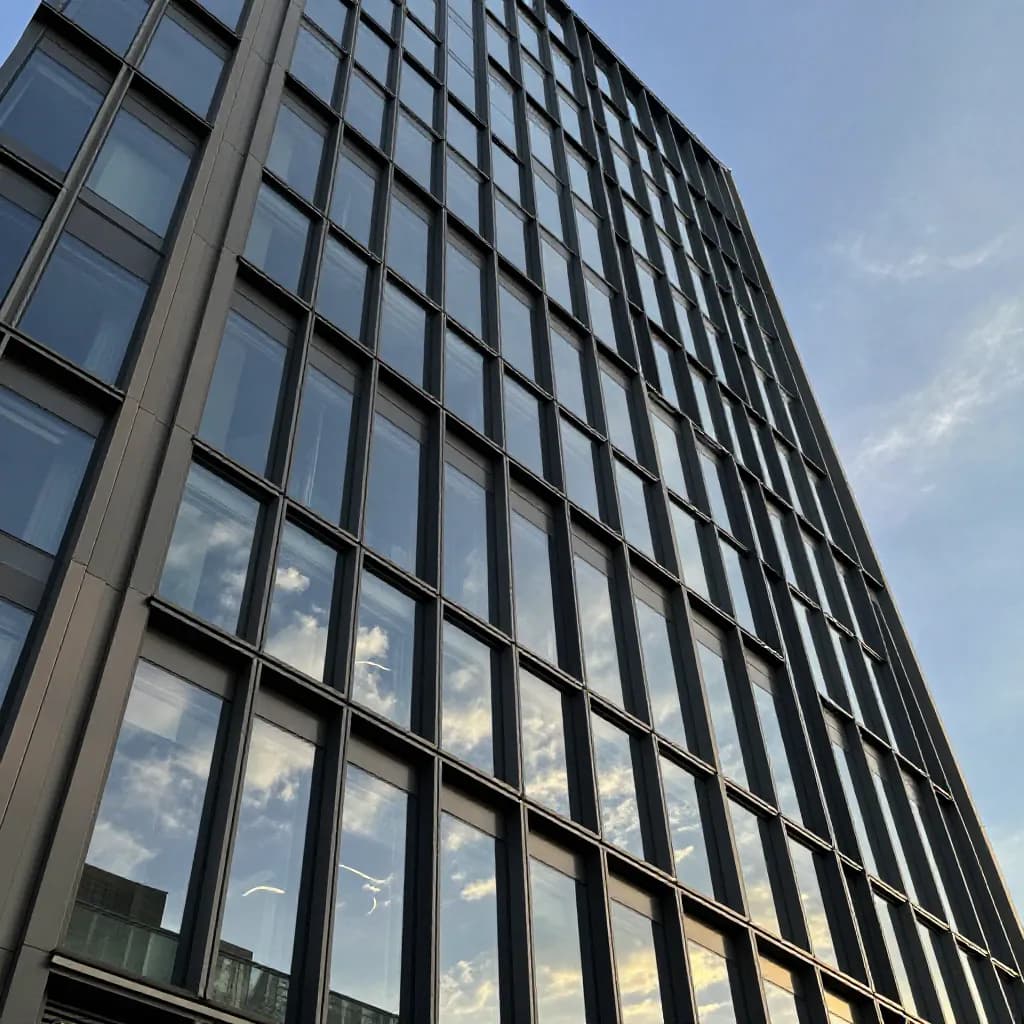
Powder coating is the dominant finishing technology for aluminum curtain wall systems worldwide. The combination of durability, color range, environmental performance, and cost-effectiveness has made powder coating the default specification for architects and facade consultants designing curtain wall systems for commercial, institutional, and high-rise residential buildings.
Ready to Start Your Project?
From one-off customs to 15,000-part production runs — get precise pricing in 24 hours.
On This Page
Curtain Wall Systems and the Role of Powder Coating
The scale of curtain wall projects creates unique challenges for powder coating that do not exist in smaller applications. A single building facade may require 10,000-50,000 square meters of coated aluminum, manufactured over 6-18 months by multiple fabrication facilities. Maintaining absolute color consistency across this volume and timeframe is a critical quality requirement that demands rigorous process control, material management, and quality assurance protocols.
Two fundamental curtain wall construction types — unitized and stick systems — each present distinct coating requirements related to their fabrication methods, assembly sequences, and tolerance management. Understanding these differences is essential for specifying powder coating systems that deliver reliable performance across the full range of curtain wall applications.
Unitized Curtain Wall Systems and Factory Coating
Unitized curtain wall systems consist of pre-assembled panels, typically one story high and one structural bay wide, that are manufactured and glazed in a factory before being transported to site and installed as complete units. This factory-based approach offers significant advantages for coating quality because the aluminum frames are powder coated under controlled conditions before glazing and assembly.
The factory coating process for unitized curtain wall frames follows a precise sequence. Extruded aluminum profiles are cut to length, machined for hardware and gasket grooves, and assembled into panel frames by mechanical fastening or welding. The assembled frames are then cleaned, pretreated with chromate-free conversion coating, and powder coated in automated spray booths with precise film thickness control.
Color consistency across unitized panels is managed through a combination of material control and process discipline. All powder for a given project is typically sourced from a single manufacturer and production batch, with sufficient quantity reserved at the outset to coat the entire project. If multiple batches are unavoidable, each batch is tested against the project master standard and approved only if it falls within the agreed delta E tolerance (typically ≤ 0.5 for critical facade applications, tighter than the ≤ 1.0 standard for general architectural work).
The thermal break profiles used in high-performance unitized curtain walls — where an insulating polyamide strip separates the interior and exterior aluminum sections — require careful coating management. The polyamide strip is typically inserted after the aluminum profiles are powder coated, meaning the coating must not interfere with the mechanical crimping or rolling process that locks the thermal break in place. Film thickness in the thermal break groove area is controlled to prevent excessive build-up that could compromise the thermal break connection.
Dual-color coating, where the exterior face of the curtain wall is a different color from the interior face, is a common requirement for unitized systems. This is achieved by masking one face during the first color application, curing, then masking the coated face and applying the second color. Automated masking systems using precision-cut adhesive films have made dual-color coating a routine production process for unitized curtain wall fabricators.
Stick Curtain Wall Systems and Site Considerations
Stick curtain wall systems are assembled on site from individual aluminum mullions (vertical members) and transoms (horizontal members) that are installed piece by piece onto the building structure. The glass and panel infills are then glazed into the assembled framework from the exterior. This site-assembled approach is common for low to mid-rise buildings and projects where the facade geometry is too complex or variable for unitized panel production.
Powder coating for stick system components is applied to individual profiles before they are shipped to site. The profiles are typically coated in standard lengths (5-7 meters) and cut to final dimensions at the fabrication shop or on site. This means that cut ends expose uncoated aluminum, which must be protected against corrosion. Touch-up paint matched to the powder coating color is applied to cut ends during installation, but this liquid touch-up will never perfectly match the factory-applied powder coating in color, gloss, and texture. Minimizing visible cut ends through careful detailing is therefore an important design consideration for stick curtain wall systems.
Site assembly of stick systems exposes the powder-coated profiles to handling damage during installation. Profiles are lifted by crane, maneuvered into position, and mechanically fastened to the building structure, with each handling operation creating opportunities for scratches, dents, and abrasion. Protective films applied over the powder coating during manufacture and maintained throughout installation protect the finish from handling damage. These films must be removed within a specified period after installation (typically 6-12 months) to prevent adhesive residue from bonding permanently to the coating surface.
Weather exposure during the installation period is another consideration for stick systems. Unlike unitized panels that are installed as sealed units, stick system frameworks may be exposed to rain, wind-blown debris, and construction dust for weeks or months before glazing is completed. The powder coating must withstand this construction-phase exposure without degradation, and any contamination must be removable by cleaning without damaging the coating.
Sealant compatibility is critical for stick curtain wall systems. Structural silicone sealants, weather seals, and gaskets must adhere reliably to the powder-coated aluminum surfaces. Adhesion testing of the specific sealant-to-coating combination per ASTM C794 is a standard requirement in curtain wall specifications, and powder coating manufacturers provide compatibility data for major sealant brands.
Color Consistency Across Large Facade Projects
Achieving and maintaining color consistency across a large curtain wall facade is one of the most demanding quality challenges in architectural powder coating. A color variation that would be imperceptible on a single window frame becomes glaringly obvious when multiplied across thousands of square meters of facade, particularly on flat, uniform surfaces viewed from a distance under natural daylight.
The human eye is remarkably sensitive to color differences between adjacent surfaces. Research in color science has established that trained observers can detect color differences as small as delta E 0.5 under controlled lighting conditions, and even untrained observers notice differences of delta E 1.0-1.5 when comparing adjacent panels. For curtain wall applications, the acceptable color tolerance between any two adjacent panels is typically specified as delta E ≤ 0.7, with an overall project tolerance of delta E ≤ 1.0 from the approved master standard.
Achieving these tight tolerances requires control at every stage of the coating process. Powder manufacturing must maintain batch-to-batch consistency through precise raw material control, formulation accuracy, and in-process color measurement. Each production batch is measured against the project master standard using a multi-angle spectrophotometer (measuring at 15°, 25°, 45°, 75°, and 110° angles for metallic colors) and released only if all measurements fall within the specified tolerance.
Application parameters — film thickness, cure temperature, and cure time — all affect the final color of the cured coating. Film thickness variations of ±10 microns can produce measurable color shifts, particularly in metallic and light colors. Cure temperature variations of ±5°C can cause yellowing (over-cure) or incomplete crosslinking (under-cure) that affects both color and performance. Automated application systems with real-time film thickness monitoring and oven temperature profiling minimize these process-related color variations.
For projects involving multiple coating applicators — common on large international projects where different facade zones are fabricated in different countries — inter-applicator color consistency requires additional coordination. Regular exchange of coated reference panels between applicators, combined with independent third-party color audits, ensures that all fabrication sites are producing coatings within the project tolerance.
Thermal Break Profiles and Coating Interactions
Thermal break technology is fundamental to the energy performance of modern curtain wall systems. By inserting an insulating barrier (typically glass-fiber-reinforced polyamide) between the interior and exterior aluminum sections of a curtain wall profile, thermal break systems reduce heat transfer through the frame, improving the overall thermal performance of the facade and reducing energy consumption for heating and cooling.
The interaction between powder coating and thermal break assembly is a critical manufacturing consideration. In the most common production sequence, aluminum profiles are extruded, cut, and powder coated before the thermal break strips are inserted. The polyamide strips are mechanically locked into grooves in the aluminum profiles by a rolling or crimping process that deforms the aluminum groove walls to grip the strip.
Powder coating in the thermal break groove area must be carefully controlled. Excessive film thickness in the groove can prevent proper seating of the polyamide strip, reduce the mechanical interlock strength, and compromise the structural integrity of the thermal break connection. Most thermal break system manufacturers specify a maximum coating thickness of 80 microns in the groove area, compared to the 60-120 microns typical on exposed surfaces. Achieving this differential film thickness requires precise gun positioning and powder delivery control during application.
Some curtain wall fabricators coat the aluminum profiles after thermal break assembly, which eliminates the groove thickness concern but introduces the challenge of coating over the polyamide strip. Powder coating does not adhere well to polyamide, so the strip surface in the visible rebate area may show poor coverage or adhesion. Masking the polyamide strip during coating, or accepting that the strip will be concealed by gaskets and glazing in the finished assembly, are the typical approaches.
The coefficient of thermal expansion differs between aluminum (23.1 × 10⁻⁶/°C) and polyamide (varies, but typically 20-80 × 10⁻⁶/°C depending on glass fiber content). This differential expansion creates stress at the aluminum-polyamide interface during temperature cycling, and the powder coating at this interface must accommodate the resulting micro-movement without cracking. Flexible polyester powder coatings with good elongation properties perform well in this application.
For curtain wall systems requiring Passive House certification or similar ultra-low-energy standards, the thermal performance of every component is scrutinized. The powder coating itself has a negligible effect on thermal transmittance (U-value) due to its thin film thickness, but the coating process must not compromise the thermal break's insulating performance through damage, contamination, or dimensional changes.
Performance Standards and Certification Requirements
Architectural curtain wall powder coatings are subject to rigorous performance standards that ensure long-term durability in exposed facade applications. The three major certification systems — Qualicoat (Europe), GSB International (Europe), and AAMA (North America) — each define comprehensive test requirements that coatings must pass to receive certification.
Qualicoat Class 2 is the standard specification for curtain wall coatings in European markets. This certification requires the coating to pass accelerated weathering tests equivalent to approximately 15-20 years of outdoor exposure, including 1,000 hours of artificial weathering per ISO 16474-2 with gloss retention ≥ 50% and color change ≤ delta E 4.0. Additional requirements include boiling water resistance (2 hours without blistering), Machu test corrosion resistance (48 hours), and acetic acid salt spray resistance (1,000 hours). Qualicoat Class 3, introduced for super-durable coatings, extends the weathering requirement and tightens the acceptance criteria.
Qualicoat Seaside certification adds requirements specific to coastal and marine environments, where airborne salt creates accelerated corrosion conditions. Seaside-certified coatings must pass extended acetic acid salt spray testing (2,000 hours) and demonstrate adhesion retention after prolonged salt exposure. This certification is essential for curtain wall projects within 5 kilometers of the coastline.
AAMA 2605, the highest performance tier in the North American system, requires 10 years of actual South Florida outdoor exposure testing in addition to accelerated laboratory tests. After 10 years of Florida exposure, the coating must retain at least 50% of its original gloss, show color change of no more than 5 delta E units, and exhibit no more than 10% chalking. This real-world exposure requirement provides the highest level of confidence in long-term coating performance.
Beyond coating-specific certifications, curtain wall systems must meet facade performance standards including air permeability (EN 12152), water tightness (EN 12154), wind resistance (EN 13116), and impact resistance (EN 14019). While these are system-level tests rather than coating tests, the powder coating contributes to the system's performance by protecting the aluminum structure from corrosion that could compromise seal integrity and structural capacity over time.
Tolerances, Inspection, and Quality Assurance on Facade Projects
Quality assurance for powder-coated curtain wall systems encompasses material inspection, process monitoring, and finished product verification at multiple stages from powder manufacture through to installed facade inspection.
Incoming powder inspection at the coating applicator's facility verifies that each batch of powder meets the project specification. Tests include particle size distribution (laser diffraction method, target D50 of 30-40 microns), gel time (hot plate method at 200°C, verifying reactivity within ±10% of the specification), specific gravity, and color measurement against the project master standard. Powder that fails any incoming test is quarantined and returned to the manufacturer.
In-process quality control during coating application includes continuous film thickness measurement using non-contact gauges, cure temperature profiling using data loggers traveling through the oven with the coated profiles, and visual inspection under standardized lighting. Film thickness is measured at a minimum of five points per profile (both ends, center, and two intermediate positions) with all readings required to fall within the 60-120 micron specification range.
Finished profile inspection includes visual assessment under D65 daylight-equivalent lighting at 1,000 lux, instrumental color measurement, adhesion testing (cross-cut per ISO 2409, requiring rating 0 — no coating removal), and gloss measurement at 60° geometry. A minimum of 10% of coated profiles are inspected, with the inspection rate increased to 100% if defects are detected.
On-site inspection of installed curtain wall panels verifies that the coating has not been damaged during transport, handling, and installation. Any damage identified during site inspection must be repaired using approved touch-up procedures before the facade is accepted. For critical projects, independent third-party inspection firms are engaged to provide impartial quality verification throughout the manufacturing and installation process.
Documentation and traceability are essential elements of curtain wall coating quality assurance. Each coated profile is traceable to its powder batch, coating date, application parameters, and inspection results through a unique identification system. This traceability enables rapid investigation and resolution of any quality issues that emerge during installation or service, and provides the documentary evidence required for warranty claims.
Maintenance and Lifecycle Management of Coated Curtain Walls
The maintenance requirements of powder-coated curtain walls are significantly lower than those of liquid-painted or anodized alternatives, but they are not zero. A structured maintenance program extends coating life, maintains building appearance, and protects the owner's investment in the facade system.
Routine cleaning is the primary maintenance activity for powder-coated curtain walls. The recommended cleaning frequency depends on the building's location and exposure conditions: every 6-12 months for buildings in urban or industrial environments, every 12-24 months for buildings in suburban or rural settings, and every 3-6 months for buildings in coastal locations where salt deposits accelerate coating degradation. Cleaning is performed using clean water with a mild, pH-neutral detergent (pH 5-8) and soft cloths or sponges. Abrasive cleaners, solvents, and high-pressure washers above 50 bar should be avoided.
Periodic inspection of the coating condition should be conducted at 5-year intervals as part of the building's facade maintenance program. Inspection assesses color retention, gloss level, chalking, adhesion, and any localized damage or corrosion. Comparison of current coating condition against the original specification and baseline measurements taken at installation provides an objective assessment of coating degradation rate and remaining service life.
Touch-up repair of localized coating damage — from window cleaning equipment, building maintenance activities, or accidental impacts — should be performed promptly to prevent corrosion initiation at damage sites. Liquid touch-up paints matched to the original powder coating color are used for small repairs. For larger damage areas, on-site re-coating using portable powder coating equipment is possible but requires careful surface preparation and is typically limited to accessible ground-floor areas.
End-of-life recoating of the entire curtain wall facade is typically required after 20-25 years, depending on the original coating quality, exposure conditions, and maintenance history. On-site recoating involves cleaning, light abrasion of the existing coating surface, and application of a liquid maintenance coating system. Alternatively, individual curtain wall panels can be removed, factory-stripped, re-pretreated, and re-powder-coated to restore the original coating quality — a more thorough but more disruptive approach.
Frequently Asked Questions
How is color consistency maintained across a large curtain wall facade?
Color consistency is achieved through single-source powder supply, batch testing against a project master standard with delta E ≤ 0.7 tolerance between adjacent panels, automated application with ±10 micron film thickness control, and regular spectrophotometric measurement. Multi-site projects use inter-applicator reference panels and third-party color audits.
What certification should curtain wall powder coating have?
In Europe, Qualicoat Class 2 is the standard minimum, with Class 3 for super-durable requirements and Seaside certification for coastal projects. In North America, AAMA 2605 is the highest performance tier, requiring 10 years of actual South Florida exposure testing. GSB Master certification is an alternative European standard.
Does powder coating affect curtain wall thermal break performance?
Powder coating has negligible effect on thermal transmittance due to its thin film. However, excessive film thickness in thermal break grooves (above 80 microns) can compromise the mechanical interlock between aluminum and polyamide strips. Careful film thickness control in groove areas is essential during application.
How long does powder coating last on a curtain wall?
Powder coating on curtain walls typically lasts 20-25 years before recoating is needed, with Qualicoat Class 2 and AAMA 2605 certified coatings maintaining acceptable appearance throughout this period. Regular cleaning every 6-24 months depending on location extends coating life and maintains building appearance.
Can curtain wall panels be dual-color powder coated?
Yes. Dual-color coating applies different colors to exterior and interior faces using precision masking between color applications. This is routine for unitized curtain wall panels, allowing exterior colors to match the building design while interior colors coordinate with the interior fit-out scheme.
Ready to Start Your Project?
From one-off customs to 15,000-part production runs — get precise pricing in 24 hours.