Airport terminals are among the most demanding building types for architectural finishes. Operating around the clock, 365 days a year, they process millions of passengers annually, each dragging luggage across floors, leaning against walls, and touching every surface from check-in counters to gate seating. The sheer volume of human traffic places extraordinary wear demands on every interior and exterior component.
Architecture
Powder Coating for Airport Terminals and Aviation Buildings
Sundial Powder Coating·April 20, 2026·10 min
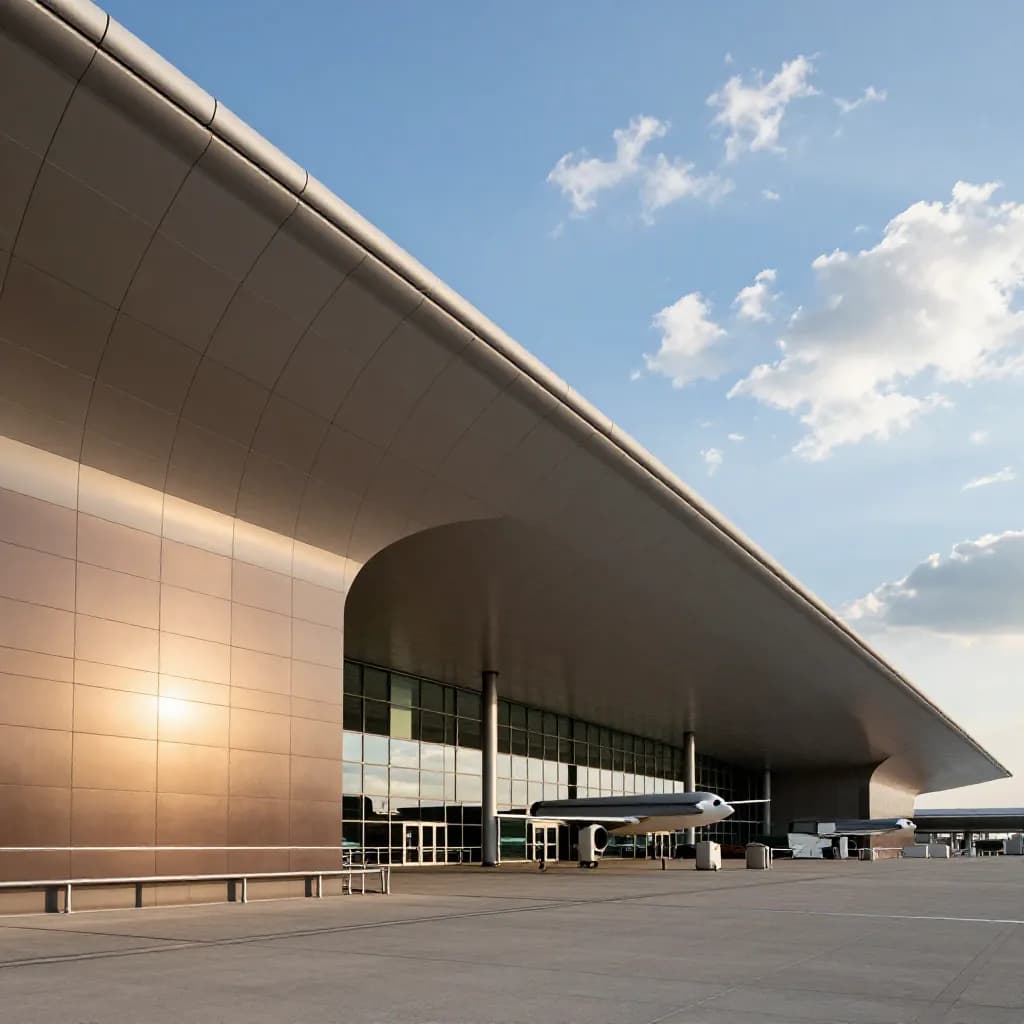
Security requirements add complexity to material specification. Airport buildings must meet stringent fire safety standards for public assembly occupancies, and all materials must be compatible with security screening environments. Brand identity is also paramount — airports serve as gateways to cities and nations, and their architectural finishes must project quality, modernity, and reliability over decades of continuous operation.
Ready to Start Your Project?
From one-off customs to 15,000-part production runs — get precise pricing in 24 hours.
On This Page
Airport Building Demands: 24/7 Operation and Extreme Traffic
The combination of extreme traffic, 24/7 operation, strict regulatory requirements, and high aesthetic expectations makes airports a showcase application for powder coating technology. The finish must perform under conditions that would rapidly degrade lesser coating systems while maintaining the visual standard expected of a major public building.
Interior Applications in Airport Terminals
Airport terminal interiors contain a vast array of metal components that benefit from powder coating. Check-in counters and self-service kiosk housings endure constant contact from passengers and luggage, requiring finishes that resist scratching, impact damage, and the aggressive cleaning chemicals used to maintain hygiene standards in high-traffic public spaces.
Seating systems throughout departure lounges, gate areas, and transit zones must withstand millions of seating cycles while maintaining their appearance. Powder-coated aluminum and steel seating frames provide the durability needed for this extreme-use application, with the 60-120 micron film thickness resisting wear far more effectively than the 25-50 micron films of liquid paint.
Wayfinding signage, ceiling systems, partition walls, and column cladding all contribute to the terminal's interior architecture. Powder coating delivers consistent color and finish across these diverse components, ensuring visual coherence throughout the terminal. The technology's ability to produce custom colors allows airports to implement distinctive brand palettes that create a recognizable identity across multiple terminal buildings and concourses.
Exterior Applications for Airport Buildings
Airport terminal exteriors present their own set of coating challenges. Curtain wall systems spanning thousands of square meters must maintain color consistency and weather resistance across the entire facade, often in exposed locations subject to high winds, driving rain, and intense UV radiation. Powder coating's batch-to-batch color consistency and 20-25 year service life make it the natural choice for these large-scale facade applications.
Canopy structures over drop-off zones, walkways, and boarding areas face direct weather exposure while also being subject to vehicle exhaust contamination from buses, taxis, and service vehicles. The chemical resistance of powder coating protects these structures from the acidic deposits left by exhaust fumes, while the thick film build resists the mechanical damage from maintenance equipment and service vehicle contact.
Airside structures including jet bridges, ground support equipment housings, and perimeter fencing operate in particularly harsh conditions. Jet blast, de-icing chemicals, aviation fuel residues, and constant UV exposure create an environment where only the most durable coating systems survive. Superdurable polyester powder coatings, formulated for extreme UV resistance, provide the performance needed for these demanding airside applications.
Fire Safety Requirements for Public Assembly Buildings
Airports are classified as public assembly buildings with some of the most stringent fire safety requirements in the construction industry. The concentration of thousands of people in enclosed terminal spaces demands that all building materials and finishes contribute to, rather than compromise, fire safety. Powder-coated aluminum achieves A1 or A2 Euroclass fire ratings, classifying it as non-combustible and meeting the highest fire safety standards.
The non-combustible classification of powder-coated aluminum is particularly important for ceiling systems, wall cladding, and partition elements that form part of the terminal's fire compartmentation strategy. These elements must not contribute fuel to a fire scenario or produce toxic smoke that could impede evacuation. The thin organic powder film on a non-combustible aluminum substrate meets these requirements without the need for additional fire-retardant treatments.
Liquid paint systems, particularly solvent-based formulations, present a fundamentally different fire risk profile. The flammable solvents used in liquid paints create storage and application hazards, and some liquid paint systems on certain substrates can contribute to fire spread. For airport buildings where fire safety is paramount, powder-coated aluminum provides the most straightforward path to regulatory compliance.
Zero VOC for Enclosed Terminal Air Quality
Indoor air quality in airport terminals is a critical concern for both passenger comfort and regulatory compliance. Terminals are enclosed environments where air is recirculated through mechanical ventilation systems, meaning that any volatile organic compound emissions from building materials and finishes are concentrated and distributed throughout the building. Powder coating produces zero VOC emissions, both during application and throughout its service life, making it the cleanest finishing option for terminal interiors.
The zero VOC characteristic is particularly important for areas where passengers spend extended periods, such as departure lounges, gate areas, and transit hotels. In these spaces, air quality directly affects passenger comfort and wellbeing. Solvent-based liquid paints can continue to off-gas VOCs for weeks or months after application, contributing to the cocktail of indoor air pollutants that building ventilation systems must manage.
For airports pursuing green building certifications such as LEED or BREEAM, specifying powder-coated finishes contributes to credits for low-emitting materials and indoor environmental quality. The complete absence of solvent emissions simplifies compliance documentation and demonstrates a commitment to passenger health that aligns with the premium service standards expected of modern airport facilities.
Frequently Asked Questions
Why is powder coating preferred for airport terminal finishes?
Powder coating delivers the combination of extreme durability, fire safety, zero VOC emissions, and design flexibility that airport terminals demand. Applied at 60-120 microns, it withstands the intense traffic of 24/7 airport operations while achieving A1 or A2 Euroclass fire ratings and contributing no harmful emissions to terminal air quality.
Does powder coating meet fire safety requirements for airports?
Yes. Powder-coated aluminum achieves A1 or A2 Euroclass fire ratings, classifying it as non-combustible. This meets the stringent fire safety requirements for public assembly buildings like airport terminals without the need for additional fire-retardant treatments.
How does powder coating improve airport indoor air quality?
Powder coating produces zero volatile organic compound emissions during application and throughout its service life. In enclosed terminal environments where air is recirculated, this eliminates a significant source of indoor air pollution, contributing to passenger comfort and green building certification credits.
How long does powder coating last on airport building exteriors?
Powder coating on airport exterior components typically lasts 20-25 years, compared to 8-12 years for liquid paint. Superdurable polyester formulations provide enhanced UV resistance for the most exposed applications, including curtain walls, canopies, and airside structures.
Ready to Start Your Project?
From one-off customs to 15,000-part production runs — get precise pricing in 24 hours.