Additives are the fine-tuning instruments of powder coating formulation — small additions (typically 0.5-5% by weight) that have outsized effects on processing behavior, application properties, and final film performance. While the base resin and crosslinker determine the fundamental chemistry and performance class of a powder coating, additives enable the formulator to optimize specific properties, solve application problems, and create decorative effects that the base chemistry alone cannot achieve.
Technical
Powder Coating Additives and Formulation: Flow Agents, Degassing, Texture, Matting, and UV Stabilizers
Sundial Powder Coating·April 22, 2026·15 min
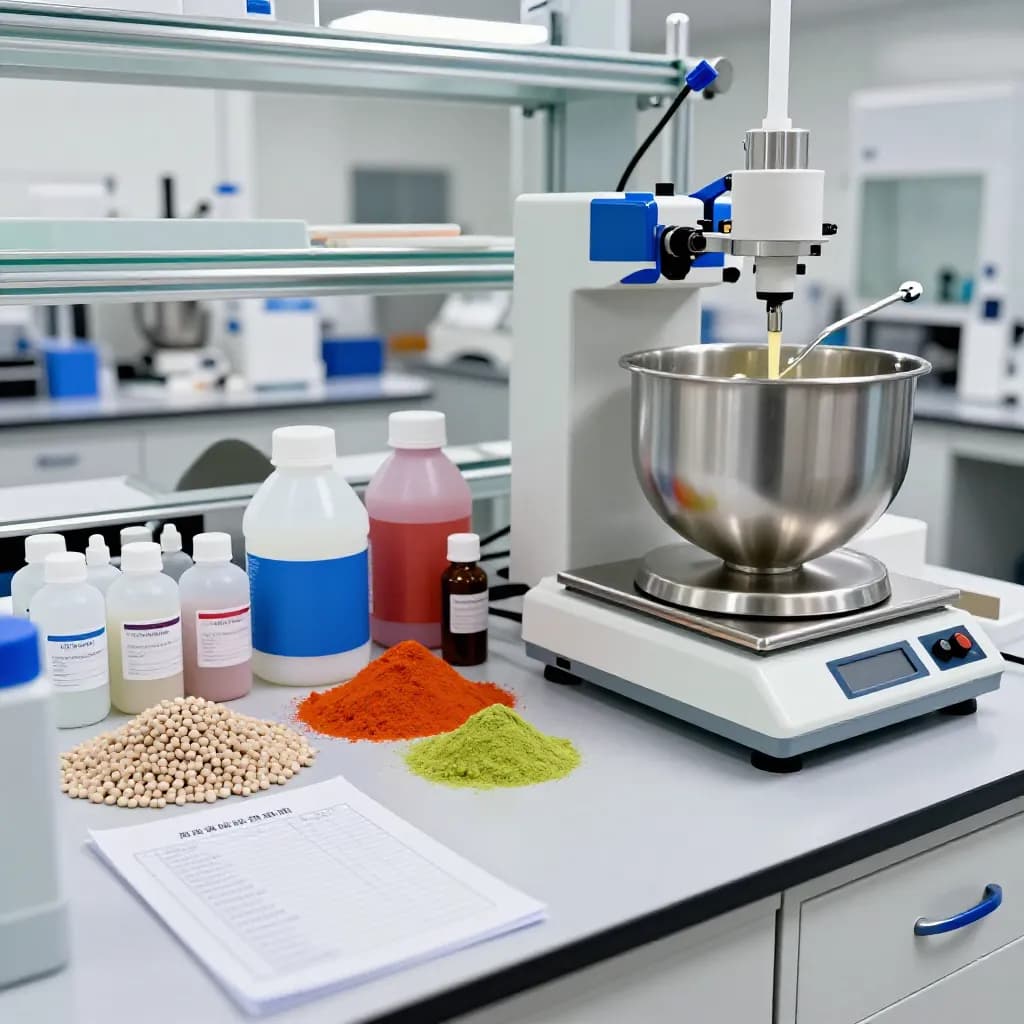
The additive categories used in powder coatings include flow and leveling agents, degassing additives, texture and structure agents, matting agents, UV stabilizers, antioxidants, charge control agents, anti-caking agents, wax additives, and specialty functional additives. Each category addresses specific formulation challenges, and most commercial powder coatings contain additives from multiple categories working in concert to deliver the required combination of processing behavior and final film properties.
Ready to Start Your Project?
From one-off customs to 15,000-part production runs — get precise pricing in 24 hours.
On This Page
The Additive Toolkit for Powder Coating Formulators
Additive selection and dosage require careful optimization because additives can interact with each other and with the base formulation in complex ways. A flow additive that improves leveling may reduce intercoat adhesion. A matting agent that reduces gloss may also reduce impact resistance. A UV stabilizer that improves weathering may affect cure behavior. The formulator must understand these interactions and balance competing effects to achieve the overall property profile required for the intended application.
The powder coating industry benefits from a sophisticated additive supply chain, with specialized manufacturers offering hundreds of additive products tailored for powder coating applications. Major additive suppliers provide technical support, formulation guidelines, and application-specific recommendations that help formulators navigate the complex landscape of additive selection and optimization. Understanding the function, mechanism, and limitations of each additive category is essential for effective formulation design.
Flow and Leveling Agents: Achieving Smooth Surfaces
Flow and leveling agents are present in virtually every powder coating formulation, serving the critical function of promoting smooth, defect-free film formation during the cure process. These surface-active additives modify the surface tension and rheological behavior of the molten coating to enhance flow, prevent surface defects, and improve the final appearance of the cured film.
Polyacrylate flow agents — based on poly(butyl acrylate), poly(2-ethylhexyl acrylate), or copolymers thereof — are the most widely used flow additives in powder coatings. These low-molecular-weight polymers are partially incompatible with the base resin and migrate to the coating surface during melting, where they form a thin layer that reduces and equalizes surface tension. The surface tension equalization prevents Marangoni flow-driven defects such as craters, Bénard cells, and orange peel. Typical dosage levels are 0.5-2.0% by weight of the total formulation.
The molecular weight and composition of polyacrylate flow agents determine their effectiveness and side effects. Lower molecular weight grades provide more aggressive surface tension reduction and better crater resistance but may cause more pronounced orange peel due to their effect on surface rheology. Higher molecular weight grades provide gentler leveling with less orange peel but may be less effective at preventing craters from aggressive contaminants. Copolymer grades combining butyl acrylate with other monomers offer tailored property balances for specific applications.
Polysiloxane (silicone) flow agents provide the most aggressive surface tension reduction, achieving surface tensions as low as 20 mN/m. They are used in formulations where polyacrylate additives alone cannot prevent cratering — typically in applications where substrate contamination is difficult to control or where the coating must tolerate exposure to low-surface-tension contaminants in service. However, silicone flow agents create significant recoatability and intercoat adhesion challenges and should be used only when necessary.
Combination flow agent systems — using both polyacrylate and polysiloxane additives at reduced individual dosages — can provide better overall performance than either type alone. The polyacrylate provides baseline leveling and surface tension equalization, while a small amount of polysiloxane provides additional crater resistance without the full negative effects of higher silicone levels.
Degassing Additives: Preventing Pinholes and Outgassing Defects
Degassing additives address one of the most common defect categories in powder coatings: pinholes, pops, and surface porosity caused by gases escaping through the coating film during cure. These gases can originate from moisture in the powder or on the substrate, air trapped between powder particles during application, volatile byproducts of the crosslinking reaction (water from HAA cure, caprolactam from PU cure), or outgassing from the substrate itself (particularly cast metals, galvanized steel, and porous substrates).
Benzoin is the classic degassing additive for powder coatings, used at typical levels of 0.5-1.5% by weight. Benzoin functions by reducing the surface tension of the molten coating at the point where gas bubbles reach the surface, allowing the bubbles to break and the coating to flow back and heal the disrupted surface before gelation. Without benzoin, gas bubbles that reach the surface create craters or pinholes that persist in the cured film because the high surface tension of the undoped coating prevents the bubble site from healing.
The mechanism of benzoin is more complex than simple surface tension reduction. Benzoin also appears to modify the melt rheology of the coating in the vicinity of gas bubbles, reducing the viscosity locally and promoting faster flow-back after bubble rupture. Additionally, benzoin may act as a nucleating agent for gas bubble formation, promoting the formation of many small bubbles rather than fewer large bubbles — small bubbles cause less surface disruption and heal more readily than large bubbles.
For substrates with severe outgassing problems — hot-dip galvanized steel, die-cast aluminum, and other porous or gas-generating substrates — benzoin alone may be insufficient. In these cases, specialized outgassing additives based on modified waxes, calcium oxide (quickite), or molecular sieves can be used in combination with benzoin. These additives work by absorbing moisture or reactive gases before they can form bubbles in the coating film, or by modifying the coating rheology to extend the time window during which gas can escape before gelation.
The dosage of degassing additives must be carefully controlled. Insufficient degassing additive results in pinholes and surface porosity, while excessive levels can cause other defects including reduced gloss, haze, and surface bloom (migration of excess additive to the coating surface during or after cure). Formulation optimization typically involves testing a range of degassing additive levels on the specific substrate type to identify the minimum effective dosage.
Texture and Structure Agents: Creating Decorative and Functional Textures
Texture agents enable the creation of structured, non-smooth surface finishes that serve both decorative and functional purposes. Textured powder coatings are widely used for applications where a smooth finish is undesirable — either because texture provides a specific aesthetic effect (leather grain, sand texture, wrinkle finish) or because texture provides functional benefits such as hiding substrate imperfections, reducing glare, improving grip, or masking fingerprints and handling marks.
Wrinkle (hammer-tone) textures are created using texture agents that cause controlled surface instability during the cure process. These agents — typically based on modified polyester or polyacrylate polymers — create surface tension gradients that drive the formation of a regular wrinkled pattern as the coating cures. The wrinkle pattern is influenced by the type and level of texture agent, the film thickness, the cure temperature profile, and the base formulation chemistry. Fine wrinkle, medium wrinkle, and coarse wrinkle effects can be achieved by adjusting these parameters.
Sand textures (also called fine texture or leather texture) are created using insoluble polymer particles — typically PTFE (polytetrafluoroethylene), polyamide, or crosslinked polyester particles — that are dispersed in the coating formulation. During cure, these particles do not melt or dissolve in the base resin, creating raised bumps on the coating surface that produce a uniform, fine-grained texture. The particle size, shape, and loading level determine the texture coarseness and density.
Structured finishes can also be created using controlled application techniques rather than formulation additives. Applying powder at very high film thickness (150-300 microns) with specific electrostatic settings can produce a textured surface due to incomplete leveling of the thick powder deposit. However, formulation-based texture agents provide more consistent and reproducible results than application-based approaches.
Textured coatings present unique quality control challenges because standard appearance measurements (gloss, DOI, wavescan) are designed for smooth surfaces and may not provide meaningful data for textured finishes. Visual standards — reference panels with defined texture levels — are typically used for production quality control, supplemented by profile measurements using stylus profilometers or optical surface analyzers that quantify the texture amplitude and wavelength.
Matting Agents: Controlling Gloss Level
Matting agents reduce the gloss of powder coatings from the natural high-gloss finish (typically 80-95 GU at 60°) to satin (30-50 GU), semi-matte (15-30 GU), or full matte (less than 15 GU) levels. Low-gloss finishes are increasingly popular in architectural and industrial applications for their contemporary aesthetic, reduced glare, and ability to hide minor surface imperfections.
The primary matting mechanism in powder coatings involves creating micro-roughness on the coating surface that scatters reflected light, reducing the specular (mirror-like) reflection measured by gloss meters. This micro-roughness can be created through several approaches, each with different effects on the coating's appearance and performance.
Dual-cure matting systems are the most common approach for achieving low gloss in powder coatings. These systems use a blend of two resins or two crosslinkers with different cure rates. During the cure process, the faster-reacting component gels first, creating a partially crosslinked network, while the slower-reacting component continues to flow. The differential shrinkage and surface tension differences between the gelled and ungelled phases create micro-wrinkles on the coating surface that scatter light and reduce gloss. The gloss level is controlled by adjusting the ratio of fast and slow components.
Filler-based matting uses fine-particle fillers — typically silica (fumed or precipitated), wax-coated silica, or polyamide particles — to create surface roughness. These particles protrude slightly from the coating surface, creating light-scattering texture. Filler-based matting is simpler to formulate than dual-cure systems but can affect mechanical properties (reduced flexibility and impact resistance) at the higher filler loadings needed for very low gloss levels.
Wax-based matting agents — typically polyethylene, polypropylene, or PTFE micro-waxes — migrate to the coating surface during cure and create a micro-textured surface layer that reduces gloss. Wax matting agents also provide surface slip (scratch resistance and anti-fingerprint properties) as a secondary benefit. However, wax-based matting is generally limited to moderate gloss reduction (satin to semi-matte) and cannot achieve the very low gloss levels possible with dual-cure or filler-based systems.
Gloss consistency in matte powder coatings is more challenging to maintain than in high-gloss products because the matting mechanism is sensitive to cure conditions. Variations in oven temperature, air velocity, and cure time can shift the gloss level by 5-10 GU or more, which is visually noticeable. Tight process control and regular gloss monitoring are essential for consistent matte finish production.
UV Stabilizers and Light Stabilizer Systems
UV stabilizers are essential additives for powder coatings intended for exterior exposure, protecting the polymer binder and organic pigments from photodegradation caused by ultraviolet radiation. Without UV stabilization, even inherently durable polyester and fluoropolymer coatings would degrade faster than their potential service life, and organic pigments would fade rapidly.
The UV stabilization system in a powder coating typically combines two complementary mechanisms: UV absorption and radical scavenging. UV absorbers (UVAs) function by absorbing UV radiation before it can reach and damage the polymer binder or pigments. The absorbed UV energy is converted to heat and dissipated harmlessly. Hindered amine light stabilizers (HALS) function by scavenging the free radicals generated when UV radiation does reach the polymer, interrupting the chain reaction of oxidative degradation before it can cause significant damage.
Benzotriazole UVAs are the most widely used UV absorbers in powder coatings, providing broad-spectrum UV absorption across the 300-380 nm wavelength range that is most damaging to organic polymers. Hydroxyphenyl triazine UVAs offer improved thermal stability and lower volatility compared to benzotriazoles, making them better suited for high-temperature cure schedules. Typical UVA dosage levels are 0.5-2.0% by weight of the total formulation.
HALS additives based on tetramethylpiperidine derivatives are the standard radical scavengers for powder coatings. HALS are particularly effective because they are regenerated during the radical scavenging cycle — each HALS molecule can neutralize hundreds of radicals before being consumed, providing long-lasting protection. HALS dosage levels of 0.5-1.5% by weight are typical, with higher levels used for the most demanding exterior applications.
The combination of UVA and HALS provides synergistic protection that is significantly more effective than either component alone. The UVA reduces the amount of UV radiation reaching the polymer, decreasing the rate of radical generation, while the HALS neutralizes the radicals that are generated despite the UVA screen. This dual-mechanism approach is standard practice for all exterior-durable powder coatings and is required by quality certification systems such as Qualicoat and GSB for their highest performance tiers.
Antioxidants, Wax Additives, and Specialty Functional Additives
Beyond the major additive categories, several additional additive types play important roles in specific powder coating applications.
Antioxidants protect the powder coating from thermal oxidation during manufacturing, storage, and cure. Primary antioxidants (hindered phenols) scavenge peroxy radicals that initiate oxidative chain reactions, while secondary antioxidants (phosphites and thioesters) decompose hydroperoxides that are intermediates in the oxidation process. Antioxidants are particularly important for polyester and polyurethane systems that are susceptible to thermal yellowing during cure, and for formulations that may be overbaked in production. Typical dosage levels are 0.1-0.5% by weight.
Wax additives serve multiple functions in powder coatings. Surface waxes (polyethylene, polypropylene, PTFE, and carnauba wax) migrate to the coating surface during cure and provide slip (reduced coefficient of friction), scratch resistance, anti-blocking properties, and improved mar resistance. Internal waxes (amide waxes, montan waxes) can improve powder flow during application and provide mold release properties for coated parts. Wax selection must consider the effect on gloss, recoatability, and intercoat adhesion — excessive wax at the surface can impair adhesion of subsequent coating layers.
Charge control agents modify the triboelectric charging behavior of powder coatings, which is relevant for tribo-charging application systems. These additives — typically quaternary ammonium salts or amine-functional compounds — increase the positive charge acceptance of the powder, improving transfer efficiency and film uniformity in tribo-gun applications. For corona-charging systems, charge control agents are less critical because the external ion source provides the charging mechanism.
Anti-caking agents (dry-flow additives) — typically fumed silica (Aerosil) or fumed alumina — are added to the finished powder after grinding to improve flowability and prevent caking during storage. These nanoparticle additives coat the powder particle surfaces, reducing inter-particle adhesion and improving fluidization behavior. Typical addition levels are 0.1-0.5% by weight of the finished powder.
Catalysts and accelerators are used to modify the cure speed of powder coatings. Tertiary amines, imidazoles, and metal salts can accelerate epoxy-based cure reactions, while specific catalysts are available for polyester-TGIC, polyester-HAA, and polyurethane systems. Catalyst selection and dosage must balance cure speed against storage stability — a more reactive formulation cures faster but may also have reduced shelf life due to advancement during storage.
Frequently Asked Questions
What is the most important additive in powder coatings?
Flow and leveling agents (typically polyacrylate-based) are present in virtually every powder coating formulation and have the greatest impact on surface quality. They prevent craters, reduce orange peel, and promote smooth film formation. Without flow agents, most powder coatings would produce unacceptable surface defects.
How does benzoin prevent pinholes in powder coatings?
Benzoin reduces surface tension at gas bubble rupture sites, allowing the molten coating to flow back and heal the disrupted surface before gelation. It also modifies local melt rheology and may promote formation of many small bubbles rather than fewer large ones. Typical dosage is 0.5-1.5% by weight.
How are matte finishes achieved in powder coatings?
The most common method is dual-cure matting, using two resins or crosslinkers with different cure rates that create micro-wrinkles during cure. Filler-based matting (silica particles) and wax-based matting are alternatives. Matte finishes are more sensitive to cure conditions than high-gloss products, requiring tighter process control.
Why do powder coatings need both UVA and HALS for exterior use?
UVA (UV absorbers) and HALS (hindered amine light stabilizers) provide synergistic protection through complementary mechanisms. UVAs absorb UV radiation before it damages the polymer, while HALS scavenge free radicals generated by UV that penetrates the UVA screen. Together they provide significantly better protection than either alone.
What is fumed silica used for in powder coatings?
Fumed silica (such as Aerosil) is added as a dry-flow additive after grinding at 0.1-0.5% by weight. The nanoparticles coat powder particle surfaces, reducing inter-particle adhesion and improving flowability, fluidization, and resistance to caking during storage. It is one of the last additives added in the manufacturing process.
Ready to Start Your Project?
From one-off customs to 15,000-part production runs — get precise pricing in 24 hours.