Metal ceiling systems and acoustic panels are ubiquitous in modern commercial architecture. Offices, airports, hospitals, retail environments, and educational buildings all rely on suspended metal ceilings to manage acoustics, conceal services, and create refined interior environments. These systems comprise thousands of individual panels, tiles, or linear elements that must present a uniform, consistent appearance across entire floor plates.
Architecture
Powder Coating for Acoustic Panels, Ceiling Systems, and Interior Cladding
Sundial Powder Coating·April 20, 2026·9 min
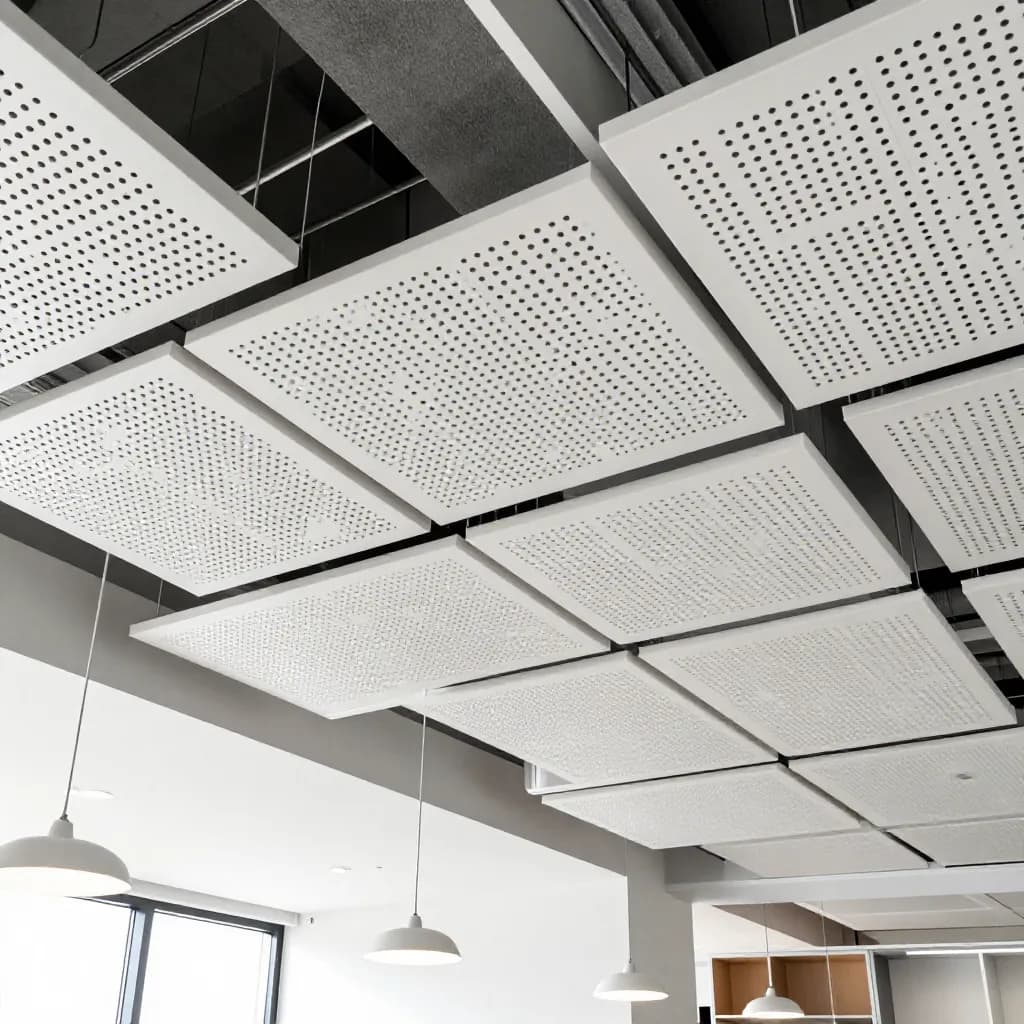
The acoustic function of these systems depends on precise perforation patterns that allow sound energy to pass through the metal face and be absorbed by backing materials. The coating applied to these perforated panels must not block or reduce the perforation openings, as any reduction in open area directly compromises acoustic performance. This creates a specific coating challenge that favors technologies capable of providing consistent coverage without excessive film build in perforations.
Ready to Start Your Project?
From one-off customs to 15,000-part production runs — get precise pricing in 24 hours.
On This Page
Metal Ceiling and Acoustic Panel Applications
Durability requirements for ceiling systems are often underestimated. While ceilings are not subject to the direct physical contact that walls and floors endure, they must maintain their appearance for the life of the building fit-out, typically 15-25 years. Any discoloration, yellowing, or inconsistency in the ceiling plane is immediately visible under the artificial lighting that illuminates these surfaces throughout the working day.
Perforated Panel Coating Challenges
Coating perforated metal panels presents a specific technical challenge. Perforations ranging from 1mm to 8mm in diameter are arranged in precise patterns across the panel face, and the coating must provide consistent coverage on the flat surfaces between perforations, on the perforation edges, and through the perforation walls without bridging or blocking the openings. This requires careful control of film thickness and application parameters.
Powder coating's electrostatic application process is well suited to perforated panel coating. The charged powder particles are attracted to the grounded metal substrate, wrapping around perforation edges and coating the internal walls of each opening. With proper application parameters — gun distance, voltage, powder flow rate, and line speed — consistent coverage is achieved without excessive build-up that could reduce perforation open area.
The 60-120 micron film thickness of powder coating, while advantageous for durability on solid surfaces, must be carefully managed on perforated panels. Thinner applications within the standard range, typically 60-80 microns, are specified for fine-perforation acoustic panels to maintain the designed open area percentage. This controlled application still provides substantially better protection than liquid paint at 25-50 microns while preserving the acoustic performance that the perforation pattern is designed to deliver.
Color and Finish for Interior Environments
Interior ceiling and cladding systems demand precise color control and consistent finish quality across large surface areas. White and light grey are the dominant colors for office and commercial ceilings, with RAL 9010 Pure White, RAL 9016 Traffic White, and RAL 7035 Light Grey accounting for the majority of specifications. These colors maximize light reflectance, supporting energy-efficient lighting design and creating bright, comfortable working environments.
Custom colors are increasingly specified for feature ceilings, accent zones, and branded environments. Retail spaces, hospitality venues, and corporate headquarters use colored ceiling elements to create distinctive interior identities. Powder coating's custom color matching capability supports any design concept, with precise reproduction across the thousands of panels that may comprise a single ceiling installation.
Wood-grain sublimation transfer finishes have expanded the design vocabulary for metal ceiling systems. These finishes replicate the appearance of natural timber on aluminum panels, providing the warmth and character of wood with the fire performance, dimensional stability, and longevity of powder-coated metal. Wood-grain ceilings are particularly popular in hospitality, residential, and wellness environments where the natural aesthetic of timber is desired without the maintenance and fire safety concerns of real wood.
Zero VOC for Occupied Interior Spaces
Ceiling systems and interior cladding are installed in spaces where people work, learn, heal, and live. The air quality impact of these large-area interior finishes is significant because of the sheer surface area they present to the occupied space below. Powder coating produces zero VOC emissions throughout its service life, ensuring that ceiling and cladding systems contribute no harmful off-gassing to indoor air quality.
This zero VOC characteristic is particularly important during and immediately after installation. New ceiling systems in offices, hospitals, and schools are often installed while the building is partially occupied or shortly before occupation begins. Liquid-painted ceiling panels can emit VOCs during this critical period, contributing to the cocktail of new-building emissions that affects indoor air quality. Powder-coated panels can be installed with confidence that they will not compromise the air quality of the spaces they serve.
For projects targeting green building certifications such as LEED, BREEAM, or WELL, specifying powder-coated ceiling and cladding systems contributes to credits for low-emitting materials and indoor environmental quality. The complete absence of solvent emissions simplifies compliance documentation and supports the healthy building objectives that these certification systems promote.
Durability Advantages Over Painted Ceiling Systems
The durability gap between powder-coated and liquid-painted ceiling systems manifests differently than on exterior applications, but is no less significant. Interior ceiling panels are not subject to weather exposure, but they must maintain their appearance under constant artificial lighting that reveals every imperfection, discoloration, and inconsistency in the ceiling plane.
Liquid-painted ceiling panels are susceptible to yellowing under fluorescent and LED lighting over time, particularly white and light-colored finishes. This yellowing creates visible inconsistencies when individual panels are replaced, as new panels appear noticeably whiter than their aged neighbors. Powder coating's superior resistance to yellowing maintains color consistency across the ceiling plane throughout its service life, and replacement panels match existing installations more closely even after years of service.
The mechanical durability of powder coating also provides advantages during ceiling maintenance activities. Ceiling panels are regularly removed and replaced for access to services above, and each handling event risks scratching or chipping the panel finish. Powder coating at 60-120 microns withstands this repeated handling far more effectively than liquid paint at 25-50 microns, maintaining the panel's appearance through dozens of removal and reinstallation cycles over the ceiling system's operational life.
Frequently Asked Questions
Does powder coating affect the acoustic performance of perforated panels?
When properly applied at controlled film thicknesses of 60-80 microns for fine-perforation panels, powder coating does not significantly reduce perforation open area or compromise acoustic performance. The electrostatic application process provides consistent coverage without bridging or blocking perforations.
Why is zero VOC important for ceiling systems?
Ceiling systems present large surface areas to occupied spaces below, making their air quality impact significant. Powder coating produces zero VOC emissions, ensuring no harmful off-gassing into offices, hospitals, schools, and other occupied environments. This supports green building certifications and healthy indoor air quality.
Do powder-coated ceiling panels yellow over time?
Powder coating provides superior resistance to yellowing compared to liquid paint, maintaining consistent white and light-colored finishes under artificial lighting for 20-25 years. This means replacement panels match existing installations more closely, even after years of service, avoiding the visible inconsistencies common with liquid-painted systems.
What finishes are available for metal ceiling systems?
Powder coating offers white, light grey, and custom colors in matte, satin, and gloss finishes. Wood-grain sublimation transfers replicate natural timber appearance on metal panels. Metallic and textured finishes are also available for feature ceilings and accent zones, providing complete design flexibility for interior architects.
Ready to Start Your Project?
From one-off customs to 15,000-part production runs — get precise pricing in 24 hours.