Polyurethane (PU) powder coatings represent a distinct chemistry class that bridges the gap between the hardness and chemical resistance of polyester systems and the flexibility and impact resistance required for demanding industrial applications. The defining feature of PU powder coatings is the urethane linkage — formed by the reaction between hydroxyl-functional polyester or polyacrylate resins and blocked isocyanate crosslinkers during the curing process.
Technical
Polyurethane Powder Coatings: Chemistry, Flexibility, and Specialized Applications
Sundial Powder Coating·April 22, 2026·14 min
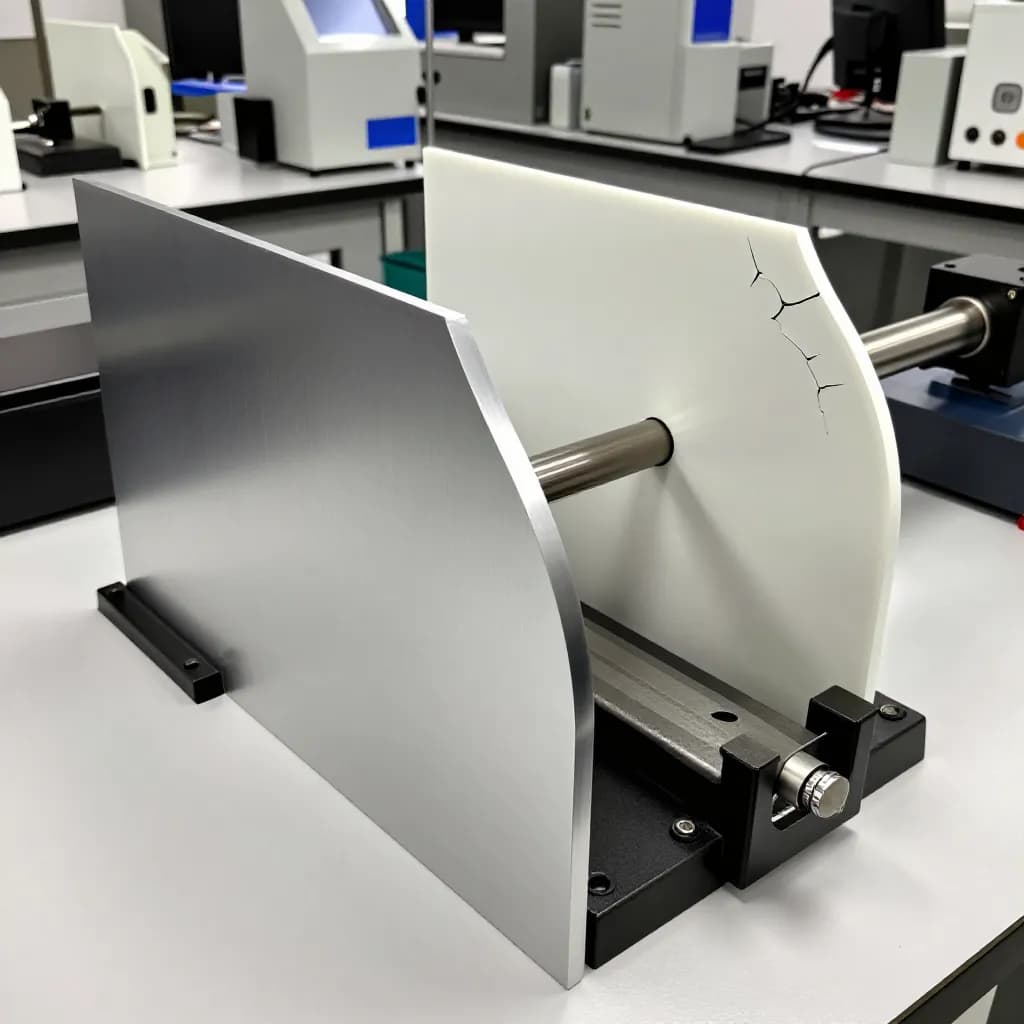
The blocked isocyanate crosslinker is the key enabling technology for PU powder coatings. Free isocyanate groups are highly reactive and would cause premature crosslinking during powder manufacturing and storage. To prevent this, the isocyanate groups are reacted with a blocking agent — typically caprolactam, methyl ethyl ketoxime (MEKO), or diethyl malonate — that renders them unreactive at ambient temperature. During curing at 160-200°C, the blocking agent dissociates (deblocks), regenerating the free isocyanate groups that then react with hydroxyl groups on the base resin to form urethane crosslinks.
Ready to Start Your Project?
From one-off customs to 15,000-part production runs — get precise pricing in 24 hours.
On This Page
Polyurethane Chemistry in Powder Coating Systems
The choice of blocking agent significantly influences the cure behavior and final properties of PU powder coatings. Caprolactam-blocked isocyanates are the most widely used, offering a good balance of storage stability and cure reactivity, but they require higher deblocking temperatures (typically 170-180°C) and release caprolactam vapor during cure, which can cause oven fouling and environmental concerns. Newer blocking agents such as diethyl malonate and 3,5-dimethylpyrazole offer lower deblocking temperatures and reduced volatile emissions, enabling lower-energy cure schedules and cleaner oven operation.
The base resin in PU powder coatings is typically a hydroxyl-functional polyester with carefully controlled molecular weight, hydroxyl value, and glass transition temperature. The hydroxyl value determines the crosslink density and, consequently, the hardness, flexibility, and chemical resistance balance of the cured film.
Flexibility and Mechanical Performance Advantages
The urethane linkage provides PU powder coatings with a unique combination of mechanical properties that distinguishes them from other powder coating chemistries. Urethane bonds are inherently flexible due to the rotational freedom around the N-H and C-O bonds in the urethane group, and they form strong hydrogen bonds that contribute to film toughness and cohesion. This molecular-level flexibility translates into macroscopic coating properties that are difficult to achieve with polyester-TGIC, polyester-HAA, or epoxy-polyester hybrid systems.
In standardized mechanical testing, PU powder coatings typically demonstrate superior performance in reverse impact resistance (ASTM D2794), mandrel bend testing (ASTM D522), and T-bend testing compared to equivalent polyester systems. A well-formulated PU powder coating can pass 0T or 1T bend tests on aluminum substrates — meaning the coating survives being bent 180° over itself with zero or one thickness of metal as a mandrel — without cracking, delamination, or loss of adhesion. This level of flexibility is essential for applications involving post-coating forming operations.
The combination of flexibility and hardness in PU coatings is particularly valuable. While highly flexible coatings can be formulated in other chemistries by reducing crosslink density or using plasticizers, these approaches typically sacrifice hardness, scratch resistance, and chemical resistance. PU coatings achieve flexibility through the inherent properties of the urethane linkage rather than through reduced crosslinking, allowing them to maintain pencil hardness values of H to 2H while still passing demanding bend and impact tests.
Abrasion resistance is another area where PU powder coatings excel. The combination of film toughness, elasticity, and surface hardness produces coatings that resist wear from repeated contact, sliding friction, and particulate impact. This makes PU systems the preferred choice for applications subject to mechanical wear, including automotive components, agricultural equipment, and industrial machinery.
Chemical Resistance and Environmental Durability
PU powder coatings offer excellent chemical resistance across a broad range of exposures, making them suitable for industrial environments where coatings face contact with fuels, lubricants, hydraulic fluids, cleaning chemicals, and process chemicals. The dense urethane crosslink network provides an effective barrier against chemical penetration, while the chemical stability of the urethane bond itself resists hydrolysis and solvolysis under most service conditions.
Resistance to automotive fluids is a particular strength of PU powder coatings. Gasoline, diesel fuel, brake fluid, engine oil, transmission fluid, and windshield washer fluid — all common exposure agents for automotive components — have minimal effect on properly cured PU coatings. This chemical resistance profile, combined with the mechanical flexibility needed to withstand vibration, thermal cycling, and stone chip impact, makes PU the chemistry of choice for many under-hood and exterior automotive components.
Solvent resistance of PU powder coatings is generally superior to polyester systems, particularly against ketones, esters, and aromatic solvents that can soften or swell polyester films. This advantage is relevant for industrial applications where coated surfaces may be cleaned with aggressive solvents or exposed to solvent-containing process chemicals.
Weathering resistance of PU powder coatings depends primarily on the base resin chemistry. Polyester-urethane systems using UV-stable polyester resins provide good exterior durability suitable for AAMA 2604 and Qualicoat Class 1-2 performance levels. However, for the highest weathering performance tiers (AAMA 2605, Qualicoat Class 3), fluoropolymer or superdurable polyester chemistries are generally preferred over PU systems. The blocked isocyanate crosslinker itself does not contribute significantly to UV resistance, so the weathering performance is largely determined by the polyester backbone and the UV stabilizer package.
Automotive Clear Coat and OEM Applications
The automotive industry represents one of the most technically demanding application areas for PU powder coatings. Automotive clear coats require an exceptional combination of properties: high gloss and distinctness of image (DOI), excellent flow and leveling for a smooth, defect-free surface, outstanding scratch and mar resistance, resistance to environmental etching from acid rain and bird droppings, and the flexibility to withstand stone chip impact without cracking or delamination.
PU powder clear coats have been successfully adopted by several automotive OEMs for specific vehicle platforms and component applications. The technology offers significant environmental advantages over solvent-based automotive clear coats, eliminating VOC emissions from the clear coat application step and reducing the complexity of paint shop abatement systems. Material utilization rates of 95%+ for powder clear coats compare favorably with the 60-70% transfer efficiency typical of liquid automotive clear coats.
Achieving automotive-grade appearance with powder clear coats requires careful optimization of the powder particle size distribution, melt viscosity, gel time, and cure schedule. The powder must melt and flow to form a smooth, uniform film before crosslinking begins to lock in the surface profile. Particle sizes are typically controlled to a tighter distribution (D50 of 25-35 microns) than standard industrial powder coatings to minimize orange peel texture and maximize DOI values.
Beyond clear coats, PU powder coatings are used extensively for automotive wheels, trim components, engine covers, suspension parts, and underbody components. Each application has specific performance requirements — wheels need stone chip resistance and brake dust resistance, trim components need UV stability and scratch resistance, and underbody parts need corrosion protection and flexibility — that PU chemistry can be formulated to address through appropriate resin selection and additive packages.
Wood Finishing with Polyurethane Powder Coatings
The application of powder coatings to wood and wood-based substrates — medium-density fiberboard (MDF), particleboard, and engineered wood products — represents a growing market segment where PU chemistry offers specific advantages. Wood substrates are heat-sensitive, limiting cure temperatures to approximately 120-150°C for surface temperatures, which is significantly lower than the 180-200°C cure schedules used for metal substrates. This constraint has driven the development of low-temperature cure PU powder coatings specifically designed for wood finishing.
Low-temperature PU powder coatings for wood use blocking agents with lower deblocking temperatures, such as diethyl malonate or methyltriazine derivatives, combined with hydroxyl-functional polyester resins optimized for reactivity at reduced temperatures. These systems achieve full cure at object temperatures of 130-150°C, which can be reached on MDF surfaces using infrared (IR) or near-infrared (NIR) curing technology without damaging the wood substrate or causing excessive moisture loss that would lead to warping or cracking.
The flexibility of PU coatings is particularly valuable for wood substrates, which undergo dimensional changes with humidity fluctuations. A rigid coating on a dimensionally unstable substrate will crack and delaminate as the wood expands and contracts. PU coatings accommodate these movements without failure, maintaining adhesion and film integrity through seasonal humidity cycles that would compromise more brittle coating chemistries.
Surface quality achievable with PU powder coatings on MDF is excellent, with smooth, uniform films that rival liquid lacquer finishes in appearance. The powder coating process eliminates the grain-raising issues associated with water-based liquid coatings on wood and provides a thicker, more durable film than conventional lacquer systems. For kitchen cabinets, office furniture, retail fixtures, and bathroom vanities, PU powder coating on MDF offers a compelling combination of appearance, durability, and environmental performance.
Formulation Considerations and Cure Optimization
Formulating PU powder coatings requires careful attention to the balance between storage stability and cure reactivity. The blocked isocyanate crosslinker must remain fully blocked during powder manufacturing (extrusion at 80-110°C), storage (up to 12 months at ambient temperature), and application, but must deblock rapidly and completely at the cure temperature to achieve full crosslink density. This narrow processing window demands precise control of blocking agent chemistry, crosslinker loading, and cure schedule.
The ratio of isocyanate groups to hydroxyl groups (NCO:OH ratio) is a critical formulation parameter. Stoichiometric balance (NCO:OH = 1:1) provides maximum crosslink density and optimal mechanical properties. Excess isocyanate (NCO:OH > 1:1) can lead to allophanate and biuret side reactions that increase crosslink density but may cause brittleness. Excess hydroxyl groups (NCO:OH < 1:1) leave unreacted hydroxyl groups that can reduce chemical resistance and water resistance.
The release of blocking agent vapor during cure is a significant practical consideration. Caprolactam, the most common blocking agent, has a boiling point of 270°C and condenses on cooler surfaces in the curing oven, including oven walls, air circulation ducts, and exhaust systems. This condensate accumulates over time and can drip onto freshly coated parts, causing surface defects. Regular oven cleaning and adequate exhaust ventilation are essential for PU powder coating operations using caprolactam-blocked crosslinkers.
Newer non-caprolactam blocking agents address the oven fouling issue by producing volatile byproducts that remain gaseous at oven exhaust temperatures and can be removed by standard thermal oxidizer systems. These alternative blocking agents also enable lower cure temperatures (150-170°C versus 180-200°C for caprolactam systems), reducing energy consumption and expanding the range of heat-sensitive substrates that can be coated with PU powder technology.
Quality Testing and Performance Verification
Quality assurance for PU powder coatings encompasses both incoming material testing and finished coating performance verification. Incoming powder testing typically includes particle size distribution analysis (laser diffraction), gel time measurement (hot plate method at specified temperature), differential scanning calorimetry (DSC) to verify cure onset and peak temperatures, and melt viscosity measurement to predict flow and leveling behavior.
Finished coating testing for PU systems emphasizes the mechanical properties that distinguish PU from other chemistries. Standard test protocols include pencil hardness (ASTM D3363), direct and reverse impact resistance (ASTM D2794), conical mandrel bend (ASTM D522), cross-cut adhesion (ASTM D3359), and T-bend testing for coil-coated substrates. Chemical resistance testing follows ASTM D1308 or equivalent methods, with specific test reagents selected based on the intended application environment.
For automotive applications, additional testing requirements include stone chip resistance (SAE J400 or equivalent gravelometer test), humidity resistance (ASTM D2247, typically 1000+ hours), cyclic corrosion testing (SAE J2334 or GMW14872), and environmental etch resistance testing using simulated acid rain and biological contaminants. These tests are typically conducted on coated panels that have undergone the complete OEM coating process, including pretreatment, primer, basecoat, and clear coat layers.
Cure verification is particularly important for PU powder coatings because undercure results in incomplete deblocking and insufficient crosslink density, while overcure can cause thermal degradation of the urethane linkages. Solvent rub testing (MEK double rubs per ASTM D5402) is the most common field method for verifying cure, with fully cured PU coatings typically withstanding 100+ MEK double rubs without breakthrough. DSC analysis of cured film samples provides a more precise assessment of cure completeness by measuring residual cure exotherm.
Frequently Asked Questions
What makes polyurethane powder coatings more flexible than polyester?
The urethane linkage formed during PU cure has inherent rotational freedom and strong hydrogen bonding that provides molecular-level flexibility. This allows PU coatings to pass 0T-1T bend tests while maintaining H-2H pencil hardness — a combination of flexibility and hardness that polyester systems cannot match without sacrificing one property for the other.
Can polyurethane powder coatings be used on wood substrates?
Yes. Low-temperature cure PU powder coatings have been developed specifically for wood and MDF substrates. These systems use blocking agents with lower deblocking temperatures, achieving full cure at 130-150°C surface temperature using IR or NIR curing. The flexibility of PU coatings accommodates the dimensional changes wood undergoes with humidity fluctuations.
What is the blocking agent in PU powder coatings?
The blocking agent is a chemical that temporarily deactivates the isocyanate crosslinker to prevent premature reaction during manufacturing and storage. Common blocking agents include caprolactam, methyl ethyl ketoxime (MEKO), and diethyl malonate. During curing, the blocking agent dissociates at elevated temperature, freeing the isocyanate to react with hydroxyl groups and form urethane crosslinks.
Why do PU powder coatings cause oven fouling?
Caprolactam-blocked PU systems release caprolactam vapor during cure. This vapor condenses on cooler oven surfaces — walls, ducts, and exhaust systems — forming a waxy buildup that can drip onto coated parts and cause defects. Regular oven cleaning and adequate exhaust ventilation are required. Newer non-caprolactam blocking agents significantly reduce this issue.
Are PU powder coatings suitable for exterior architectural use?
PU powder coatings provide good exterior durability suitable for AAMA 2604 and Qualicoat Class 1-2 performance levels when formulated with UV-stable polyester resins. However, for the highest weathering tiers (AAMA 2605, Qualicoat Class 3), fluoropolymer or superdurable polyester chemistries are generally preferred over PU systems.
Ready to Start Your Project?
From one-off customs to 15,000-part production runs — get precise pricing in 24 hours.