Polyester powder coatings dominate the architectural and industrial finishing markets, accounting for the majority of all powder coatings consumed globally. The performance of these coatings depends critically on the crosslinker — the chemical hardener that reacts with the carboxyl-functional polyester resin during curing to form a dense, three-dimensional polymer network. The two principal crosslinkers used in polyester powder coatings are triglycidyl isocyanurate (TGIC) and β-hydroxyalkylamide (HAA), and the choice between them has significant implications for coating performance, worker safety, regulatory compliance, and end-use suitability.
Technical
Polyester TGIC vs HAA Powder Coatings: Crosslinker Chemistry and Performance Compared
Sundial Powder Coating·April 22, 2026·14 min
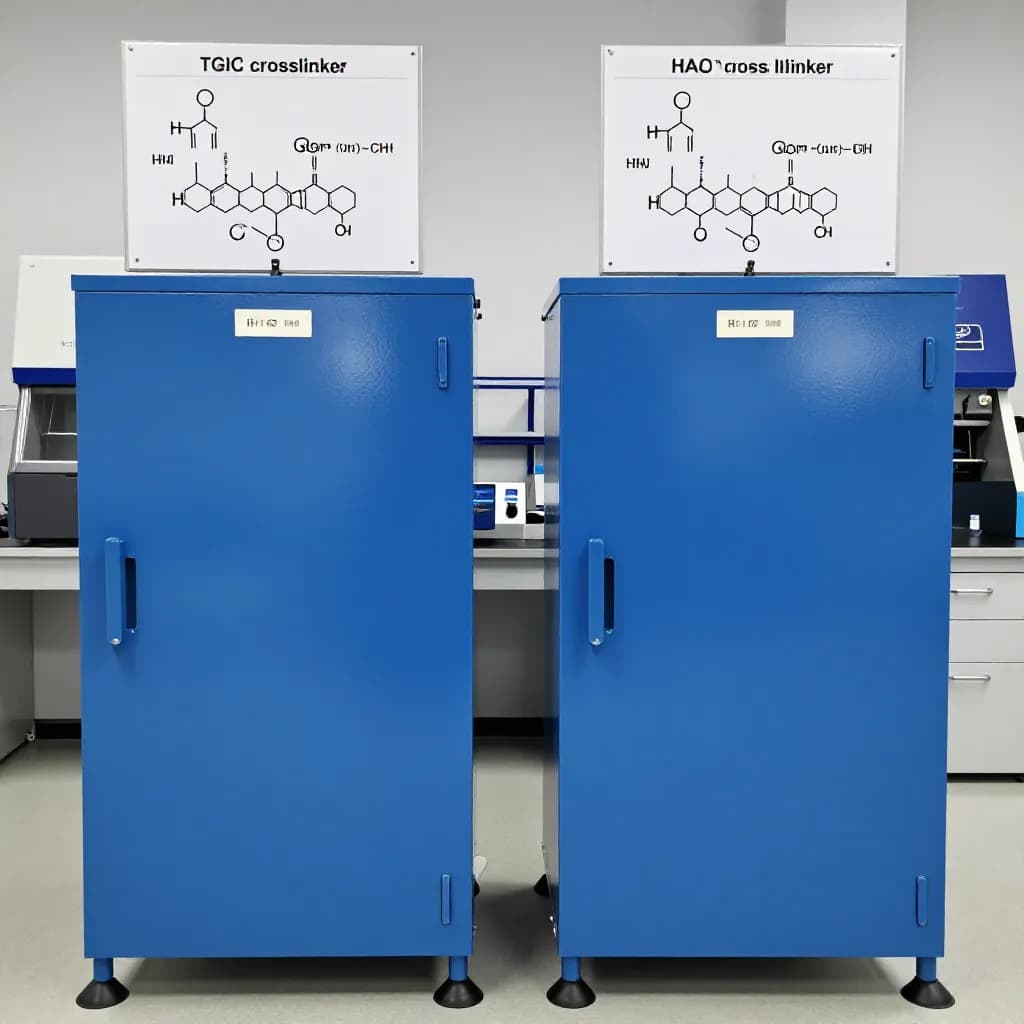
TGIC was the original crosslinker developed for exterior-durable polyester powder coatings in the 1970s and 1980s. It reacts with carboxyl groups on the polyester resin through an epoxy-carboxyl reaction mechanism, forming ester linkages that produce a highly crosslinked, weather-resistant film. TGIC-cured systems became the industry standard for architectural and outdoor applications due to their excellent UV resistance, gloss retention, and mechanical properties.
Ready to Start Your Project?
From one-off customs to 15,000-part production runs — get precise pricing in 24 hours.
On This Page
Understanding Polyester Crosslinker Chemistry in Powder Coatings
HAA emerged as an alternative crosslinker in the 1990s, driven primarily by health and safety concerns surrounding TGIC. HAA reacts with carboxyl-functional polyester resins through a condensation reaction, releasing water as a byproduct. This fundamentally different reaction mechanism produces coatings with somewhat different performance characteristics, and the water release during cure introduces specific formulation and application considerations that must be managed for optimal results.
TGIC Health Concerns and Regulatory Classification
The primary driver behind the development of HAA alternatives was the toxicological profile of TGIC. Triglycidyl isocyanurate is classified as a mutagen (Category 2) under the European CLP Regulation (EC No 1272/2008), carrying the hazard statement H341 — suspected of causing genetic defects. It is also classified as a reproductive toxicant (Category 2) with hazard statement H361f — suspected of damaging fertility. These classifications triggered mandatory labeling, handling restrictions, and occupational exposure limits across the European Union.
In practical terms, the mutagenicity classification means that TGIC-containing powder coatings must be handled with specific personal protective equipment, including respiratory protection during powder handling and application. Workplace exposure monitoring is required, and maximum allowable concentrations in workplace air are strictly regulated. The powder itself, as a fine particulate, presents the primary exposure route through inhalation during mixing, loading, spraying, and booth cleaning operations.
Several European countries went beyond the EU-wide classification requirements. Sweden effectively banned TGIC in powder coatings through stringent occupational health regulations, and other Nordic countries followed with similar restrictions. The Netherlands, Germany, and the United Kingdom also implemented workplace controls that made TGIC use significantly more burdensome and expensive compared to HAA alternatives. These regulatory pressures accelerated the transition to HAA-cured systems across Europe, particularly in the architectural sector where Qualicoat and GSB certification bodies actively encouraged the shift.
Outside Europe, the regulatory landscape is more varied. In North America, TGIC remains widely used and is not subject to the same classification restrictions, though OSHA workplace exposure limits apply. In Asia-Pacific markets, TGIC use continues to be common, particularly in China and Southeast Asia, where regulatory frameworks are less restrictive regarding mutagenicity classifications.
HAA Crosslinker Chemistry and Reaction Mechanism
β-Hydroxyalkylamide (HAA) crosslinkers, commercially known under trade names such as Primid XL-552 and Primid QM-1260, react with carboxyl-functional polyester resins through a condensation esterification mechanism. During curing, the hydroxyl groups on the HAA molecule react with the carboxyl end groups of the polyester chain, forming ester bonds and releasing water as a condensation byproduct. This reaction typically requires cure temperatures of 180-200°C for 10-20 minutes, comparable to TGIC cure schedules.
The water release during HAA cure is a critical formulation consideration. Approximately 3-5% of the crosslinker weight is released as water vapor during the curing reaction. If this water cannot escape the film efficiently, it can cause pinholing, cratering, or surface defects — particularly at higher film thicknesses above 80-100 microns. Formulators address this by optimizing the melt viscosity and gel time of HAA systems to ensure the film remains fluid long enough for water vapor to escape before the crosslinking reaction locks the film into its final state.
HAA crosslinkers are classified as non-toxic and carry no mutagenicity, carcinogenicity, or reproductive toxicity classifications under CLP or GHS systems. This clean toxicological profile is the primary advantage driving HAA adoption. Workers handling HAA-cured powder coatings require standard dust protection but not the enhanced respiratory protection and exposure monitoring mandated for TGIC systems. This reduces compliance costs, simplifies workplace safety programs, and eliminates the regulatory burden associated with handling mutagenic substances.
The stoichiometry of HAA systems differs from TGIC. HAA is typically used at 4-6% by weight of the total formulation, compared to 6-8% for TGIC. The lower crosslinker loading in HAA systems can influence the final crosslink density and, consequently, certain mechanical and chemical resistance properties of the cured film.
Performance Comparison: Weathering and Durability
In terms of exterior weathering performance, both TGIC and HAA-cured polyester powder coatings deliver excellent results when properly formulated. Both systems comfortably meet the requirements of Qualicoat Class 1 (1-year Florida exposure equivalent), Qualicoat Class 2 (3-year Florida exposure equivalent), and AAMA 2604 specifications. For the most demanding applications — Qualicoat Class 3 and AAMA 2605 — superdurable polyester formulations are available in both TGIC and HAA-cured versions, though the resin and pigment selection becomes more critical than the crosslinker choice at this performance tier.
Historically, TGIC-cured systems were considered to have a slight edge in gloss retention during extended weathering exposure. The higher crosslink density achievable with TGIC was believed to produce a more resistant polymer network. However, advances in HAA-compatible polyester resin technology have largely closed this gap. Modern superdurable HAA systems from leading resin manufacturers demonstrate weathering performance that is statistically equivalent to their TGIC counterparts in standardized accelerated and natural weathering tests.
One area where differences persist is in overbake resistance. TGIC-cured systems generally tolerate overbaking — exposure to cure temperatures significantly above the specified schedule — better than HAA systems. Overbaked HAA coatings can exhibit yellowing, particularly in light colors, due to oxidative degradation of the HAA crosslinker at elevated temperatures. This makes TGIC systems somewhat more forgiving in production environments where oven temperature control is imprecise or where complex part geometries result in varying thermal exposure across the coated surface.
Chemical resistance is another area of nuanced difference. TGIC-cured coatings generally show slightly better resistance to strong alkaline solutions and certain aggressive cleaning chemicals, attributable to the higher crosslink density and the chemical stability of the isocyanurate ring structure. For most architectural applications, however, both systems provide adequate chemical resistance for the exposures encountered in service.
Formulation and Application Differences
From a formulation perspective, TGIC and HAA systems require different polyester resins. TGIC-cured systems use carboxyl-functional polyester resins with acid values typically in the range of 30-40 mg KOH/g, while HAA systems use resins with higher acid values, typically 50-80 mg KOH/g, to provide sufficient carboxyl groups for the condensation reaction. This means that switching from TGIC to HAA is not simply a matter of substituting one crosslinker for another — the entire resin system must be reformulated.
The water release during HAA cure imposes specific constraints on film thickness. While TGIC systems can be applied at film thicknesses up to 120-150 microns without significant risk of surface defects, HAA systems are more prone to pinholing and outgassing defects above 80-100 microns. This limitation is manageable for most architectural applications where 60-80 micron films are standard, but it can be a constraint for industrial applications requiring thicker protective coatings.
In terms of application behavior, HAA-cured powders generally exhibit slightly different charging and fluidization characteristics compared to TGIC systems. HAA powders tend to be somewhat more sensitive to humidity during storage and application, as the HAA crosslinker is hygroscopic. Moisture absorption can affect powder flow, charging efficiency, and ultimately film quality. Proper storage conditions — below 25°C and 60% relative humidity — are more critical for HAA systems than for TGIC equivalents.
Color matching between TGIC and HAA systems requires attention because the different crosslinkers can influence the final color of the cured film, particularly in light and pastel shades. The slight yellowing tendency of HAA at elevated temperatures means that color formulations developed for TGIC systems may need adjustment when converted to HAA chemistry. Pigment selection, particularly the choice of white pigments and optical brighteners, may also differ between the two systems.
Market Trends and Regional Adoption Patterns
The global market has shifted decisively toward HAA-cured polyester powder coatings, driven primarily by European regulatory pressure and the downstream influence of European quality certification systems. In Europe, HAA systems now account for the vast majority of architectural polyester powder coatings, with TGIC use largely confined to specialized industrial applications where its specific performance advantages justify the additional regulatory compliance burden.
Qualicoat and GSB International, the two dominant European architectural coating quality labels, have been instrumental in driving HAA adoption. While neither organization has formally banned TGIC, their emphasis on worker safety and environmental responsibility has created a market environment where HAA is the default choice for certified architectural coatings. Most major European powder coating manufacturers have reformulated their architectural product lines entirely to HAA chemistry.
In North America, the transition has been slower but is accelerating. TGIC remains more common in the US market, particularly for industrial and general-purpose applications, but the architectural segment is increasingly moving toward HAA in alignment with global specification trends. Major international powder manufacturers supply HAA-cured products as their standard architectural offering worldwide, making TGIC-specific products less readily available over time.
The Asia-Pacific market presents the most diverse picture. Japan and South Korea have largely followed European trends toward HAA adoption, while China, India, and Southeast Asian markets continue to use significant volumes of TGIC-cured powder coatings. Cost considerations play a role in these markets, as TGIC systems can be marginally less expensive to formulate due to lower crosslinker loading requirements and the availability of lower-cost TGIC from Chinese manufacturers. However, as multinational OEMs and construction companies apply global specification standards to their Asian operations, HAA adoption is increasing across the region.
Selecting the Right Crosslinker for Your Application
The choice between TGIC and HAA should be guided by a systematic evaluation of application requirements, regulatory environment, and performance priorities. For architectural applications in Europe and increasingly worldwide, HAA is the clear default choice. It meets all relevant quality certification requirements, eliminates mutagenicity-related regulatory burdens, and delivers weathering performance equivalent to TGIC in modern superdurable formulations.
TGIC retains advantages in specific niches. Applications requiring thick film builds above 100 microns, such as functional protective coatings for industrial equipment, may benefit from TGIC's freedom from outgassing defects. Environments with poor oven temperature control, where overbaking is a frequent occurrence, favor TGIC's superior overbake tolerance. Applications requiring maximum chemical resistance to aggressive alkaline or solvent exposures may also benefit from the higher crosslink density achievable with TGIC.
For new coating lines and greenfield operations, specifying HAA from the outset avoids the need for future reformulation as regulations tighten. The trend toward stricter chemical safety regulations is global and unidirectional — substances classified as mutagens face increasing restrictions over time, not fewer. Investing in HAA-compatible formulation expertise and application know-how positions coating operations for long-term regulatory compliance.
When converting existing TGIC lines to HAA, a systematic reformulation approach is essential. Simply substituting HAA for TGIC in an existing formula will not produce acceptable results. The polyester resin, pigment loading, additive package, and cure schedule must all be optimized for the HAA reaction mechanism. Working closely with resin and crosslinker suppliers during the conversion process ensures that the HAA formulations meet or exceed the performance benchmarks established by the original TGIC products.
Frequently Asked Questions
Why is TGIC restricted in some countries?
TGIC (triglycidyl isocyanurate) is classified as a Category 2 mutagen and reproductive toxicant under the European CLP Regulation. This means it is suspected of causing genetic defects and damaging fertility. These classifications triggered mandatory workplace controls, exposure monitoring, and enhanced PPE requirements across the EU, with some Nordic countries effectively banning its use in powder coatings.
Can HAA powder coatings match TGIC performance for exterior durability?
Yes. Modern HAA-cured superdurable polyester powder coatings deliver weathering performance statistically equivalent to TGIC systems in standardized accelerated and natural exposure tests. Both crosslinker types comfortably meet Qualicoat Class 2 and AAMA 2604 requirements, and superdurable versions of both achieve Qualicoat Class 3 and AAMA 2605 performance levels.
What causes pinholing in HAA powder coatings?
HAA crosslinkers release water as a condensation byproduct during the curing reaction. If the film gels before this water vapor can escape, it becomes trapped and creates pinholes or craters in the cured surface. This is most problematic at film thicknesses above 80-100 microns. Proper formulation with optimized gel time and melt viscosity allows water to escape before the film sets.
Is it possible to simply replace TGIC with HAA in an existing formula?
No. TGIC and HAA require different polyester resin types with different acid values and molecular architectures. A direct crosslinker substitution will produce a coating with poor cure, inadequate mechanical properties, and likely surface defects. Converting from TGIC to HAA requires complete reformulation of the resin system, pigment loading, additive package, and cure schedule.
Which crosslinker is better for thick film applications?
TGIC is generally better suited for thick film applications above 100 microns because its cure reaction does not release volatile byproducts. HAA systems release water during cure, which can cause pinholing and surface defects at higher film builds. For standard architectural film thicknesses of 60-80 microns, both systems perform equally well.
Ready to Start Your Project?
From one-off customs to 15,000-part production runs — get precise pricing in 24 hours.