Naval vessels operate in what is arguably the most corrosive environment on earth. The combination of continuous saltwater exposure, high humidity, intense ultraviolet radiation, temperature extremes from arctic to tropical waters, and constant mechanical stress from wave action creates coating challenges that far exceed those of land-based applications. A naval coating system must protect steel and aluminum structures from corrosion while simultaneously resisting biofouling, chemical exposure, abrasion, and in combat vessels, the effects of blast, fire, and weapons impact.
Technical
Naval and Marine Military Coatings: Protecting Ships and Offshore Assets
Sundial Powder Coating·April 20, 2026·12 min
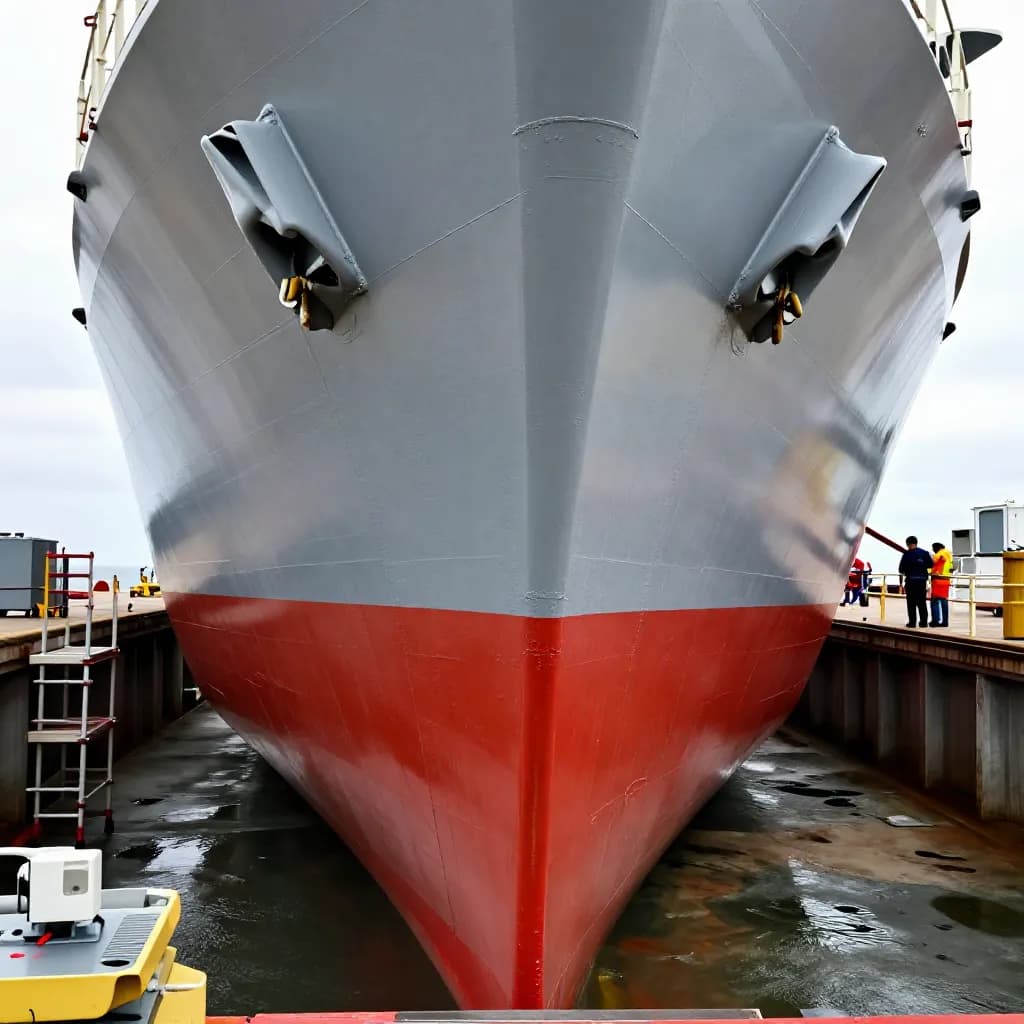
The scale of the coating challenge on a modern warship is immense. A typical destroyer has over 200,000 square feet of coated surface area, including the hull below the waterline, the superstructure above the waterline, interior bulkheads and overheads, tanks, voids, machinery spaces, and weather decks. Each of these areas has different exposure conditions and therefore different coating requirements. The hull below the waterline is continuously immersed in seawater and subject to biofouling, while the superstructure is exposed to UV, salt spray, and weather. Interior spaces must meet fire resistance and air quality requirements.
Ready to Start Your Project?
From one-off customs to 15,000-part production runs — get precise pricing in 24 hours.
On This Page
The Extreme Challenge of Naval Environments
The cost of coating failure on naval vessels is measured not only in maintenance dollars but in operational readiness. Corrosion is the single largest maintenance cost driver for the US Navy, consuming billions of dollars annually. Hull fouling from marine organisms increases fuel consumption by 10-40% depending on severity, directly impacting a vessel's range and operational capability. Coating system selection, application quality, and maintenance practices have a direct and measurable impact on fleet readiness and lifecycle costs.
Hull Coatings and Anti-Fouling Systems
Hull coatings below the waterline serve two critical functions: corrosion protection and anti-fouling. The corrosion protection system typically consists of a multi-coat epoxy barrier system applied directly to the blasted steel hull, providing a tough, impermeable barrier against seawater. These epoxy coatings are applied at high film thicknesses — often 200-400 microns total — to ensure long-term barrier protection. The epoxy system works in conjunction with cathodic protection (sacrificial zinc anodes or impressed current systems) to provide comprehensive corrosion defense.
Over the anti-corrosive epoxy system, an anti-fouling coating is applied to prevent the attachment and growth of marine organisms including barnacles, mussels, algae, and slime. Traditional anti-fouling coatings use biocides — most commonly copper compounds — that leach slowly from the coating surface, creating a toxic boundary layer that prevents organism settlement. Self-polishing copolymer (SPC) anti-fouling coatings are the most widely used technology on naval vessels, providing controlled biocide release over a 3-5 year service period as the coating surface gradually erodes.
Environmental concerns about copper and other biocides have driven development of alternative anti-fouling technologies. Silicone-based foul-release coatings create an ultra-smooth, low-surface-energy surface that prevents strong adhesion of marine organisms, allowing them to be removed by the hydrodynamic forces of the vessel moving through water. While foul-release coatings do not prevent all fouling, they significantly reduce the effort required for hull cleaning and eliminate biocide discharge. The US Navy has evaluated both biocidal and non-biocidal anti-fouling systems and continues to research advanced solutions including biomimetic surfaces and ultrasonic anti-fouling systems.
Superstructure and Topside Coatings
The superstructure and topside areas of naval vessels — everything above the waterline — require coatings that provide corrosion protection, UV resistance, and in many cases, specific visual or signature management properties. The standard US Navy topside color is haze grey, Federal Standard 595 color 36270, which provides a low-visibility appearance against the sea and sky. This color is applied using coatings that must meet requirements for gloss, color retention, chalking resistance, and chemical resistance including resistance to stack gases, fuel, and cleaning compounds.
For combat vessels, topside coatings may need to meet CARC requirements for chemical agent resistance, similar to land-based military equipment. The integration of CARC capability with the marine durability requirements of naval topside coatings presents unique formulation challenges. The coating must resist both the marine environment (salt spray, UV, humidity) and chemical warfare agents while maintaining the correct haze grey color and low-gloss appearance. Some naval vessels also require coatings with specific radar signature management properties, adding another dimension to the performance requirements.
Deck coatings represent a specialized category within topside coatings. Weather decks, flight decks, and working surfaces require coatings with high slip resistance to ensure crew safety in wet conditions, while also providing abrasion resistance against foot traffic, equipment movement, and aircraft operations. Non-skid deck coatings typically incorporate aggregate particles (aluminum oxide or similar) in an epoxy or polyurethane matrix to create a textured, high-traction surface. Flight deck coatings must additionally withstand jet exhaust temperatures, hydraulic fluid exposure, and the mechanical loads of aircraft landing and handling operations.
Interior Coatings for Naval Vessels
Interior coatings on naval vessels must balance corrosion protection with fire safety, air quality, and habitability requirements. The enclosed nature of shipboard spaces means that coating emissions directly affect the air that crew members breathe, making low-VOC and zero-VOC coatings particularly valuable for interior applications. MIL-PRF-24712 powder coatings have gained significant adoption for interior naval applications precisely because they produce zero VOC emissions and meet the Navy's stringent fire performance requirements.
Fire resistance is a paramount concern for interior naval coatings. The International Maritime Organization (IMO) and US Navy specifications require interior coatings to meet specific criteria for flame spread, smoke generation, and toxicity of combustion products. In the confined spaces of a warship, a coating that generates dense smoke or toxic fumes during a fire can be as dangerous as the fire itself, impairing crew evacuation and firefighting efforts. MIL-PRF-24712 qualified powder coatings have been tested and approved for use in these demanding interior applications, providing both corrosion protection and fire safety.
Powder coatings qualified under MIL-PRF-24712 are used extensively on interior bulkheads (walls), overheads (ceilings), and structural members throughout naval vessels. The twelve coating types defined in the specification cover applications on steel, aluminum, and copper-nickel substrates, with formulations optimized for each substrate's specific requirements. The durability of powder coatings in the high-humidity, high-vibration shipboard environment has proven superior to many liquid coating alternatives, reducing maintenance frequency and the associated disruption to shipboard operations.
Ballast Tank and Below-Waterline Coatings
Ballast tanks and other below-waterline internal spaces present some of the most severe coating challenges on a naval vessel. These spaces are subject to continuous or intermittent seawater immersion, often with limited access for inspection and maintenance. Coating failure in ballast tanks leads to rapid corrosion of the tank structure, potentially compromising the vessel's structural integrity and stability. The IMO Performance Standard for Protective Coatings (PSPC) for ballast tanks establishes minimum requirements for coating systems in these critical spaces.
The standard coating system for ballast tanks is a multi-coat epoxy system applied at high film thickness, typically 320 microns or more total dry film thickness. The epoxy must be specifically formulated for immersion service, with excellent resistance to cathodic disbondment (the tendency of coatings to lose adhesion near cathodic protection anodes). Surface preparation is critical — ballast tank coatings are typically applied over steel blasted to Sa 2.5 (near-white metal) per ISO 8501-1, with a surface profile of 50-75 microns to ensure mechanical adhesion.
Void spaces, cofferdams, and other enclosed below-waterline compartments have similar coating requirements to ballast tanks, though the specific exposure conditions may vary. Some spaces experience only humidity and condensation rather than full immersion, while others may be exposed to fuel, lubricants, or other fluids. The coating system for each space must be selected based on its specific exposure conditions. Access limitations in many of these spaces make coating application and inspection challenging, emphasizing the importance of getting the coating system right during initial construction or drydock maintenance periods when full access is available.
Powder Coating Applications on Naval Vessels
Powder coating technology has found growing application on naval vessels, driven by the environmental benefits of zero-VOC emissions, the superior durability of powder coatings in the marine environment, and the operational advantages of a single-coat, oven-cured system. The US Navy has been a leader in adopting powder coatings for shipboard use, with MIL-PRF-24712 providing the specification framework for qualified products.
The primary applications for powder coatings on naval vessels are interior spaces and components. Bulkheads, overheads, doors, hatches, ventilation ducting, pipe hangers, cable trays, and equipment enclosures are all candidates for powder coating. These components can be coated in a shore-based facility before installation on the vessel, taking advantage of the controlled environment and efficient production processes of a powder coating shop. The consistency and durability of powder coatings reduce the need for touch-up during the construction process and extend the maintenance interval once the vessel is in service.
Powder coating is also increasingly used for shipboard equipment and components that are removed for maintenance during drydock periods. Valves, pump housings, electrical enclosures, furniture frames, and storage lockers are examples of items that can be stripped, pretreated, and powder coated during overhaul. The challenge for broader adoption of powder coating on naval vessels lies in the size limitations of curing ovens and the need for field-repairable coating systems for areas that cannot be removed for shop coating. Research continues into lower-temperature cure powder coatings and UV-curable powder systems that could expand the range of naval applications suitable for powder coating technology.
Frequently Asked Questions
What color are US Navy ships painted?
US Navy surface combatants are painted haze grey, Federal Standard 595 color 36270. This color provides low visibility against the sea and sky background. Submarines are typically painted black (BT Exterior Black). Auxiliary and support vessels may use different color schemes depending on their role.
How often do naval ships need to be repainted?
Hull anti-fouling coatings typically last 3-5 years between drydock repainting cycles. Topside and superstructure coatings may last 5-8 years with regular touch-up maintenance. Interior coatings, particularly powder coatings, can last 10 years or more in protected spaces. The actual maintenance interval depends on the vessel's operating environment and tempo.
Why is hull fouling a problem for naval vessels?
Marine organism growth on ship hulls increases hydrodynamic drag, which can increase fuel consumption by 10-40% depending on fouling severity. This directly reduces a vessel's range and speed capability. For naval vessels, this translates to reduced operational readiness and significantly increased fuel costs across the fleet.
Can powder coating be used on ship hulls?
Powder coating is not currently practical for ship hull exteriors due to the enormous surface area involved and the inability to oven-cure an assembled hull. However, powder coating is widely used for interior shipboard spaces, components, and equipment under MIL-PRF-24712. Hull coating remains the domain of liquid epoxy and anti-fouling systems applied in drydock.
Ready to Start Your Project?
From one-off customs to 15,000-part production runs — get precise pricing in 24 hours.