Nano-ceramic powder coating hybrids represent a convergence of organic polymer coating technology and inorganic ceramic materials science. By incorporating ceramic nano-particles — typically 1-100 nanometers in diameter — into powder coating formulations, researchers and formulators have created coatings that combine the flexibility, adhesion, and processability of organic polymers with the hardness, scratch resistance, and chemical inertness of ceramics. The result is a new class of coatings that significantly outperforms conventional powder coatings in surface hardness, abrasion resistance, and environmental durability.
Innovation
Nano-Ceramic Powder Coating Hybrids: Enhanced Hardness, Scratch Resistance, and Hydrophobic Properties
Sundial Powder Coating·April 22, 2026·11 min
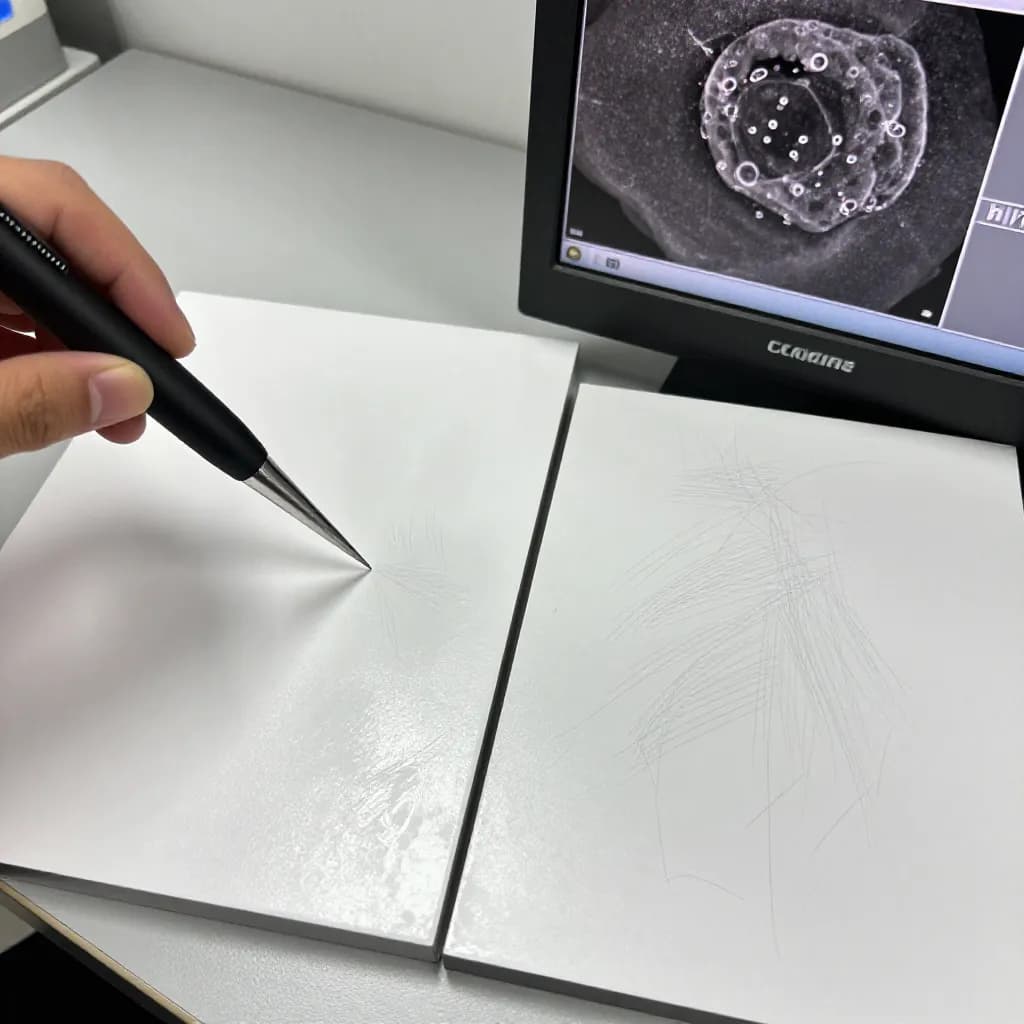
The nano-scale dimension of the ceramic particles is critical to the hybrid concept. At the nanometer scale, ceramic particles are small enough to be incorporated into the powder coating matrix without creating visible surface defects, scattering light, or significantly increasing film roughness. They can be dispersed uniformly throughout the coating film, creating a homogeneous composite rather than a filled system with discrete particle-matrix interfaces. The high surface area of nano-particles also enables strong interfacial bonding with the polymer matrix, transferring the ceramic's mechanical properties to the coating more effectively than larger particles.
Ready to Start Your Project?
From one-off customs to 15,000-part production runs — get precise pricing in 24 hours.
On This Page
The Promise of Nano-Ceramic Hybrid Coatings
The commercial interest in nano-ceramic hybrid powder coatings is driven by applications where conventional powder coatings fall short in surface hardness and scratch resistance. Automotive clear coats, consumer electronics housings, architectural hardware, and premium appliance finishes all demand surfaces that resist scratching from everyday contact while maintaining optical clarity and gloss. Nano-ceramic technology offers a pathway to meeting these demands within the powder coating platform.
Nano-Particle Types and Their Properties
Several types of ceramic nano-particles are used in hybrid powder coating formulations, each contributing specific property enhancements. Nano-silica — silicon dioxide particles in the 10-50 nanometer range — is the most widely used ceramic additive due to its availability, cost-effectiveness, and versatility. Nano-silica increases surface hardness, improves scratch resistance, enhances chemical resistance, and can modify surface energy to create hydrophobic or hydrophilic surfaces depending on the surface treatment of the particles.
Nano-alumina — aluminum oxide particles — provides exceptional hardness, with bulk alumina having a Mohs hardness of 9, second only to diamond. Nano-alumina additions to powder coatings significantly increase pencil hardness, mar resistance, and abrasion resistance. The particles also improve thermal stability and can enhance the coating's resistance to UV degradation by absorbing ultraviolet radiation.
Nano-titania — titanium dioxide particles below 100 nanometers — contributes photocatalytic self-cleaning properties in addition to hardness enhancement. Under UV illumination, nano-titania generates reactive oxygen species that decompose organic contaminants on the coating surface, providing a self-cleaning function. Nano-zirconia, nano-ceria, and nano-zinc oxide are additional ceramic additives used for specific property enhancements including UV absorption, antioxidant activity, and antimicrobial function. The selection of nano-particle type, size, surface treatment, and loading level is tailored to the target property profile of the hybrid coating.
Dispersion and Surface Modification Challenges
The primary technical challenge in formulating nano-ceramic hybrid powder coatings is achieving uniform dispersion of nano-particles throughout the polymer matrix. Nano-particles have an inherent tendency to agglomerate — clustering together into larger aggregates driven by van der Waals forces and high surface energy. Agglomerated nano-particles do not provide the property enhancements of individually dispersed particles and can create visible defects, surface roughness, and weak points in the coating film.
Surface modification of nano-particles is the primary strategy for preventing agglomeration and promoting dispersion. Silane coupling agents — organosilicon compounds that bond to the nano-particle surface and present organic functional groups to the polymer matrix — are widely used to compatibilize ceramic nano-particles with organic resin systems. The silane treatment reduces the surface energy of the nano-particles, preventing agglomeration, and creates chemical bonds between the ceramic surface and the polymer matrix, improving interfacial adhesion and mechanical property transfer.
The dispersion process during powder manufacturing must be carefully optimized. High-shear mixing during the extrusion step can break up agglomerates and distribute nano-particles throughout the resin, but excessive shear can also damage the nano-particles or degrade the polymer. Pre-dispersion of nano-particles in a liquid carrier followed by incorporation into the powder formulation is an alternative approach that can achieve better dispersion quality. Sol-gel processing — where ceramic nano-particles are generated in situ within the resin through hydrolysis and condensation of metal alkoxide precursors — represents the most advanced dispersion approach, producing nano-particles that are inherently well-dispersed because they are formed within the polymer matrix rather than added as pre-formed particles.
Enhanced Hardness and Scratch Resistance
The most commercially significant property enhancement from nano-ceramic additives is increased surface hardness and scratch resistance. Standard polyester and polyurethane powder coatings achieve pencil hardness values of H to 2H and can be scratched by fingernails, keys, and other common objects. Nano-ceramic hybrid formulations can achieve pencil hardness values of 3H to 6H or higher, providing significantly improved resistance to scratching and marring.
The scratch resistance mechanism involves both the intrinsic hardness of the ceramic nano-particles and the reinforcement of the polymer matrix surrounding them. When a scratch-inducing object contacts the coating surface, the nano-particles resist indentation and deflect the scratching force, while the reinforced polymer matrix resists the plastic deformation that would otherwise create a visible scratch. The effectiveness of this mechanism depends on the nano-particle loading level, dispersion quality, and the strength of the particle-matrix interface.
Optimal nano-particle loading levels for scratch resistance enhancement are typically 1-5% by weight. Below 1%, the particle concentration is insufficient to create a continuous reinforcement network. Above 5-10%, the high filler content can compromise the coating's flexibility, impact resistance, and optical clarity. Within the optimal range, scratch resistance improvements of 50-200% compared to unfilled coatings are achievable, as measured by nano-indentation, micro-scratch testing, or standardized car wash simulation tests. For automotive clear coat applications, where car wash scratch resistance is a critical consumer satisfaction metric, nano-ceramic hybrid powder coatings offer a compelling performance advantage.
Hydrophobic and Self-Cleaning Surface Properties
Nano-ceramic additives can be engineered to create hydrophobic powder coating surfaces that repel water, resist soiling, and exhibit self-cleaning behavior. The hydrophobic effect is achieved through a combination of nano-scale surface roughness — created by nano-particles protruding slightly from the coating surface — and low-surface-energy surface chemistry provided by fluorinated or alkyl silane treatments on the nano-particles.
Water contact angles on nano-ceramic hydrophobic powder coatings typically range from 100 to 140 degrees, compared to 70-90 degrees for standard powder coatings. At contact angles above 150 degrees — the superhydrophobic regime — water droplets roll freely across the surface, carrying dirt and contaminants with them in a self-cleaning action analogous to the lotus effect observed in nature. While achieving stable superhydrophobicity in a durable powder coating remains challenging, contact angles of 120-140 degrees provide significant practical benefits in water repellency and soil resistance.
The hydrophobic surface properties translate into tangible performance advantages for coated products. Architectural facades and cladding with hydrophobic powder coatings resist rain streaking, atmospheric soiling, and biological growth, maintaining their appearance with less frequent cleaning. Automotive surfaces shed water more effectively, improving visibility and reducing water spot formation. Industrial equipment in outdoor environments resists moisture accumulation that can promote corrosion under the coating. The combination of enhanced hardness, scratch resistance, and hydrophobic properties in a single nano-ceramic hybrid powder coating creates a surface that is simultaneously harder to damage and easier to keep clean.
Automotive Clear Coat Applications
The automotive industry is the primary target market for nano-ceramic hybrid powder coatings, where the technology addresses the persistent challenge of clear coat scratch resistance. Automotive clear coats must maintain optical clarity, high gloss, and smooth appearance while resisting the scratches and swirl marks caused by car washing, environmental debris, and everyday contact. Consumer satisfaction surveys consistently identify paint scratch resistance as a top concern, driving OEM investment in harder, more scratch-resistant clear coat technologies.
Nano-ceramic hybrid powder clear coats offer a unique combination of properties for automotive application: enhanced scratch resistance from the ceramic reinforcement, excellent optical clarity because the nano-particles are below the wavelength of visible light and do not scatter light, and the environmental advantages of powder coating including zero VOC emissions and high material utilization. The thin film capability of modern powder coating technology enables application at 35-50 microns, compatible with automotive coating stack requirements.
Field trials and accelerated testing of nano-ceramic hybrid powder clear coats have demonstrated significant improvements in car wash scratch resistance, maintaining higher gloss retention after simulated car wash cycles compared to conventional powder and liquid clear coats. The scratch recovery behavior is also enhanced in some formulations, where the polymer matrix surrounding the nano-particles exhibits improved elastic recovery that partially closes shallow scratches. The combination of scratch prevention through ceramic hardness and scratch recovery through polymer elasticity creates a dual-mechanism approach to maintaining automotive surface appearance over the vehicle's service life.
Future Developments and Commercialization Outlook
Nano-ceramic hybrid powder coating technology is transitioning from research and development to commercial production, with several major powder coating manufacturers offering nano-enhanced products for automotive, architectural, and industrial applications. The commercialization pathway involves scaling up nano-particle production and surface treatment, integrating nano-dispersion into standard powder manufacturing processes, and validating long-term performance through accelerated and real-world exposure testing.
Cost remains a consideration for broad market adoption. Nano-particles, particularly surface-modified grades optimized for powder coating, carry a premium over conventional fillers and additives. However, the loading levels required for significant property enhancement are low — typically 1-5% by weight — which limits the material cost impact on the finished powder. As nano-particle production scales up and manufacturing processes are optimized, costs are expected to decrease, making nano-ceramic hybrid coatings economically viable for a wider range of applications.
Future research directions include multi-functional nano-particles that provide simultaneous hardness, UV protection, and antimicrobial properties; responsive nano-ceramic coatings that change properties in response to environmental stimuli; and bio-inspired nano-structured surfaces that replicate the self-cleaning, anti-reflective, or adhesive properties found in nature. The integration of nano-ceramic technology with other powder coating innovations — including low-temperature cure, UV cure, and self-healing systems — will create increasingly sophisticated coating solutions that push the boundaries of what powder coatings can achieve. The nano-ceramic hybrid approach represents not just an incremental improvement in powder coating performance but a fundamental expansion of the property space accessible to powder coating technology.
Frequently Asked Questions
What are nano-ceramic powder coatings?
Nano-ceramic powder coatings are hybrid formulations that incorporate ceramic nano-particles — such as silica, alumina, or titania in the 1-100 nanometer size range — into a conventional powder coating matrix. The nano-particles enhance surface hardness, scratch resistance, and can provide hydrophobic or self-cleaning properties while maintaining the flexibility and processability of the organic polymer coating.
How much harder are nano-ceramic hybrid coatings compared to standard powder coatings?
Nano-ceramic hybrid powder coatings typically achieve pencil hardness values of 3H to 6H compared to H to 2H for standard powder coatings. Scratch resistance improvements of 50-200% are achievable at optimal nano-particle loading levels of 1-5% by weight, as measured by standardized scratch and abrasion tests.
Do nano-particles affect the appearance of powder coatings?
At the recommended loading levels of 1-5%, properly dispersed nano-particles do not significantly affect the appearance of powder coatings. Because the particles are smaller than the wavelength of visible light, they do not scatter light or reduce optical clarity. Gloss, color, and transparency are maintained, making nano-ceramic technology suitable for clear coat and high-gloss applications.
Are nano-ceramic powder coatings safe to manufacture and use?
Nano-ceramic powder coatings use nano-particles that are bound within the polymer matrix, minimizing free nano-particle exposure during application and use. During manufacturing, standard industrial hygiene practices for handling fine powders apply. Regulatory frameworks for nano-materials are evolving, and manufacturers should follow current guidance from REACH, TSCA, and occupational health authorities regarding nano-particle handling and exposure limits.
Can nano-ceramic technology be applied to existing powder coating formulations?
In principle, nano-ceramic additives can be incorporated into most powder coating resin systems including polyester, polyurethane, epoxy, and hybrid chemistries. However, the dispersion process, surface treatment compatibility, and property optimization must be tailored to each specific resin system. Simply adding nano-particles to an existing formulation without optimization is unlikely to achieve the desired property enhancements.
Ready to Start Your Project?
From one-off customs to 15,000-part production runs — get precise pricing in 24 hours.