Modern product design and architecture increasingly call for parts and assemblies that feature more than one color or finish on a single component. A window frame with a dark exterior face and a light interior face. An appliance panel with a matte body and gloss accent trim. An automotive wheel with a machined face and a painted barrel in contrasting colors. These multi-color and multi-finish designs create visual interest, functional differentiation, and brand identity that single-color coatings cannot achieve.
Technical
Multi-Color Powder Coating Techniques: Masking, Dual-Finish Profiles, and Powder-on-Powder Methods
Sundial Powder Coating·April 22, 2026·13 min
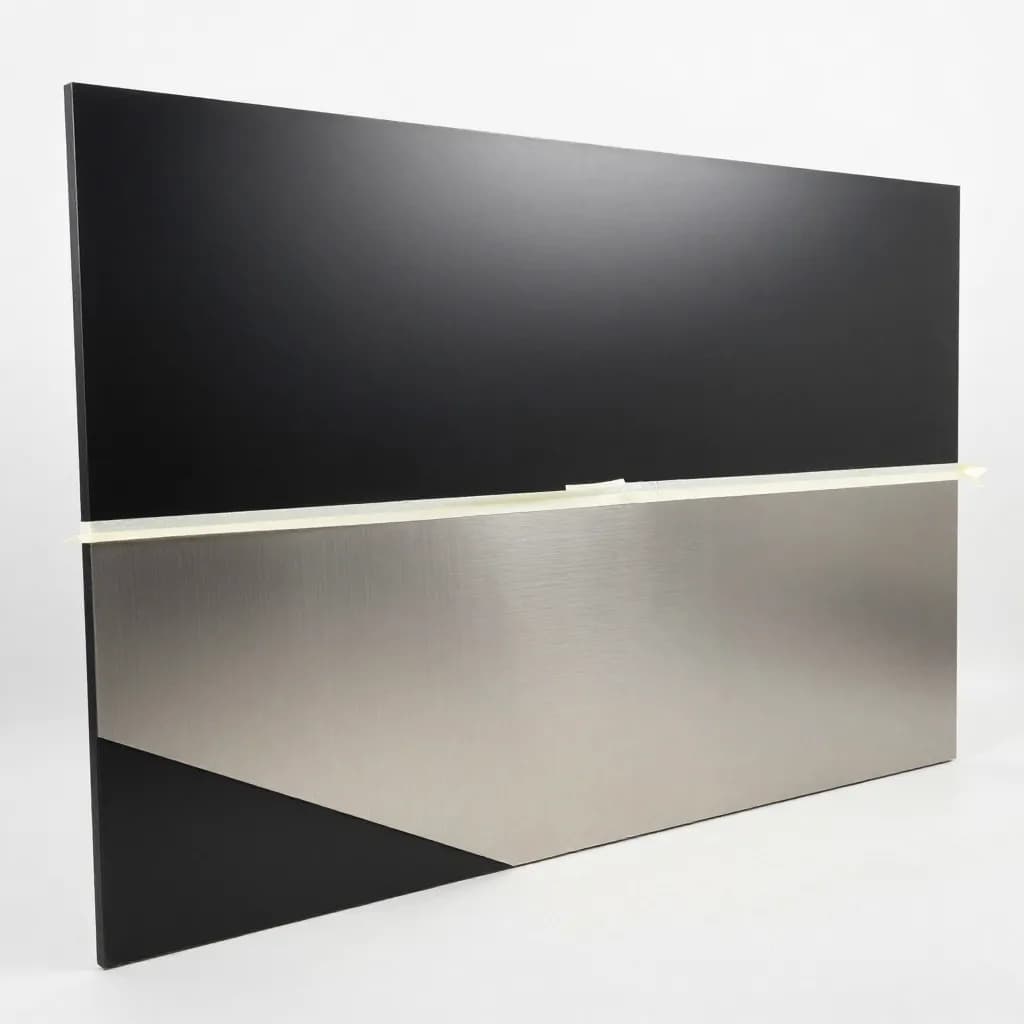
Powder coating can deliver multi-color results, but the process is inherently more complex than single-color application. Unlike liquid paint, which can be masked and sprayed in multiple passes at room temperature, powder coating requires oven curing after each color application. This means that multi-color powder coating involves multiple application and cure cycles, with masking operations between them to protect previously coated areas. Each additional color adds process steps, handling, and cost.
Ready to Start Your Project?
From one-off customs to 15,000-part production runs — get precise pricing in 24 hours.
On This Page
The Demand for Multi-Color and Multi-Finish Parts
Despite the added complexity, multi-color powder coating is widely practiced and well-established. Architectural window and door manufacturers routinely produce dual-color profiles. Custom automotive and motorcycle shops create elaborate multi-color designs. Industrial equipment manufacturers use color coding to differentiate functional zones on complex assemblies. Understanding the available techniques — and their practical limitations — helps designers specify achievable multi-color designs and helps coaters deliver them efficiently.
Masking for Two-Tone and Multi-Color Finishes
Masking is the most common method for achieving multi-color powder coating. The process involves applying the first color to the entire part (or to the areas designated for that color), curing it, masking the cured first-color areas, applying the second color to the exposed areas, and curing again. For three or more colors, the process is repeated with additional masking and cure cycles.
Masking materials must withstand the cure oven temperature — typically 180 to 200°C — without degrading, melting, or leaving adhesive residue on the cured coating. High-temperature masking tapes, typically polyester or polyimide film with silicone adhesive, are the standard choice for straight-line masking. These tapes maintain adhesion during the cure cycle and peel cleanly afterward without damaging the underlying coating. For curved or irregular masking lines, flexible high-temperature tapes or die-cut masking shapes are used.
Liquid masking compounds — peelable coatings applied by brush, spray, or dip — are useful for masking large areas or complex shapes that would be difficult to cover with tape. These compounds cure to a rubbery film that peels off after the second color is cured. Silicone plugs and caps mask holes, threads, and cylindrical features.
The quality of the color transition line depends on the precision of the masking. A well-applied tape produces a sharp, clean boundary between colors. A poorly applied tape — with wrinkles, gaps, or lifting edges — produces a ragged, uneven transition that looks unprofessional. For critical applications, the masking line should follow a natural feature of the part geometry — an edge, a groove, a step — where a slight imperfection in the transition will be less visible than on a flat, featureless surface.
Dual-Finish Architectural Profiles
One of the most commercially significant multi-color powder coating applications is the dual-finish architectural profile — a window or door frame with different colors on its exterior and interior faces. This allows architects to coordinate the exterior facade color with the building's design language while giving interior designers the freedom to choose a complementary interior color. A building might have dark anthracite grey frames on the exterior and warm white frames on the interior, for example.
Dual-finish profiles are produced using specialized application equipment designed for this specific task. The most common approach uses a two-booth system where the profile passes through the first booth for exterior-face coating, is partially cured or held electrostatically, then passes through the second booth for interior-face coating, and finally enters the cure oven for full cure of both colors simultaneously. The key challenge is preventing overspray from the second color from contaminating the first color on the opposite face.
Advanced dual-finish systems use precise gun positioning, air curtains, and electrostatic control to confine each color to its designated face. The profile geometry helps — the web (the section between exterior and interior faces) acts as a natural barrier that limits overspray migration. Some systems apply a narrow strip of the exterior color around the profile edges to ensure complete coverage at the transition zone, accepting a small overlap rather than risking a bare line.
Dual-finish capability is a significant competitive advantage for architectural coating operations. It allows them to serve the growing market demand for color-differentiated profiles without the cost and complexity of separate coating runs for each face. The technology has matured to the point where dual-finish profiles are a standard offering from major architectural aluminum system companies, with color combinations available from stock or on short lead times.
Powder-on-Powder Application
Powder-on-powder (PoP) application is a technique where a second powder coating is applied over an uncured or partially cured first coat, and both layers are cured together in a single oven pass. This approach eliminates the need for a separate cure cycle between colors, reducing energy consumption, processing time, and handling. It is used for both multi-color work and for functional multi-layer systems such as primer-plus-topcoat applications.
The technical challenge of powder-on-powder is achieving adequate adhesion between the two layers and preventing the second layer from disturbing the first during application. When the first layer is uncured powder held only by electrostatic charge, applying the second layer with a standard corona gun can blow the first layer off the part or create mixing and contamination at the boundary. Several approaches address this challenge.
The most common approach is to partially gel the first layer — heating it just enough to melt and tack the powder without fully crosslinking it — before applying the second layer. The gelled first layer is sticky enough to hold the second layer's powder and resistant enough to avoid being disturbed by the spray air. After the second layer is applied, both layers are fully cured together. This requires precise temperature control during the gel step — too little heat and the first layer is still loose; too much and it begins to crosslink, potentially causing inter-coat adhesion problems.
Tribo-charging guns are sometimes preferred for the second-layer application in powder-on-powder systems because they use friction rather than high-voltage corona discharge to charge the powder. The absence of the strong electric field associated with corona guns reduces the tendency to disturb the first layer and minimizes back-ionization effects that can cause defects in multi-layer electrostatic application.
Selective Application Methods
Selective application methods apply powder to specific areas of a part without masking, using controlled spray patterns, electrostatic shielding, or physical barriers to confine the powder to the desired zones. These methods are faster than masking-based approaches for certain part geometries and production volumes.
Controlled spray pattern application uses precisely aimed spray guns with narrow fan patterns to apply powder to specific areas of a part while avoiding adjacent areas. This works best when the color zones are separated by significant distance or by physical features (edges, steps, grooves) that help contain the spray pattern. The technique requires skilled operators or precisely programmed automatic guns and is most effective for simple, repeatable color zone patterns.
Electrostatic shielding uses grounded metal shields or screens positioned between the spray gun and the areas that should not receive powder. The shield intercepts the charged powder particles before they reach the protected area. This technique is used in production environments where the same masking pattern is repeated on every part — the shields are fixed in position and do not need to be applied and removed for each part.
Stencil application uses a physical template — a metal or plastic sheet with cutouts matching the desired coating pattern — placed against the part surface. Powder is sprayed through the cutouts, coating only the exposed areas. After removing the stencil, the part is cured. Stencil application is used for applying logos, graphics, and decorative patterns in contrasting colors. The technique produces sharp-edged patterns with good repeatability and is faster than tape masking for complex shapes that would require extensive hand-taping.
Digital printing technology adapted for powder coating is an emerging selective application method. These systems use inkjet-like printheads to deposit powder in precise patterns, potentially enabling full-color, photographic-quality images on powder-coated surfaces. While still in development for production use, digital powder printing promises to revolutionize multi-color powder coating by eliminating masking entirely.
Design Considerations for Multi-Color Parts
Designing parts for multi-color powder coating requires understanding the practical constraints of the process and incorporating features that facilitate clean color transitions and efficient production.
Place color transition lines along natural part features — edges, grooves, steps, or changes in surface angle — rather than across flat, featureless surfaces. A transition along an edge is easier to mask precisely, and any slight imperfection in the masking line is less visible because the edge itself creates a visual break. A transition across a flat surface demands perfect masking and is unforgiving of any waviness or bleed-through.
Design adequate clearance between color zones. If two colors meet at a sharp inside corner, masking tape cannot conform perfectly to the corner, and the transition will be imprecise. A small radius, a groove, or a step at the transition provides a natural masking guide and hides minor imperfections. For profiles with dual-finish requirements, design the web section between exterior and interior faces with sufficient depth to act as a barrier against overspray migration.
Consider the cure compatibility of the colors. In powder-on-powder systems, both layers must cure at the same temperature and time. If the first color requires a different cure schedule than the second, the powder-on-powder approach may not be feasible, and separate cure cycles with masking will be necessary. Consult with the powder manufacturer to confirm that the selected color combinations are compatible for multi-layer application.
Account for the additional cost and lead time of multi-color coating. Each additional color typically adds 30 to 50 percent to the coating cost due to the extra application, masking, and cure cycles. Complex multi-color designs with tight tolerances on transition lines add further cost. Communicate the multi-color requirement to the coater early in the project to ensure they have the capability and capacity to deliver the specified result.
Quality Control for Multi-Color Finishes
Multi-color powder coating introduces quality control challenges beyond those of single-color work. In addition to the standard checks — film thickness, adhesion, gloss, and color match for each color — multi-color parts require inspection of the color transition zones and verification that masking has not caused defects.
Transition line quality is assessed visually. The line should be straight (or follow the intended curve), sharp, and free of bleed-through (second color visible under the masking edge on the first color area), bare spots (gaps in coverage at the transition), or tape marks (adhesive residue or surface disturbance from masking tape removal). Establish acceptance criteria for transition line quality — including maximum allowable waviness, bleed-through width, and bare spot size — and agree on these criteria with the coater before production.
Inter-coat adhesion between the first and second colors should be verified, particularly in powder-on-powder systems where both layers cure together. The cross-cut adhesion test should be performed across the color boundary to confirm that both layers are well-bonded to each other and to the substrate. Delamination between layers at the color boundary indicates a compatibility or process issue that must be resolved.
Film thickness in multi-color areas requires careful measurement. In zones where two colors overlap (the masking transition zone), the total film build is the sum of both layers and may exceed the maximum specified thickness. In zones where masking prevented the second color from reaching the substrate, the film thickness is only the first color layer. Ensure that both the single-layer and double-layer zones meet their respective thickness requirements.
For production runs, establish a first-article approval process that includes evaluation of all color zones, transition lines, and multi-layer areas before full production proceeds. This catches process issues early and prevents large quantities of non-conforming parts.
Frequently Asked Questions
How many colors can be applied to a single powder coated part?
There is no theoretical limit, but each additional color adds a masking and cure cycle, increasing cost and processing time. Two-color finishes are common and economical. Three colors are feasible but more expensive. Four or more colors are possible for custom work but require significant labor and process time.
What is powder-on-powder application?
Powder-on-powder is a technique where a second powder layer is applied over a partially gelled (not fully cured) first layer, and both layers are cured together in a single oven pass. This saves energy and time compared to fully curing each layer separately, but requires precise temperature control during the gel step.
How sharp can the color transition line be?
With high-quality masking tape applied along a part edge or groove, the transition line can be very sharp — comparable to automotive paint masking. On flat surfaces, slight waviness or bleed-through of 0.5-1 mm is typical. Designing the transition along natural part features improves line quality and hides minor imperfections.
Does multi-color powder coating cost more?
Yes. Each additional color typically adds 30-50% to the coating cost due to extra application, masking, and cure cycles. Complex designs with tight transition tolerances add further cost. Discuss multi-color requirements with the coater early to get accurate cost estimates and ensure feasibility.
Can different gloss levels be applied to the same part?
Yes. Multi-finish designs combining matte and gloss areas on the same part are achieved using the same masking techniques as multi-color work. The first finish is applied and cured, masked, and the second finish is applied and cured. This is common in product design where matte bodies with gloss accents create visual contrast.
Ready to Start Your Project?
From one-off customs to 15,000-part production runs — get precise pricing in 24 hours.