Restoring a military vehicle's coating is one of the most visible and rewarding aspects of any military vehicle restoration project. Whether you are restoring a World War II Jeep, a Vietnam-era M35 deuce-and-a-half, or a modern HMMWV, the coating system you choose will define the vehicle's appearance, authenticity, and long-term durability. The military vehicle collector and restoration community is passionate about accuracy, and selecting the correct paint system, color, and finish is essential for a historically authentic result.
Technical
Military Vehicle Coating and Restoration: A Practical Guide
Sundial Powder Coating·April 20, 2026·11 min
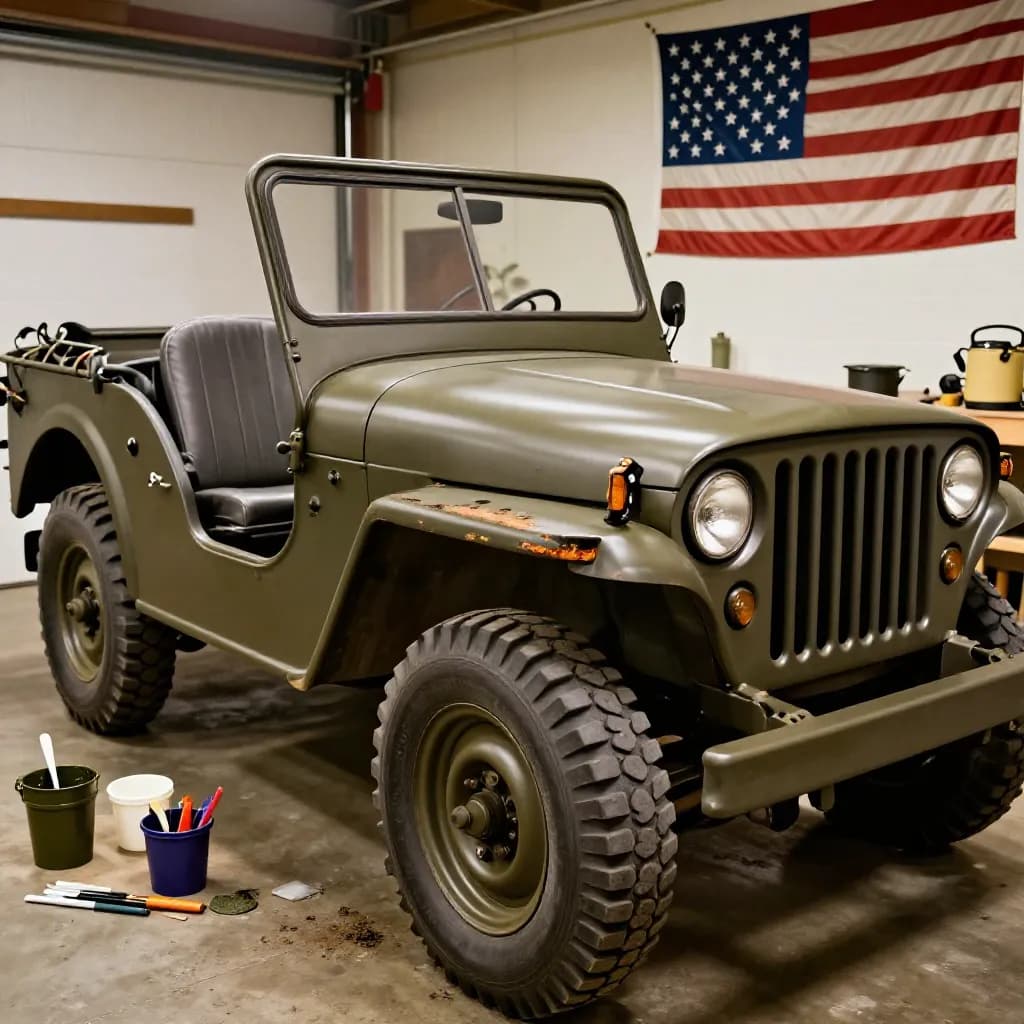
Military vehicle coatings have evolved dramatically over the decades, from the simple lacquers and enamels of World War II through the alkyd enamels of the Cold War era to the modern CARC polyurethane systems used today. Each era's coating system has distinct characteristics in terms of appearance, durability, application method, and availability. Understanding these differences is crucial for choosing the right approach for your specific restoration project — whether your goal is museum-quality historical accuracy or a durable, practical finish for a vehicle that will see regular use.
Ready to Start Your Project?
From one-off customs to 15,000-part production runs — get precise pricing in 24 hours.
On This Page
Introduction to Military Vehicle Restoration Coatings
This guide covers the major military coating systems used from World War II to the present, provides practical guidance on color matching using Federal Standard 595 references, discusses surface preparation techniques for military vehicles, and explores the role of powder coating in military vehicle restoration. The information is relevant to collectors, restorers, reenactors, and anyone working with military surplus vehicles and equipment.
Understanding Original Military Paint Systems
World War II military vehicles were painted with relatively simple coating systems by modern standards. The US Army used olive drab lacquer (shade 319 or later shade 9) as the primary vehicle color, applied over a red oxide or zinc chromate primer. These lacquer coatings dried quickly and were easy to apply in field conditions, but they offered limited durability and weather resistance. The olive drab color faded rapidly in sunlight, and the lacquer film was prone to cracking and peeling after a few years of exposure. For restorers seeking absolute authenticity for a WWII vehicle, lacquer paints are still available from specialty suppliers, though they are increasingly difficult to use due to their high VOC content and regulatory restrictions.
During the 1950s through the 1970s, the US military transitioned to alkyd enamel paint systems, which offered improved durability and weather resistance compared to lacquers. These single-component paints were applied by brush, roller, or spray and cured through solvent evaporation and oxidation. Alkyd enamels provided a reasonable balance of durability, ease of application, and field repairability. The standard olive drab color during this period was FS 24087 (semi-gloss) or FS 34087 (flat), and vehicles from the Vietnam era through the early 1980s typically wore alkyd enamel finishes.
The introduction of CARC in the mid-1980s represented a fundamental change in military coating technology. The two-component polyurethane topcoat over epoxy primer system provided dramatically improved durability, chemical resistance, and camouflage performance compared to alkyd enamels. However, CARC also introduced significant application complexity — the two-component system requires precise mixing ratios, has a limited pot life, and the isocyanate curing agent poses serious health hazards requiring supplied-air respiratory protection. For restorers, the choice between authentic CARC and simpler alternatives is one of the most important decisions in the project.
Choosing the Right Coating for Restoration
The choice of coating system for a military vehicle restoration depends on several factors: the era of the vehicle, the intended use (static display, occasional driving, or regular use), the restorer's equipment and experience, and budget. For vehicles that will be primarily static displays or used only occasionally, historical accuracy may be the priority, and period-correct coating systems can be justified despite their limitations. For vehicles that will see regular use, a more durable modern coating system may be the practical choice.
For WWII and Korean War era vehicles, many restorers use modern single-component alkyd or synthetic enamel paints in the correct olive drab shade. These paints are widely available, easy to apply with basic spray equipment, and provide a finish that closely approximates the appearance of the original coatings. Some purists insist on lacquer for WWII vehicles, but the practical difficulties and regulatory issues with lacquer make it a challenging choice. High-quality alkyd enamels in the correct Federal Standard colors offer an excellent compromise between authenticity and practicality.
For post-1985 vehicles that were originally coated with CARC, restorers face a choice between authentic two-component CARC and single-component alternatives. Genuine CARC paint is available from military coating suppliers and provides the most authentic finish, but it requires proper mixing equipment, spray equipment capable of handling the high-solids material, and most importantly, appropriate respiratory protection including a supplied-air respirator. Single-component CARC alternatives, such as those qualified under MIL-DTL-53039, offer easier application for touch-up work. Some restorers opt for high-quality commercial two-component polyurethanes in military colors as a practical alternative that provides similar durability without the full complexity of the military CARC system.
Surface Preparation for Military Vehicles
Proper surface preparation is the foundation of any successful coating application, and military vehicles present unique challenges due to their construction materials, age, and condition. Most military vehicles are constructed primarily of steel, often with significant corrosion after years of outdoor storage or use. Aluminum components are common on newer vehicles and aircraft-related equipment. The surface preparation approach must be tailored to the substrate material and the condition of the existing coating.
For steel surfaces with heavy corrosion or multiple layers of old paint, abrasive blasting is the most effective preparation method. Media blasting with aluminum oxide, garnet, or crushed glass at 40-80 psi removes rust, old paint, and mill scale to create a clean, profiled surface ready for primer. For vehicles with sound existing paint that simply needs refreshing, sanding with 180-320 grit sandpaper to create mechanical adhesion may be sufficient. Chemical paint strippers can be used for localized paint removal, but care must be taken to neutralize and remove all stripper residue before priming.
After cleaning and paint removal, steel surfaces should be primed as quickly as possible to prevent flash rusting — ideally within 4 hours of blasting in moderate humidity conditions. For CARC systems, the primer is an epoxy type per MIL-DTL-53022 or MIL-DTL-53030. For non-CARC restorations, a high-quality epoxy primer or self-etching primer provides excellent corrosion protection and adhesion. Aluminum surfaces require different preparation — they should not be aggressively blasted, and a chromate or non-chromate conversion coating (such as Alodine) should be applied before priming to ensure adhesion and corrosion protection. All surfaces must be thoroughly degreased before any coating application, as oils and greases from handling, machining, or storage will cause adhesion failure.
Color Matching Military Colors
Accurate color matching is essential for an authentic military vehicle restoration, and the Federal Standard 595 color system (now SAE AMS-STD-595) is the primary reference for US military colors. The most commonly needed colors for military vehicle restoration include FS 34087 and FS 34088 (olive drab green — the standard color for most US military equipment from the 1950s through the 1980s), FS 33446 (desert sand tan — the standard desert color from 1990 onward), FS 34094 (the green component of woodland CARC camouflage), FS 30051 (the brown component of woodland camouflage), and FS 37030 (flat black, used in camouflage patterns and for specific equipment).
Other frequently needed colors include FS 34079 (forest green, used on some equipment), FS 27038 (semi-gloss black, used for chassis and running gear components), FS 36231 (dark grey, used on some Navy and Air Force equipment), and FS 14087 (gloss olive drab, used on some WWII-era equipment where a gloss finish was specified). For WWII restorations, the original olive drab shades 319 and 9 predate the Federal Standard system, but modern FS equivalents are available — FS 33070 is often cited as a close match to the wartime olive drab.
Obtaining accurate color references can be challenging. Official Federal Standard 595 color chips are available from the Defense Logistics Agency and from commercial suppliers of government standards. Many military paint suppliers offer color cards showing their available military colors alongside the FS reference numbers. When matching colors, it is important to compare under consistent lighting conditions, as military colors — particularly olive drab and desert tan — can appear significantly different under fluorescent, incandescent, and natural lighting. For the most accurate results, use a spectrophotometer to measure the color coordinates of both the reference chip and the mixed paint.
Powder Coating for Military Vehicle Restoration
Powder coating has become an increasingly popular option for military vehicle restoration, particularly for components and subassemblies that can be removed from the vehicle and processed through a powder coating line. Wheels, rims, brackets, toolbox bodies and lids, jerry can holders, pioneer tool clamps, tow hooks, trailer hitches, frame sections, axle housings, and similar components are excellent candidates for powder coating. The superior durability, corrosion resistance, and uniform finish of powder coating make it an attractive choice for parts that will be exposed to harsh conditions.
For military vehicle restoration, powder coating offers several practical advantages. The finish is significantly more durable than single-component paints, resisting chipping, scratching, and chemical exposure far better than alkyd enamels. Powder coating provides excellent edge coverage, protecting the sharp edges and corners common on military fabrications where liquid paint tends to thin and fail first. The consistent film thickness achieved with electrostatic powder application eliminates the runs, sags, and thin spots that can occur with spray-applied liquid coatings. And for restorers who outsource their coating work, powder coating shops are widely available and typically offer competitive pricing for batch work.
The primary limitation of powder coating for military vehicle restoration is color availability. While standard military colors like olive drab and flat black are available from some powder coating suppliers, the range of military-specific colors in powder form is more limited than in liquid paint. Custom color matching is possible but may require minimum order quantities that are impractical for a single vehicle restoration. The flat or low-gloss finish typical of military coatings can also be challenging to achieve in powder — most standard powder coatings have a higher gloss level than military specifications require, though low-gloss and matte powder formulations are available from specialty suppliers. Restorers should also be aware that powder-coated components will need to be masked at mating surfaces to ensure proper assembly fit.
Frequently Asked Questions
What color is olive drab in Federal Standard 595?
The most common olive drab references are FS 34087 (flat olive drab) and FS 34088 (a slightly different shade of flat olive drab). For semi-gloss applications, FS 24087 is used. WWII-era olive drab is often matched to FS 33070. The exact shade depends on the era and branch of service — always research the specific vehicle you are restoring to determine the correct color reference.
Is CARC paint safe to apply at home?
Two-component CARC paint contains isocyanate curing agents that pose serious respiratory health hazards. Professional application requires a supplied-air respirator, full body protection, and proper ventilation. Home application without this equipment is not recommended. Single-component military paints or commercial polyurethanes are safer alternatives for home restorers, though proper respiratory protection should always be used when spraying any coating.
Can I use commercial paint instead of military paint for restoration?
Yes, many restorers use high-quality commercial paints color-matched to Federal Standard 595 references. Commercial single-component enamels and two-component polyurethanes can provide excellent results at lower cost and with easier application than genuine military coatings. The trade-off is that commercial paints will not have CARC chemical agent resistance or NIR camouflage properties, which is irrelevant for collector vehicles.
How do I find the correct paint color for my military vehicle?
Start by identifying the vehicle's era and the applicable technical manual, which will specify the required colors by Federal Standard 595 number. Military vehicle forums and marque-specific clubs are excellent resources for color information. Federal Standard 595 color chips can be purchased from the Defense Logistics Agency or commercial standards suppliers. Many military paint suppliers also offer color reference cards.
Should I powder coat my military vehicle frame?
Powder coating is an excellent choice for military vehicle frames and chassis components. It provides superior corrosion protection and durability compared to brush or spray-applied liquid paint, and the consistent coverage protects hard-to-reach areas. The frame should be fully disassembled, blasted to bare metal, and powder coated before reassembly. Use a flat or low-gloss black or olive drab powder to match the original military appearance.
Ready to Start Your Project?
From one-off customs to 15,000-part production runs — get precise pricing in 24 hours.