Gloss is one of the most fundamental properties specified for any powder coating, yet it is frequently misunderstood. In technical terms, gloss is a measure of how much light a surface reflects at a specific angle relative to a perfect mirror. A perfectly smooth, highly reflective surface would score 100 gloss units (GU) on a standard gloss meter, while a perfectly matte, light-scattering surface would approach 0 GU. Real-world powder coatings fall somewhere along this spectrum, and the gloss level profoundly affects the visual character, perceived quality, and practical performance of the finished surface.
Guides
Matte vs Gloss Powder Coating: Gloss Units, Formulation, Durability, and When to Specify Each
Sundial Powder Coating·April 22, 2026·13 min
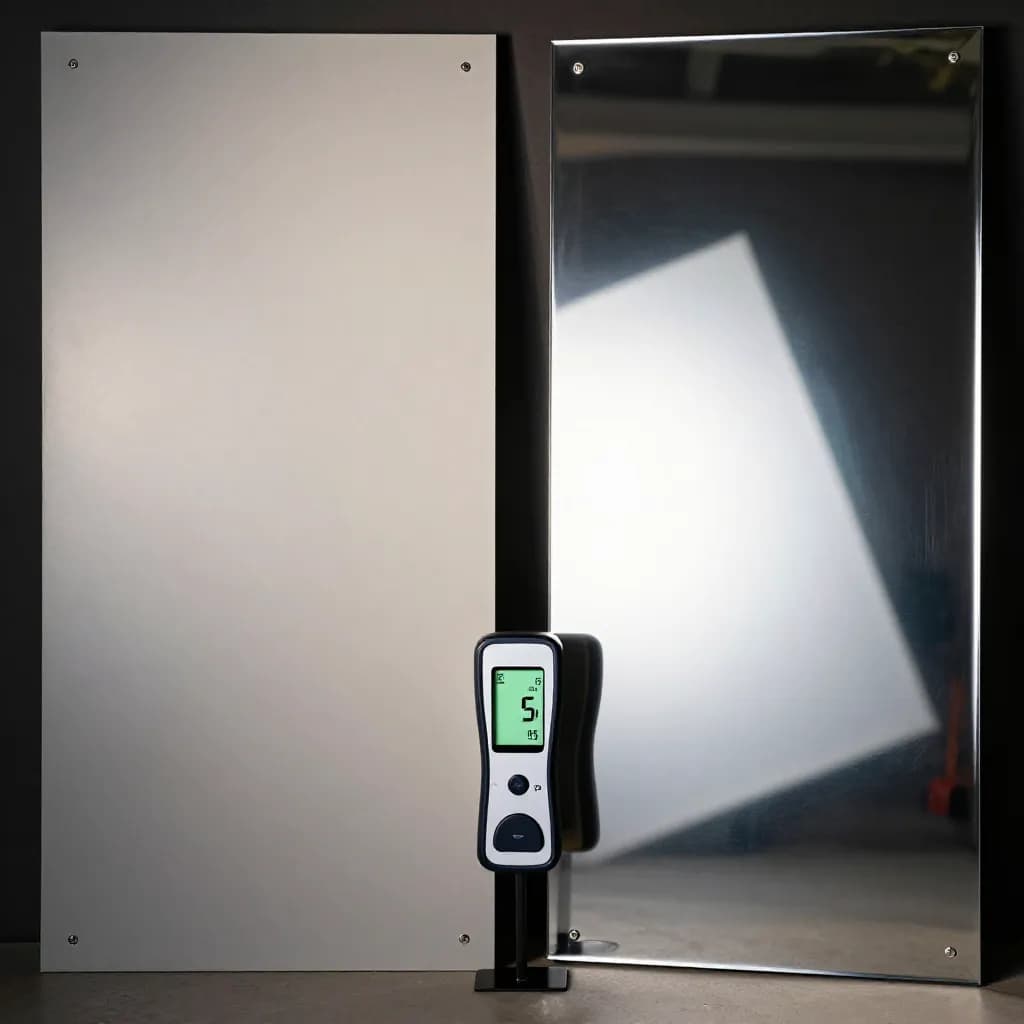
Gloss is measured using a gloss meter — a device that projects a beam of light onto the surface at a defined angle and measures the intensity of the reflected beam at the corresponding opposite angle. The standard measurement angle for powder coatings is 60 degrees, which provides good discrimination across the full gloss range. For very high-gloss surfaces (above 70 GU at 60°), a 20-degree measurement provides better differentiation. For very low-gloss surfaces (below 10 GU at 60°), an 85-degree measurement is more sensitive.
Ready to Start Your Project?
From one-off customs to 15,000-part production runs — get precise pricing in 24 hours.
On This Page
Understanding Gloss in Powder Coatings
The powder coating industry generally categorizes gloss levels as follows: high gloss is above 80 GU, gloss is 60 to 80 GU, semi-gloss is 30 to 60 GU, satin is 15 to 30 GU, matte is 5 to 15 GU, and dead matte or ultra-matte is below 5 GU. These ranges are approximate and can vary between manufacturers and standards bodies, so specifying a target gloss value with an acceptable tolerance range — for example, 30 ± 5 GU at 60° — is always more precise than using descriptive terms alone.
How Gloss Is Controlled in Powder Formulation
The gloss level of a powder coating is determined primarily by its formulation, not by the application technique. High-gloss finishes are achieved by using resin systems that flow smoothly during the melt phase and cure to form a flat, uniform surface that reflects light specularly. The resin, hardener, and flow additive package are optimized to promote maximum leveling before the crosslinking reaction locks the surface in place.
Reducing gloss requires disrupting this smooth surface at a microscopic level. There are several formulation strategies for achieving this. The most common approach uses matting agents — typically fine silica particles, wax-modified additives, or incompatible resin blends — that create controlled micro-roughness on the cured film surface. These micro-irregularities scatter incident light in multiple directions rather than reflecting it specularly, reducing the measured gloss value.
Another approach to gloss reduction is the dry-blend method, where a high-gloss powder and a matte powder of the same color are blended together in specific ratios. During cure, the two components flow and crosslink at different rates, creating a surface with alternating smooth and rough micro-domains that produce an intermediate gloss level. This method offers flexibility — the same base powders can be blended in different ratios to hit various gloss targets — but it requires careful blending control and can produce less consistent results than single-component matte formulations. A third method uses specific cure chemistry where the crosslinking reaction itself creates surface texture, typically through controlled incompatibility between resin and hardener systems.
Visual and Aesthetic Differences
The choice between matte and gloss finishes has a profound impact on the visual character of a coated product. High-gloss finishes create a mirror-like surface that reflects the surrounding environment, producing a sense of depth, richness, and luxury. Gloss finishes make colors appear more saturated and vibrant because the specular reflection adds brightness to the perceived color. A high-gloss black, for example, appears deeper and more intense than the same black pigment in a matte formulation.
Matte finishes, by contrast, create a soft, diffuse appearance that absorbs light rather than reflecting it. Colors in matte finishes appear more muted and understated, with a chalky or velvety quality that many designers find sophisticated and contemporary. Matte finishes reduce visual noise — they do not reflect surrounding objects or light sources, creating a calm, uniform appearance that lets the form and geometry of the object speak for itself. This is why matte finishes have become increasingly popular in modern architecture, premium consumer electronics, and minimalist product design.
Satin and semi-gloss finishes occupy the middle ground, offering a gentle sheen that provides some depth and color richness without the full reflectivity of a high-gloss surface. Satin finishes are often described as having a "soft glow" that is neither flat nor shiny. They are versatile choices that work well in both residential and commercial settings, and they tend to be more forgiving of surface imperfections than either extreme — high gloss reveals every flaw, while very low matte can show handling marks and uneven texture more readily than a moderate sheen.
Durability and Performance Differences
A common question is whether matte and gloss powder coatings differ in durability. The answer is nuanced. The base resin chemistry — polyester, super-durable polyester, epoxy, or hybrid — determines the fundamental durability characteristics such as UV resistance, corrosion protection, and chemical resistance. A matte polyester and a gloss polyester using the same resin system will have very similar underlying performance because the protective properties come from the resin matrix, not the surface texture.
However, there are practical differences in how matte and gloss finishes age and show wear. High-gloss surfaces are more susceptible to visible scratching because any disruption to the smooth, reflective surface creates a contrasting matte mark that catches the eye. Matte surfaces, with their already-diffuse light scattering, tend to hide minor scratches and abrasion marks more effectively. This makes matte finishes a practical choice for high-traffic applications, frequently handled products, and surfaces exposed to mechanical contact.
On the other hand, matte finishes can be more challenging to clean than gloss finishes. The micro-rough surface that creates the matte appearance can trap dirt, oils, and fingerprints more readily than a smooth gloss surface. Fingerprints are particularly visible on dark matte finishes because the oils from skin temporarily change the surface reflectivity, creating shiny marks on the matte background. Some matte powder formulations include anti-fingerprint additives to mitigate this issue, but it remains a consideration for consumer-facing products. Gloss finishes, with their smooth surfaces, are generally easier to wipe clean and resist staining more effectively.
When to Specify Gloss Finishes
High-gloss powder coatings are the right choice when visual impact, color vibrancy, and a premium appearance are priorities. Automotive applications — wheels, trim, and custom parts — frequently use high-gloss finishes because the reflective surface enhances the perception of quality and craftsmanship. Consumer appliances, retail fixtures, and point-of-sale displays benefit from gloss finishes that catch the eye and make colors pop under showroom lighting.
Gloss finishes are also preferred when cleanability is important. In food service equipment, medical devices, laboratory furniture, and cleanroom environments, the smooth surface of a high-gloss coating is easier to sanitize and less likely to harbor contaminants than a textured or matte surface. The ability to wipe a gloss surface clean with a damp cloth, without dirt lodging in surface micro-texture, is a genuine functional advantage in hygiene-sensitive applications.
Architecturally, gloss finishes are used selectively — on accent elements, entrance features, and signage where a reflective surface creates visual emphasis against a backdrop of matte or satin building elements. Full-facade high-gloss finishes are less common because they can create glare issues, show dirt and weathering marks more readily, and amplify any surface imperfections in the substrate. When specifying gloss for architectural applications, consider the orientation of the surface relative to sunlight and the potential for reflected glare to affect neighboring buildings or pedestrians.
When to Specify Matte Finishes
Matte powder coatings excel in applications where a sophisticated, contemporary aesthetic is desired and where the surface will be subject to handling or mechanical contact. The current design trend across architecture, furniture, consumer electronics, and automotive interiors strongly favors matte and satin finishes, driven by a broader cultural shift toward understated, tactile design that prioritizes material quality over surface flash.
In architectural applications, matte finishes are the dominant choice for facade panels, window frames, and cladding systems. Matte surfaces reduce glare, minimize the visibility of surface contamination between cleaning cycles, and create a uniform appearance across large surface areas where gloss variation between panels would be distracting. The major architectural quality standards — Qualicoat, GSB, and AAMA — all accommodate matte finishes, and many of the most specified architectural colors are available only in matte or satin sheens.
Matte finishes are also the practical choice for industrial equipment, machinery housings, and technical products where glare reduction improves usability. Instrument panels, control enclosures, and display housings benefit from matte surfaces that do not reflect overhead lighting into operators' eyes. Military and defense applications almost universally specify matte finishes — typically in the 0 to 5 GU range — for tactical equipment, vehicle components, and weapon systems where light reflection could compromise concealment. When specifying matte finishes, always define the acceptable gloss range numerically rather than relying on the word "matte" alone, as interpretations vary widely.
Measuring and Specifying Gloss Correctly
Accurate gloss specification and measurement are essential for avoiding disputes between specifiers, coaters, and end users. The most common source of confusion is the use of vague descriptive terms — "matte," "satin," "semi-gloss" — without numerical gloss values. These terms mean different things to different people and different industries. A finish that an automotive customer considers "matte" might be what an architectural specifier calls "satin." Always specify gloss as a numerical target with a tolerance band, measured at a defined angle.
The standard specification format is: target GU ± tolerance at measurement angle. For example, "30 ± 5 GU at 60°" defines a satin finish with a clear acceptance window. For very low-gloss finishes below 10 GU at 60°, add an 85-degree measurement to improve discrimination — for example, "5 ± 2 GU at 60°, 15 ± 5 GU at 85°." For high-gloss finishes above 80 GU at 60°, add a 20-degree measurement for better differentiation at the top of the scale.
Gloss measurement should be performed on flat, representative areas of the coated part, avoiding edges, corners, and areas near hanging points where film thickness variation can affect gloss readings. The gloss meter should be calibrated against certified reference tiles before each measurement session. Temperature can affect gloss readings — freshly cured parts that are still warm may read differently than parts at room temperature — so allow parts to cool to ambient temperature before measuring. Document the measurement instrument model, calibration date, measurement angle, and number of readings averaged to ensure reproducibility.
Combining Gloss Levels in Multi-Finish Designs
Modern product and architectural design increasingly combines different gloss levels on a single product or building element to create visual contrast and hierarchy. A common approach is to use a matte finish as the primary surface treatment with gloss accents on logos, trim elements, or feature lines. This contrast draws the eye to specific design elements and creates a sense of depth and layering that a single gloss level cannot achieve.
Achieving multi-gloss designs in powder coating requires either masking techniques or separate coating operations. The most straightforward method is to coat the entire part in one gloss level, mask the areas that should remain at that level, and then apply the second gloss level to the exposed areas. This requires careful masking to achieve clean transition lines and adds a second cure cycle, which must be compatible with the first coat — the first coat must withstand the second cure without degradation, discoloration, or gloss change.
An alternative approach for extruded profiles — common in architectural window and door systems — is to apply different finishes to different faces of the profile in a single pass using selective application techniques. The exterior face might receive a matte finish for weather resistance and glare reduction, while the interior face receives a satin or semi-gloss finish for easier cleaning and a warmer appearance. This dual-finish capability is a significant advantage of powder coating over anodizing, which produces a uniform finish across all surfaces. When specifying multi-gloss designs, ensure that the transition between gloss levels is clearly defined on drawings and that acceptable tolerance for the transition line position and sharpness is agreed upon with the coating applicator.
Frequently Asked Questions
How is gloss measured on powder coatings?
Gloss is measured using a gloss meter that projects light at a specific angle (typically 60°) and measures the intensity of the reflected beam. The result is expressed in gloss units (GU). For very high-gloss surfaces, a 20° angle provides better differentiation; for very low-gloss surfaces, an 85° angle is more sensitive.
Is matte powder coating less durable than gloss?
No. Matte and gloss powder coatings using the same base resin chemistry offer equivalent corrosion protection, UV resistance, and chemical resistance. The practical difference is that gloss finishes show scratches more visibly, while matte finishes can show fingerprints and be slightly harder to clean.
What gloss level should I specify for outdoor architectural use?
Most architectural applications use matte (5-15 GU) or satin (15-30 GU) finishes because they reduce glare, hide surface contamination between cleaning cycles, and create uniform appearance across large panel areas. Always specify the target gloss numerically with a tolerance range rather than using descriptive terms alone.
Why do matte finishes show fingerprints?
The micro-rough surface texture that creates the matte appearance can be temporarily altered by skin oils, creating shiny marks that contrast with the surrounding matte surface. This is most visible on dark colors. Some matte powder formulations include anti-fingerprint additives to reduce this effect.
Can I get the same color in both matte and gloss?
Yes, most powder coating colors are available across the full gloss range. However, the same pigment formulation will appear slightly different at different gloss levels — colors look more saturated and vibrant in gloss finishes and more muted in matte finishes. Always evaluate color samples at the specified gloss level.
What is the difference between satin and semi-gloss?
Satin finishes typically fall in the 15-30 GU range at 60°, producing a soft, low sheen. Semi-gloss finishes are in the 30-60 GU range, with a more noticeable reflective quality. Satin is closer to matte with a gentle glow, while semi-gloss is closer to full gloss with moderate reflectivity.
Ready to Start Your Project?
From one-off customs to 15,000-part production runs — get precise pricing in 24 hours.