Conventional powder coatings require curing temperatures of 160-200°C for 10-20 minutes to achieve full crosslinking and film property development. This thermal requirement has historically limited powder coating to metal substrates that can withstand these temperatures without deformation, degradation, or dimensional change. Heat-sensitive materials — including medium-density fiberboard, engineered wood products, thermoplastics, composites, and pre-assembled components containing temperature-sensitive elements — have been largely excluded from the benefits of powder coating technology.
Innovation
Low-Temperature Cure Powder Coatings: Expanding Substrates and Saving Energy
Sundial Powder Coating·April 22, 2026·11 min
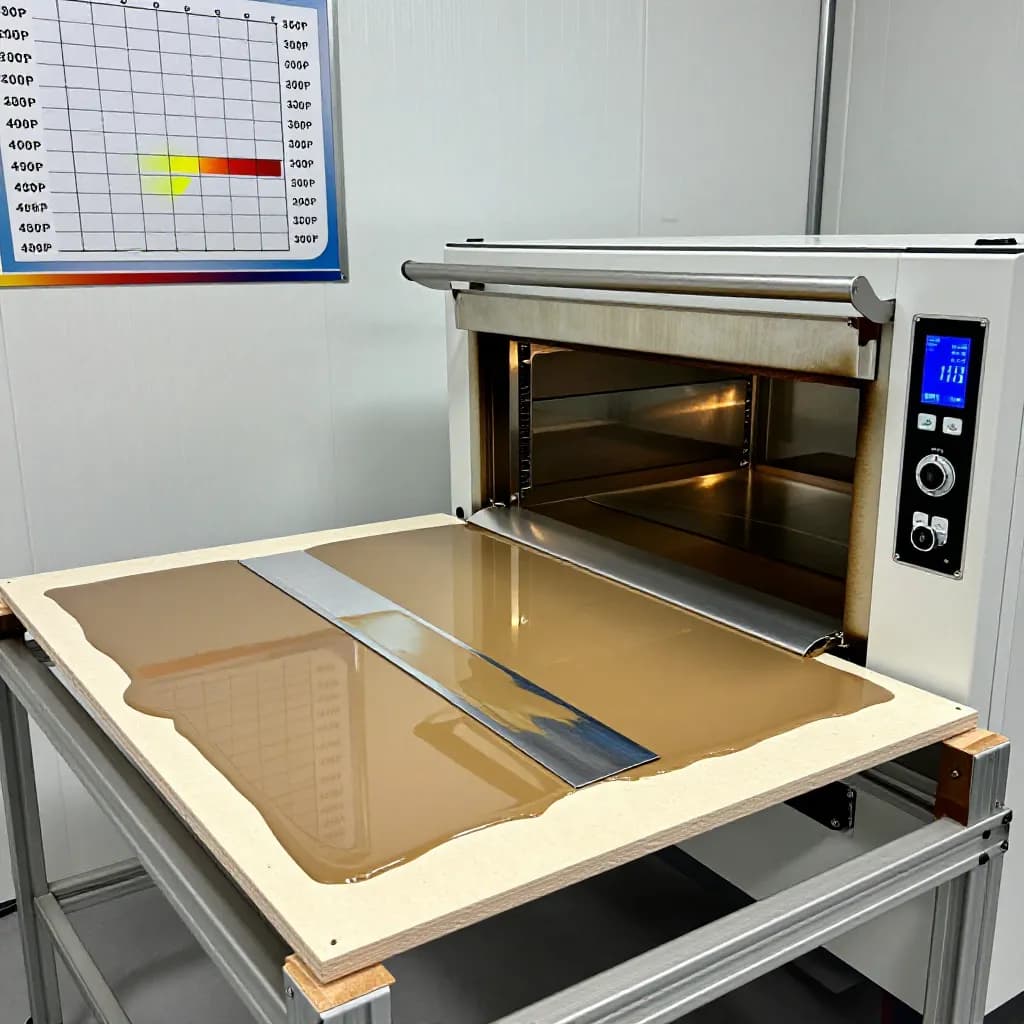
Low-temperature cure powder coatings are changing this equation. Through advances in resin chemistry, crosslinker design, and catalysis, formulators have developed powder coating systems that achieve full cure at temperatures as low as 120-140°C, with some experimental systems targeting sub-100°C cure. These reduced curing temperatures open powder coating to a vast range of substrates and applications that were previously the exclusive domain of liquid paints, UV-cure coatings, or laminate films.
Ready to Start Your Project?
From one-off customs to 15,000-part production runs — get precise pricing in 24 hours.
On This Page
Breaking the Temperature Barrier in Powder Coating
The implications extend beyond substrate compatibility. Lower curing temperatures translate directly into reduced energy consumption per coated part, shorter oven residence times enabling higher throughput, and reduced thermal stress on substrates and fixturing. For manufacturers already coating metal substrates, switching to low-temperature cure formulations can deliver significant energy cost savings and carbon footprint reductions without compromising coating performance.
Resin Chemistry for Low-Temperature Crosslinking
Achieving full crosslinking at reduced temperatures requires fundamental changes to the resin and crosslinker chemistry that drives the curing reaction. Standard polyester-TGIC and polyester-HAA systems rely on condensation or addition reactions that proceed at commercially useful rates only above 160°C. Low-temperature cure systems employ alternative chemistries with lower activation energies, faster reaction kinetics, or catalytic acceleration to achieve equivalent crosslink density at 120-140°C.
One approach uses highly reactive carboxyl-functional polyester resins paired with beta-hydroxyalkylamide crosslinkers that have been modified for enhanced reactivity at lower temperatures. By increasing the functionality of both the resin and crosslinker — more reactive groups per molecule — the system achieves the target crosslink density with less thermal energy input. The trade-off is reduced storage stability, as the increased reactivity that enables low-temperature cure also makes the powder more susceptible to premature reaction during storage, particularly in warm climates.
Epoxy-based low-temperature cure systems offer another pathway, using latent catalysts that become active at specific temperatures to initiate rapid homopolymerization or co-reaction with amine or phenolic crosslinkers. These catalytic systems can achieve sharp cure onset — transitioning from stable powder to fully cured film within a narrow temperature window — which is advantageous for process control. Hybrid epoxy-polyester systems with optimized catalyst packages represent a practical compromise, offering low-temperature cure capability with acceptable storage stability and a balance of interior and exterior durability depending on the epoxy-to-polyester ratio.
Coating MDF and Engineered Wood Products
Medium-density fiberboard is one of the most commercially significant substrates for low-temperature cure powder coatings. MDF is widely used in furniture, kitchen cabinetry, retail fixtures, and interior architectural elements, and it has traditionally been finished with liquid paints or laminate films. Powder coating MDF offers advantages in finish quality, durability, environmental performance, and production efficiency — but only if the curing temperature can be kept below the threshold that causes substrate damage.
MDF begins to degrade at temperatures above approximately 160°C, with moisture release causing blistering and delamination of the coating film. Even at lower temperatures, the moisture content of MDF must be carefully managed to prevent outgassing during cure. Pre-conditioning MDF panels to a moisture content of 4-6% before coating, combined with infrared pre-heating to drive surface moisture out before powder application, are standard practices in MDF powder coating operations.
Low-temperature cure powder coatings designed specifically for MDF typically cure at 125-140°C for 8-15 minutes, well within the substrate's thermal tolerance. These formulations must achieve adequate flow and leveling at the reduced cure temperature to produce the smooth, high-quality finish expected in furniture and cabinetry applications. The electrostatic application of powder to non-conductive MDF requires either conductive primers, moisture conditioning to increase surface conductivity, or corona charging techniques optimized for low-conductivity substrates. Despite these process adaptations, powder-coated MDF delivers a superior finish compared to most liquid paint systems — thicker, more uniform, more durable, and with zero VOC emissions.
Powder Coating Plastics and Composites
Thermoplastic and thermoset composite substrates represent a growing opportunity for low-temperature cure powder coatings. Engineering plastics such as polyamide, polycarbonate, ABS, and glass-fiber reinforced composites are increasingly used in automotive, electronics, and consumer product applications where powder coating could provide superior finish quality and environmental performance compared to liquid painting — if the thermal constraints can be managed.
The heat deflection temperature of the substrate sets the upper limit for curing temperature. Polycarbonate deflects at approximately 130-140°C, ABS at 90-110°C, and polyamide 6 at 60-80°C under load. Low-temperature cure powder coatings must achieve full property development below these thresholds, which is achievable for polycarbonate and some ABS grades with current 120-140°C cure technology, but remains challenging for lower-temperature plastics without UV-cure or dual-cure approaches.
Surface preparation of plastic substrates for powder coating differs significantly from metal preparation. Plastics require surface activation through flame treatment, plasma treatment, or chemical etching to improve adhesion. Conductive primers or conductive additives in the plastic compound enable electrostatic powder deposition. Some advanced approaches use in-mold coating, where powder is applied to the mold surface before plastic injection, creating a coated part in a single manufacturing step. The automotive industry is particularly interested in powder-coated plastic components for bumpers, mirror housings, and interior trim, where the combination of weight reduction from plastic substrates and environmental benefits from powder coating aligns with industry sustainability targets.
Energy Savings and Carbon Footprint Reduction
The energy consumption of the curing oven is the largest single energy cost in a powder coating operation, typically accounting for 50-70% of total energy use. Reducing the cure temperature by 40-60°C — from a conventional 180°C to a low-temperature 120-140°C — delivers proportional reductions in oven energy consumption, with typical savings of 20-35% depending on oven design, insulation quality, and production throughput.
The energy savings compound when shorter cure times are also achievable. Low-temperature cure formulations that reach full crosslinking in 8-10 minutes rather than the conventional 15-20 minutes allow either faster line speeds for increased throughput or shorter oven lengths for reduced capital investment and floor space. For new installations, the combination of lower temperature and shorter cure time can enable significantly smaller, less expensive curing ovens that consume less energy per unit of production.
Carbon footprint calculations for powder coating operations show that oven energy is the dominant contributor to scope 1 and scope 2 emissions for gas-fired and electrically heated ovens respectively. A 25% reduction in oven energy consumption translates directly into a 15-20% reduction in the total carbon footprint of the coating operation. For manufacturers facing carbon reduction targets, emissions trading obligations, or customer demands for lower-carbon products, low-temperature cure powder coatings provide a straightforward pathway to measurable environmental improvement without compromising product quality or production capacity.
Formulation Advances and Storage Stability
The central technical challenge in low-temperature cure powder coating development is balancing cure reactivity against storage stability. A powder that cures rapidly at 130°C must remain stable as a dry powder during storage at ambient temperatures, which can reach 35-40°C in warehouses during summer months. The difference between storage temperature and cure temperature — the processing window — must be wide enough to prevent sintering, blocking, or premature reaction during storage and handling.
Recent formulation advances have widened this processing window through several strategies. Encapsulated crosslinkers, where the reactive curing agent is coated with a shell material that melts or dissolves only at the cure temperature, prevent premature reaction during storage while enabling rapid crosslinking once the cure temperature is reached. Latent catalyst systems that are inactive at ambient temperature but become highly active above a specific trigger temperature provide sharp cure onset without compromising shelf life.
Crystallizable resin technology represents another breakthrough. These resins are amorphous during extrusion and application but crystallize during storage, creating a physical barrier to molecular mobility that prevents premature reaction. Upon heating in the cure oven, the crystalline domains melt, releasing the reactive groups for crosslinking. This approach decouples storage stability from cure reactivity, enabling formulations that are exceptionally stable at room temperature yet cure rapidly at temperatures as low as 120°C. Shelf life of 12 months or more at 25°C storage has been demonstrated for crystallizable resin-based low-temperature cure systems, comparable to conventional powder coatings.
Application Techniques and Process Optimization
Applying low-temperature cure powder coatings requires process adjustments compared to conventional powder coating operations. The electrostatic application process itself is largely unchanged — corona or tribo charging guns, automated reciprocators or robotic applicators, and powder recovery systems all function normally with low-temperature cure powders. However, the reduced cure temperature affects oven design, conveyor speed, and quality control procedures.
Oven temperature profiling becomes more critical with low-temperature cure systems because the margin between undercure and overcure is narrower. A conventional powder coating cured at 180°C for 15 minutes has a relatively forgiving cure window — parts that spend 12-20 minutes at temperature will generally achieve acceptable properties. A low-temperature cure system designed for 130°C for 10 minutes may have a tighter window, requiring more precise oven temperature control and more consistent part loading to ensure uniform heat distribution.
Infrared curing technology is particularly well-suited to low-temperature cure powder coatings. IR ovens heat the coating film directly through radiation absorption, rather than heating the surrounding air and relying on convection to transfer heat to the part. This direct heating approach is more energy-efficient, provides faster temperature rise in the coating film, and reduces the thermal exposure of the substrate — all advantages that complement the goals of low-temperature cure technology. Combination IR-convection ovens that use infrared for initial rapid heating followed by convection for temperature equalization represent the optimal curing approach for many low-temperature cure applications.
Frequently Asked Questions
How low can powder coating cure temperatures go?
Current commercial low-temperature cure powder coatings achieve full cure at 120-140°C. Experimental formulations have demonstrated cure at temperatures below 100°C, though these are not yet widely available commercially. UV-cure powder coatings, which use light rather than heat for crosslinking, can cure at even lower substrate temperatures and represent the ultimate low-temperature approach.
Do low-temperature cure powder coatings perform as well as conventional systems?
Well-formulated low-temperature cure powder coatings can match the mechanical properties, chemical resistance, and appearance of conventional systems for most applications. Some trade-offs may exist in extreme weathering resistance or chemical resistance for the most demanding applications, but for interior use and moderate exterior exposure, performance is comparable to standard cure systems.
Can existing powder coating lines be converted to low-temperature cure?
Yes. Existing powder coating lines can typically accommodate low-temperature cure formulations with adjustments to oven temperature settings and conveyor speed. No major equipment changes are required, though oven temperature uniformity may need to be improved for the tighter cure window. The powder application equipment, recovery systems, and pretreatment processes remain unchanged.
What energy savings can be expected from low-temperature cure?
Switching from conventional 180°C cure to low-temperature 130°C cure typically reduces oven energy consumption by 20-35%, depending on oven design and production conditions. Combined with shorter cure times, total energy savings can reach 30-40%. These savings translate directly into reduced operating costs and lower carbon emissions from the coating operation.
Is the shelf life of low-temperature cure powder coatings shorter?
Early low-temperature cure formulations had reduced shelf life due to the higher reactivity needed for low-temperature crosslinking. Modern formulations using encapsulated crosslinkers, latent catalysts, and crystallizable resins have largely overcome this limitation, achieving shelf life of 6-12 months at recommended storage temperatures of 25°C or below, comparable to many conventional powder coatings.
Ready to Start Your Project?
From one-off customs to 15,000-part production runs — get precise pricing in 24 hours.