Low-observable (LO) coatings are specialized materials designed to reduce the detectability of military platforms — aircraft, ships, vehicles, and structures — across one or more regions of the electromagnetic spectrum. While the term "stealth" is popularly associated with radar invisibility, modern low-observable technology encompasses a much broader range of signature management including radar cross-section (RCS) reduction, infrared (IR) signature suppression, visual signature minimization, and in some cases, acoustic signature reduction. Coatings play a critical role in each of these signature management domains.
Technical
Low-Observable and Stealth Coatings: How Coatings Reduce Detection
Sundial Powder Coating·April 20, 2026·11 min
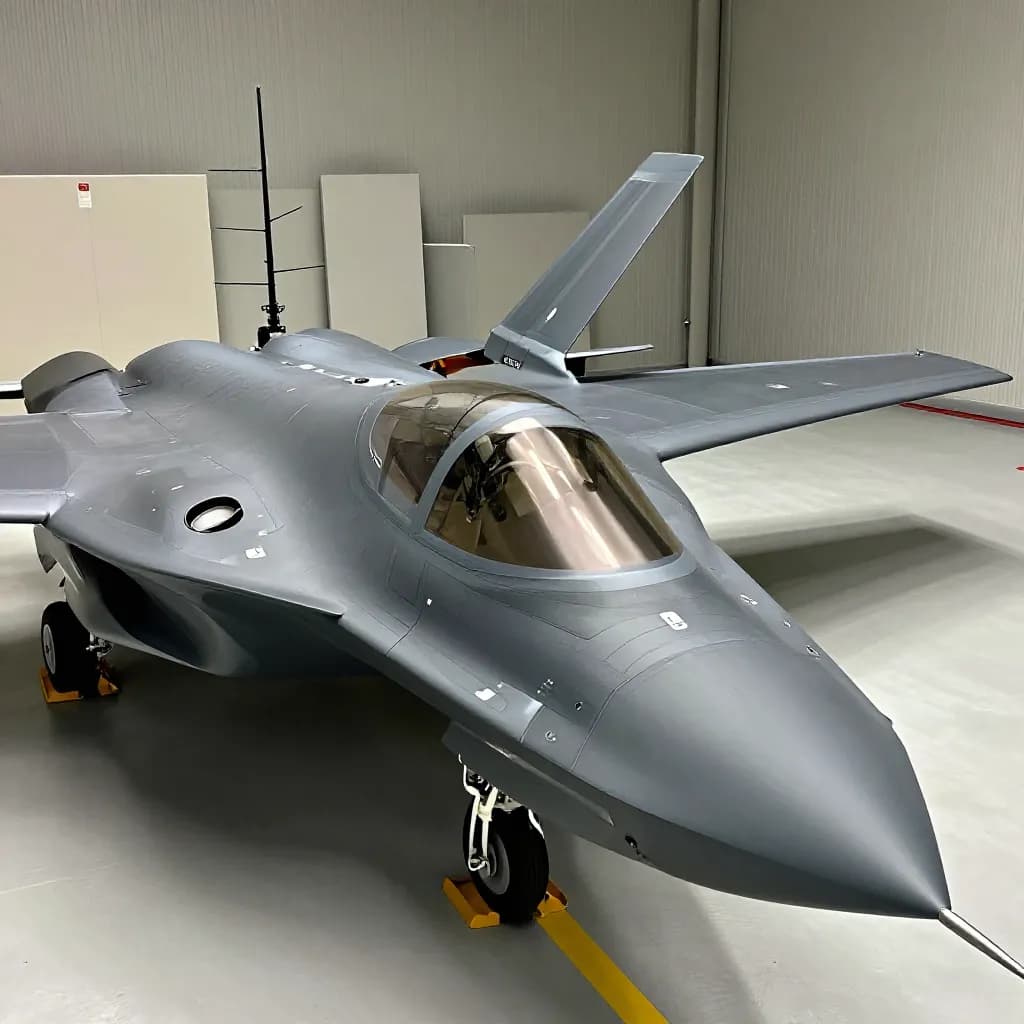
The fundamental principle behind low-observable coatings is the manipulation of electromagnetic energy. When radar waves, infrared radiation, or visible light strikes a surface, the energy is either reflected, absorbed, or transmitted. Conventional coatings reflect a significant portion of incident energy back toward the source, making the coated object detectable. Low-observable coatings are engineered to minimize this reflection — either by absorbing the energy and converting it to heat, by redirecting it away from the source, or by matching the object's emission characteristics to the background environment.
Ready to Start Your Project?
From one-off customs to 15,000-part production runs — get precise pricing in 24 hours.
On This Page
What Are Low-Observable Coatings?
The development of low-observable coatings has been one of the most significant military technology achievements of the past half-century. From the early radar-absorbing materials used on the U-2 and SR-71 reconnaissance aircraft to the advanced multi-spectral coatings on the F-22 Raptor and F-35 Lightning II, coating technology has been central to the evolution of stealth capability. These coatings represent some of the most closely guarded military secrets, with specific formulations and performance characteristics classified at the highest levels of national security.
Radar Absorbing Materials (RAM)
Radar absorbing materials are coatings and structural materials designed to reduce the radar cross-section of military platforms by absorbing incident radar energy and converting it to negligible amounts of heat. RAM coatings typically contain electrically or magnetically lossy materials — substances that interact with the electromagnetic fields of radar waves and dissipate their energy. Common RAM constituents include carbon-based materials (carbon black, carbon fibers, carbon nanotubes), iron-based magnetic materials (ferrite, carbonyl iron), and specialized conductive polymers.
The effectiveness of RAM depends on several factors including the coating thickness, the frequency of the incident radar, the angle of incidence, and the electromagnetic properties of the absorbing materials. Different RAM formulations are optimized for different radar frequency bands — a coating that is highly effective against X-band radar (8-12 GHz, used by many fire control radars) may be less effective against S-band (2-4 GHz, used by many surveillance radars) or higher-frequency bands. This frequency dependence is one reason why modern stealth platforms use multiple RAM types in different areas, with each formulation optimized for the threat radars most likely to illuminate that surface area.
RAM coatings have been used on stealth aircraft including the B-2 Spirit bomber, F-117 Nighthawk, F-22 Raptor, and F-35 Lightning II. On these platforms, RAM works in conjunction with the aircraft's shape — which is designed to redirect radar energy away from the transmitter — to achieve very low radar cross-sections. The B-2, for example, combines a flying-wing shape that minimizes radar returns with extensive RAM application to achieve an RCS reportedly comparable to a large bird despite having a wingspan of 172 feet. Naval vessels have also adopted RAM in limited applications, particularly on superstructure surfaces and mast structures where radar reflections are most problematic.
Infrared Signature Reduction
Infrared signature management is increasingly important as IR-guided missiles and IR search-and-track systems become more sophisticated and prevalent. Every object with a temperature above absolute zero emits infrared radiation, and military platforms — with their hot engines, exhaust plumes, and sun-heated surfaces — emit significantly more IR energy than the natural background. IR-reducing coatings work by managing the thermal emissivity of surfaces to minimize the contrast between the platform and its background environment.
Low-emissivity coatings reduce the amount of infrared radiation emitted by a surface at a given temperature. By applying coatings with carefully controlled emissivity values to hot surfaces such as engine nacelles and exhaust areas, the apparent IR signature can be reduced without changing the actual surface temperature. Conversely, in some applications, high-emissivity coatings are used on cooler surfaces to help them radiate absorbed solar heat more quickly, reducing the overall thermal contrast of the platform. The optimal emissivity profile depends on the specific platform, its operating environment, and the threat IR sensors it must defeat.
Thermal camouflage coatings represent a more sophisticated approach to IR signature management. These coatings are designed to make a surface's IR emission pattern match the surrounding environment, similar to how visual camouflage matches the visible appearance. This can involve coatings with spatially varying emissivity to break up the thermal outline of a vehicle, or coatings that change their IR properties in response to environmental conditions. Some advanced concepts incorporate phase-change materials or thermochromic compounds that actively adjust their thermal emission characteristics, though these technologies remain largely in the research phase for military applications.
Visual Signature Management
Visual signature management through coatings encompasses the traditional camouflage coatings discussed elsewhere in this series, but in the context of low-observable technology, it extends to more sophisticated approaches for reducing visual detection. For aircraft operating at altitude, the visual signature against the sky is a significant detection cue. Counter-shading techniques — applying lighter colors to the underside of aircraft and darker colors to the upper surfaces — have been used since World War I to reduce visual contrast against the sky and ground respectively.
Modern visual signature management for aircraft goes beyond simple color selection. The specific reflectance properties of the coating across the visible spectrum are carefully controlled to minimize contrast against typical sky backgrounds at operational altitudes. Low-gloss finishes are standard on military aircraft to eliminate specular reflections (glints) that can reveal an aircraft's position at long range. The CARC system used on ground vehicles provides visual camouflage through color and pattern matching, combined with the NIR reflectance management that defeats night vision devices as discussed in detail in our camouflage coatings article.
For naval vessels, visual signature management includes the selection of hull and superstructure colors that minimize contrast against the sea and sky background. The US Navy's haze grey (FS 36270) was specifically selected for its low visibility in typical maritime conditions. Some navies have experimented with more complex visual signature reduction schemes, including graduated color patterns that account for the different backgrounds seen at different heights on the vessel's profile. The integration of visual, radar, and infrared signature management into a single coating system remains an active area of research and development.
Challenges of Stealth Coatings
Despite their remarkable capabilities, low-observable coatings present significant challenges in terms of maintenance, durability, cost, and operational constraints. RAM coatings are notoriously maintenance-intensive — the materials that provide radar absorption are often sensitive to moisture, UV radiation, temperature cycling, and mechanical damage. On early stealth aircraft like the F-117, RAM maintenance consumed a disproportionate share of maintenance hours, with coatings requiring frequent inspection, repair, and replacement to maintain the aircraft's low-observable characteristics.
The environmental sensitivity of RAM coatings creates operational constraints that affect how stealth platforms are deployed and maintained. Many RAM formulations degrade when exposed to moisture, requiring climate-controlled hangars and careful management of flight operations in adverse weather. Mechanical damage from hail, bird strikes, or ground handling can compromise the coating's radar-absorbing properties, requiring immediate repair before the aircraft can be considered mission-ready for stealth operations. The repair process itself is often complex and time-consuming, involving precise application of replacement materials and verification of electromagnetic performance.
Cost is another significant challenge. Low-observable coatings are among the most expensive coating materials in existence, with some formulations costing hundreds or thousands of dollars per gallon. The specialized application processes, controlled environment requirements, and extensive quality verification add further to the cost. Balancing stealth performance with durability and maintainability has been a central challenge in every stealth program, and each generation of stealth aircraft has incorporated improvements in coating durability. The F-35 program, for example, has placed significant emphasis on developing more durable and maintainable LO coatings compared to earlier stealth platforms.
The Future of Low-Observable Coatings
The future of low-observable coatings is being shaped by advances in materials science, nanotechnology, and adaptive systems. Metamaterial-based coatings represent one of the most promising research directions. Metamaterials are engineered structures with electromagnetic properties not found in natural materials, created by arranging sub-wavelength elements in specific patterns. Metamaterial coatings could potentially provide broadband radar absorption across a wider frequency range than conventional RAM, or even achieve negative refractive index effects that redirect radar energy in controlled directions.
Adaptive camouflage systems that can change their visual and infrared appearance in response to the surrounding environment are another active area of research. These systems draw inspiration from biological camouflage mechanisms such as those used by cephalopods (octopus and cuttlefish), which can rapidly change their skin color and texture to match their surroundings. Electrochromic and thermochromic materials that change color or thermal emission properties in response to electrical signals or temperature changes are being investigated for military applications, though significant challenges remain in achieving the speed, range, and durability required for practical military use.
Multispectral signature management — the ability to simultaneously control a platform's signature across radar, infrared, visible, and ultraviolet bands — is the ultimate goal of low-observable coating research. Current stealth coatings are typically optimized for one or two spectral bands, and achieving effective signature reduction across all bands simultaneously with a single coating system remains a formidable technical challenge. Advances in computational design, nanomaterial synthesis, and multi-functional coating architectures are gradually bringing this goal closer to reality, promising future military platforms with unprecedented levels of survivability across the full spectrum of detection threats.
Frequently Asked Questions
How does stealth coating make aircraft invisible to radar?
Stealth coatings do not make aircraft truly invisible to radar. Radar absorbing materials (RAM) reduce the radar cross-section by absorbing incident radar energy and converting it to small amounts of heat, rather than reflecting it back to the radar receiver. Combined with the aircraft's radar-deflecting shape, RAM coatings can reduce the radar return to a level comparable to a small bird, making detection and tracking extremely difficult but not impossible.
Are stealth coatings available for civilian use?
Military-grade RAM and low-observable coatings are classified materials and are not available for civilian purchase. However, some commercial radar-absorbing materials are available for applications such as electromagnetic compatibility (EMC) testing, anechoic chamber construction, and reducing radar interference. These commercial products are not comparable in performance to military stealth coatings.
How much does stealth coating maintenance cost?
Stealth coating maintenance is one of the most significant cost drivers for low-observable aircraft. While specific costs are classified, it is publicly known that LO maintenance accounts for a substantial portion of the per-flight-hour operating cost of stealth aircraft. The F-35 program has made significant investments in developing more durable LO coatings to reduce these maintenance costs compared to earlier stealth platforms.
Can stealth coatings defeat all types of radar?
No single stealth coating is equally effective against all radar frequencies. RAM coatings are typically optimized for specific frequency bands, and their effectiveness varies with radar frequency, angle of incidence, and polarization. Very low frequency radars (VHF/UHF band) are generally more difficult to defeat with coatings alone because the required coating thickness becomes impractically large at longer wavelengths.
Ready to Start Your Project?
From one-off customs to 15,000-part production runs — get precise pricing in 24 hours.