For decades, liquid paint was the default finishing method for architectural metalwork. Solvent-based and waterborne liquid coatings were applied to everything from window frames and curtain walls to cladding panels and structural steelwork. However, the past two decades have seen a decisive shift toward powder coating, driven by tightening environmental regulations, evolving fire safety standards, and growing demand for longer-lasting, lower-maintenance building finishes.
Architecture
Liquid Paint vs Powder Coating for Buildings: Why Architects Are Switching
Sundial Powder Coating·April 20, 2026·10 min
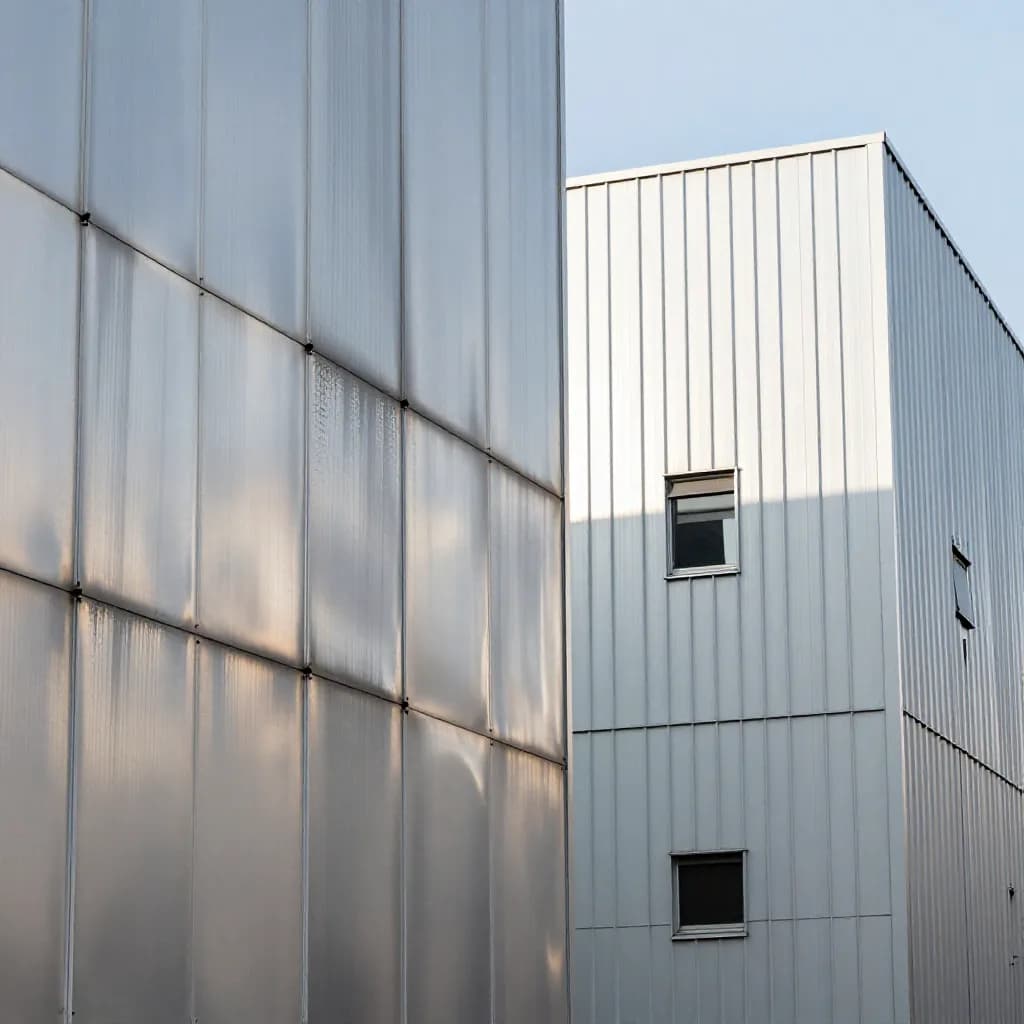
Architects and specifiers who once defaulted to liquid paint are now actively choosing powder coating for new projects and, in many cases, specifying powder-coated replacements when liquid-painted elements reach the end of their service life. This transition is not a matter of fashion — it reflects a fundamental reassessment of which technology delivers better performance, lower risk, and greater value over the life of a building.
Ready to Start Your Project?
From one-off customs to 15,000-part production runs — get precise pricing in 24 hours.
On This Page
The Shift Away from Liquid Paint in Architecture
Understanding the specific shortcomings of liquid paint relative to powder coating helps explain why this shift has been so comprehensive and why it is unlikely to reverse.
The Film Thickness Gap
The most immediate technical difference between liquid paint and powder coating is film thickness. Liquid paint systems typically achieve 25-50 microns of dry film thickness, often requiring multiple coats to reach even this level. Powder coating, by contrast, delivers 60-120 microns in a single application — two to four times the thickness of a typical liquid system.
This thickness gap has profound implications for durability. A thicker coating provides a more effective barrier against ultraviolet radiation, which breaks down polymer chains and causes chalking and fading. It also offers greater resistance to moisture penetration, chemical attack, and mechanical damage from impacts, abrasion, and handling during installation.
The multi-coat requirement of liquid systems introduces additional risks. Each coat must be properly dried or cured before the next is applied, and inter-coat adhesion failures can cause delamination years after installation. Powder coating eliminates this risk entirely by achieving its full protective film build in a single, thermally fused layer.
Fire and Safety Risks of Liquid Paint
Liquid paint poses fire and safety risks that powder coating avoids entirely. Solvent-based liquid paints contain flammable organic solvents — typically comprising 40-60% of the product by weight — that create explosion and fire hazards during storage, mixing, and application. Paint spray booths for liquid application require explosion-proof electrical equipment, fire suppression systems, and continuous ventilation to manage flammable vapor concentrations.
Beyond the application environment, liquid paints release volatile organic compounds that include hazardous substances such as toluene, xylene, and isocyanates. Isocyanate exposure, common with two-component polyurethane liquid coatings, is a leading cause of occupational asthma in the coatings industry. Workers require respiratory protection, health surveillance, and specialized training to handle these materials safely.
Powder coatings eliminate these hazards. With no solvents, there is no flammable vapor, no explosion risk, and no VOC exposure. The powder itself is not classified as flammable in normal application conditions, and workers face significantly lower health risks. This safety advantage reduces insurance costs, simplifies regulatory compliance, and creates a healthier working environment.
Environmental Compliance Burden of Liquid Paint
Operating a liquid paint facility involves a substantial environmental compliance burden. VOC emissions must be monitored, reported, and controlled, often requiring expensive abatement equipment such as thermal oxidizers or carbon adsorption systems. Solvent waste, contaminated cleaning materials, and paint sludge must be classified as hazardous waste and disposed of through licensed waste management contractors.
Regulatory requirements continue to tighten. The European Union's Industrial Emissions Directive, the US EPA's Clean Air Act, and equivalent regulations worldwide impose increasingly strict limits on VOC emissions from coating operations. Facilities that fail to comply face fines, enforcement action, and potential operating license revocation.
Powder coating operations face none of these burdens. With zero VOC emissions, no solvent waste, and overspray powder that is reclaimed and reused rather than disposed of, powder coating facilities have a dramatically simpler environmental compliance profile. This regulatory simplicity translates into lower operating costs and reduced business risk for coating applicators and, by extension, for the architects and building owners who specify their services.
Consistency and Quality Control
Achieving consistent quality with liquid paint is inherently more challenging than with powder coating. Liquid paint viscosity varies with temperature, humidity, and solvent evaporation during the working day. Spray operators must continuously adjust equipment settings to maintain uniform film thickness and appearance. Runs, sags, orange peel, and dry spray are common defects that require rework.
Powder coating offers significantly better process control. The electrostatic application method ensures uniform powder deposition, and the thermal curing process produces a consistent, defect-free film. Film thickness is easily measured and controlled, and the absence of solvent evaporation eliminates defects related to drying conditions.
Color consistency is another area where powder coating excels. Each batch of powder is manufactured to precise color specifications and can be verified against standards before application. Liquid paints are more susceptible to color variation between batches and can shift in appearance depending on application technique, film thickness, and drying conditions.
Lifecycle Cost: Powder Coating Lasts 2-3 Times Longer
When evaluated over the full lifecycle of a building, powder coating delivers substantially lower total cost of ownership than liquid paint. A powder-coated aluminum facade typically maintains its appearance and protective performance for 20-25 years, while a liquid-painted equivalent will generally require recoating within 8-12 years. This means a building with a 60-year design life might need two or three powder coating cycles compared to five or six liquid paint cycles.
The cost of recoating a building facade is not limited to materials and labor. It includes scaffolding or access equipment, building occupant disruption, project management, waste disposal, and potential business interruption for commercial properties. Each recoating cycle also carries the risk of adhesion failures if the existing coating is not properly prepared, potentially escalating costs further.
When initial coating cost, maintenance frequency, recoating intervals, and associated indirect costs are all factored in, powder coating typically delivers a 30-50% lower total lifecycle cost compared to liquid paint for architectural aluminum applications. This economic advantage, combined with superior environmental and safety performance, makes the business case for powder coating compelling.
When Liquid Paint Is Still Needed
Despite the clear advantages of powder coating for architectural aluminum, there are situations where liquid paint remains the appropriate choice. Substrates that cannot withstand the curing temperatures required for powder coating — typically 160-200°C — must be finished with liquid systems. This includes timber, most plastics, and assembled components containing heat-sensitive adhesives, seals, or electronic elements.
On-site application is another scenario where liquid paint is necessary. Powder coating requires a controlled factory environment with electrostatic spray equipment and curing ovens, making it unsuitable for field application. Touch-up repairs, site modifications, and coating of elements that cannot be transported to a coating facility must be carried out with liquid products.
Very large structural steel elements that exceed the dimensions of available curing ovens may also require liquid coating. However, the trend toward modular construction and prefabrication is reducing the number of elements that fall into this category, as more components are factory-finished before delivery to site.
Frequently Asked Questions
Why are architects switching from liquid paint to powder coating?
Architects are switching because powder coating offers 60-120 micron film thickness versus 25-50 for liquid, zero VOC emissions, non-combustible fire ratings on aluminum, 95-98% material efficiency, and a 20-25 year service life compared to 8-12 years for liquid paint. These advantages align with modern requirements for durability, sustainability, and fire safety.
Is liquid paint cheaper than powder coating?
Liquid paint may have a lower initial application cost in some cases, but powder coating is significantly cheaper over the building lifecycle. Powder coating lasts 20-25 years versus 8-12 for liquid, meaning fewer recoating cycles, less scaffolding, and lower maintenance costs. Total lifecycle savings of 30-50% are typical for architectural aluminum.
Can liquid paint match the durability of powder coating?
In most architectural applications, liquid paint cannot match powder coating durability. The thinner film build of 25-50 microns provides less protection against UV, moisture, and mechanical damage than the 60-120 micron powder coating film. Even high-performance liquid systems like PVDF coatings typically require more frequent maintenance than equivalent powder formulations.
Is liquid paint a fire risk on buildings?
Solvent-based liquid paints contain flammable solvents that pose fire and explosion risks during storage and application. On the finished building, the fire performance depends on the substrate and coating system. Powder-coated aluminum achieves A1 or A2 non-combustible Euroclass ratings, while liquid paint systems on some substrates may not achieve equivalent fire classifications.
When should I still specify liquid paint instead of powder coating?
Liquid paint is still appropriate for substrates that cannot withstand powder coating cure temperatures of 160-200°C, such as timber and most plastics. It is also necessary for on-site application, touch-up repairs, and very large structural elements that exceed curing oven dimensions. For architectural aluminum, however, powder coating is almost always the superior choice.
Ready to Start Your Project?
From one-off customs to 15,000-part production runs — get precise pricing in 24 hours.