ISO 12944 — Paints and varnishes — Corrosion protection of steel structures by protective paint systems — is the international standard that provides a systematic framework for selecting, specifying, and verifying protective coating systems for steel structures exposed to atmospheric, water, and soil environments. Published in multiple parts, ISO 12944 is the most widely referenced corrosion protection standard worldwide, used by engineers, specifiers, and coating professionals to design coating systems that provide reliable, long-term protection against corrosion.
Technical
ISO 12944 Corrosion Protection by Protective Paint Systems: Categories, Durability, and Coating Selection
Sundial Powder Coating·April 22, 2026·14 min
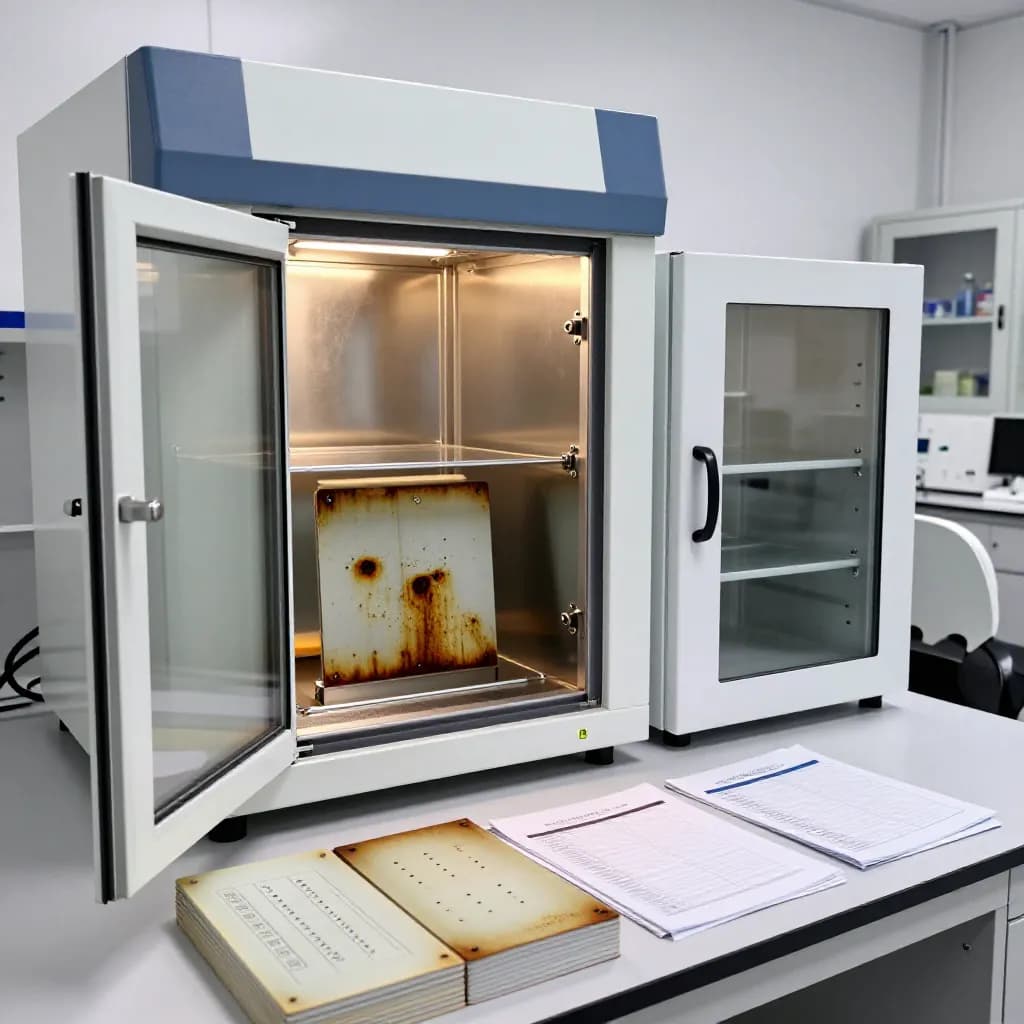
The standard addresses the complete lifecycle of corrosion protection, from the initial assessment of the corrosive environment through coating system selection, surface preparation, application, inspection, and maintenance. This comprehensive scope makes ISO 12944 more than a simple coating specification — it is a design methodology that guides the entire corrosion protection decision-making process.
Ready to Start Your Project?
From one-off customs to 15,000-part production runs — get precise pricing in 24 hours.
On This Page
ISO 12944: The Framework for Corrosion Protection of Steel Structures
ISO 12944 is organized into multiple parts, each addressing a specific aspect of corrosion protection. Part 1 provides general introduction and definitions. Part 2 classifies environments by corrosivity category. Part 3 addresses design considerations for structures to be coated. Part 4 covers surface types and surface preparation. Part 5 specifies protective paint systems for different corrosivity categories and durability ranges. Part 6 addresses laboratory performance test methods. Part 7 covers execution and supervision of paint work. Part 8 addresses development of specifications for new work and maintenance. Part 9 covers protective paint systems for offshore and related structures.
For powder coating professionals, ISO 12944 is particularly relevant because it provides the framework for specifying powder coating systems on steel structures — bridges, buildings, industrial facilities, infrastructure, and equipment — where corrosion protection is the primary performance requirement. Understanding the standard's classification system and coating system recommendations enables powder coating applicators and specifiers to select appropriate systems for each application environment.
Corrosivity Categories: C1 Through CX
The cornerstone of ISO 12944 is its classification of atmospheric environments into corrosivity categories that describe the aggressiveness of the corrosive exposure. Part 2 of the standard defines six categories — C1, C2, C3, C4, C5, and CX — ranging from very low corrosivity to extreme corrosivity. Each category is defined by the expected corrosion rate of unprotected carbon steel and zinc, expressed as mass loss or thickness loss per year.
C1 (Very Low) environments include heated interiors with clean atmospheres — offices, shops, schools, and hotels. Corrosion rate for carbon steel is less than 1.3 microns per year. Minimal coating protection is required, and decorative considerations often drive the coating specification rather than corrosion protection.
C2 (Low) environments include unheated interiors with occasional condensation and rural atmospheres with low pollution. Corrosion rate for carbon steel is 1.3-25 microns per year. Basic coating systems provide adequate protection.
C3 (Medium) environments include urban and industrial atmospheres with moderate sulfur dioxide pollution, and coastal areas with low salinity. Corrosion rate is 25-50 microns per year. This is the most common category for general industrial and commercial applications, and it represents the baseline for most protective coating specifications.
C4 (High) environments include industrial areas with high humidity and aggressive atmospheres, and coastal areas with moderate salinity. Corrosion rate is 50-80 microns per year. More robust coating systems with higher film thickness and better barrier properties are required.
C5 (Very High) environments include industrial areas with very high humidity and aggressive atmospheres, and coastal and offshore areas with high salinity. Corrosion rate is 80-200 microns per year. High-performance coating systems with multiple coats and substantial total film thickness are required.
CX (Extreme) was introduced in the 2018 revision to address offshore and extreme industrial environments where corrosion rates exceed 200 microns per year. CX environments include offshore platforms, splash zones, and chemical processing facilities with extreme chemical exposure. The most robust coating systems available are required for CX environments.
Durability Ranges and Service Life Expectations
ISO 12944 defines three durability ranges that describe the expected time to first major maintenance of the coating system. These durability ranges are combined with the corrosivity category to determine the appropriate coating system specification.
Low durability (L) corresponds to 7-15 years to first major maintenance. This range is appropriate for structures where regular maintenance access is available and where the cost of periodic recoating is acceptable relative to the initial coating investment.
Medium durability (M) corresponds to 15-25 years to first major maintenance. This is the most commonly specified durability range for general industrial and commercial structures, balancing initial coating cost against maintenance frequency.
High durability (H) corresponds to more than 25 years to first major maintenance. This range is specified for structures where maintenance access is difficult or expensive (bridges, towers, offshore structures), where the consequences of coating failure are severe (chemical containment, safety-critical structures), or where the building owner requires maximum lifecycle value.
It is important to understand that the durability ranges describe the time to first major maintenance, not the total service life of the coating system. A coating system with High durability in a C3 environment is expected to provide more than 25 years of protection before major maintenance (full recoating) is required, but it may require minor touch-up or repair during that period. The actual time to first major maintenance depends on the specific coating system, the quality of surface preparation and application, and the actual environmental exposure, which may differ from the assumed corrosivity category.
The combination of corrosivity category and durability range determines the minimum coating system requirements specified in Part 5 of the standard. For example, a C4 environment with High durability requires a more robust coating system (more coats, higher total film thickness, more durable coating chemistry) than a C4 environment with Low durability. This matrix approach allows the standard to address a wide range of application scenarios with appropriate coating system recommendations.
Coating System Selection per ISO 12944-5
Part 5 of ISO 12944 provides tables of recommended coating systems for each combination of corrosivity category and durability range. These tables specify the coating type (primer, intermediate coat, topcoat), the generic coating chemistry (epoxy, polyurethane, zinc-rich, alkyd, etc.), the number of coats, and the minimum dry film thickness for each coat and for the total system.
For C1-C2 environments, relatively simple coating systems are adequate. A single coat of alkyd, polyester, or epoxy-polyester powder coating at 60-80 microns may be sufficient for Low or Medium durability. For High durability in C2, a two-coat system (primer plus topcoat) with a total film thickness of 120-160 microns is typically recommended.
For C3 environments — the most common specification scenario — the standard recommends two-coat or three-coat systems depending on the durability range. A typical C3-High system might consist of a zinc-rich epoxy primer (60-80 microns), an epoxy intermediate coat (60-80 microns), and a polyurethane or polyester topcoat (60-80 microns), for a total system thickness of 200-240 microns. Powder coating systems for C3-High typically use an epoxy primer (60-80 microns) plus a polyester topcoat (60-80 microns) for a total of 120-160 microns.
For C4-C5 environments, three-coat systems with substantial total film thickness are standard. Zinc-rich primers provide cathodic protection in addition to barrier protection, and high-build intermediate coats increase the total barrier thickness. Total system film thickness of 240-320 microns or more is typical for C5-High applications.
For CX environments, the most robust systems available are specified, often including specialized coatings such as glass-flake reinforced epoxies, high-build polyurethanes, or thermal-sprayed zinc/aluminum metallic coatings with organic topcoats. Total system thickness can exceed 400 microns for the most demanding CX applications.
The standard notes that the recommended systems are generic guidelines, and specific proprietary coating systems may provide equivalent or superior performance at different film thicknesses or with different numbers of coats. Coating manufacturers can demonstrate that their specific products meet the performance requirements of a given corrosivity category and durability range through the laboratory testing procedures defined in Part 6.
Surface Preparation Requirements
ISO 12944-4 addresses surface preparation — the single most critical factor in the long-term performance of any protective coating system. The standard defines surface preparation grades, methods, and quality requirements that must be achieved before coating application.
Abrasive blast cleaning is the preferred surface preparation method for new steel construction. The standard references ISO 8501-1 for visual assessment of surface cleanliness, with grades ranging from Sa 1 (light blast cleaning) to Sa 3 (blast cleaning to visually clean steel). For most protective coating systems in C3 and above environments, Sa 2½ (very thorough blast cleaning) is the minimum requirement. Sa 2½ requires that at least 95% of the surface area is free of all visible oil, grease, dirt, mill scale, rust, paint coatings, and foreign matter, with any remaining traces showing only as slight stains.
Surface profile (roughness) after blast cleaning is specified to ensure adequate mechanical anchoring for the coating system. The required profile depends on the coating system — thicker, higher-build systems generally require coarser profiles for adequate adhesion. ISO 8503 defines methods for assessing surface profile using comparator panels or stylus instruments. Typical profile requirements range from 25-50 microns for standard coating systems to 50-100 microns for heavy-duty systems.
For maintenance coating of existing structures, surface preparation options include localized blast cleaning of damaged areas, power tool cleaning (ISO 8501-1, grades St 2 and St 3), and high-pressure water jetting (ISO 8501-4). The choice of preparation method depends on the condition of the existing coating, the accessibility of the structure, and environmental constraints (containment of blast debris, noise, dust).
Surface contamination — particularly soluble salt contamination from chlorides and sulfates — must be assessed and controlled before coating application. ISO 8502 defines methods for measuring surface salt contamination, with maximum allowable levels depending on the coating system and the corrosivity category. Soluble salt contamination left on the surface before coating can cause osmotic blistering and premature coating failure, even if the surface appears visually clean.
The time between surface preparation and coating application (the flash-off time) must be minimized to prevent re-rusting of the prepared surface. ISO 12944-7 specifies that coating should be applied before any visible rusting occurs on the prepared surface, which in humid environments may be as little as 2-4 hours after blast cleaning.
Inspection and Quality Verification
ISO 12944-7 addresses the execution and supervision of coating work, including inspection requirements at each stage of the coating process. Systematic inspection is essential for verifying that the coating system is applied correctly and will provide the expected corrosion protection over its intended service life.
Pre-coating inspection verifies that the steel surface has been prepared to the specified cleanliness grade and profile, that surface contamination (soluble salts, oil, grease) is within acceptable limits, and that environmental conditions (temperature, humidity, dew point) are suitable for coating application. The steel surface temperature must be at least 3°C above the dew point to prevent moisture condensation that would compromise coating adhesion.
During-application inspection monitors the coating process in real time, verifying that the correct coating products are being used, that application equipment is functioning properly, that wet film thickness is within specification, and that each coat is applied within the specified overcoating interval. Wet film thickness measurement using comb gauges provides immediate feedback on film build during application.
Post-application inspection verifies the quality of the completed coating system. Dry film thickness measurement (ISO 19840) is the most important post-application test, verifying that the specified minimum film thickness has been achieved across the entire coated surface. The standard defines sampling procedures, measurement methods, and acceptance criteria for film thickness verification.
Adhesion testing (ISO 4624, pull-off method) may be required for critical applications to verify that the coating system has achieved adequate bond strength to the substrate. Pull-off adhesion values of 3-5 MPa are typical minimum requirements for protective coating systems.
Holiday (pinhole) detection using high-voltage spark testing may be required for coating systems on immersed or buried structures where coating continuity is critical. The test voltage is selected based on the coating thickness, and any holidays detected must be repaired before the structure enters service.
Inspection records must be maintained throughout the coating process, documenting surface preparation quality, environmental conditions, coating products used, film thickness measurements, adhesion test results, and any repairs or touch-ups performed. These records provide traceability and quality evidence for the lifetime of the structure.
Powder Coating Systems Within the ISO 12944 Framework
Powder coatings are increasingly used within the ISO 12944 framework for corrosion protection of steel structures, offering environmental advantages (zero VOC), high material efficiency, and excellent film build in single-coat applications. However, the application of powder coatings to structural steel presents specific challenges and considerations that differ from traditional liquid paint systems.
Single-coat powder coating systems — typically epoxy, polyester, or epoxy-polyester hybrid at 60-120 microns — are suitable for C1-C3 environments with Low to Medium durability requirements. These systems provide good barrier protection and are widely used for structural steel in buildings, warehouses, and light industrial facilities. The high film build achievable in a single powder coat provides barrier protection equivalent to two-coat liquid systems at similar total thickness.
Multi-coat powder coating systems — epoxy primer plus polyester topcoat — extend the applicability of powder coatings to C3-High and C4 environments. The epoxy primer provides corrosion protection and substrate adhesion, while the polyester topcoat provides UV resistance and aesthetic properties. Total system thickness of 120-200 microns is typical for these dual-coat systems.
For C5 and CX environments, powder coating systems may be combined with other protection methods. Thermal-sprayed zinc or zinc-aluminum metallic coatings sealed with powder coating topcoats provide cathodic protection plus barrier protection for the most demanding environments. Hot-dip galvanized steel overcoated with powder coating (duplex systems) is another approach that combines galvanic and barrier protection.
The size limitation of powder coating — parts must fit inside the curing oven — restricts the application of powder coatings to components and fabrications rather than large assembled structures. Structural steel members, connection plates, handrails, ladders, and equipment enclosures are typical powder-coated items within the ISO 12944 framework. Large assembled structures (bridges, towers, tanks) are typically coated with liquid systems applied on-site.
ISO 12944-5 includes powder coating systems in its recommended system tables, recognizing their role in the protective coatings landscape. The standard treats powder coatings on the same performance basis as liquid coatings — the corrosion protection provided by the system depends on the coating chemistry, film thickness, and application quality, regardless of whether the coating was applied as a powder or a liquid.
Frequently Asked Questions
What corrosivity category applies to a typical urban building?
Most urban buildings fall into corrosivity category C3 (Medium), characterized by urban and industrial atmospheres with moderate pollution. Coastal urban areas may be C4 (High) due to salt air influence. The specific category should be determined by assessing the actual environmental conditions at the project site per ISO 12944-2.
What does 'High durability' mean in ISO 12944?
High durability (H) means the coating system is expected to provide more than 25 years of protection before first major maintenance (full recoating) is required. This does not mean the coating will last forever — minor touch-up may be needed during this period, and the actual service life depends on the specific system and environmental conditions.
Can powder coatings be used for ISO 12944 C5 environments?
Powder coatings alone may not provide sufficient protection for C5 environments, which require very robust multi-coat systems with high total film thickness. However, powder coatings can be used as part of duplex systems — for example, hot-dip galvanized steel overcoated with powder coating — that provide combined galvanic and barrier protection suitable for C5 service.
What surface preparation is required for ISO 12944?
For most protective coating systems in C3 and above environments, abrasive blast cleaning to Sa 2½ (ISO 8501-1) is the minimum requirement. This means at least 95% of the surface is free of all visible contamination. Surface profile, soluble salt contamination, and environmental conditions must also meet specified requirements.
How is the corrosivity category determined for a specific site?
ISO 12944-2 provides guidance based on environmental descriptions (rural, urban, industrial, coastal) and measured corrosion rates. For critical projects, corrosion rate measurements using standard test coupons exposed at the site for one year provide the most accurate category determination. Environmental data and local experience can also inform the assessment.
Ready to Start Your Project?
From one-off customs to 15,000-part production runs — get precise pricing in 24 hours.