Powder coating flexibility varies significantly depending on the formulation, and modern powder coatings can be engineered to be remarkably flexible. Standard decorative powder coatings offer moderate flexibility suitable for most applications, while specialty flexible formulations can withstand severe bending, forming, and deformation without cracking, chipping, or losing adhesion.
Technical
Is Powder Coating Flexible? Bend Testing, Formulation, and Applications
Sundial Powder Coating·April 22, 2026·11 min
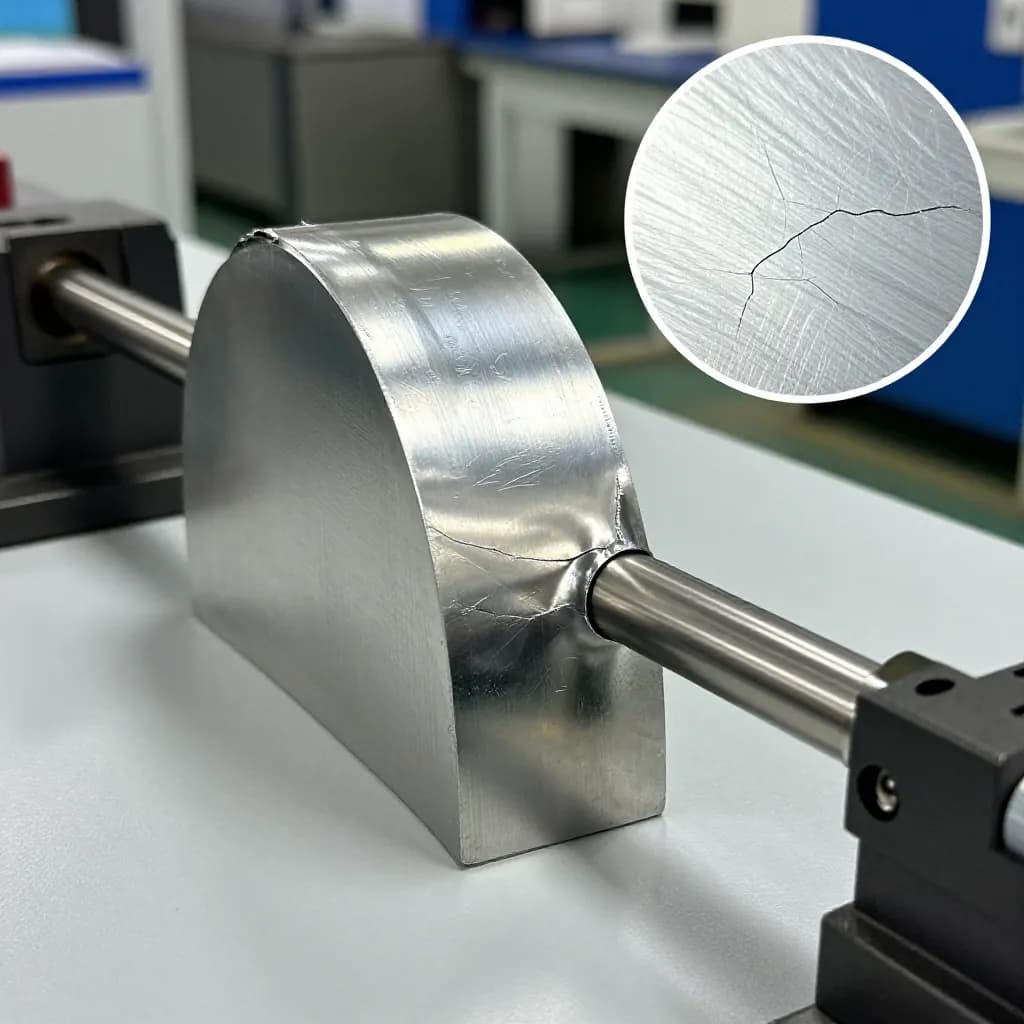
The flexibility of a powder coating is determined primarily by the resin chemistry and the ratio of hard to soft molecular segments in the polymer network. Resins with longer chain segments between cross-link points produce more flexible coatings, while highly cross-linked resins with short chain segments produce harder but more brittle films. Formulators balance these characteristics to achieve the desired combination of flexibility, hardness, chemical resistance, and other properties.
Ready to Start Your Project?
From one-off customs to 15,000-part production runs — get precise pricing in 24 hours.
On This Page
Powder Coating Flexibility Ranges from Rigid to Highly Flexible
Flexibility is a critical performance requirement for powder coatings applied to parts that will be bent, formed, or subjected to mechanical deformation after coating. Pre-coated metal that is roll-formed into profiles, stamped into shapes, or bent during assembly requires a coating that can accommodate the deformation without failure. Similarly, parts that experience flexural stress in service — such as springs, clips, and brackets — need coatings with adequate flexibility to survive repeated bending cycles.
This article examines how powder coating flexibility is measured, what formulation factors control it, and how to specify the right level of flexibility for demanding applications.
Mandrel Bend Testing: Measuring Flexibility
The conical mandrel bend test, performed according to ASTM D522 or ISO 6860, is the most common method for evaluating powder coating flexibility. In this test, a coated metal panel is bent over a conical mandrel with a continuously varying diameter, typically ranging from 3 millimeters at the small end to 38 millimeters at the large end. After bending, the coating is examined for cracking along the bend line.
The result is reported as the smallest mandrel diameter at which the coating shows no cracking. A coating that passes at 3 millimeters is highly flexible, while one that cracks at 25 millimeters has poor flexibility. Standard decorative powder coatings typically pass mandrel bend testing at 6 to 12 millimeters, while flexible formulations pass at 3 to 4 millimeters or even achieve a direct impact bend without cracking.
The cylindrical mandrel bend test, using mandrels of fixed diameter according to ASTM D1737, provides a pass-fail assessment at a specific bend radius. This test is commonly specified in coating standards where a minimum flexibility requirement is defined, such as passing a 6-millimeter or 8-millimeter mandrel bend.
Test conditions significantly affect results. Panel thickness, bend speed, temperature, and coating thickness all influence the outcome. Thinner panels and thinner coatings generally produce better bend results because the strain at the coating surface is lower. Testing at elevated temperatures also improves results because the coating becomes more pliable as it approaches its glass transition temperature. For this reason, standardized test conditions specify panel thickness, coating thickness range, and test temperature to ensure comparable results.
T-Bend Testing for Pre-Coated Metal
The T-bend test is the definitive flexibility assessment for powder coatings on pre-coated metal that will be formed after coating. This test, performed according to ASTM D4145, involves bending a coated panel 180 degrees over itself, with the number of panel thicknesses at the bend determining the T-bend rating. A 0T bend means the panel is folded flat on itself with no spacer — the most severe test possible. A 1T bend includes one panel thickness as a spacer, 2T includes two thicknesses, and so on.
After bending, the coating at the bend apex is examined for cracking, and adhesion is tested by applying adhesive tape over the bend and pulling it away to check for coating removal. The T-bend rating is the minimum number of panel thicknesses at which the coating shows no cracking and no adhesion loss.
For pre-coated metal applications, a 0T or 1T rating is typically required to ensure the coating survives the forming operations used in manufacturing. Roll forming, brake forming, stamping, and hemming all impose severe bending strains on the coating, and only formulations specifically designed for flexibility can achieve the 0T to 2T ratings needed for these processes.
Achieving excellent T-bend performance requires careful optimization of the entire coating system, not just the powder formulation. Substrate type and thickness, pretreatment chemistry, coating thickness, and cure conditions all affect T-bend results. Thinner coatings generally perform better in T-bend testing because the absolute strain at the coating surface is lower for a given bend radius. Optimal coating thickness for pre-coated metal applications is typically 40 to 60 microns, thinner than the 60 to 80 microns common in post-coating applications.
Formulating for Flexibility
Powder coating formulators control flexibility through several key variables in the coating composition. The most fundamental is the resin backbone structure. Resins with long, flexible molecular chains between cross-link points produce coatings with greater elongation and bend capability. Polyester resins are particularly versatile in this regard, as the chain length and branching can be adjusted during resin synthesis to produce a wide range of flexibility levels.
The cross-link density of the cured coating is inversely related to flexibility. Higher cross-link density produces harder, more chemically resistant but more brittle coatings, while lower cross-link density produces softer, more flexible but less chemically resistant films. Formulators adjust the ratio of resin to hardener and select hardener types that produce the desired cross-link density for the target flexibility level.
The glass transition temperature of the cured coating affects flexibility at service temperatures. Coatings with glass transition temperatures well above the service temperature are in their glassy state and tend to be more brittle. Formulations designed for flexibility often have lower glass transition temperatures, keeping the coating in a more rubbery, flexible state at room temperature.
Plasticizers and flexibilizing additives can be incorporated into powder coating formulations to improve flexibility without fundamentally changing the resin system. These additives work by increasing the free volume within the polymer network, allowing greater molecular mobility and deformation before cracking occurs. However, excessive plasticizer use can compromise other properties including hardness, chemical resistance, and blocking resistance.
Pigment type and loading also influence flexibility. High pigment loadings reduce flexibility because the rigid pigment particles act as stress concentrators in the polymer matrix. Flexible formulations typically use lower pigment volumes and avoid large, angular pigment particles that create stress concentration points.
Roll-Formed and Pre-Coated Metal Applications
The coil coating and pre-coated metal industry represents one of the most demanding applications for flexible powder coatings. In this process, flat metal coil stock is powder coated in a continuous line before being cut, formed, and assembled into finished products. The coating must survive all subsequent forming operations without cracking, peeling, or losing its protective and aesthetic properties.
Roll forming is the most common forming process for pre-coated metal. In roll forming, the flat coated strip passes through a series of contoured rollers that progressively bend it into the desired profile shape. The coating on the outside of bends is stretched in tension, while the coating on the inside is compressed. The severity of the forming depends on the bend radius relative to the metal thickness, with tighter radii imposing greater strain on the coating.
Common products manufactured from pre-coated powder-coated metal include building cladding panels, roofing profiles, rainwater goods, garage doors, shelving systems, and appliance housings. Each of these products involves forming operations that require the coating to flex without failure, and the specific flexibility requirements vary with the product geometry and forming process.
The economic advantage of pre-coating is significant. Coating flat coil stock in a continuous process is far more efficient than coating individual formed parts, with higher line speeds, better material utilization, and lower energy consumption per square meter of coated surface. However, this efficiency is only achievable if the coating can survive the post-coating forming operations, making flexibility a non-negotiable performance requirement.
Quality control for pre-coated metal applications includes T-bend testing on production samples, reverse impact testing, and adhesion testing after forming. These tests are performed at regular intervals during production to verify that the coating maintains its flexibility throughout the coating run.
Flexibility vs Other Performance Properties
Achieving high flexibility in a powder coating inevitably involves trade-offs with other performance properties. Understanding these trade-offs helps specifiers make informed decisions about the appropriate flexibility level for their application.
Hardness and scratch resistance typically decrease as flexibility increases. The same molecular mobility that allows a coating to bend without cracking also makes it easier to scratch or indent. Highly flexible powder coatings may have pencil hardness ratings of HB to 2H, compared to 3H to 5H for standard rigid formulations. For applications where both flexibility and scratch resistance are important, formulators must find an optimal balance point.
Chemical resistance generally decreases with increasing flexibility because the lower cross-link density that enables flexibility also creates a more open polymer network that is more permeable to chemical species. Flexible coatings may show reduced resistance to solvents, acids, and alkalis compared to their rigid counterparts.
Blocking resistance — the ability of coated surfaces to resist sticking together when stacked or wound into coils — can be compromised in highly flexible formulations. The softer, more pliable surface of flexible coatings is more prone to blocking, particularly at elevated storage temperatures. This is a critical consideration for coil-coated products that are wound into coils after coating and may be stored for extended periods before forming.
Weathering resistance is generally not significantly affected by flexibility modifications, as UV resistance is primarily determined by the resin type and stabilizer package rather than the cross-link density. Flexible polyester formulations can achieve the same UV performance as rigid polyester formulations when properly stabilized.
The key to successful specification is defining the minimum flexibility required for the application and accepting the associated trade-offs in other properties, rather than specifying maximum flexibility regardless of actual need.
Specifying Flexibility for Your Application
Proper flexibility specification begins with understanding the mechanical demands the coating will face during manufacturing, assembly, and service. For parts that are coated in their final form and experience no post-coating deformation, standard powder coating flexibility is typically adequate. A mandrel bend result of 6 to 12 millimeters satisfies the requirements of most post-coated applications.
For parts that undergo moderate bending or forming after coating, such as brackets bent to 90 degrees or panels with gentle curves, specify a mandrel bend requirement of 3 to 6 millimeters. This level of flexibility accommodates moderate forming operations without requiring the most extreme flexible formulations.
For pre-coated metal applications involving roll forming, stamping, or hemming, specify T-bend requirements appropriate to the forming severity. Products with gentle bends may require only 3T to 4T performance, while products with tight bends or hems require 0T to 1T. Consult with the forming equipment manufacturer and the powder coating supplier to determine the appropriate T-bend requirement for the specific product geometry.
Always specify flexibility requirements using standardized test methods and clearly defined acceptance criteria. Include the test method reference, panel thickness, coating thickness range, test temperature, and pass-fail criteria in the specification. This ensures that the coating supplier, applicator, and quality inspector are all working to the same standard.
For critical applications, request flexibility test data from the powder coating manufacturer for the specific formulation and color being considered. Flexibility can vary between colors within the same product range due to differences in pigment type and loading. Testing the actual production formulation on representative substrates provides the most reliable assurance of adequate flexibility performance.
Frequently Asked Questions
Can powder coating survive bending without cracking?
Yes, when the right formulation is selected. Standard powder coatings pass mandrel bend tests at 6-12mm, while specialty flexible formulations pass at 3-4mm or achieve 0T T-bend ratings. Flexible formulations are specifically designed for pre-coated metal that will be formed after coating.
What is a T-bend test for powder coating?
The T-bend test (ASTM D4145) bends a coated panel 180 degrees over itself, with the rating indicating how many panel thicknesses are at the bend. A 0T rating means the panel is folded flat — the most severe test. Lower T-bend numbers indicate greater flexibility.
Is flexible powder coating less durable?
Flexible formulations trade some hardness and chemical resistance for bendability. Pencil hardness may drop from 3H-5H to HB-2H, and solvent resistance may decrease. However, UV resistance and corrosion protection are generally maintained. The key is specifying only the flexibility level actually needed.
Can you roll-form powder-coated metal?
Yes, using flexible powder coating formulations designed for pre-coated metal applications. These coatings achieve 0T to 2T bend ratings and are applied to flat coil stock before forming. This is standard practice for building cladding, roofing profiles, and appliance housings.
What makes a powder coating flexible?
Flexibility is controlled by resin backbone length, cross-link density, glass transition temperature, and pigment loading. Longer resin chains, lower cross-link density, and lower pigment volumes produce more flexible coatings. Plasticizing additives can further improve flexibility.
Ready to Start Your Project?
From one-off customs to 15,000-part production runs — get precise pricing in 24 hours.