Powder coating provides good to excellent chemical resistance depending on the resin chemistry selected. Among the common powder coating resin types, epoxy formulations deliver the highest chemical resistance, making them the preferred choice for industrial environments where exposure to acids, alkalis, solvents, and other aggressive chemicals is expected. Polyester, hybrid, and other resin types offer varying levels of chemical resistance suited to different exposure conditions.
Technical
Is Powder Coating Chemical Resistant? Resistance by Resin Type and Application
Sundial Powder Coating·April 22, 2026·12 min
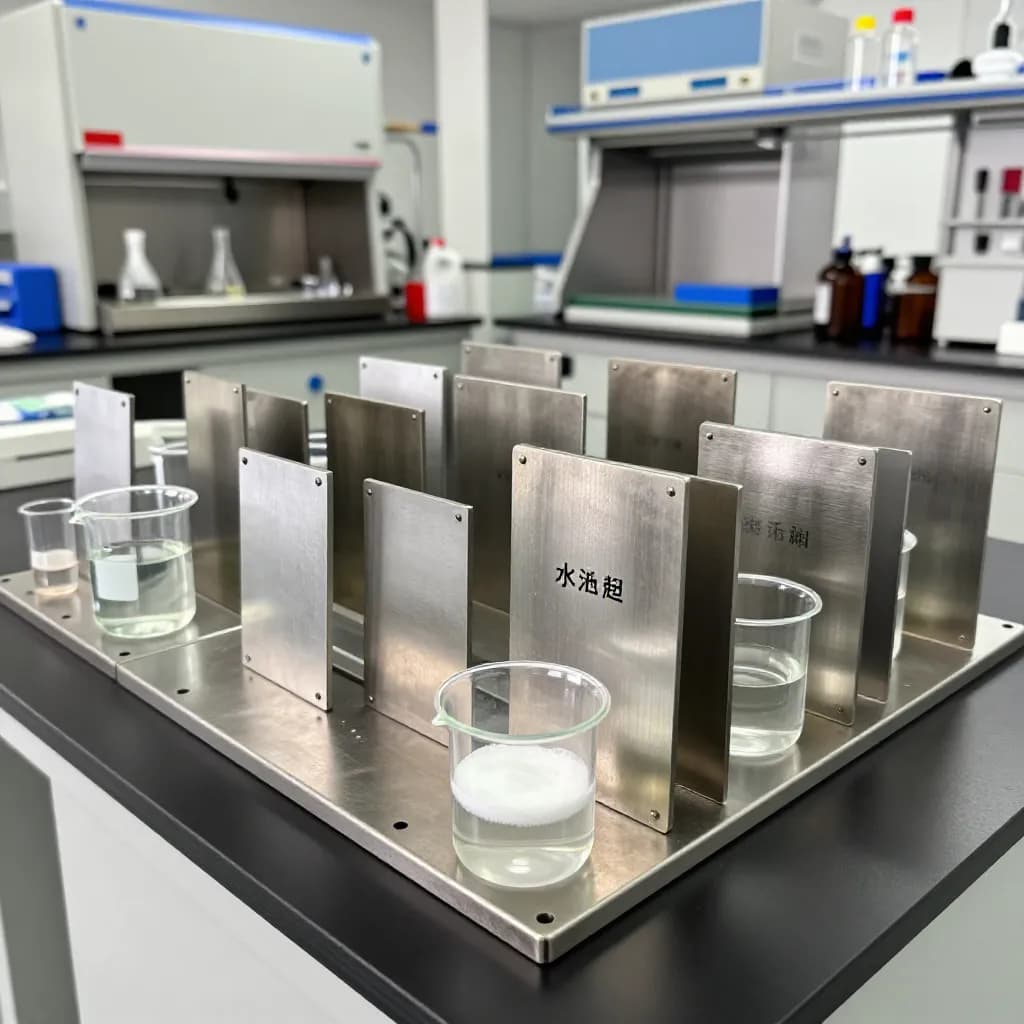
The chemical resistance of a powder coating is determined by the density and nature of its cross-linked polymer network. When the coating is fully cured, the resin molecules form a three-dimensional molecular structure that resists penetration by chemical species. The tighter and more chemically stable this network, the better the coating resists chemical attack. Epoxy resins form particularly dense cross-linked networks with excellent resistance to a wide range of chemicals.
Ready to Start Your Project?
From one-off customs to 15,000-part production runs — get precise pricing in 24 hours.
On This Page
Powder Coating Offers Strong Chemical Resistance, Varying by Resin Type
Understanding chemical resistance is critical for industrial applications where coated equipment, piping, structural steel, or enclosures may be exposed to chemical splashes, fumes, or immersion. Specifying the wrong resin type for a chemical environment can lead to premature coating failure through softening, blistering, discoloration, or loss of adhesion.
This article examines the chemical resistance properties of each major powder coating resin type, the testing methods used to evaluate chemical resistance, and practical guidance for selecting the right powder coating for chemically demanding applications.
Epoxy: The Chemical Resistance Champion
Epoxy powder coatings are the gold standard for chemical resistance in the powder coating industry. Their dense, highly cross-linked molecular structure provides outstanding resistance to a broad spectrum of chemicals including strong acids, strong alkalis, organic solvents, fuels, and hydraulic fluids. This makes epoxy the default choice for applications in chemical processing, oil and gas, pharmaceutical manufacturing, and other chemically aggressive environments.
In acid resistance testing, epoxy powder coatings typically withstand prolonged exposure to sulfuric acid, hydrochloric acid, and phosphoric acid at concentrations up to 10 to 20 percent without significant degradation. Resistance to organic acids such as acetic acid and citric acid is also excellent. The coating maintains its adhesion, hardness, and appearance even after extended acid contact.
Alkali resistance is equally impressive. Epoxy coatings resist sodium hydroxide, potassium hydroxide, and ammonia solutions at concentrations that would rapidly degrade most other coating types. This alkali resistance is particularly valuable in food processing, cleaning chemical exposure, and concrete contact applications where alkaline conditions are common.
Solvent resistance is another area where epoxy excels. The dense cross-linked structure resists swelling and softening when exposed to common industrial solvents including acetone, methyl ethyl ketone, toluene, and xylene. While prolonged immersion in aggressive solvents may eventually affect the coating, short-term splash and wipe exposure causes no damage.
The primary limitation of epoxy powder coatings is their poor UV resistance, which restricts their use to interior and enclosed applications. For outdoor chemical exposure applications, alternative resin systems or multi-coat approaches are required.
Polyester, Hybrid, and Specialty Resin Chemical Resistance
Standard polyester powder coatings provide moderate chemical resistance that is adequate for many consumer and light industrial applications. Polyester resins resist mild acids, mild alkalis, and many common household chemicals including cleaning agents, detergents, and food substances. However, they are less resistant than epoxy to strong acids, strong alkalis, and aggressive organic solvents.
Polyester coatings perform well against automotive fluids including gasoline, diesel fuel, brake fluid, and engine oil, making them suitable for automotive wheel and component applications. They also resist common environmental chemicals such as salt spray, acid rain, and bird droppings that are relevant to outdoor architectural and automotive applications.
Hybrid epoxy-polyester powder coatings offer chemical resistance intermediate between pure epoxy and pure polyester. The epoxy component contributes improved chemical resistance compared to straight polyester, while the polyester component provides better UV resistance than pure epoxy. Hybrids are commonly used for interior applications where moderate chemical resistance is needed along with good mechanical properties and decorative appearance.
For applications requiring both outdoor durability and enhanced chemical resistance, specialty formulations are available. Acrylic powder coatings offer good chemical and stain resistance combined with excellent UV stability and clarity, making them suitable for automotive clear coats and exterior applications requiring chemical resistance. Fluoropolymer powder coatings provide exceptional chemical resistance along with outstanding UV and weathering performance, though at a significant cost premium.
Polyurethane powder coatings, cross-linked with blocked isocyanates, offer a good balance of chemical resistance, UV resistance, and flexibility. They are used in applications such as agricultural equipment and outdoor furniture where exposure to both chemicals and sunlight is expected.
Testing Methods for Chemical Resistance
Chemical resistance testing of powder coatings follows standardized methods that provide objective, comparable data for specification and quality control purposes. The most common approach is spot testing according to ASTM D1308 or ISO 2812, where specific chemicals are applied to the coating surface for defined exposure periods and the coating is then evaluated for changes in appearance, adhesion, hardness, and film integrity.
In spot testing, a small quantity of the test chemical is placed on the coated surface, typically covered with a watch glass to prevent evaporation, and left in contact for a specified duration — commonly 24 hours, though shorter or longer periods may be specified depending on the application. After exposure, the chemical is removed and the coating is evaluated for softening, blistering, discoloration, loss of gloss, and loss of adhesion.
Immersion testing provides a more severe assessment of chemical resistance. Coated panels are partially or fully immersed in the test chemical at a specified temperature for extended periods, often 30 days or longer. This method is used for applications where the coating will be in continuous contact with chemicals, such as tank linings, pipe coatings, and chemical processing equipment.
The MEK double rub test, performed according to ASTM D5402, is widely used as a quick assessment of cure completeness and solvent resistance. A cloth soaked in methyl ethyl ketone is rubbed back and forth across the coating surface, and the number of double rubs before the coating is affected is recorded. Fully cured epoxy coatings typically withstand over 100 MEK double rubs, while polyester coatings may show effects at 30 to 50 rubs.
For critical applications, chemical resistance testing should be performed on the specific powder formulation and substrate combination intended for use, as results can vary with coating thickness, cure conditions, and substrate type.
Industrial Applications Requiring Chemical Resistance
Chemical processing plants represent one of the most demanding environments for powder-coated components. Structural steel, pipe supports, equipment housings, and access platforms in chemical plants are exposed to acid fumes, alkali splashes, solvent vapors, and aggressive cleaning chemicals. Epoxy powder coatings are the standard specification for these applications, often applied at increased film thicknesses of 100 to 150 microns for enhanced protection.
The oil and gas industry relies heavily on chemically resistant powder coatings for pipeline components, valve bodies, fittings, and structural steel in refineries and processing facilities. These coatings must resist crude oil, refined petroleum products, hydrogen sulfide, carbon dioxide, and various process chemicals. Fusion-bonded epoxy powder coating is the dominant technology for internal and external pipeline protection, applied at thicknesses of 300 to 500 microns for buried pipeline applications.
Pharmaceutical and food processing facilities require coatings that resist frequent cleaning with aggressive sanitizing chemicals including sodium hypochlorite, peracetic acid, and quaternary ammonium compounds. The coating must maintain its integrity and appearance through hundreds of cleaning cycles without degradation, staining, or harboring bacteria in surface defects.
Laboratory furniture and fume hood components require chemical resistance to a wide range of reagents including concentrated acids, bases, and organic solvents. Epoxy powder coatings are the standard finish for laboratory casework, providing the necessary chemical resistance along with a smooth, easy-to-clean surface.
Wastewater treatment facilities expose coated surfaces to a complex mix of chemicals including hydrogen sulfide, chlorine, caustic soda, and various organic compounds. Powder-coated handrails, structural steel, and equipment housings in these facilities must resist this chemical cocktail while also withstanding the high-humidity environment.
Factors That Affect Chemical Resistance Performance
Several factors beyond resin type influence the chemical resistance performance of a powder coating in actual service. Cure completeness is perhaps the most critical variable. An under-cured powder coating has not fully developed its cross-linked molecular network, leaving it significantly more vulnerable to chemical attack. Even a modest cure deficiency can reduce chemical resistance by 50 percent or more compared to a fully cured film.
Coating thickness directly affects chemical resistance because thicker films provide a longer diffusion path for chemical species attempting to penetrate to the substrate. For chemically demanding applications, specifying a minimum film thickness of 80 to 120 microns provides a meaningful improvement in chemical resistance compared to standard thicknesses of 60 to 80 microns.
Temperature has a significant effect on chemical resistance. Most chemical resistance data is generated at room temperature, but many industrial applications involve elevated temperatures that accelerate chemical attack. As a general rule, chemical resistance decreases as temperature increases, and coatings that perform well at room temperature may fail at elevated temperatures. When chemical exposure at elevated temperatures is expected, testing should be conducted at the actual service temperature.
Concentration of the chemical agent is another important variable. A coating that easily resists a 5 percent acid solution may fail when exposed to a 20 percent solution of the same acid. Chemical resistance data should be evaluated at concentrations representative of actual service conditions rather than relying on generic resistance ratings.
The duration of chemical exposure matters as well. Brief splash contact is far less demanding than continuous immersion. Many coatings that resist short-term chemical contact will eventually degrade under prolonged or continuous exposure. Specifiers should clearly define the expected exposure duration and pattern when evaluating chemical resistance requirements.
Specifying Powder Coatings for Chemical Environments
Effective specification of powder coatings for chemically demanding applications requires a systematic approach that begins with a thorough assessment of the chemical exposure conditions. The specifier should identify all chemicals the coating will encounter, their concentrations, temperatures, and whether exposure will be intermittent splash or continuous immersion.
Once the chemical exposure profile is defined, the specifier can evaluate candidate powder coating formulations against the specific chemicals and conditions identified. Powder coating manufacturers publish chemical resistance guides that list the performance of their products against common chemicals, and most will conduct custom testing against specific chemicals upon request for significant projects.
For applications involving multiple chemicals, the coating must resist all of them, not just the most aggressive one. Chemical interactions can also affect coating performance — a coating that resists acid and solvent individually may fail when exposed to a mixture of both. Testing with representative chemical mixtures is advisable for complex exposure environments.
Specification documents should clearly state the required chemical resistance performance, including specific chemicals, concentrations, temperatures, exposure durations, and acceptance criteria. Referencing standardized test methods such as ASTM D1308 for spot testing or ASTM D870 for immersion testing provides a clear framework for evaluation and quality control.
For the most demanding chemical resistance applications, consider multi-coat systems that combine the chemical resistance of an epoxy primer with the UV resistance of a polyester topcoat. This approach is particularly valuable for outdoor chemical exposure applications where single-coat epoxy cannot be used due to UV degradation concerns. The epoxy primer provides the chemical barrier while the polyester topcoat protects the epoxy from UV damage.
Regular inspection and maintenance of powder coatings in chemical environments is essential. Even the most chemically resistant coating will eventually degrade under severe exposure, and early detection of coating deterioration allows timely repair before substrate damage occurs.
Frequently Asked Questions
Which powder coating resin has the best chemical resistance?
Epoxy powder coating provides the best overall chemical resistance, withstanding strong acids, strong alkalis, and organic solvents. Its dense cross-linked molecular structure creates an effective barrier against a wide range of aggressive chemicals, making it the standard choice for chemical processing and industrial environments.
Can powder coating resist acid exposure?
Yes, particularly epoxy formulations, which resist sulfuric, hydrochloric, and phosphoric acids at concentrations up to 10-20%. Polyester coatings resist mild acids adequately. The level of resistance depends on acid type, concentration, temperature, and exposure duration.
How is chemical resistance of powder coating tested?
Chemical resistance is tested using standardized methods including ASTM D1308 spot testing, where chemicals are applied to the surface for defined periods, and immersion testing for continuous contact applications. The MEK double rub test (ASTM D5402) provides a quick assessment of solvent resistance and cure completeness.
Does powder coating resist solvents?
Epoxy powder coatings offer excellent solvent resistance, withstanding acetone, MEK, toluene, and xylene exposure. Polyester coatings have moderate solvent resistance suitable for brief contact. Cure completeness is critical — under-cured coatings have significantly reduced solvent resistance regardless of resin type.
Can powder coating be used in chemical processing plants?
Yes. Epoxy powder coatings are widely used in chemical processing for structural steel, equipment housings, and pipe supports. They are typically applied at 100-150 microns for enhanced protection. For outdoor chemical plant applications, multi-coat systems with epoxy primer and polyester topcoat are recommended.
Ready to Start Your Project?
From one-off customs to 15,000-part production runs — get precise pricing in 24 hours.