Stripping — the complete removal of cured powder coating from a substrate — is necessary in several situations: repairing defective coatings that cannot be corrected by overcoating, changing the color or type of coating on a previously coated part, removing coating from racks and fixtures to restore electrical conductivity, reclaiming parts that were coated in error, and preparing previously coated parts for recoating when the existing coating has degraded beyond repair.
Guides
How to Strip Powder Coating Safely: Chemical, Burn-Off, and Blast Methods
Sundial Powder Coating·April 22, 2026·13 min
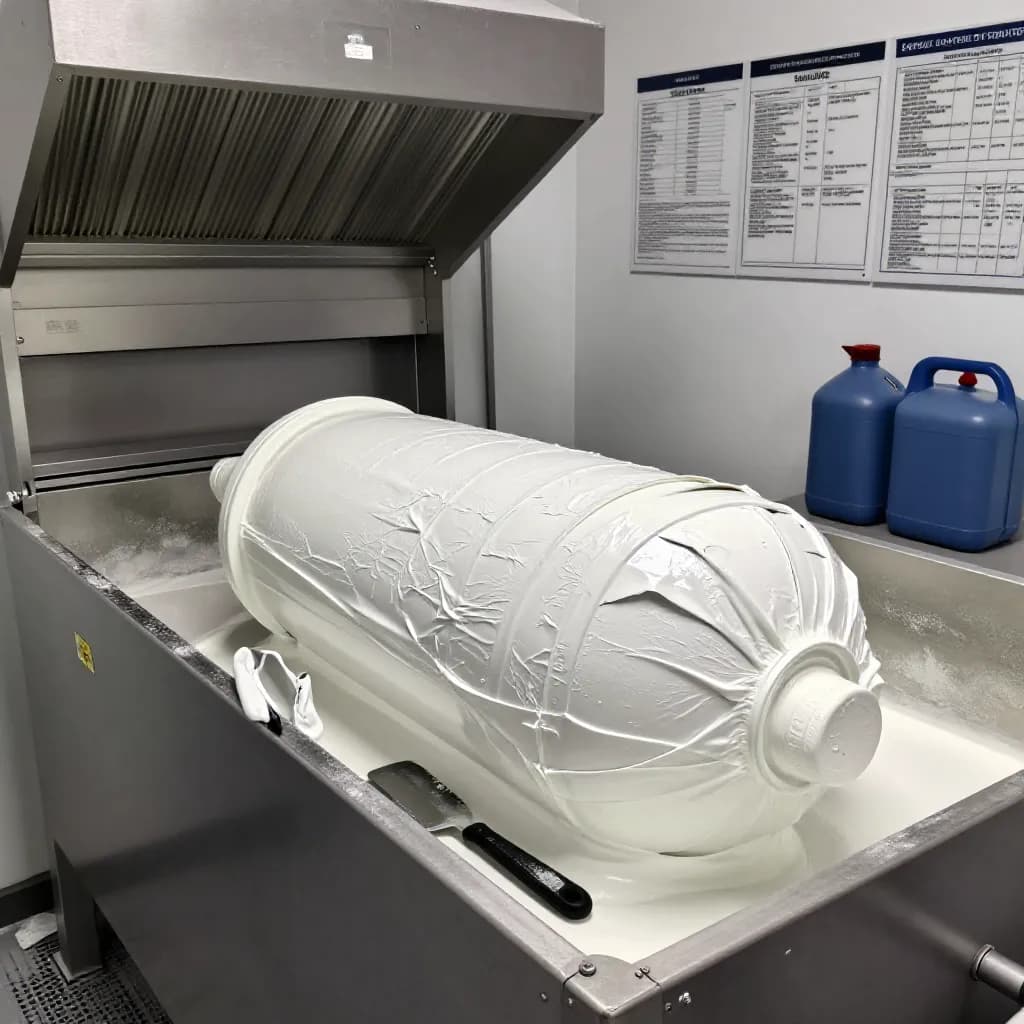
Unlike liquid paint, which can sometimes be removed with simple solvents, cured powder coating is a thermoset material that has undergone an irreversible chemical cross-linking reaction. This cross-linked structure makes powder coating highly resistant to solvents, chemicals, and mechanical removal — the same properties that make it an excellent protective coating also make it difficult to strip.
Ready to Start Your Project?
From one-off customs to 15,000-part production runs — get precise pricing in 24 hours.
On This Page
When and Why Powder Coating Needs to Be Stripped
The three primary stripping methods — chemical stripping, thermal burn-off, and abrasive blasting — each work by a different mechanism and have different advantages, limitations, and safety considerations. Chemical strippers break down the polymer structure through chemical reaction. Burn-off ovens decompose the coating through high-temperature pyrolysis. Abrasive blasting physically removes the coating through mechanical impact. The choice of method depends on the substrate material, part geometry, production volume, environmental regulations, and the condition required of the substrate after stripping.
All stripping methods involve hazards that require proper safety controls. Chemical strippers contain aggressive chemicals, burn-off ovens operate at extreme temperatures, and abrasive blasting generates hazardous dust. This guide covers each method with emphasis on safe operating procedures and environmental compliance.
Chemical Stripping: Process and Safety
Chemical strippers for powder coating are formulated to penetrate and break down the cross-linked polymer structure, causing the coating to swell, soften, and detach from the substrate. They are available in several chemistries, each suited to different coating types and substrates.
Methylene chloride-based strippers are the most aggressive and fastest-acting, capable of removing most powder coatings in 15-60 minutes at room temperature. However, methylene chloride is a suspected carcinogen and is subject to increasingly strict regulations in many jurisdictions. Its use requires extensive safety controls including supplied-air respiratory protection, chemical-resistant clothing, and ventilated work areas. Many operations have moved away from methylene chloride due to regulatory pressure and worker safety concerns.
Alkaline strippers based on sodium hydroxide (caustic soda) or potassium hydroxide operate at elevated temperatures (80-100°C) and require longer immersion times (2-8 hours) but are less toxic than solvent-based strippers. They work well on epoxy and hybrid powder coatings but are less effective on polyester coatings. Alkaline strippers are not suitable for aluminum substrates — the strong alkali attacks aluminum aggressively, causing pitting and material loss.
Acid-based strippers are used for specific applications, particularly for stripping coatings from aluminum without damaging the substrate. They operate at moderate temperatures and require careful concentration control to avoid etching the aluminum surface.
Regardless of the chemistry, chemical stripping requires personal protective equipment including chemical-resistant gloves, face shield, apron, and appropriate respiratory protection. Immersion tanks must be equipped with local exhaust ventilation to capture fumes. Emergency eyewash and shower stations must be accessible within 10 seconds of the stripping area. Operators must be trained in the specific hazards of the chemicals used and the emergency procedures for spills and exposures.
Thermal Burn-Off: Process and Safety
Thermal burn-off removes powder coating by heating the coated part to temperatures of 400-500°C in a controlled-atmosphere oven. At these temperatures, the organic polymer decomposes into gases and a small amount of ash residue. The ash is then removed by brushing, blowing with compressed air, or light abrasive blasting to reveal the clean substrate beneath.
Burn-off ovens are available in two types: pyrolytic ovens that operate in a low-oxygen atmosphere to prevent combustion, and fluidized bed ovens that combine heat with mechanical action from fluidized abrasive media. Pyrolytic ovens are the most common type for production stripping operations. They heat the parts gradually to the decomposition temperature, hold at temperature until the coating is fully decomposed, and then cool the parts before removal.
The primary advantage of burn-off is speed and simplicity for steel parts. A typical burn-off cycle takes 2-4 hours including heat-up, hold, and cool-down, and can process large batches of parts or racks simultaneously. There are no chemicals to manage, no liquid waste to dispose of, and the process is relatively hands-off once the oven is loaded.
The limitations of burn-off are significant. It cannot be used on aluminum — the burn-off temperature exceeds aluminum's melting point and would destroy the parts. It subjects steel parts to high temperatures that can cause warping, distortion, and changes in metallurgical properties. Thin sheet metal parts are particularly susceptible to distortion. Repeated burn-off cycles can cause cumulative heat damage to racks and fixtures, reducing their service life.
Safety considerations for burn-off include the extreme temperatures involved, the combustible gases generated during decomposition, and the potential for fire if the oven atmosphere control fails. Burn-off ovens must be equipped with afterburners or thermal oxidizers to destroy the combustible gases before they are exhausted to atmosphere. The oven must have temperature controls, over-temperature alarms, and fire suppression systems. Operators must be trained in oven operation, emergency shutdown procedures, and the hazards of working around high-temperature equipment.
Abrasive Blasting for Coating Removal
Abrasive blasting can remove powder coating by physically eroding the coating from the substrate through the impact of high-velocity blast media. This method works on any substrate material and does not involve chemicals or extreme temperatures, making it the most versatile stripping method.
The choice of blast media for stripping depends on the substrate and the desired surface condition after stripping. Aluminum oxide in 36-60 mesh is effective for removing powder coating from steel while simultaneously creating a surface profile suitable for recoating. Plastic media (Type II or Type V acrylic or melamine) removes coating without significantly profiling the substrate, which is useful when the substrate surface must be preserved — for example, on machined surfaces or polished metals. Walnut shell and corn cob media are even gentler options for delicate substrates.
Blasting parameters for stripping differ from those used for surface preparation of bare metal. Higher pressures (80-120 psi) and coarser media are used to break through the tough cured coating. The blast angle should be 60-80 degrees to maximize the cutting action on the coating. Multiple passes may be required to remove thick coatings or coatings with strong adhesion.
The main disadvantage of blasting for stripping is speed — removing a thick, well-adhered powder coating by blasting is slow compared to chemical or thermal methods, particularly on large parts or complex geometries where the blast stream cannot reach all surfaces efficiently. Blasting also generates significant dust containing coating particles and blast media fragments, requiring effective dust collection and respiratory protection.
For production stripping operations, blasting is most practical for small parts, flat surfaces, and situations where chemical and thermal methods are not suitable — for example, stripping aluminum parts that cannot be chemically stripped due to substrate sensitivity or thermally stripped due to the low melting point. For large-volume stripping of steel parts, chemical or thermal methods are generally more efficient.
Environmental Disposal and Regulatory Compliance
All stripping methods generate waste that must be managed in compliance with environmental regulations. The specific requirements depend on the stripping method, the coating composition, and the local regulatory framework, but the general principles are consistent: characterize the waste, handle it safely, and dispose of it through licensed facilities.
Chemical stripping generates spent stripper solution containing dissolved coating residues, and sludge consisting of coating fragments and precipitated metals. Spent stripper solutions are typically classified as hazardous waste due to their corrosive pH (strongly alkaline or acidic) and may contain heavy metals from the coating pigments — particularly chromium, lead, and cadmium in older coatings. The waste must be collected, stored in compatible containers, labeled as hazardous waste, and transported to a licensed treatment or disposal facility by a permitted hauler.
Burn-off generates ash residue and exhaust gases. The ash may contain heavy metals from coating pigments and must be tested to determine whether it is classified as hazardous waste. If heavy metals are present above regulatory thresholds, the ash must be disposed of as hazardous waste. Exhaust gases from the burn-off process must be treated by afterburners or thermal oxidizers to destroy volatile organic compounds before release to atmosphere. Air emission permits may be required depending on the volume of coating processed.
Abrasive blasting generates spent media mixed with coating fragments. This waste is typically less hazardous than chemical stripping waste but must still be characterized for heavy metals and disposed of appropriately. Dust collected by the blast room ventilation system may be classified as hazardous if it contains heavy metals above regulatory thresholds.
Maintain waste characterization records, disposal manifests, and regulatory permits as required by local environmental regulations. Many jurisdictions require annual reporting of hazardous waste generation and disposal. Non-compliance with environmental regulations can result in significant fines and legal liability.
Choosing the Right Stripping Method
The choice of stripping method depends on several factors that must be evaluated for each specific situation.
Substrate material is the first consideration. Aluminum parts cannot be stripped by burn-off (melting point too low) or by strongly alkaline chemical strippers (substrate attack). Chemical stripping with acid-based or neutral strippers, or abrasive blasting with non-ferrous media, are the options for aluminum. Steel parts can be stripped by any method, with the choice depending on other factors.
Part geometry affects method suitability. Complex parts with deep recesses, blind holes, and internal passages are difficult to strip by blasting because the blast stream cannot reach all surfaces. Chemical immersion is more effective for complex geometries because the liquid contacts all surfaces regardless of accessibility. Burn-off is also effective for complex parts because heat penetrates uniformly.
Production volume and turnaround time influence the economics. Chemical stripping and burn-off can process large batches simultaneously, making them more efficient for high-volume stripping. Blasting is a serial process — one part or one surface at a time — and is more practical for small quantities or occasional stripping needs.
Substrate condition after stripping matters for the subsequent recoating process. Chemical stripping and burn-off leave the substrate in a condition that typically requires additional surface preparation (blasting and pretreatment) before recoating. Abrasive blasting with appropriate media can strip the coating and prepare the surface for recoating in a single operation, saving a process step.
Environmental and safety considerations may favor one method over another. Operations in areas with strict air emission regulations may find burn-off difficult to permit. Operations concerned about chemical exposure may prefer blasting or burn-off over chemical stripping. Evaluate the full regulatory and safety picture before committing to a stripping method.
Post-Stripping Surface Preparation for Recoating
Stripping removes the coating, but it does not necessarily leave the substrate in a condition suitable for immediate recoating. Additional surface preparation is almost always required after stripping to ensure that the new coating achieves proper adhesion and performance.
After chemical stripping, the substrate surface may retain residual stripper chemicals, dissolved coating residues, and reaction products from the stripping process. Thorough rinsing with clean water is essential — multiple rinse stages may be needed to remove all chemical residues. After rinsing, the surface should be tested for cleanliness using the water-break test or pH paper to confirm that no alkaline or acidic residues remain. The stripped surface will typically require abrasive blasting to create a fresh surface profile and remove any remaining coating traces, followed by pretreatment before recoating.
After burn-off, the substrate surface is covered with a thin layer of ash and oxide. This residue must be removed by brushing, blowing with compressed air, or light abrasive blasting. The high temperatures of the burn-off process create a thick oxide layer on steel that must be removed by blasting to expose clean metal. The blasted surface should then be pretreated and coated promptly to prevent re-oxidation.
After abrasive blasting for stripping, the surface may be ready for pretreatment and coating if the blast profile and cleanliness meet specification. Verify the surface cleanliness and profile depth as you would for any blasted surface. If the blasting was performed with media that is coarser than optimal for the coating specification, a second blast pass with finer media may be needed to achieve the correct profile.
Regardless of the stripping method, treat the stripped surface with the same care and urgency as a freshly prepared new surface. Stripped surfaces oxidize and contaminate just as quickly as new surfaces, and the same time limits for processing after preparation apply. Do not assume that a stripped surface is inherently cleaner or more receptive to coating than a new surface — verify its condition through the standard inspection procedures before proceeding to coating.
Frequently Asked Questions
What is the safest way to strip powder coating?
Abrasive blasting is generally the safest method as it avoids both aggressive chemicals and extreme temperatures. However, it requires respiratory protection and dust collection. Chemical stripping requires chemical-resistant PPE and ventilation. Burn-off requires high-temperature safety controls. Choose the method that best matches your safety infrastructure and training capabilities.
Can you strip powder coating from aluminum?
Yes, but not with burn-off ovens (temperature exceeds aluminum's melting point) or strongly alkaline chemical strippers (they attack aluminum). Use acid-based or neutral chemical strippers formulated for aluminum, or abrasive blast with non-ferrous media such as plastic media, aluminum oxide, or glass bead at reduced pressure.
How do you dispose of powder coating stripping waste?
Stripping waste must be characterized for hazardous constituents — particularly heavy metals from coating pigments. Spent chemical stripper is typically hazardous waste due to corrosive pH and dissolved metals. Burn-off ash and blast dust may be hazardous if heavy metals exceed regulatory thresholds. Dispose through licensed hazardous waste facilities with proper manifests and documentation.
How long does chemical stripping take?
Methylene chloride strippers work in 15-60 minutes at room temperature. Alkaline strippers require 2-8 hours at elevated temperature (80-100°C). Acid strippers for aluminum typically require 1-4 hours. Time depends on coating type, thickness, and stripper concentration. Epoxy coatings generally strip faster than polyester coatings.
Do you need to blast after stripping before recoating?
Almost always yes. Chemical stripping and burn-off leave residues and oxides that must be removed by blasting. Even after blast stripping, the surface should be verified for cleanliness and profile. Treat a stripped surface with the same preparation standards as a new surface — clean, blast, pretreat, and coat within the standard time limits.
Ready to Start Your Project?
From one-off customs to 15,000-part production runs — get precise pricing in 24 hours.