Setting up a powder coating workshop requires careful planning before any equipment is purchased or any walls are built. The layout, infrastructure, and equipment selection must be driven by the types of parts you will coat, the production volume you need to achieve, the quality standards you must meet, and the regulatory requirements that apply to your location.
Guides
How to Set Up a Powder Coating Workshop: Space, Ventilation, Electrical, and Safety
Sundial Powder Coating·April 22, 2026·14 min
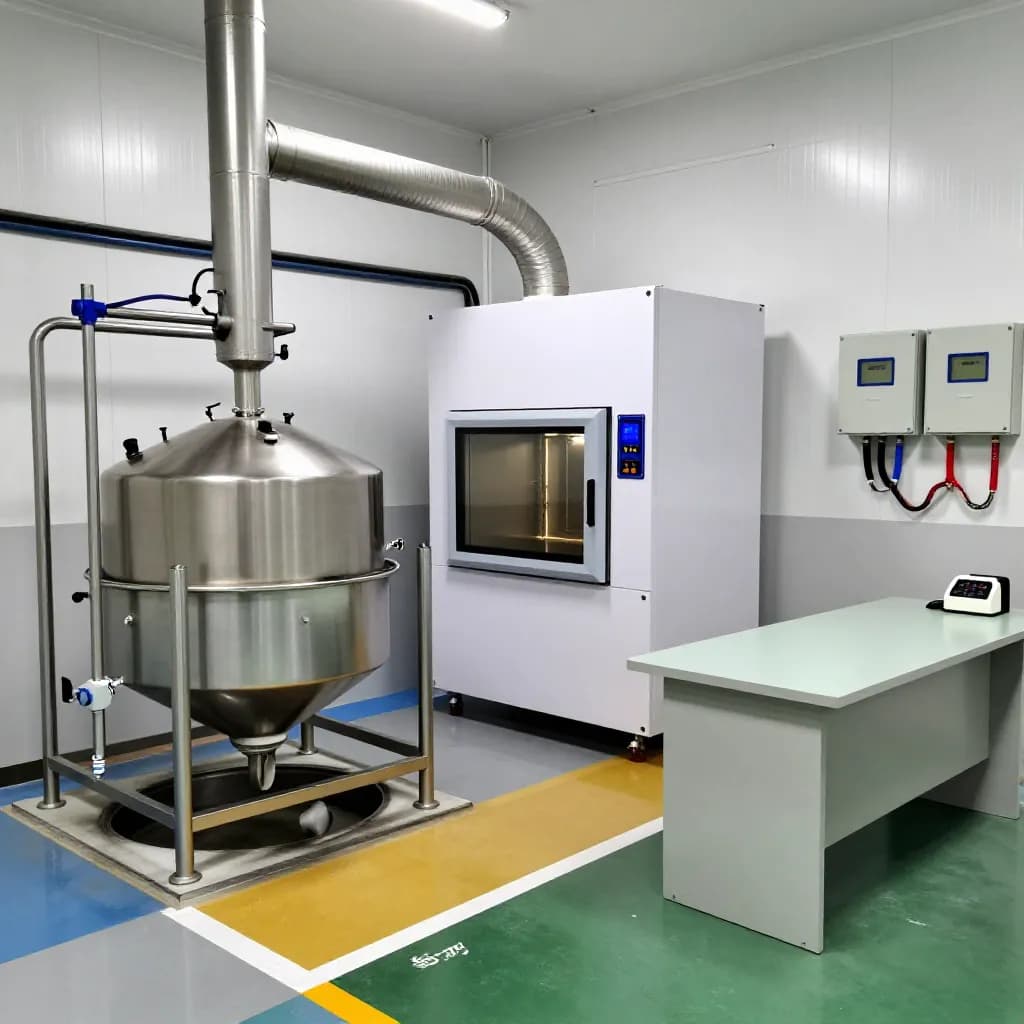
Start by defining your production requirements. What is the largest part you will coat? This determines the minimum booth and oven dimensions. What is your target throughput — parts per hour or square meters per day? This determines whether you need a batch or continuous system. What substrates will you coat — steel only, or also aluminum and other metals? This affects your pretreatment system requirements. What quality specifications must you meet? This determines your testing equipment and process control needs.
Ready to Start Your Project?
From one-off customs to 15,000-part production runs — get precise pricing in 24 hours.
On This Page
Planning Your Powder Coating Workshop: Start with the End in Mind
The physical space required for a powder coating workshop depends on the production scale. A small job shop operation coating individual parts in a batch process can operate in as little as 200-300 square meters, including preparation, coating, curing, and storage areas. A medium-volume operation with a conveyor system requires 500-1000 square meters. A high-volume production line may require 2000 square meters or more.
Regardless of scale, the workshop must accommodate the complete process flow: receiving and inspection of incoming parts, surface preparation (cleaning and blasting), pretreatment (if applicable), drying, powder application, curing, cooling, inspection, and packaging or shipping. Each of these functions requires dedicated space, and the layout must allow efficient material flow from one function to the next without backtracking or cross-contamination.
Ventilation Design: The Most Critical Infrastructure Element
Ventilation is the most important infrastructure element in a powder coating workshop. Inadequate ventilation creates health hazards from airborne powder dust, fire and explosion risks from combustible powder accumulations, contamination of the coating process from environmental dust, and regulatory non-compliance that can result in fines and shutdowns.
The spray booth ventilation system must capture all overspray powder and prevent it from escaping into the general work environment. The booth exhaust airflow must maintain a minimum face velocity of 0.5 m/s (100 fpm) at the booth opening to ensure that powder is drawn into the booth rather than escaping. For manual spray booths, the total exhaust volume is typically 5000-15000 cubic meters per hour depending on the booth size and opening area.
The booth exhaust air must be filtered before discharge to atmosphere. Cartridge filters or bag filters with a minimum efficiency of 99.9% for particles above 1 micron are standard. The filtered exhaust can be discharged outdoors or recirculated to the workspace if the filtration efficiency is adequate and local regulations permit recirculation. Recirculating the filtered air saves heating and cooling energy but requires higher filtration standards and monitoring.
General workshop ventilation — separate from the booth exhaust — must provide adequate air changes to maintain air quality in the preparation, curing, and storage areas. The blasting area requires its own dedicated exhaust system to capture blast dust. The curing oven requires exhaust ventilation to remove decomposition gases and fumes generated during the cure process. Each of these systems must be designed and sized independently based on the specific requirements of the process and the applicable ventilation standards.
Make-up air — replacement air to compensate for the air exhausted by the booth, blast room, and oven — must be provided to prevent negative pressure in the building that can cause drafts, door operation problems, and backdrafting of combustion appliances. The make-up air system should be heated (and cooled, if applicable) to maintain comfortable working conditions and consistent process temperatures.
Electrical Systems and Power Requirements
Powder coating equipment has significant electrical power requirements that must be planned into the workshop infrastructure from the beginning. Retrofitting electrical systems after the workshop is built is expensive and disruptive.
The curing oven is typically the largest electrical load in the workshop. Electric convection ovens for powder coating range from 30 kW for small batch ovens to 200 kW or more for large production ovens. Gas-fired ovens have lower electrical requirements (for fans and controls only) but require gas supply infrastructure. Determine the oven type and size early in the planning process so that the electrical service can be sized accordingly.
The compressed air system — compressor, dryer, and distribution — is the second largest electrical load, typically 15-50 kW depending on the compressor size. The compressor should be located in a separate room or enclosure to reduce noise in the work area and to provide clean, cool intake air. Size the compressor to provide the total air volume required by all equipment operating simultaneously, plus a 20-30% margin for future expansion.
The pretreatment system requires power for pumps, heaters, and controls. Heated wash stages may require 10-30 kW each for electric immersion heaters. Pump motors for spray wash systems typically range from 2-10 kW each. The total pretreatment electrical load depends on the number of stages and the heating method.
The powder application equipment — guns, feed units, and control systems — has relatively modest electrical requirements, typically 1-3 kW per gun station. However, the high-voltage power supply for corona guns requires proper grounding and isolation to prevent interference with other electrical systems.
All electrical installations in the powder coating area must comply with the applicable electrical code for hazardous locations. Powder coating booths and the immediate surrounding area are classified as hazardous locations due to the presence of combustible powder dust. Electrical equipment in these areas must be rated for the hazard classification — typically Class II, Division 2 (NEC) or Zone 22 (IEC) for the area around the booth. This affects the type of lighting, switches, outlets, and motors that can be installed in the booth area.
Equipment Layout and Material Flow
The layout of equipment in the workshop determines the efficiency of material flow, the productivity of operators, and the risk of cross-contamination between process stages. A well-planned layout minimizes handling, reduces travel distances, and separates clean and dirty operations.
The ideal material flow is linear — parts move in one direction from receiving through each process stage to shipping, without backtracking or crossing paths. In practice, space constraints often require some compromise, but the goal of unidirectional flow should guide the layout planning.
Separate the dirty operations (blasting, grinding, and chemical stripping) from the clean operations (pretreatment, coating, and curing) with physical barriers — walls, curtains, or distance — to prevent contamination of prepared surfaces by blast dust, grinding debris, or chemical fumes. The transition from dirty to clean areas should include a cleaning step — typically a blowdown station where parts are cleaned with compressed air before entering the clean zone.
The spray booth should be located as close as possible to the curing oven to minimize the handling distance for powder-coated parts. Uncured powder is fragile and can be disturbed by handling, air currents, and contact. The shorter the distance between the booth and the oven, the lower the risk of damage to the uncured powder film.
Provide adequate staging areas between process stages for work-in-progress inventory. Parts waiting for the next process stage need a clean, protected area where they will not be contaminated or damaged. Staging areas also provide buffer capacity that allows each process stage to operate at its own pace without being constrained by the speed of adjacent stages.
Allow space for future expansion. Powder coating operations tend to grow as capabilities are proven and demand increases. Leaving space for additional booths, a larger oven, or an extended pretreatment system avoids the need for a costly facility move when growth occurs. A common planning guideline is to size the building for 150-200% of the initial equipment footprint.
Safety Systems and Regulatory Compliance
Powder coating workshops must comply with a range of safety regulations covering fire protection, explosion prevention, occupational health, and environmental protection. Understanding and planning for these requirements from the outset avoids costly retrofits and regulatory problems after the workshop is operational.
Fire and explosion protection is the primary safety concern. Powder coatings are combustible materials, and airborne powder dust in the right concentration can form an explosive atmosphere. The spray booth and powder storage areas must be designed to prevent the accumulation of combustible dust concentrations. This is achieved through adequate ventilation, regular housekeeping, and electrical equipment rated for hazardous locations.
Fire suppression systems may be required in the spray booth, powder storage area, and curing oven depending on local fire codes and insurance requirements. Automatic fire suppression — typically dry chemical or clean agent systems — provides rapid response to fires that may start in the booth or oven. Manual fire extinguishers rated for Class D (combustible dust) fires should be located at all work stations.
Occupational health requirements include respiratory protection for operators exposed to powder dust (particularly during booth cleaning and color changes), hearing protection for operators in high-noise areas (blasting, compressor rooms), and ergonomic considerations for repetitive tasks (spraying, racking, and masking). Conduct a workplace hazard assessment before operations begin and implement the required controls — engineering controls (ventilation, enclosures), administrative controls (procedures, training), and personal protective equipment.
Environmental regulations govern air emissions (booth exhaust, oven exhaust), wastewater discharge (pretreatment rinse water), and solid waste disposal (spent blast media, powder waste, chemical sludge). Obtain the required environmental permits before beginning operations. Design the pretreatment system with wastewater treatment capability if direct discharge to the sewer is not permitted. Plan for proper storage and disposal of all waste streams generated by the operation.
Essential Equipment Selection for a New Workshop
Selecting the right equipment for a new powder coating workshop requires balancing capability, quality, and budget. Over-specifying equipment wastes capital; under-specifying creates bottlenecks and quality limitations that constrain the operation from the start.
The spray booth is the centerpiece of the operation. For a new workshop, a cartridge-filter booth with manual spray guns is the most versatile and cost-effective starting configuration. Size the booth for the largest parts you expect to coat, with at least 300 mm clearance on all sides. Choose a booth with a quick-color-change capability if you will coat multiple colors. Automatic gun systems can be added later as volume justifies the investment.
The curing oven should be sized for the largest parts and the highest batch volume you expect to process. A gas-fired batch oven is the most common choice for new operations due to lower operating cost compared to electric ovens and the flexibility to accommodate varying part sizes and batch configurations. Ensure the oven has adequate temperature uniformity (±5°C), reliable controls, and sufficient heating capacity to bring your heaviest loads to cure temperature within 30-45 minutes.
The surface preparation system depends on your part mix. A blast cabinet or small blast room handles most small-to-medium parts. A multi-stage spray wash system provides pretreatment for parts requiring enhanced corrosion resistance. For a startup operation, a manual blast cabinet and a simple iron phosphate spray wash system provide adequate capability at moderate cost.
The compressed air system should be sized for the total air demand of all equipment operating simultaneously. An oil-free rotary screw compressor with a refrigerated dryer and adequate receiver tank capacity provides clean, dry air for the entire operation. Size the compressor for 125-150% of the calculated demand to allow for future expansion and to avoid running the compressor at full capacity continuously.
Quality control equipment — coating thickness gauge, adhesion test kit, gloss meter, and temperature profiling system — is essential from day one. These instruments provide the data needed to verify coating quality, troubleshoot problems, and demonstrate compliance with customer specifications. Do not defer quality equipment purchases — operating without measurement capability leads to quality problems that are far more expensive than the instruments.
Commissioning and Startup: Getting It Right from Day One
Commissioning — the process of verifying that all installed equipment and systems operate correctly before beginning production — is the final step before the workshop is operational. Thorough commissioning prevents startup problems that can damage equipment, produce defective coatings, and create safety hazards.
Verify all utility connections: electrical power to each piece of equipment at the correct voltage and phase, compressed air at the required pressure and flow rate to each use point, gas supply to the oven at the correct pressure, and water supply to the pretreatment system at the required flow rate and quality. Test each utility under load — a system that appears to work at no load may fail when all equipment is operating simultaneously.
Test each piece of equipment individually before running the complete process. Run the oven through a full temperature cycle and verify temperature uniformity with a multi-point thermocouple survey. Test the spray booth exhaust system and verify face velocity at the booth opening. Run the pretreatment system and verify chemical concentrations, temperatures, and spray coverage. Test each powder gun for charging voltage, powder flow rate, and spray pattern.
Run test parts through the complete process — from surface preparation through coating and curing — before accepting production work. Measure film thickness, test adhesion, verify cure with solvent rub testing, and inspect the visual quality of the test parts. These test runs validate the entire process chain and identify any issues that need correction before production begins.
Train all operators on the equipment, procedures, and safety requirements before production starts. Training should cover equipment operation, quality standards, safety procedures, and emergency response. Document the training and verify operator competency through practical demonstrations. Operators who understand the process and the equipment produce better results from day one than operators who learn by trial and error on production parts.
Establish baseline process parameters during commissioning — gun settings, oven temperatures, pretreatment concentrations, and quality measurements — and document them as the standard operating conditions. These baselines provide the reference point for future process control and troubleshooting.
Frequently Asked Questions
How much space do you need for a powder coating workshop?
A small batch operation can work in 200-300 square meters. A medium-volume operation with conveyor needs 500-1000 square meters. Plan for 150-200% of initial equipment footprint to allow for future expansion. The space must accommodate preparation, coating, curing, inspection, and storage areas with efficient material flow.
What ventilation is required for powder coating?
The spray booth needs exhaust maintaining minimum 0.5 m/s face velocity at the opening, with 99.9% efficient filtration. Separate exhaust systems are needed for blasting and oven areas. Make-up air must replace exhausted air to prevent negative building pressure. All ventilation must comply with local codes for combustible dust environments.
What electrical classification applies to powder coating areas?
Powder coating booth areas are typically classified as Class II, Division 2 (NEC) or Zone 22 (IEC) hazardous locations due to combustible powder dust. Electrical equipment in these areas — lighting, switches, motors, outlets — must be rated for the hazard classification. Consult local electrical codes and a qualified electrician for specific requirements.
What equipment do you need to start powder coating?
Essential equipment includes a spray booth with filtration, powder coating gun and feed system, curing oven, surface preparation equipment (blast cabinet or wash system), compressed air system with dryer, and quality control instruments (thickness gauge, adhesion test kit). Start with manual equipment and upgrade to automation as volume grows.
What safety systems are required for a powder coating workshop?
Required systems include booth ventilation with combustible dust filtration, fire suppression in booth and oven areas, hazardous-location electrical equipment, respiratory and hearing protection for operators, emergency eyewash and shower stations near chemical areas, and proper waste handling for powder, chemicals, and blast media.
Ready to Start Your Project?
From one-off customs to 15,000-part production runs — get precise pricing in 24 hours.