Surface preparation is the single most important factor determining the performance and longevity of a powder coating. Industry data consistently shows that 80% or more of all coating failures can be traced back to inadequate surface preparation rather than problems with the powder material or application process. A perfectly applied powder coat over a poorly prepared substrate will fail — it is only a matter of time.
Guides
How to Prepare Metal for Powder Coating: The Complete Surface Preparation Guide
Sundial Powder Coating·April 22, 2026·14 min
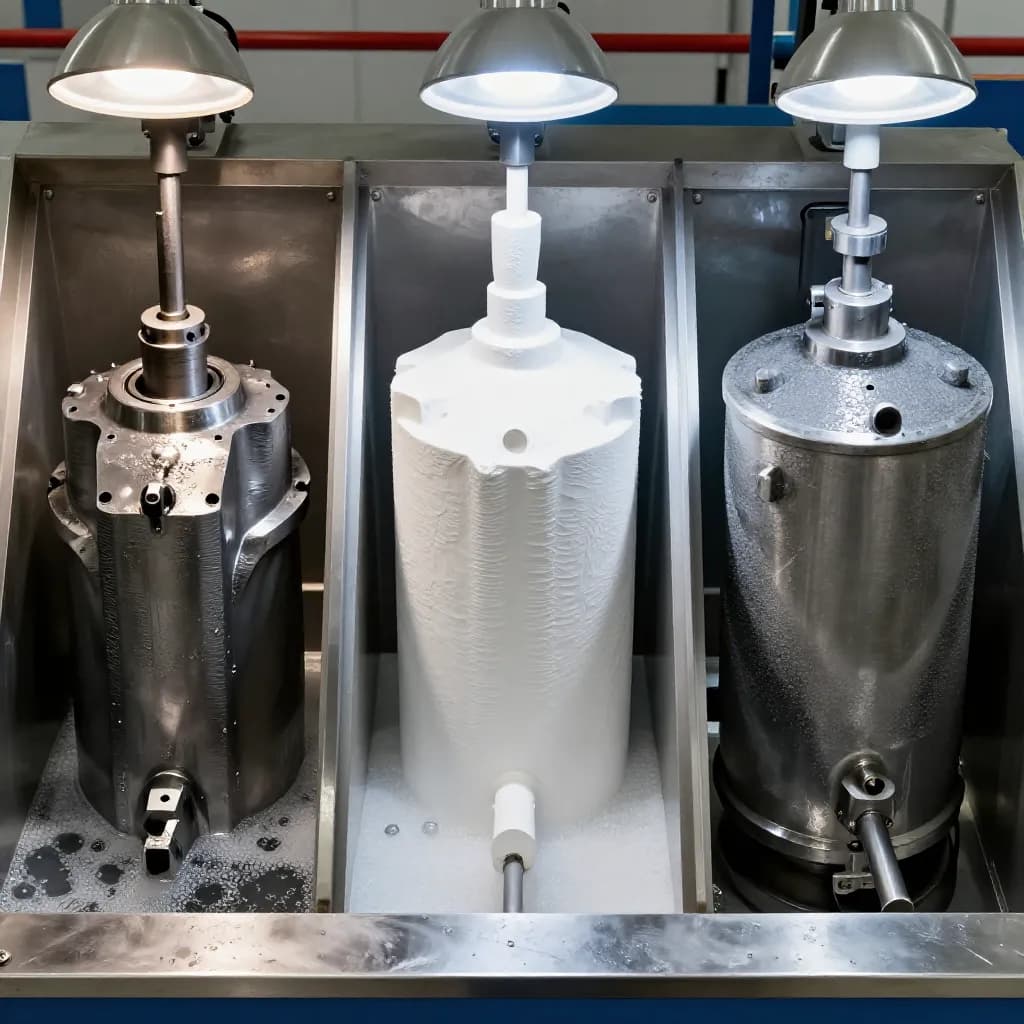
The goal of surface preparation is straightforward: create a surface that is chemically clean, free of contaminants, and has the appropriate profile to promote mechanical and chemical adhesion of the powder coating. This means removing all oils, greases, mill scale, rust, oxides, old coatings, and any other material that could interfere with the bond between the metal substrate and the applied powder.
Ready to Start Your Project?
From one-off customs to 15,000-part production runs — get precise pricing in 24 hours.
On This Page
Why Surface Preparation Is the Foundation of Powder Coating Quality
Different metals require different preparation approaches. Mild steel, aluminum, galvanized steel, stainless steel, and cast metals each present unique challenges in terms of surface contamination, oxide layers, and substrate chemistry. A preparation process that works perfectly for cold-rolled steel may cause problems on aluminum or galvanized surfaces. Understanding these differences is essential for achieving consistent, high-quality results across a range of substrates.
This guide walks through each stage of the metal preparation process in the order they should be performed, from initial assessment through final inspection before the part enters the powder booth.
Stage One: Initial Assessment and Contaminant Identification
Before any cleaning or blasting begins, every part should be visually assessed to identify the types and severity of contamination present. This initial assessment determines which preparation steps are necessary and in what sequence they should be performed. Skipping this step often leads to wasted time and materials when a generic preparation process proves inadequate for the specific contamination encountered.
Common contaminants on incoming metal parts include cutting oils and coolants from machining operations, drawing compounds from stamping and forming, mill scale from hot-rolled steel, flash rust from humid storage conditions, weld spatter and heat tint from fabrication, and residual coatings or markings from previous finishing operations. Each of these contaminants requires a specific removal approach.
Heavily oiled parts from machining operations need thorough degreasing before any abrasive blasting — blasting an oily surface simply drives the contamination into the surface profile, creating adhesion problems that are extremely difficult to detect until the coating fails in service. Parts with heavy mill scale may require more aggressive blasting media or longer blast times than parts with only light surface rust.
During assessment, also check for substrate defects that surface preparation cannot correct: deep pits, porosity in castings, laminations in sheet metal, or weld defects that will telegraph through the finished coating. These issues should be addressed through grinding, filling, or rejection before the preparation process begins, as powder coating will not hide significant substrate defects.
Stage Two: Degreasing and Chemical Cleaning
Degreasing is the first active step in surface preparation and must be performed before any abrasive blasting or chemical pretreatment. The purpose is to remove all organic contaminants — oils, greases, waxes, drawing compounds, and fingerprints — that would prevent subsequent preparation steps from working effectively and compromise coating adhesion.
Alkaline cleaning is the most common degreasing method in production powder coating operations. Alkaline cleaners work by saponifying fats and oils, emulsifying petroleum-based contaminants, and dispersing solid particles. They are typically applied by spray wash at 50-70°C with concentrations of 2-5% by volume, followed by thorough rinsing with clean water. The cleaner chemistry must be matched to the substrate — strongly alkaline cleaners that work well on steel can etch and damage aluminum surfaces.
Solvent wiping with acetone, MEK, or proprietary solvent blends is appropriate for small batches or spot cleaning but is not practical for production volumes. Vapor degreasing with chlorinated solvents was once common but has largely been phased out due to environmental and health regulations. Aqueous parts washers using heated alkaline solutions have replaced vapor degreasers in most operations.
The effectiveness of degreasing should be verified before proceeding. The water-break test is the simplest and most widely used method: rinse the cleaned surface with clean water and observe whether the water sheets uniformly across the surface or breaks into droplets. A continuous, unbroken water film indicates a clean surface. Water beading or breaking indicates residual contamination that requires additional cleaning. This simple test takes seconds and prevents costly rework downstream.
Stage Three: Abrasive Blasting for Profile and Cleanliness
Abrasive blasting serves two critical functions in powder coating preparation: it removes surface contaminants that chemical cleaning cannot address — mill scale, rust, old coatings, and tightly adherent oxides — and it creates a surface profile that dramatically improves mechanical adhesion of the powder coating. A properly blasted surface provides thousands of microscopic anchor points per square centimeter for the coating to grip.
The choice of blast media depends on the substrate material and the required surface profile. Steel grit or shot in the range of S230 to S330 is standard for steel substrates, producing an angular profile of 25-75 microns that is ideal for powder coating adhesion. Aluminum oxide media in 60-120 mesh is preferred for aluminum and other non-ferrous metals because it does not embed ferrous contamination that could cause galvanic corrosion under the coating. Glass bead is used where a smoother profile is acceptable or where the substrate is too thin to withstand aggressive angular media.
The target cleanliness standard for powder coating is typically SA 2.5 (near-white metal blast) per ISO 8501-1, which requires that at least 95% of the surface area is free of all visible residues. SA 3 (white metal blast) is specified for critical applications but is significantly more expensive to achieve and maintain. The blast profile should be measured with a surface profile gauge or replica tape to confirm it falls within the specified range.
Timing after blasting is critical. Freshly blasted steel begins to oxidize within hours in humid conditions. Parts should proceed to pretreatment or coating within four hours of blasting, or sooner in high-humidity environments. If parts cannot be processed promptly, they should be stored in a climate-controlled area with relative humidity below 50%.
Stage Four: Chemical Pretreatment for Adhesion and Corrosion Resistance
Chemical pretreatment creates a conversion coating on the metal surface that serves two purposes: it provides a chemical bond between the metal substrate and the powder coating, and it adds a layer of corrosion resistance that protects the substrate if the powder coating is damaged or breached in service. While abrasive blasting alone can provide adequate adhesion for many applications, chemical pretreatment is essential for parts that must meet demanding corrosion resistance specifications.
Iron phosphate is the most common pretreatment for steel in general industrial powder coating. It is applied as a spray or immersion stage in a multi-stage wash system, typically at 40-60°C with a processing time of 60-120 seconds. Iron phosphate produces a thin amorphous coating weighing 0.3-1.0 g/m² that improves adhesion and provides moderate corrosion protection. It is relatively simple to control and maintain, making it suitable for job shops and medium-volume operations.
Zinc phosphate provides significantly better corrosion resistance than iron phosphate and is specified for automotive, appliance, and other demanding applications. The crystalline zinc phosphate coating weighs 1.5-4.0 g/m² and provides a more robust barrier against under-film corrosion. However, zinc phosphate systems are more complex to operate, requiring more process stages, tighter chemical control, and generating more sludge that requires disposal.
Zirconium-based and other thin-film pretreatments have gained significant market share as alternatives to traditional phosphate systems. These newer chemistries produce extremely thin conversion coatings — typically less than 100 nanometers — that provide adhesion and corrosion performance comparable to iron phosphate with significantly reduced chemical consumption, lower operating temperatures, less sludge generation, and simplified wastewater treatment. They are particularly well-suited for mixed-metal processing lines that handle both steel and aluminum.
Stage Five: Rinsing, Drying, and Pre-Coating Inspection
Proper rinsing between pretreatment stages and after the final pretreatment step is critical but often overlooked. Residual pretreatment chemicals left on the surface can interfere with powder adhesion, cause discoloration, or create defects in the cured film. The final rinse should use deionized or reverse-osmosis water with conductivity below 30 microsiemens per centimeter to prevent mineral deposits that can cause adhesion problems and cosmetic defects.
Drying must be thorough and complete before parts enter the powder booth. Any residual moisture on the surface will cause the electrostatically charged powder to clump, creating defects in the applied film. Parts are typically dried in a dedicated dry-off oven at 110-150°C for sufficient time to ensure all moisture is driven from the surface, including moisture trapped in joints, seams, and recesses. Recessed areas and blind holes require particular attention — trapped moisture that flashes to steam during curing causes blistering and blowout defects.
Pre-coating inspection is the final quality gate before parts enter the powder application process. Inspectors should verify that surfaces are uniformly clean with no visible contamination, that the surface profile is within specification, that pretreatment coating weight is within the target range, and that parts are completely dry. Any parts that fail inspection should be returned for reprocessing rather than sent forward with known defects.
Documentation of preparation parameters — blast media type and condition, pretreatment chemical concentrations and temperatures, rinse water quality, and dry-off oven temperature — provides traceability that is invaluable for troubleshooting if coating problems emerge later. Many quality systems require this documentation as part of the production record.
Common Surface Preparation Mistakes and How to Avoid Them
The most frequent preparation mistake is insufficient degreasing before blasting. When oily parts are blasted without proper cleaning, the blast media drives oil into the surface profile where it becomes invisible but remains active as a contaminant. The resulting surface looks clean and has the correct profile, but the embedded oil prevents proper adhesion. The coating may pass initial inspection but will fail prematurely in service through delamination or blistering. Always degrease thoroughly before blasting, and verify cleanliness with a water-break test.
Using the wrong blast media for the substrate is another common error. Blasting aluminum with steel grit embeds ferrous particles in the soft aluminum surface, creating galvanic corrosion cells that cause blistering and coating failure. Always use non-ferrous media — aluminum oxide, glass bead, or plastic media — on aluminum and other non-ferrous substrates.
Over-blasting thin materials causes warping and distortion that cannot be corrected after the fact. Sheet metal thinner than 1.5 mm requires reduced blast pressure, increased nozzle distance, and careful technique to achieve the required cleanliness without distorting the part. Consider chemical stripping as an alternative to blasting for very thin or delicate parts.
Neglecting rinse water quality is a subtle but significant source of coating defects. Municipal tap water contains dissolved minerals — calcium, magnesium, silicates — that deposit on the surface during drying and create adhesion barriers. The final rinse should always use deionized or RO water, and rinse water quality should be monitored daily with a conductivity meter. Investing in water treatment for the final rinse stage pays for itself many times over in reduced reject rates and improved coating performance.
Matching Preparation Methods to Substrate and Application
Not every part requires every preparation step. The appropriate preparation process depends on the substrate material, the incoming condition of the parts, and the performance requirements of the finished coating. Over-preparing parts wastes time and money; under-preparing them causes failures. The key is matching the preparation intensity to the actual requirements.
For new, clean mild steel parts with minimal oil contamination destined for interior decorative applications, alkaline cleaning followed by iron phosphate pretreatment may be entirely sufficient. The parts do not need aggressive blasting because there is no mill scale or rust to remove, and the corrosion resistance requirements are modest.
For structural steel with heavy mill scale and rust that will be exposed to outdoor weathering, the full preparation sequence is necessary: thorough degreasing, abrasive blasting to SA 2.5, zinc phosphate or zirconium pretreatment, deionized water rinse, and complete drying. Cutting corners on any of these steps for exterior-exposed structural components is a false economy that will result in premature coating failure.
Aluminum requires particular care because of its reactive oxide layer. While this oxide provides natural corrosion resistance, it must be properly managed during preparation to ensure coating adhesion. Chromate conversion coating was the traditional pretreatment for aluminum but is being replaced by chrome-free alternatives due to environmental regulations. Zirconium and titanium-based pretreatments now provide equivalent performance on aluminum without the health and environmental concerns associated with hexavalent chromium. Regardless of the pretreatment chemistry chosen, the alkaline cleaning stage must use aluminum-safe formulations to avoid etching or staining the substrate.
Frequently Asked Questions
What happens if you skip surface preparation before powder coating?
Skipping surface preparation leads to poor adhesion, premature coating failure, and defects such as blistering, peeling, and under-film corrosion. Industry data shows that over 80% of powder coating failures are caused by inadequate surface preparation rather than problems with the powder or application process.
What blast standard is required for powder coating?
The standard blast cleanliness for powder coating is SA 2.5 (near-white metal blast) per ISO 8501-1, which requires at least 95% of the surface to be free of visible residues. SA 3 (white metal blast) is specified for critical applications but is more costly to achieve and maintain.
How soon after blasting must parts be coated?
Freshly blasted steel should proceed to pretreatment or coating within four hours, or sooner in humid conditions. Exposed steel begins to oxidize rapidly, and flash rust will compromise coating adhesion. If immediate processing is not possible, store parts in a climate-controlled area below 50% relative humidity.
What is the water-break test for surface cleanliness?
The water-break test involves rinsing a cleaned surface with clean water and observing the water behavior. A continuous, unbroken water film indicates a clean surface. If the water beads up or breaks into droplets, residual oil or contamination is present and additional cleaning is required before proceeding.
Can you use the same blast media on steel and aluminum?
No. Steel grit or shot should never be used on aluminum because ferrous particles embed in the soft aluminum surface and cause galvanic corrosion under the coating. Always use non-ferrous media such as aluminum oxide, glass bead, or plastic media when blasting aluminum and other non-ferrous substrates.
Ready to Start Your Project?
From one-off customs to 15,000-part production runs — get precise pricing in 24 hours.