Powder coating equipment that is not properly maintained produces inconsistent results, higher defect rates, increased downtime, and premature equipment failure. The relationship between maintenance and quality is direct — a gun with a worn electrode produces inconsistent charging, a booth with clogged filters has poor powder containment, an oven with failed temperature controls produces under-cured or over-cured coatings, and a pretreatment system with depleted chemicals produces inadequate surface preparation.
Guides
How to Maintain Powder Coating Equipment: Guns, Booths, Ovens, and Pretreatment Systems
Sundial Powder Coating·April 22, 2026·14 min
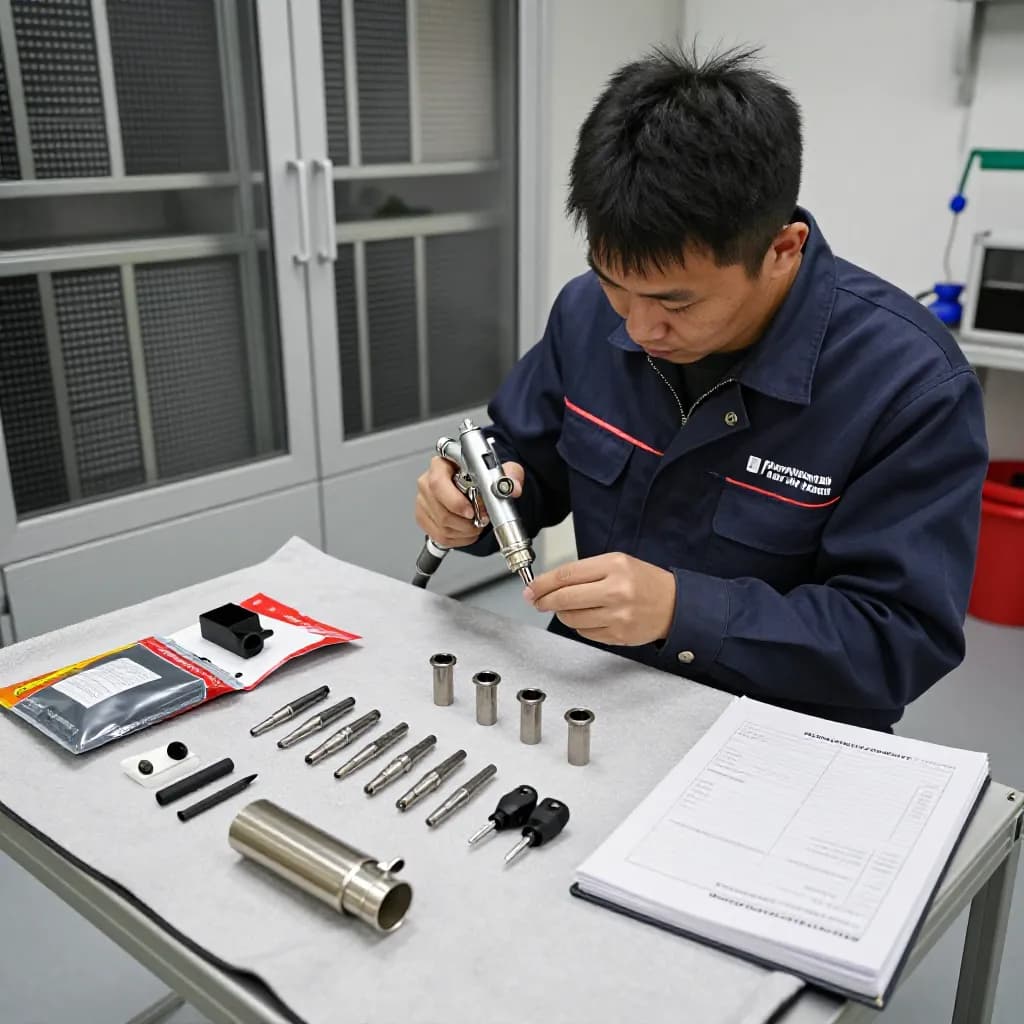
Preventive maintenance — scheduled inspection, cleaning, calibration, and replacement of wear items before they fail — is far more cost-effective than reactive maintenance that addresses problems only after they cause production failures. A preventive maintenance program reduces unplanned downtime, extends equipment life, maintains consistent coating quality, and provides documentation that supports quality system requirements.
Ready to Start Your Project?
From one-off customs to 15,000-part production runs — get precise pricing in 24 hours.
On This Page
Why Preventive Maintenance Is Essential for Powder Coating Quality
The maintenance requirements for powder coating equipment span four major systems: the powder application system (guns, pumps, hoses, and feed units), the spray booth and powder recovery system, the curing oven, and the pretreatment system. Each system has its own maintenance schedule, procedures, and critical parameters. This guide covers the essential maintenance tasks for each system, organized by frequency — daily, weekly, monthly, and annual — to help establish a comprehensive maintenance program.
Powder Gun Maintenance: Daily, Weekly, and Scheduled
The powder coating gun is the most maintenance-intensive component in the system because it handles abrasive powder at high velocity and operates at high voltage. Wear and contamination directly affect charging efficiency, powder delivery, and spray pattern quality.
Daily maintenance includes visual inspection of the gun tip, electrode, and deflector for powder buildup and damage. Clean the gun exterior and tip assembly with compressed air and a soft brush at the end of each shift. Check the electrode for erosion — a worn electrode produces a weaker electric field and reduced charging efficiency. Inspect the powder hose connections for leaks and the hose interior for buildup by disconnecting and blowing through with compressed air.
Weekly maintenance includes a more thorough cleaning of the gun internals. Disassemble the gun tip assembly — nozzle, deflector, and electrode — and clean each component individually. Inspect the electrode for wear and replace if the tip has eroded more than 1 mm from its original profile. Check the high-voltage cable and connector for damage, cracking, or powder contamination that could cause arcing or voltage leakage. Test the charging voltage with a kilovolt meter to verify that the gun is delivering the set voltage at the electrode.
Scheduled maintenance — typically monthly or based on operating hours — includes replacement of wear items according to the manufacturer's schedule. Nozzles, deflectors, and electrodes are consumable items with defined service lives. Powder pump components — venturi throats, diaphragms, and seals — wear with use and should be replaced at the manufacturer's recommended intervals. The high-voltage multiplier (cascade) should be tested annually and replaced if output has degraded.
Maintain a spare parts inventory for all gun wear items. A gun failure during production causes immediate downtime if spare parts are not available. Stock at least two sets of nozzles, deflectors, electrodes, and pump components for each gun in the operation.
Spray Booth and Recovery System Maintenance
The spray booth contains the powder overspray and the recovery system collects it for reuse. Maintenance of these systems ensures effective powder containment, consistent reclaim quality, and safe operating conditions.
Daily booth maintenance includes visual inspection of the booth interior for powder accumulation on walls, floor, and equipment. Blow down or wipe any significant accumulations, particularly before color changes. Check the booth exhaust airflow by observing the velocity at the booth opening — air should flow inward at all points. If airflow is weak or inconsistent, the filters may be clogged or the exhaust fan may be malfunctioning.
Filter maintenance is the most critical aspect of booth upkeep. Cartridge filters in the recovery system capture overspray powder and must be cleaned regularly by reverse-pulse compressed air. Monitor the differential pressure across the filter bank — increasing pressure indicates filter loading. Most systems have automatic pulse cleaning triggered by pressure differential, but the pulse system itself requires maintenance. Check pulse valves, compressed air supply pressure, and pulse timer settings weekly.
Replace filters when they can no longer be cleaned to acceptable differential pressure levels. Filter life depends on the powder type, application volume, and cleaning frequency, but typical cartridge filter life is 2000-4000 operating hours. Do not operate with damaged or bypassed filters — this releases powder into the exhaust system and the work environment.
The cyclone separator, if present, should be inspected monthly for wear and buildup. The cyclone interior surfaces wear from the abrasive action of the powder-laden air stream. Worn cyclone walls reduce separation efficiency, allowing more powder to reach the final filters and reducing reclaim quality. Check the cyclone cone, vortex finder, and discharge valve for wear and proper operation.
Booth lighting should be maintained for consistent visual inspection of the coating process. Clean light fixtures weekly — powder accumulation on light covers reduces illumination and makes it difficult for operators to assess coating quality. Replace failed lamps promptly.
Curing Oven Calibration and Maintenance
The curing oven must maintain accurate, uniform temperature to produce consistently cured coatings. Oven maintenance focuses on temperature accuracy, uniformity, air circulation, and energy efficiency.
Temperature controller calibration should be verified monthly by comparing the controller reading against an independent calibrated thermometer or thermocouple placed at the controller sensor location. If the controller reading differs from the reference by more than ±3°C, recalibrate the controller or replace the sensor. Temperature sensors (thermocouples or RTDs) degrade over time and should be replaced annually or whenever calibration drift is detected.
Oven temperature uniformity surveys should be performed quarterly or whenever the oven configuration changes. Place calibrated thermocouples at multiple locations throughout the oven — top, bottom, front, back, left, right, and center — and record temperatures during a standard cure cycle. Temperature variation should be within ±5°C of the setpoint at the cure temperature. Variations exceeding this range indicate problems with air circulation, burner output, or insulation.
Air circulation system maintenance includes checking fan belts for tension and wear (monthly), lubricating fan bearings per the manufacturer's schedule, and inspecting fan blades for balance and damage (quarterly). A failed or degraded circulation fan causes temperature non-uniformity that directly affects cure quality. Listen for unusual noises from the fan assembly — bearing noise, belt squeal, or blade vibration — that indicate developing problems.
Burner maintenance for gas-fired ovens includes checking ignition systems, flame sensors, gas valves, and combustion air supply (monthly). Clean burner orifices and inspect heat exchangers for soot buildup (quarterly). Have the burner system professionally serviced annually, including combustion efficiency testing and safety interlock verification.
Insulation inspection should be performed annually. Look for damaged, compressed, or missing insulation on the oven shell, doors, and ductwork. Use a thermal imaging camera to identify hot spots on the exterior that indicate insulation failures. Repair or replace damaged insulation promptly — heat loss through insulation failures wastes energy and can create safety hazards.
Oven door seals and gaskets wear with use and should be inspected monthly and replaced when they no longer provide an effective seal. Worn door seals allow heat to escape, increasing energy consumption and potentially creating cold spots near the door.
Pretreatment System Monitoring and Maintenance
The pretreatment system — wash stages, chemical baths, rinse tanks, and associated pumps, heaters, and controls — requires regular monitoring and maintenance to ensure consistent surface preparation quality. Pretreatment chemistry that drifts out of specification produces inadequate surface preparation that leads to adhesion and corrosion failures in the finished coating.
Chemical concentration monitoring is the most frequent pretreatment maintenance task. Test the concentration of each chemical stage — cleaner, pretreatment, and any post-rinse treatments — at least once per shift using the titration or test methods specified by the chemical supplier. Record the results and adjust concentrations as needed to maintain the target range. Concentration drift is normal as chemicals are consumed by the process and diluted by dragout, and regular adjustment is expected.
Temperature monitoring of heated stages should be continuous via the stage temperature controllers, with daily verification against an independent thermometer. Pretreatment reactions are temperature-dependent — a 5°C drop in cleaner temperature can significantly reduce cleaning effectiveness. Check heater elements, thermostats, and circulation pumps regularly to ensure consistent temperature control.
Rinse water quality monitoring is essential for preventing mineral deposits and chemical carryover that cause coating defects. Test rinse water conductivity daily — the final rinse should be below 30 microsiemens per centimeter for most applications. Replace or replenish rinse water when conductivity exceeds the target. Monitor the deionized water system — resin beds, reverse osmosis membranes, and storage tanks — to ensure consistent water quality.
Nozzle and spray system maintenance ensures uniform chemical coverage of the parts. Inspect spray nozzles weekly for clogging, wear, and proper spray pattern. Clogged nozzles create bare spots where the chemical does not contact the part surface. Replace worn nozzles that no longer produce the correct spray pattern. Check pump pressures and flow rates monthly to verify that the spray system is delivering the specified volume and pressure.
Sludge management is an ongoing requirement for phosphate pretreatment systems. Zinc phosphate systems in particular generate sludge that accumulates in the pretreatment tank and must be removed regularly to maintain bath chemistry and prevent nozzle clogging. Monitor sludge levels and remove sludge on a scheduled basis — weekly or monthly depending on production volume.
Compressed Air System Maintenance
Clean, dry compressed air is essential for every aspect of the powder coating process — powder fluidization, gun operation, booth cleaning, and general plant air. Moisture, oil, and particulate contamination in the compressed air supply cause powder clumping, gun malfunctions, coating defects, and equipment damage.
Air dryer maintenance is the highest priority. Refrigerated dryers require regular condenser cleaning (monthly), drain valve inspection (weekly), and refrigerant charge verification (annually). Desiccant dryers require desiccant replacement or regeneration on schedule, valve inspection, and tower switching verification. Monitor the dewpoint of the dried air — it should be at least 10°C below the lowest ambient temperature in the plant to prevent condensation in the air lines.
Moisture separators and drain traps throughout the air distribution system must be drained daily — more frequently in humid conditions. Automatic drains should be checked weekly to verify they are operating correctly. A failed automatic drain allows moisture to accumulate and eventually reach the powder coating equipment.
Air filters at the compressor intake, after the dryer, and at point-of-use locations must be inspected and replaced on schedule. Intake filters prevent environmental contaminants from entering the system. After-dryer filters remove any particulate or oil that passes through the dryer. Point-of-use filters provide final protection at the equipment. Monitor differential pressure across each filter and replace when the pressure drop exceeds the manufacturer's recommendation.
Oil-free compressors are preferred for powder coating operations because they eliminate the risk of oil contamination in the air supply. If oil-lubricated compressors are used, the air treatment system must include coalescing filters and activated carbon filters to remove oil vapor and aerosol. Test the air quality at point-of-use locations quarterly for oil content — any detectable oil indicates a filter failure that must be corrected immediately.
Air line maintenance includes checking for leaks (which waste energy and reduce system pressure), draining low points in the piping where moisture collects, and verifying that pressure regulators at each piece of equipment are functioning correctly and set to the specified pressure.
Building a Maintenance Schedule and Documentation System
An effective maintenance program requires a structured schedule, clear procedures, and consistent documentation. Without these elements, maintenance tasks are missed, performed inconsistently, or not recorded, undermining the program's effectiveness.
Create a master maintenance schedule that lists every maintenance task, its frequency, the responsible person, and the procedure reference. Organize tasks by frequency — daily, weekly, monthly, quarterly, and annual — and by equipment system. Post daily and weekly task lists at each work station so operators can see and complete their assigned tasks. Use a calendar or computerized maintenance management system (CMMS) to schedule and track less frequent tasks.
Write clear, step-by-step procedures for each maintenance task. Include the tools and materials needed, safety precautions, the specific steps to perform, the acceptance criteria (what constitutes a passing result), and the corrective action if the result fails. Procedures should be written for the skill level of the person performing the task — operator-level procedures for daily tasks, technician-level procedures for weekly and monthly tasks.
Document all maintenance activities and results. At minimum, record the date, the task performed, the result (pass/fail and any measurements), the person who performed the task, and any corrective actions taken. This documentation provides evidence of maintenance compliance for quality audits, supports trend analysis that can predict equipment failures before they occur, and provides a history that is invaluable for troubleshooting recurring problems.
Review maintenance data monthly to identify trends and recurring issues. If a particular component fails frequently, investigate whether the maintenance interval is too long, the operating conditions are too severe, or the component quality is inadequate. Adjust the maintenance program based on actual experience rather than relying solely on manufacturer recommendations, which may not account for your specific operating conditions.
Budget for maintenance materials, spare parts, and labor as a planned operating expense rather than an unplanned emergency cost. A well-maintained powder coating operation typically spends 3-5% of equipment value annually on preventive maintenance — a fraction of the cost of unplanned downtime and quality failures that result from deferred maintenance.
Frequently Asked Questions
How often should powder coating guns be maintained?
Daily: clean exterior and tip, inspect electrode. Weekly: disassemble and clean internals, test charging voltage. Monthly: replace wear items (nozzles, deflectors, electrodes) per manufacturer schedule, inspect high-voltage components. Keep spare parts stocked to avoid downtime from unexpected failures.
How do you check oven temperature accuracy?
Monthly, compare the oven controller reading against an independent calibrated thermometer at the sensor location. Quarterly, perform a multi-point temperature uniformity survey with thermocouples throughout the oven. Variation should be within ±5°C of setpoint. Recalibrate or replace sensors if drift exceeds ±3°C.
How often should pretreatment chemicals be tested?
Test chemical concentrations at least once per shift using the titration methods specified by the chemical supplier. Monitor temperatures continuously with daily independent verification. Test rinse water conductivity daily. Record all results and adjust concentrations to maintain target ranges. Increase testing frequency during high-production periods.
Why is compressed air quality important for powder coating?
Moisture in compressed air causes powder clumping, gun malfunctions, and coating defects like blistering. Oil contamination causes fisheyes and adhesion failures. Particulate contamination causes seeds and inclusions. Maintain air dryers, drain moisture traps daily, replace filters on schedule, and test air quality quarterly.
What should a powder coating maintenance budget include?
Budget for consumable wear items (gun parts, filters, nozzles), calibration services (oven sensors, gauges), chemical replenishment (pretreatment, rinse water treatment), spare parts inventory, and maintenance labor. A well-maintained operation typically spends 3-5% of equipment value annually on preventive maintenance.
Ready to Start Your Project?
From one-off customs to 15,000-part production runs — get precise pricing in 24 hours.