Receiving powder coated parts without inspection is a gamble that can result in costly rework, project delays, and customer complaints. Even the best coating operations occasionally produce parts with defects — insufficient film thickness, color variation, adhesion problems, or surface imperfections — and catching these issues at incoming inspection is far less expensive than discovering them after assembly, installation, or delivery to the end customer.
Guides
How to Inspect Powder Coated Parts: A Buyer's Checklist for Quality Acceptance
Sundial Powder Coating·April 22, 2026·13 min
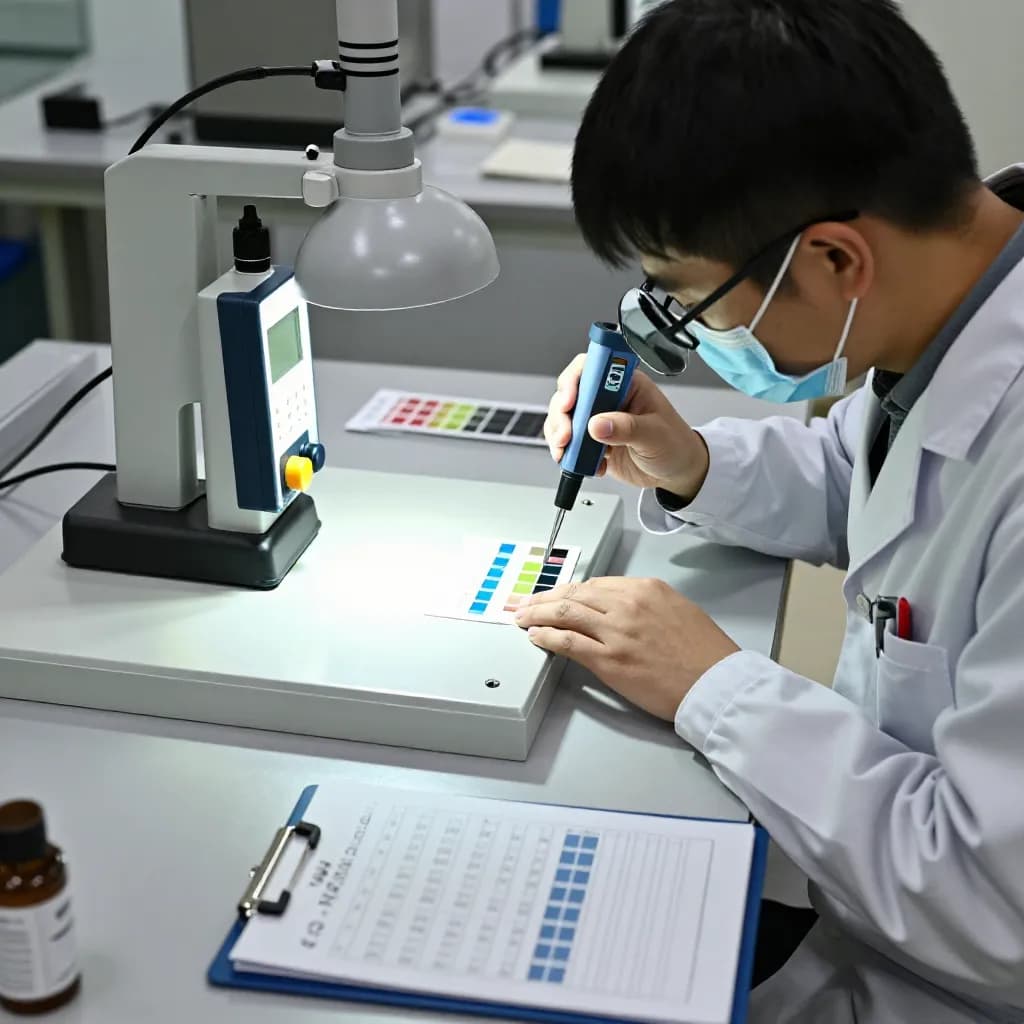
A structured inspection process serves multiple purposes. It verifies that the coater has met the specification requirements, providing objective evidence of compliance. It identifies defects early, when they can be addressed through rework or replacement at the coater's expense rather than becoming the buyer's problem. It creates a documented quality record that supports warranty claims, regulatory compliance, and continuous improvement efforts. And it establishes clear expectations with the coater, encouraging consistent quality over time.
Ready to Start Your Project?
From one-off customs to 15,000-part production runs — get precise pricing in 24 hours.
On This Page
Why Incoming Inspection Matters
The level of inspection should be proportional to the criticality of the application and the maturity of the relationship with the coater. A new coater or a first-production run warrants thorough inspection of every parameter on a significant sample of parts. An established coater with a proven track record may require only spot-check inspection of key parameters. But some level of incoming inspection should always be performed — trust but verify is the appropriate philosophy for coating quality management.
Visual Inspection: What to Look For
Visual inspection is the first and most important quality check for powder coated parts. A trained inspector can identify a wide range of defects quickly and without instruments, making visual inspection the most efficient screening tool in the quality arsenal.
Examine parts under consistent, adequate lighting — ideally a combination of fluorescent and natural daylight at a minimum illumination level of 500 lux. Inspect from a normal viewing distance (approximately arm's length) and from multiple angles to catch defects that are only visible at certain viewing angles.
Surface defects to look for include: pinholes (tiny holes in the coating caused by outgassing or contamination), craters (circular depressions caused by surface contamination), orange peel (a bumpy texture resembling orange skin caused by poor flow during cure), runs and sags (thick accumulations of coating caused by excessive application or poor racking), dry spray (a rough, powdery surface caused by insufficient electrostatic charge or excessive gun-to-part distance), fisheyes (circular areas where the coating has pulled away from a contamination spot), and seeds or inclusions (foreign particles embedded in the coating surface).
Coverage defects include: bare spots (areas where no coating was applied), thin areas (areas with visibly thinner coating, often appearing lighter in color), and edge pull-back (coating that has retracted from sharp edges during cure, leaving the edge exposed). Color defects include: color variation between parts or across a single part, color mismatch against the approved reference standard, and gloss variation. Check for masking accuracy — ensure that masked areas are clean and that coating boundaries align with drawing requirements.
Film Thickness Measurement
Film thickness is the most commonly measured quantitative parameter in powder coating inspection. It directly affects coating performance — too thin and the coating provides inadequate protection; too thick and it may crack, have poor adhesion, or cause dimensional interference on precision parts.
Film thickness is measured using non-destructive gauges that work on electromagnetic principles. Magnetic gauges (using magnetic induction or magnetic pull-off) measure coating thickness on ferrous (steel) substrates. Eddy-current gauges measure coating thickness on non-ferrous (aluminum, copper, brass) substrates. Dual-mode gauges automatically detect the substrate type and select the appropriate measurement method. Modern digital gauges provide readings accurate to ±1-2 microns and can store hundreds of readings for statistical analysis.
Measurement technique affects accuracy. Place the gauge probe flat against the surface — tilting the probe produces inaccurate readings. Take multiple readings across each part, including flat surfaces, edges, corners, recessed areas, and areas near hanging points. The specification typically defines a minimum number of readings per part and the locations where readings should be taken. Record all readings and calculate the average, minimum, and maximum for comparison against the specification.
Typical acceptance criteria specify a minimum film thickness (e.g., "min. 60 µm") or a range (e.g., "60-80 µm"). Some specifications allow a limited percentage of readings below the minimum — for example, "no individual reading below 48 µm, average of all readings min. 60 µm." Understand the specific acceptance criteria in your specification before making accept/reject decisions. Readings on edges and corners are typically excluded from the average calculation because these areas naturally have different film builds than flat surfaces.
Gloss Measurement and Color Verification
Gloss measurement verifies that the coating sheen matches the specification. Gloss is measured using a gloss meter — a portable instrument that projects a light beam onto the surface at a defined angle and measures the intensity of the reflected beam. The standard measurement angle for powder coatings is 60 degrees, with supplementary measurements at 20 degrees (for high-gloss surfaces above 70 GU) or 85 degrees (for low-gloss surfaces below 10 GU at 60°).
Calibrate the gloss meter against its certified reference tile before each measurement session. Take readings on flat, representative areas of the part — avoid edges, corners, textured areas, and areas near hanging points. Take multiple readings and average them. Compare the average against the specification target and tolerance — for example, "30 ± 5 GU at 60°" means acceptable readings fall between 25 and 35 GU.
Color verification can be performed visually or instrumentally. Visual color assessment compares the coated part against an approved physical reference panel under standardized lighting conditions. The part and reference should be placed side by side at the same angle and viewed under the same light source. For critical color matching, use a light booth with multiple light sources (D65 daylight, fluorescent, incandescent) to check for metamerism — the phenomenon where two colors match under one light source but differ under another.
Instrumental color measurement uses a spectrophotometer to quantify the color difference (Delta E) between the part and the reference standard. The spectrophotometer provides objective, numerical data that eliminates the subjectivity of visual assessment. Typical acceptance criteria specify a maximum Delta E value — ΔE ≤ 1.0 for tight matches, ΔE ≤ 2.0 for standard commercial work. For metallic finishes, multi-angle spectrophotometers that measure at several angles are necessary because metallic colors change with viewing angle.
Adhesion and Hardness Testing
Adhesion testing verifies that the coating is properly bonded to the substrate — a critical performance attribute that depends on pretreatment quality, powder compatibility, and cure adequacy. The standard adhesion test for powder coatings is the cross-cut test per ISO 2409 (or ASTM D3359 Method B in North America).
The cross-cut test involves scribing a grid pattern through the coating to the substrate using a multi-blade cutting tool, applying a specified adhesive tape over the grid, pressing it firmly, and then pulling the tape off at a defined angle and speed. The amount of coating removed with the tape is evaluated against a photographic reference scale from Gt 0 (no removal — perfect adhesion) to Gt 5 (more than 65% removal — complete failure). Most specifications require Gt 0 or Gt 1 for acceptance.
The cross-cut test is destructive — it damages the coating in the test area — so it is performed on sacrificial test panels coated alongside the production parts, or on inconspicuous areas of production parts where the test marks will not be visible in service. Some specifications require adhesion testing after environmental exposure — for example, cross-cut adhesion after 24 hours of water immersion or after humidity cabinet exposure — to verify that the adhesion is maintained under service conditions.
Hardness testing measures the resistance of the cured coating to indentation or scratching. The pencil hardness test (ISO 15184 / ASTM D3363) is the most common method, using calibrated pencils of increasing hardness drawn across the coating surface. The hardness is reported as the hardest pencil that does not scratch the coating. Typical powder coatings achieve pencil hardness of H to 3H. Hardness below the expected range may indicate under-curing.
Acceptance, Rejection, and Disposition
Clear acceptance and rejection criteria, agreed upon before production begins, are essential for efficient quality management. The inspection results should lead to one of three dispositions: accept, reject, or conditional accept.
Accept means the parts meet all specification requirements and are released for use. The inspection records are filed as evidence of compliance, and the parts proceed to assembly, installation, or delivery.
Reject means one or more specification requirements are not met, and the defect is significant enough to affect performance or appearance. Rejected parts are returned to the coater for rework (stripping and recoating) or replacement. The rejection should be documented with specific details — which requirement was not met, what the measured values were, and what the acceptance criteria require — to give the coater clear information for corrective action.
Conditional accept (also called concession or deviation acceptance) means a specification requirement is not fully met, but the deviation is minor enough that the parts can be used without significant impact on performance or appearance. For example, a part with film thickness of 58 microns against a 60-micron minimum might be conditionally accepted if the deviation is small and the application is not critical. Conditional acceptance should be documented, approved by the responsible engineer or quality authority, and communicated to the coater to prevent recurrence.
Establish a clear escalation path for borderline cases. Not every inspection result falls neatly into accept or reject, and having a defined process for resolving ambiguous cases — involving the quality engineer, the specifier, and the coater as needed — prevents delays and disputes.
Documentation and Record Keeping
Inspection documentation creates the quality record that supports traceability, warranty claims, regulatory compliance, and continuous improvement. Every inspection should produce a documented record that includes the following elements.
Part identification: part number, batch or lot number, quantity inspected, and quantity accepted/rejected. Specification reference: the drawing number, specification section, or quality standard against which the parts were inspected. Inspection results: all measured values (film thickness readings, gloss readings, color measurements, adhesion test results) with their locations on the part, the acceptance criteria, and the pass/fail determination for each parameter.
Inspector identification: the name or ID of the person performing the inspection, their qualification or certification level, and the date of inspection. Instrument identification: the model, serial number, and calibration status of all measurement instruments used. Disposition: the accept/reject/conditional accept decision, with authorization signatures as required by the quality system.
For rejected parts, the documentation should include a description of the defect, photographs if applicable, the root cause (if known), and the corrective action requested. For conditional acceptances, the documentation should include the justification for acceptance, any limitations on use, and the approval authority.
Retain inspection records for the duration of the coating warranty plus any additional period required by your quality management system or regulatory requirements. These records are your evidence of due diligence in coating quality management and your foundation for warranty claims if coating performance issues arise during service. Digital record-keeping systems with searchable databases and photographic attachments are increasingly replacing paper-based systems, offering better accessibility, analysis capability, and long-term storage reliability.
Frequently Asked Questions
What instruments do I need to inspect powder coated parts?
Essential instruments include a film thickness gauge (magnetic for steel, eddy-current for aluminum, or dual-mode), a gloss meter (60° standard angle), and a cross-cut adhesion test kit. For color-critical work, add a spectrophotometer. A calibrated pencil hardness test set is useful for verifying cure. All instruments should be calibrated to traceable standards.
How many parts should I inspect from each batch?
Inspection sampling depends on batch size, application criticality, and coater track record. For critical applications or new coaters, inspect 100% of parts visually and measure film thickness on 10-20% of parts. For established coaters with proven quality, visual inspection of all parts with instrumental measurement on 5-10% may be sufficient. Follow your quality system's sampling plan.
What is an acceptable film thickness for powder coating?
Standard powder coatings are typically specified at 60-80 microns. The specific requirement depends on the application and specification. Most standards allow individual readings slightly below the minimum if the average meets the target. Always refer to your specific specification for acceptance criteria rather than using general guidelines.
How do I test adhesion on powder coated parts?
The standard method is the cross-cut test per ISO 2409 or ASTM D3359. A multi-blade cutter scribes a grid through the coating, adhesive tape is applied and pulled off, and the amount of coating removed is rated on a scale from Gt 0 (perfect) to Gt 5 (failure). Most specifications require Gt 0 or Gt 1. The test is destructive, so it is performed on test panels or inconspicuous areas.
What should I do if powder coated parts fail inspection?
Document the failure with specific measurements, photographs, and reference to the specification requirement that was not met. Return the parts to the coater with this documentation for rework or replacement. For minor deviations, consider conditional acceptance with documented justification. Communicate clearly with the coater to prevent recurrence.
Ready to Start Your Project?
From one-off customs to 15,000-part production runs — get precise pricing in 24 hours.